Heather fabric mixes dyed and undyed fibres in the yarn for a soft, speckled look; the trade calls it melange. How it is made, what it is made of, other ways to get a heather look, and what our register of 636 melange fabrics shows.
At a glance
Melangetrade name for heather
10% / 15%dyed fibre share
636melange entries in our register
30%of them with elastane
Heather fabric is fabric with a soft, mottled, multi-tone look made by mixing fibres of different colours in the yarn. The classic example is heather grey: a mix of black or grey fibres with white fibres, spun together so the fabric looks speckled grey rather than flat grey. In the knit trade the same thing is usually called melange. Heathered jersey is used for T-shirts, sweatshirts, sportswear and loungewear because it looks casual, hides small marks and fading, and has a natural, lived-in feel.
This guide explains how heather fabric is made, what it is made of, the different ways to get a heather look, how heathered jersey behaves in dyeing and washing, and what our register of 636 melange fabrics shows.
How heather yarn is made
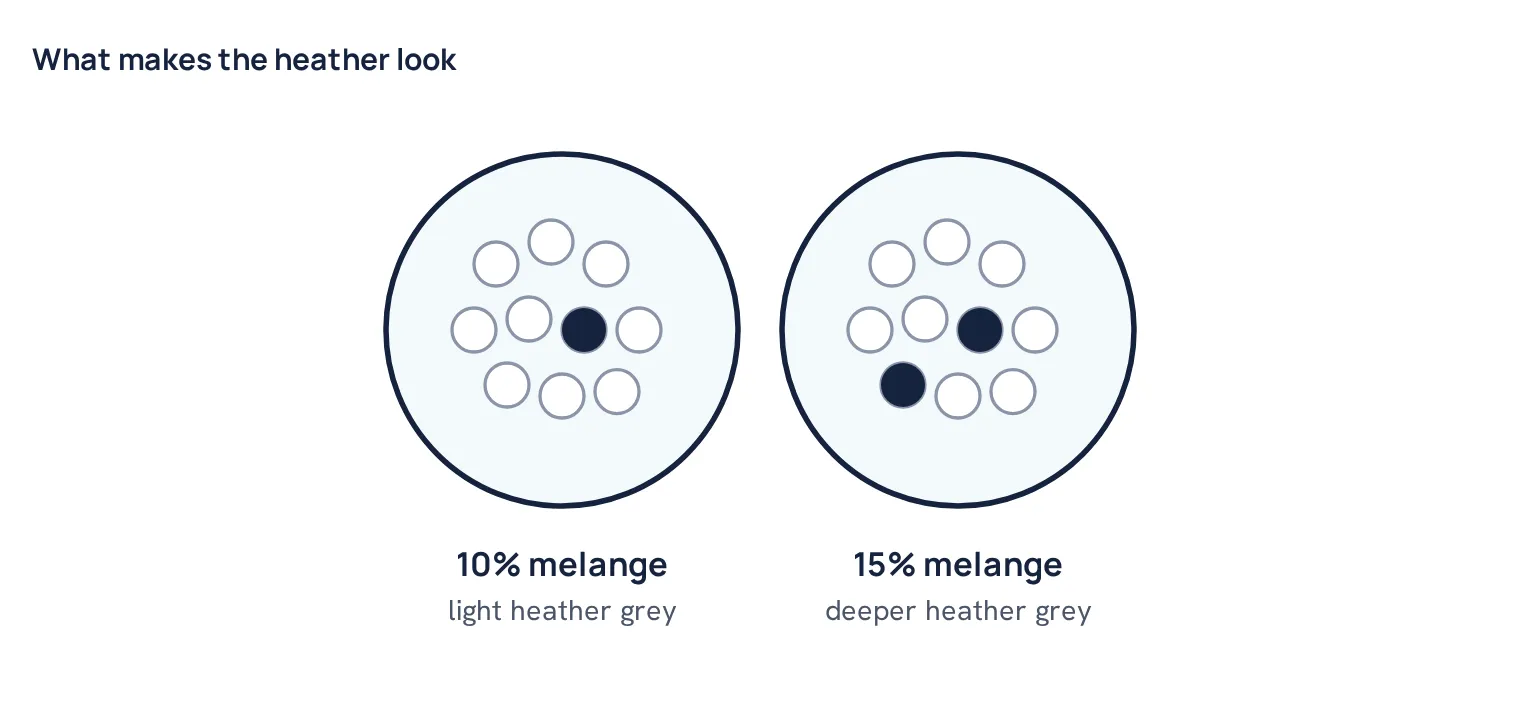
A heather or melange yarn is spun from a blend of fibres that are already different colours. Some of the fibre is dyed before spinning (fibre-dyed or “stock-dyed” cotton), or a coloured synthetic fibre such as dope-dyed viscose or polyester is used, and it is blended with undyed fibre. The share of coloured fibre sets the depth: in our register the melange share is written into the yarn description, for example “MEL 10%” or “MEL 15%”. A 10% melange has one part dyed fibre to nine parts undyed fibre; a 15% melange has more dyed fibre and gives a deeper grey.
What is heather fabric made of?
Heather fabric can be made of almost any fibre, but the common ones are:
- Cotton heather: fibre-dyed cotton blended with white cotton. Soft and breathable.
- Cotton with dope-dyed viscose or polyester: a coloured synthetic or viscose fibre blended with cotton. Note that a “10% melange” made this way is not 100% cotton, and the label must say so.
- CVC heather: cotton-polyester blends, often the most stable in washing.
- Tri-blend heather: polyester, cotton and viscose, very soft and drapey, popular in fashion tees.
- Heather with elastane: about 30% of the melange entries in our register (192 of 636) contained elastane.
Two “grey melange 10%” fabrics can look similar on the day but differ in composition, fastness and how they react to processing, depending on whether the dark fibre is fibre-dyed cotton or dope-dyed viscose. The details are in the melange (heather) development guide.
Other ways to get a heather look
| Method | How | Result |
|---|---|---|
| Melange yarn | Dyed + undyed fibre spun together | True heather; shade set in spinning |
| Cross-dyeing a blend | Dye only one fibre of a blend, e.g. only the cotton in CVC | Two-tone heather from piece dyeing |
| Overdyeing grey melange | Dye a grey melange fabric a colour | Coloured heather, such as heather navy |
| Slub or twist yarns | Uneven or twisted multi-colour yarns | Streaky, textured look |
Overdyeing grey melange needs care, because the dyed and undyed fibres take dye differently; see the grey melange overdyeing process.
What is heathered jersey fabric?
Heathered jersey is single jersey knitted from heather (melange) yarn. It has the soft, flexible handle of ordinary jersey and the speckled look of heather. In our records, plain cotton melange jersey used the same count, gauge and stitch length pairs as piece-dyed cotton jersey, for example 24/1 on 24 gauge at 2.80 mm, so it knits and weighs like normal jersey; the difference is in the yarn.
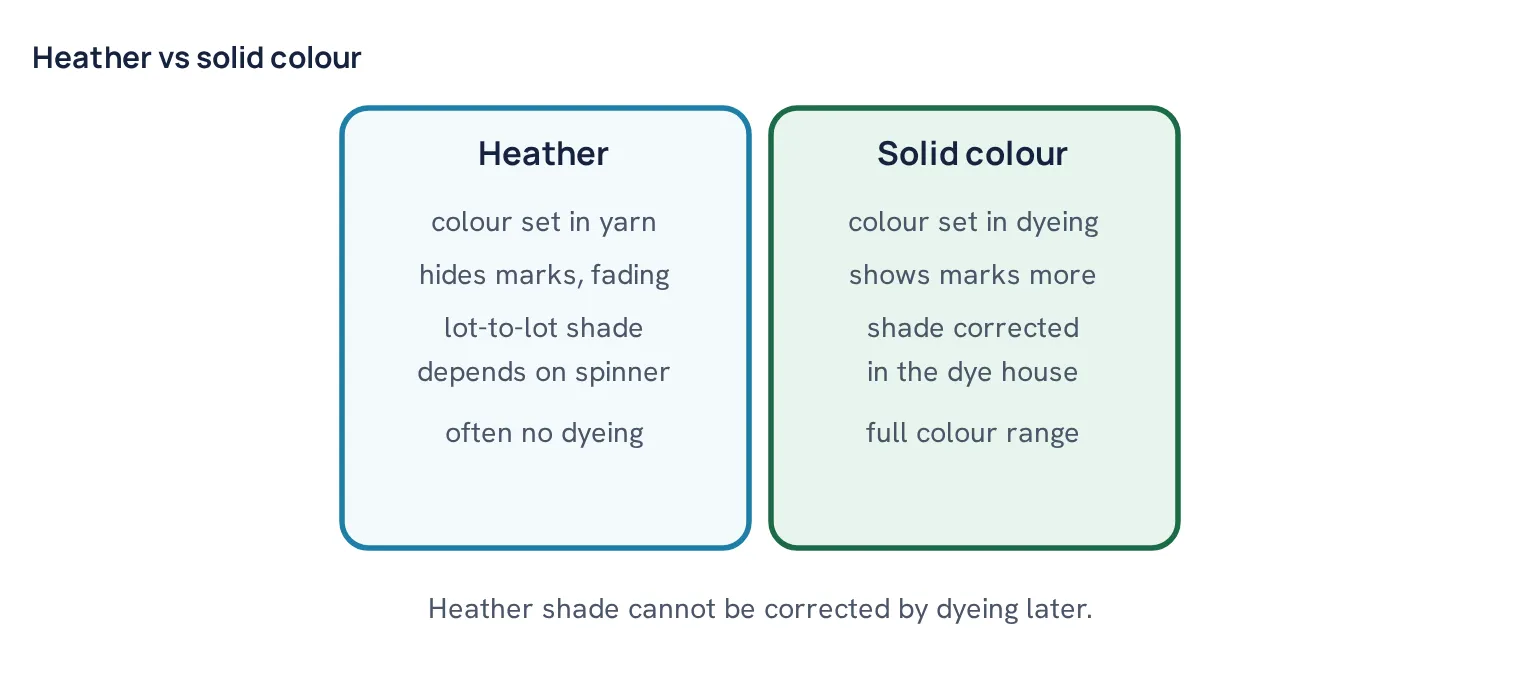
Common mistake: mixing yarn lots from two spinners in one heather order. A buyer who approves a 10% grey melange has approved that ratio from that source; a 12% lot from another mill will not match, even though both are “grey melange”, and the dye house cannot correct it.
How heather fabric is processed and cared for
Heather fabric made from pre-coloured yarn usually needs no dyeing, only scouring, washing and finishing, which keeps it cheaper and lower in water use. It still shrinks like any knit of the same fibre, so it is compacted to control shrinkage. Cotton and modal melange, such as a 60/40 cotton/modal yarn in our register, gives a softer fabric but relaxes and shrinks more in water than cotton alone.
At home, heather garments are easy to care for: wash at 30–40°C with like colours. Because the colour is mixed into the fibres, fading and small marks are much less visible than on solid colours.
Worked example. A sportswear brand wants a light heather grey T-shirt that looks the same in every reorder. The safest approach is to specify the exact melange percentage (for example 10%), the dark fibre type and the spinner, and approve the yarn lot before knitting. Asking only for “heather grey” invites lot-to-lot differences that no dye house can fix.
Summary
- Heather (melange) fabric mixes dyed and undyed fibres in the yarn for a speckled look.
- The melange share, such as 10% or 15%, sets the depth.
- It can be cotton, CVC, tri-blend, with dope-dyed viscose or with elastane; check the label.
- Heathered jersey knits like normal jersey; its shade is fixed in spinning, not dyeing.
Other multi-colour looks: space dyed fabric changes colour along the yarn, and tri-blend gets a heathered look from three fibres taking dye differently.
Questions
What is heather fabric?
Heather fabric is made from yarn that mixes fibres of different colours, such as dyed and undyed fibres, so it looks softly speckled. In the knit trade it is called melange.
What is heather fabric made of?
Commonly cotton, cotton-polyester, tri-blends of polyester, cotton and viscose, or cotton with dope-dyed viscose. Some contain elastane. Check the label for the exact fibres.
What is heathered jersey fabric?
It is single jersey knitted from heather (melange) yarn. It feels like ordinary jersey but has a speckled, mottled colour.
What does 10% melange mean?
It means about one part dyed fibre to nine parts undyed fibre in the yarn. A higher percentage, such as 15%, gives a deeper heather.
Does heather fabric fade?
It fades like any fabric of the same fibre, but because the colour is mixed into the fibres, fading and small marks are much less visible than on solid colours.

Textile engineer with 14+ years in dyeing and fabric development. He writes every guide on Dyeing Solution from real production work. Full profile