Space dyed fabric is knitted from yarn dyed in several colours along its length, giving random streaks and flecks. How space dyed yarn is made, space dyed vs heather and slub, pooling, and finishing checks.
At a glance
Yarndyed in bands
Beforeknitting
Streaksnot mottled
Poolingmachine-dependent
Space dyed fabric is made from yarn that has been dyed in several colours, or several depths of one colour, at intervals along its length. When that yarn is knitted, the colours fall in random streaks, flecks and stripes across the fabric. The result is a lively, uneven, “marled” look that is popular for sweaters, joggers, leggings, socks and athleisure.
This guide explains what space dyed means, how space dyed yarn is made, how it differs from heather (melange), slub and yarn-dyed stripes, and what to expect when it is washed and finished.
What does space dyed mean?
“Space dyed” describes the yarn, not the fabric construction. Normal dyed yarn is one even colour from end to end. Space dyed yarn has colour applied only to certain “spaces” along it, so one length of yarn may go from navy to grey to white and back again. The fabric itself is usually a normal knit, such as single jersey, fleece or rib; the pattern comes entirely from the yarn.
How space dyed yarn is made
Space dyeing is done on the yarn before knitting. The common methods are:
- Printing the yarn: yarn in a flat sheet or hank passes under rollers or nozzles that apply dye in bands.
- Knit-deknit: the yarn is knitted into a tube, the tube is printed or dyed in bands, then unravelled back into yarn.
- Injection on the package: dye is injected into different zones of a yarn package, so each zone takes a different colour.
Each method gives a different repeat length and sharpness of colour change. The yarn is then fixed, washed and dried before knitting, like any other yarn-dyed knit.
Space dyed vs heather, slub and stripes
| Effect | What changes | Look on fabric |
|---|---|---|
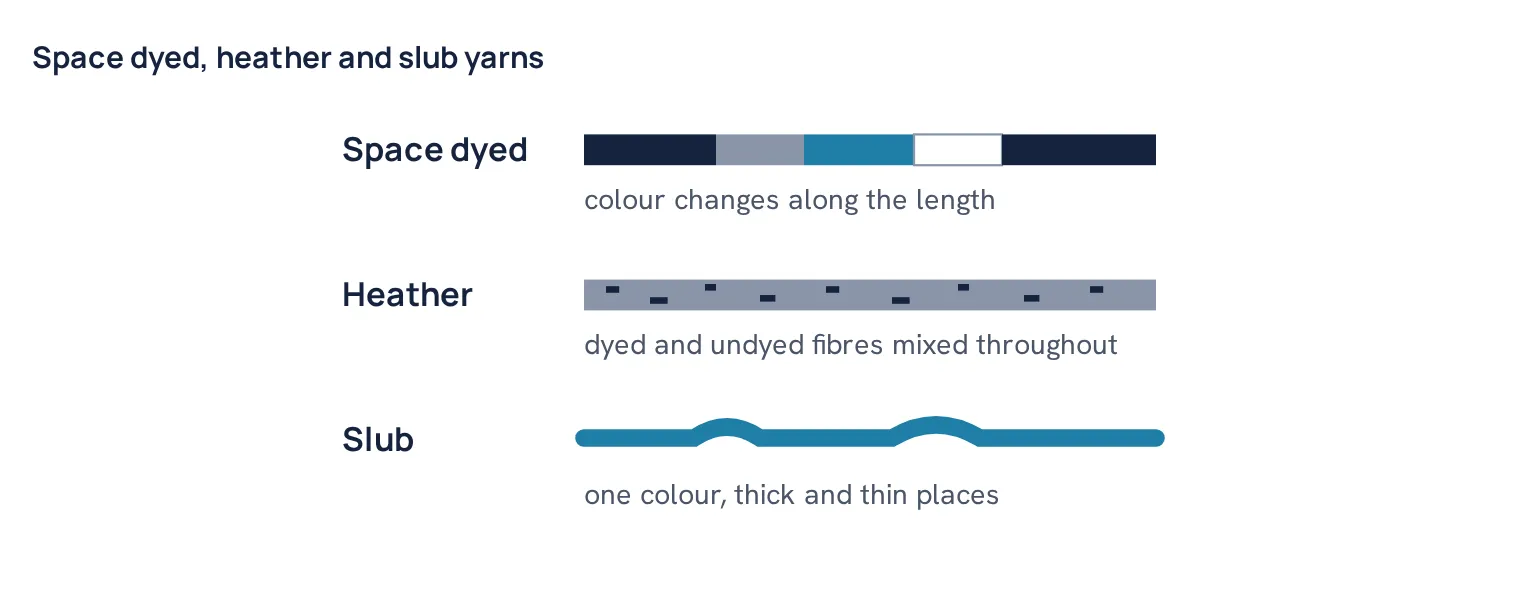
| Space dyed | Colour along the yarn length | Random streaks and flecks of different colours |
| Heather (melange) | Fibres of different colours mixed in the yarn | Even, soft mottled colour |
| Slub | Yarn thickness | Thick-thin texture, usually one colour |
| Yarn-dyed stripe | Solid-coloured yarns fed in a set order | Regular, planned stripes |
Heather and space dyed are often confused because both look multi-coloured. Heather is mixed at the fibre stage and looks even from a distance; space dyed shows clear, separate colour streaks. See what is heather fabric and what is slub fabric.
Why space dyed patterns pool and stripe
How the colours fall depends on the repeat length of the yarn and the width of the knitting machine. When the colour repeat lines up with one course (one round of the machine), the same colour lands in the same place each round and builds into a visible band or zigzag. This is called pooling. Short, random repeats give a speckled look; longer repeats give streaks. Changing the machine diameter, the gauge or the number of feeders changes the pattern, so a sample must always be knitted on the actual production machine before bulk.
Common mistake: approving a space dyed design from a small swatch, then knitting bulk on a different machine diameter. The colour repeat lands differently, and the fabric shows bands or a completely different pattern. Approve on the production machine, and keep the same yarn lot for the whole order.
Finishing and washing space dyed knits
Because the yarn is already coloured, space dyed fabric is not dyed again; it is scoured or washed, softened and compacted. Two checks matter more than with solid fabric:
- Staining: dark bands can bleed onto light or white bands in washing. Wash and staining fastness must be checked on the white parts. See staining in wash fastness.
- Rubbing: dark bands can rub off, especially when wet. See wet rubbing fastness failures.
Where space dyed fabric is used
- Sweaters, cardigans and knitwear
- Joggers, hoodies and fleece sets
- Leggings and athleisure tops
- Socks, beanies and accessories
Summary
- Space dyed fabric is knitted from yarn dyed in different colours along its length.
- The yarn is coloured before knitting, by printing, knit-deknit or package injection.
- Heather mixes colours inside the yarn; slub changes thickness; space dyed changes colour along the yarn.
- The pattern depends on the repeat length and the knitting machine, so approve on the production machine.
- Check staining and rubbing on the light bands before bulk.
Questions
What does space dyed mean?
It means the yarn was dyed in different colours, or depths of one colour, at intervals along its length, so the knitted fabric shows random streaks and flecks.
What is the difference between space dyed and heather?
Heather mixes differently coloured fibres inside the yarn for an even mottled look. Space dyed yarn changes colour along its length, giving separate streaks.
How is space dyed yarn made?
By printing dye onto yarn in bands, by knitting, dyeing and unravelling the yarn (knit-deknit), or by injecting different dyes into zones of a yarn package.
Why does space dyed fabric show stripes or bands?
When the colour repeat in the yarn lines up with one round of the knitting machine, the same colour lands in the same place each round. This is called pooling.
Does space dyed fabric bleed?
It can. Dark bands may stain light bands in washing, so staining and rubbing fastness should be checked on the light parts before bulk.

Textile engineer with 14+ years in dyeing and fabric development. He writes every guide on Dyeing Solution from real production work. Full profile