Tri-blend is a soft, drapey fabric made from polyester, cotton and rayon in one yarn, with a heathered vintage look. What it is made of, why it looks heathered, tri-blend vs cotton and 50/50, and printing tips.
At a glance
50/25/25poly/cotton/rayon
Heatheredthree dye uptakes
Softand drapey
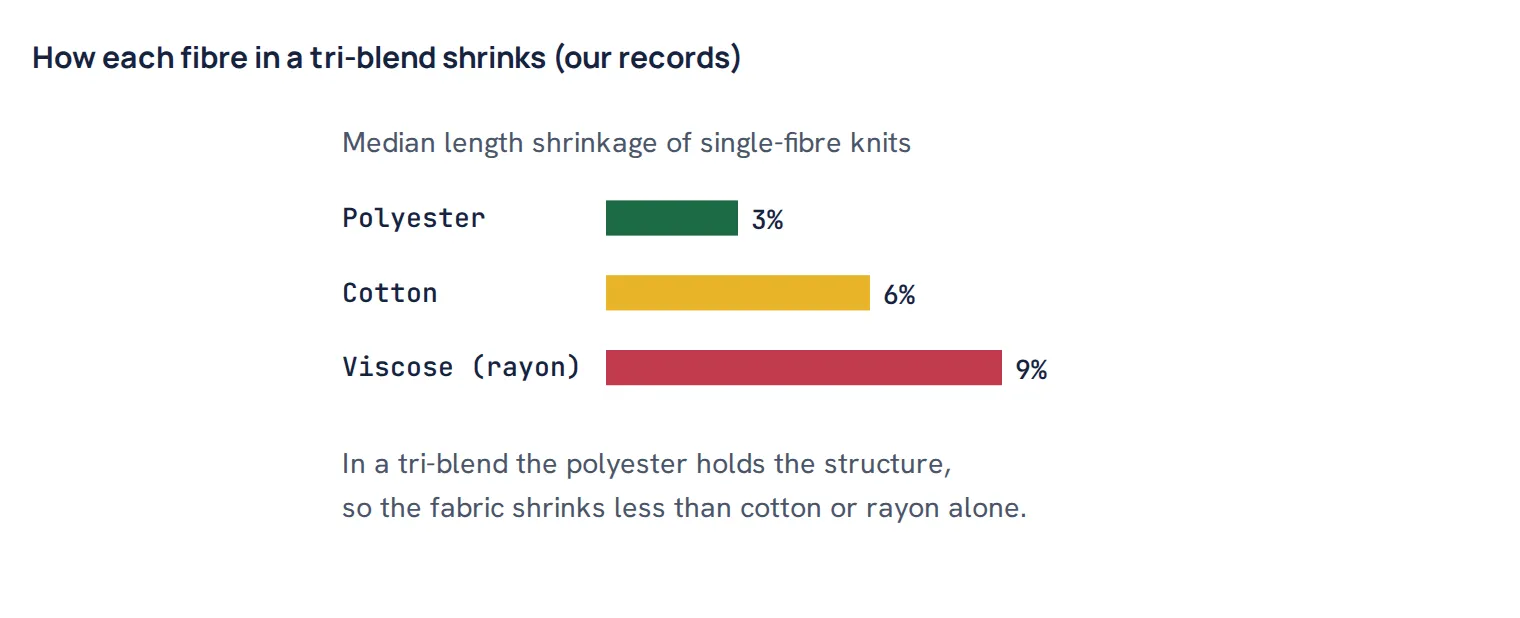
3 / 6 / 9%fibre shrinkage
A tri-blend is a fabric made from three fibres blended in one yarn, most often polyester, cotton and rayon (viscose). A typical tri-blend T-shirt is around 50% polyester, 25% cotton and 25% rayon. Each fibre adds something: polyester gives strength and shape, cotton gives a natural feel, and rayon gives softness and drape. The result is a very soft, lightweight, slightly stretchy shirt with a faded, heathered “vintage” look that is popular for fashion and printed tees.
This guide explains what tri-blend fabric is, why tri-blend shirts look heathered, tri-blend vs 100% cotton and 50/50, how the blend behaves in washing, and what to know before printing on it.
What is tri-blend fabric made of?
| Fibre | Typical share | What it adds |
|---|---|---|
| Polyester | About 50% | Strength, shape, less shrinkage, quick drying |
| Cotton | About 25% | Natural feel, breathability |
| Rayon (viscose) | About 25% | Softness, drape, the “worn-in” handle |
The yarn is usually a fine ring-spun yarn knitted into a light jersey, around 120–150 GSM. For the fibres themselves see what is viscose and what is poly cotton.
Why tri-blend shirts look heathered
The three fibres take dye differently. Polyester needs disperse dye at high temperature; cotton and rayon take reactive dye, and rayon takes it deeper than cotton. When the fabric is dyed, each fibre ends up at a slightly different depth, so the colour looks mottled and soft rather than flat. In many tri-blends only the cellulose part (cotton and rayon) is dyed, and the polyester is left light on purpose, which gives the classic faded, heather look. See reactive vs disperse dye and heather fabric.
Tri-blend vs 100% cotton vs 50/50
| Point | Tri-blend | 50/50 poly-cotton | 100% cotton |
|---|---|---|---|
| Softness | Very soft, silky | Soft | Soft, more structured |
| Drape | Fluid, clings a little | Medium | Stiffer |
| Look | Heathered, vintage | Slightly heathered | Solid colour |
| Shrinkage | Low to medium | Low | Medium |
| Breathability | Good | Good | Very good |
| Price | Higher | Lower | Medium |
Printing on tri-blend shirts
Because the fabric contains three fibres, print methods behave differently:
- Screen printing: works well; water-based and discharge inks give a soft, vintage print that suits tri-blend.
- Sublimation: only the polyester takes the dye, so the print is soft and faded, not bright. For vivid sublimation use 100% polyester.
- Heat transfer and DTF: work, but use the lower temperature setting for the fabric to avoid shine and scorching.
Common mistake: expecting every tri-blend lot to match the last one exactly in shade. Three fibres each take dye differently, and small changes in the blend or the dye uptake of the rayon show as a shade shift. Approve each new lot against the standard, and keep one lot per order where possible.
How to care for tri-blend
- Wash cool (30°C), inside out, on a gentle cycle.
- Tumble dry low or line dry; high heat can shrink the rayon and damage prints.
- Do not iron directly on prints; use low heat.
Worked example. A brand wants a very soft, drapey printed tee with a worn-in look. A 50/25/25 tri-blend gives the handle and heathered colour; a water-based screen print keeps it soft. If the brand later wants bright all-over sublimation, it should switch to 100% polyester, because only the polyester third of a tri-blend takes sublimation dye.
Summary
- Tri-blend is usually about 50% polyester, 25% cotton and 25% rayon in one yarn.
- It is very soft and drapey with a heathered, vintage look.
- The heather comes from three fibres taking dye differently.
- Polyester keeps shrinkage lower than cotton or rayon alone.
- Sublimation prints look faded on tri-blend; use 100% polyester for bright sublimation.
Questions
What is a tri-blend shirt?
A T-shirt made from a yarn of three fibres, usually about 50% polyester, 25% cotton and 25% rayon, giving a very soft, drapey shirt with a heathered look.
Why do tri-blend shirts look heathered?
Each fibre takes dye differently: polyester needs disperse dye, while cotton and rayon take reactive dye at different depths, so the colour looks mottled and soft.
Is tri-blend better than cotton?
It is softer and drapes more, and shrinks less than cotton, but it is less structured and usually costs more. It depends on the look you want.
Does tri-blend shrink?
A little. The polyester holds the structure, so it shrinks less than 100% cotton or rayon, but wash cool and dry low.
Can you sublimate on tri-blend?
Only the polyester part takes sublimation dye, so prints look faded. For bright sublimation use 100% polyester.

Textile engineer with 14+ years in dyeing and fabric development. He writes every guide on Dyeing Solution from real production work. Full profile