Viscose (rayon) is a soft fibre made from wood pulp. What it is made of, whether it is natural, plastic or toxic, viscose vs cotton and polyester, and how much it really shrinks, from our finishing records.
At a glance
Wood pulpregenerated cellulose
9%median length shrinkage
25%within GSM tolerance
60°Cgentle dyeing
Viscose is a soft, smooth fibre made from wood pulp. The cellulose in the wood is dissolved and then re-formed into fibre, so viscose is chemically close to cotton but made in a factory. In the United States it is usually labelled rayon or viscose rayon; in Europe and Asia it is called viscose. Viscose fabric drapes well, feels cool, takes bright colours and is cheap, which is why it is used for dresses, blouses, T-shirts and linings. Its weak point is water: wet viscose loses much of its strength and shrinks more than almost any other fabric.
This guide explains what viscose is made of, whether it is natural, plastic or toxic, viscose versus cotton and polyester, and how it behaves in dyeing and washing, with figures from our finishing records.
What is viscose fabric made of?
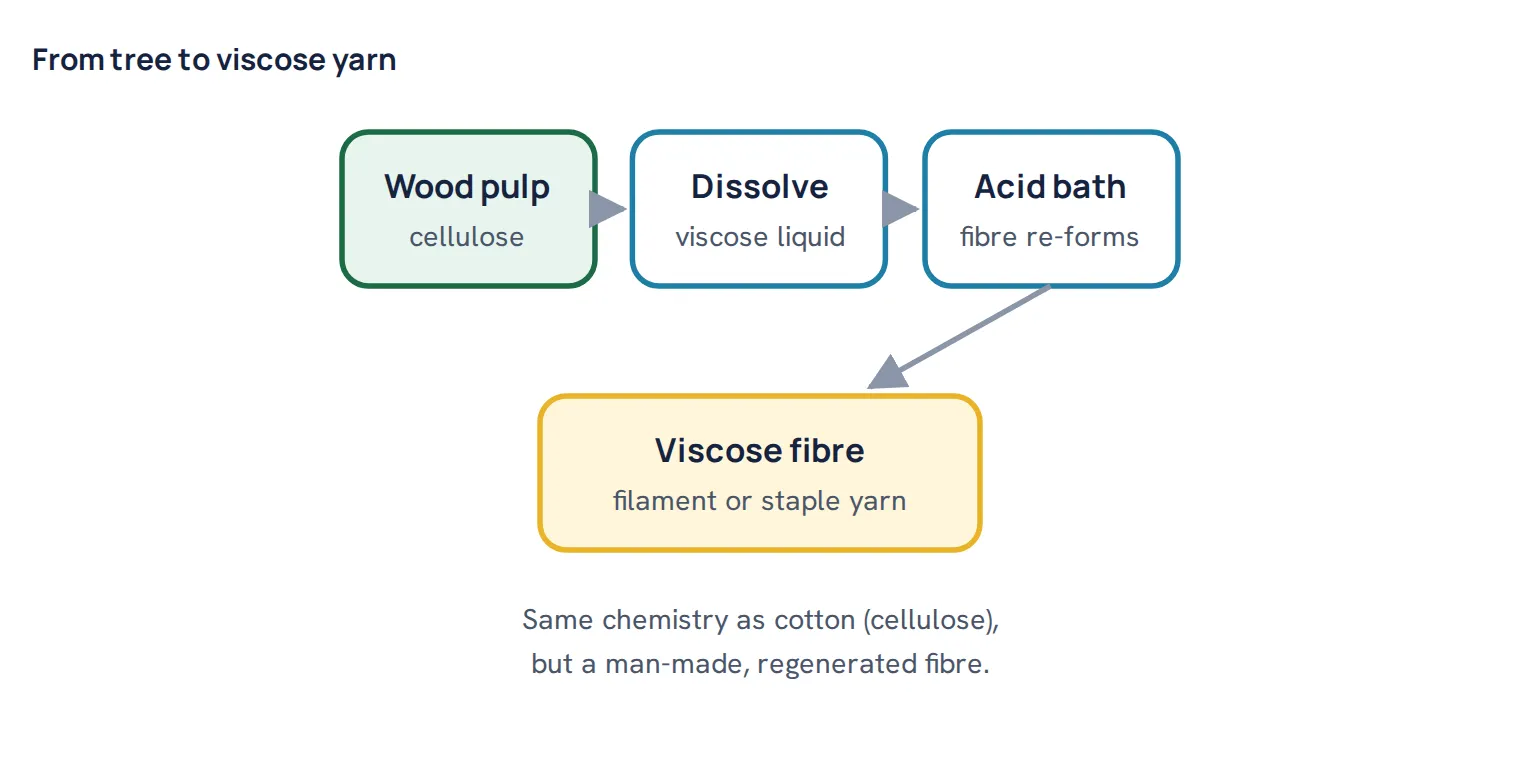
Viscose starts as cellulose from trees, such as eucalyptus, beech, pine or bamboo. The wood pulp is treated with caustic soda and carbon disulphide, which turns the cellulose into a thick, honey-like liquid called viscose (the fibre takes its name from it). This liquid is pushed through tiny holes into an acid bath, where the cellulose turns solid again as fine filaments. The filaments are used as they are for silky yarns, or cut into short staple fibre and spun like cotton for knit and jersey yarns.
“Bamboo fabric” in clothing is usually viscose made from bamboo pulp; once the bamboo is dissolved, the fibre is regular viscose.
Is viscose natural, synthetic or plastic?
Viscose is not plastic. It is made of cellulose, the same material as cotton and linen, not from oil like polyester or nylon. It is usually called semi-synthetic or a regenerated cellulose fibre: the raw material is natural, but the fibre is made by a chemical process. Viscose is biodegradable under suitable conditions.
Is viscose fabric toxic?
The finished fabric is not considered toxic to wear and is widely used next to the skin. The concern is the manufacturing: carbon disulphide, used to dissolve the cellulose, is harmful to workers and the environment if it is not contained and recovered. Some producers run closed systems that recover most of the chemicals and hold environmental certifications; if this matters to you, look for that evidence rather than for the word “natural”.
Viscose vs cotton
| Point | Viscose | Cotton |
|---|---|---|
| Feel | Very soft, smooth, cool | Soft, more matt |
| Drape | Fluid, hangs close to the body | Stiffer |
| Colour | Bright, deep shades | Good |
| Wet strength | Low: weak and easily distorted when wet | Strong when wet |
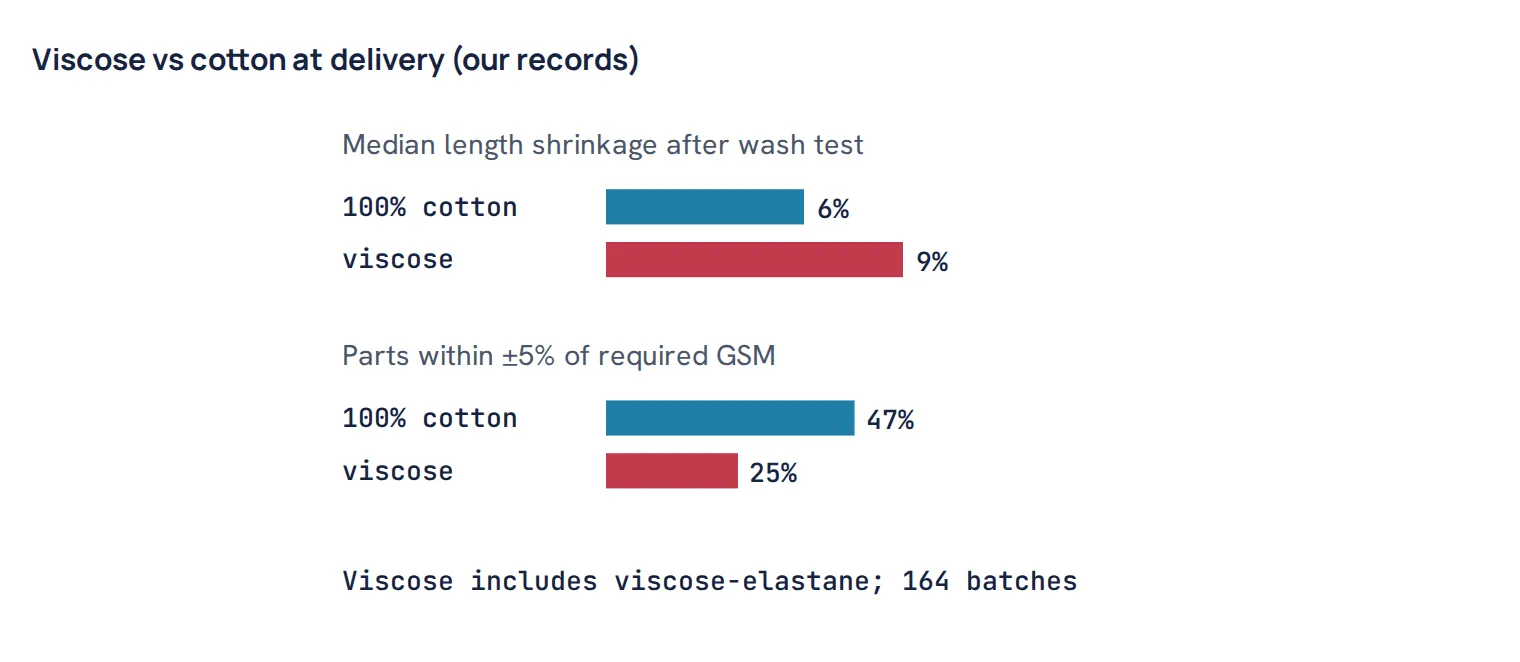
| Shrinkage (our records) | Median 9% in length | Median 6% in length |
| Creasing | Creases easily | Moderate |
| Price | Usually lower | Similar or higher |
Viscose vs polyester
Polyester is made from oil, absorbs very little water, dries fast and keeps its shape and size. Viscose absorbs water, breathes and feels cooler and softer, but it shrinks, creases and is weaker. The two are often blended: poly-viscose (PV) fabric uses polyester for stability and viscose for softness and drape. In our records PV fabric kept length shrinkage within 5% in 73% of parts, against only 23% for viscose.
Viscose vs modal and lyocell
All three are regenerated cellulose from wood. Modal is a modified viscose with stronger, more stable fibre when wet. Lyocell is made by a different, solvent-based process and is the strongest of the three. Ordinary viscose is the softest and cheapest, and the least stable in washing.
Does viscose shrink?
Yes, more than any other common fibre we finish. Wet viscose swells and loses strength, so it stretches in the wet processes and then relaxes back when it is washed. In our records of viscose and viscose-elastane knit fabric, the median length shrinkage after the wash test was 9%, and the worst tenth shrank 14% or more. Only 23% of parts kept length shrinkage within 5%. The fibre-by-fibre comparison is in does fabric shrink after washing and does rayon shrink.
- We do nothing special for lyocell or viscose. They are dyed and finished the normal way.
- After the stenter we check the parameters. If the length has grown or the width has come down, or the fabric needs some other correction, we set the compactor to adjust for it and then run the fabric.
How viscose is dyed
Viscose takes the same reactive dyes as cotton and gives bright, deep shades, often deeper than cotton at the same recipe. Because it is weak when wet, everything is gentler: a mild scour at 70–80°C instead of near-boiling, no enzyme treatment, and the whole dyeing at about 60°C. The full route is in the 100% viscose knit dyeing process. For home dyeing, see can you dye rayon.
Common mistake: washing a viscose dress hot and tumble drying it. The wet fibre is weak and swollen, the heat and tumbling pull it out of shape, and it comes out shorter and distorted. Wash cool, do not wring, and dry flat or on a hanger.
Is viscose a good fabric?
Viscose is a good fabric for comfort, drape and colour at a low price, especially for summer clothes, dresses and blouses. It is a poor choice where size stability and durability matter most, such as fitted garments that will be washed hot or often. Blends with polyester or elastane, or the more stable modal and lyocell, solve much of that.
How to care for viscose
- Wash cool (30°C) on a gentle cycle, or hand wash.
- Do not wring or twist; press water out gently.
- Dry flat or on a hanger; avoid the tumble dryer.
- Iron on medium heat, inside out, while slightly damp.
Worked example. A buyer orders a 100% viscose jersey dress and allows 5% shrinkage. With a median of 9% in our records, a viscose fabric finished straight off the stenter is likely to fail. The mill needs to relax the fabric, set enough overfeed on the compactor and check a washed sample before cutting; the buyer may also choose a viscose-elastane or modal fabric for better stability.
Summary
- Viscose (rayon) is regenerated cellulose made from wood pulp: semi-synthetic, not plastic.
- The fabric is safe to wear; the concerns are in how it is manufactured.
- It is softer, drapier and brighter than cotton, but weaker when wet.
- Viscose knit shrank a median 9% in length in our records, the most of any fibre.
- Wash cool, handle gently and dry flat to keep its size.
Questions
What is viscose fabric made of?
Wood pulp. The cellulose is dissolved into a thick liquid and re-formed into fibre in an acid bath, so viscose is chemically close to cotton but factory-made.
Is viscose the same as rayon?
Yes. In the United States the fibre is usually labelled rayon or viscose rayon; viscose is the more common name elsewhere.
Is viscose fabric toxic?
The finished fabric is not considered toxic to wear. The concern is the chemicals used in manufacturing, which must be contained and recovered to protect workers and the environment.
Is viscose plastic?
No. Viscose is made from cellulose, the same material as cotton, not from oil. It is semi-synthetic and biodegradable under suitable conditions.
Does viscose shrink?
Yes, more than most fabrics. In our records viscose knit shrank a median 9% in length after washing, and the worst tenth shrank 14% or more.

Textile engineer with 14+ years in dyeing and fabric development. He writes every guide on Dyeing Solution from real production work. Full profile