Cotton-viscose is dyed in one reactive bath, with the viscose setting the limits: a scour without bleach, no enzyme, a hot wash no hotter than 80°C. Here is the process from our floor, step by step.
At a glance
1 bathReactive for both fibres
Scour onlyNo bleach, no enzyme
60°CViscose curve
80°CHot wash maximum
Cotton and viscose are both cellulose, so a cotton-viscose knit is dyed in one reactive bath, like cotton-modal. The viscose sets the limits: it is weaker, takes dye faster and shrinks more.
The route for cotton-viscose
Process flow: cotton-viscose knit dyeing
- Heat setting only for heavy GSM fabric, at 180–190°C.
- Scour only, without bleaching, at 70–80°C.
- Reactive dyeing in one bath for both fibres, on the viscose curve at 60°C.
- After-treatment: hot wash (never above 80°C), soaping, fixing and softener.
- Finishing with extra care on shrinkage.
- Cotton-viscose gets only a scour, as we do on cotton-modal fabric.
- No enzyme on cotton-viscose. If the buyer needs a clean surface, singeing can be done.
- Heat setting only when the fabric is heavy GSM.
- The scouring temperature is 70–80°C. That is OK, and better.
The scour runs at 70–80°C, the same mild temperature as on 100% viscose. That is enough to clean the cotton part too, and it keeps the viscose strong.
The dyeing curve
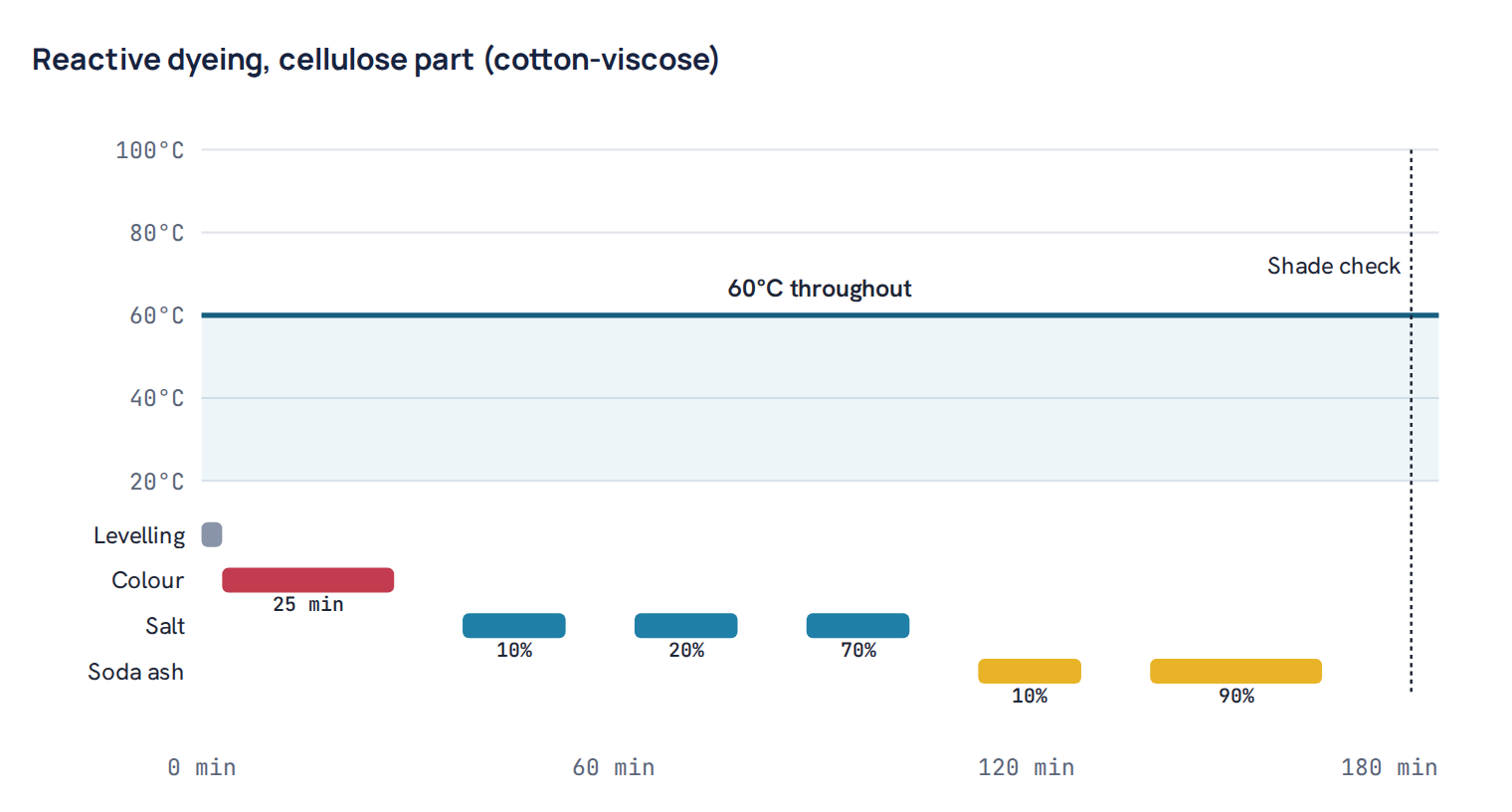
Both fibres go into the same bath. Because the viscose takes up dye faster than the cotton, the salt and soda go in portions and the salt sample is checked before the soda, while there is still room to correct the shade.
Common fault: scouring at cotton temperatures. At 98°C with strong alkali, the viscose swells and weakens, and the fabric comes out with crease marks and lower strength.
After-treatment
Hot wash at no more than 80°C, then soaping, fixing and softener, as on all cotton and viscose fabrics.
Limitations of cotton-viscose
- Strength. Viscose is weak, especially when wet. Blends with viscose can lose strength, and shade variation can come up between batches and between the two fibres.
- Shrinkage. Viscose shrinks more than any other fibre we finish; plan compaction and overfeed for it.

Textile engineer with 14+ years in dyeing and fabric development. He writes every guide on Dyeing Solution from real production work. Full profile