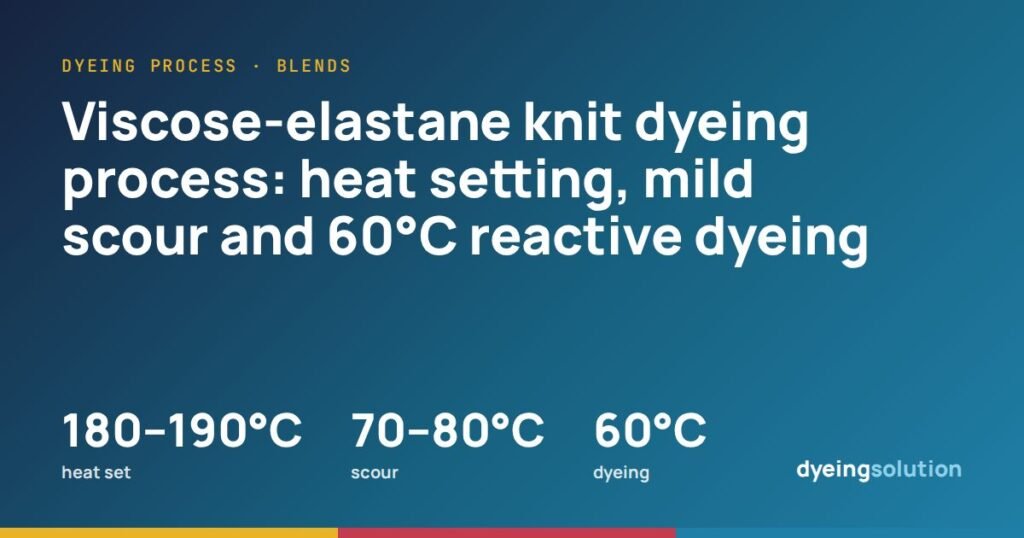
Viscose-elastane is heat set first, then dyed exactly like 100% viscose: a mild scour, reactive dyeing at 60°C and no enzyme. Here is the process from our floor, step by step.
At a glance
180–190°CHeat set, always
70–80°CScour, never hotter
60°CReactive dyeing
No enzymeIt weakens viscose
Viscose-elastane is dyed exactly like 100% viscose, after one extra step: heat setting, to fix the elastane before the fabric meets hot water.
The route for viscose-elastane
Process flow: viscose-elastane knit dyeing
- Heat setting of the greige fabric at 180–190°C, always.
- Load hot at 70°C and scour at 70–80°C, never hotter.
- Peroxide killer and acid.
- Reactive dyeing at 60°C, following the 100% viscose process.
- After-treatment: hot wash at 80°C for 10 minutes, soaping, fixing and softener.
- Finishing with extra care on shrinkage.
- Viscose-elastane is always heat set, at 180 to 190°C.
- No enzyme on viscose-elastane.
- After heat setting, it follows the viscose process.
The dyeing curve
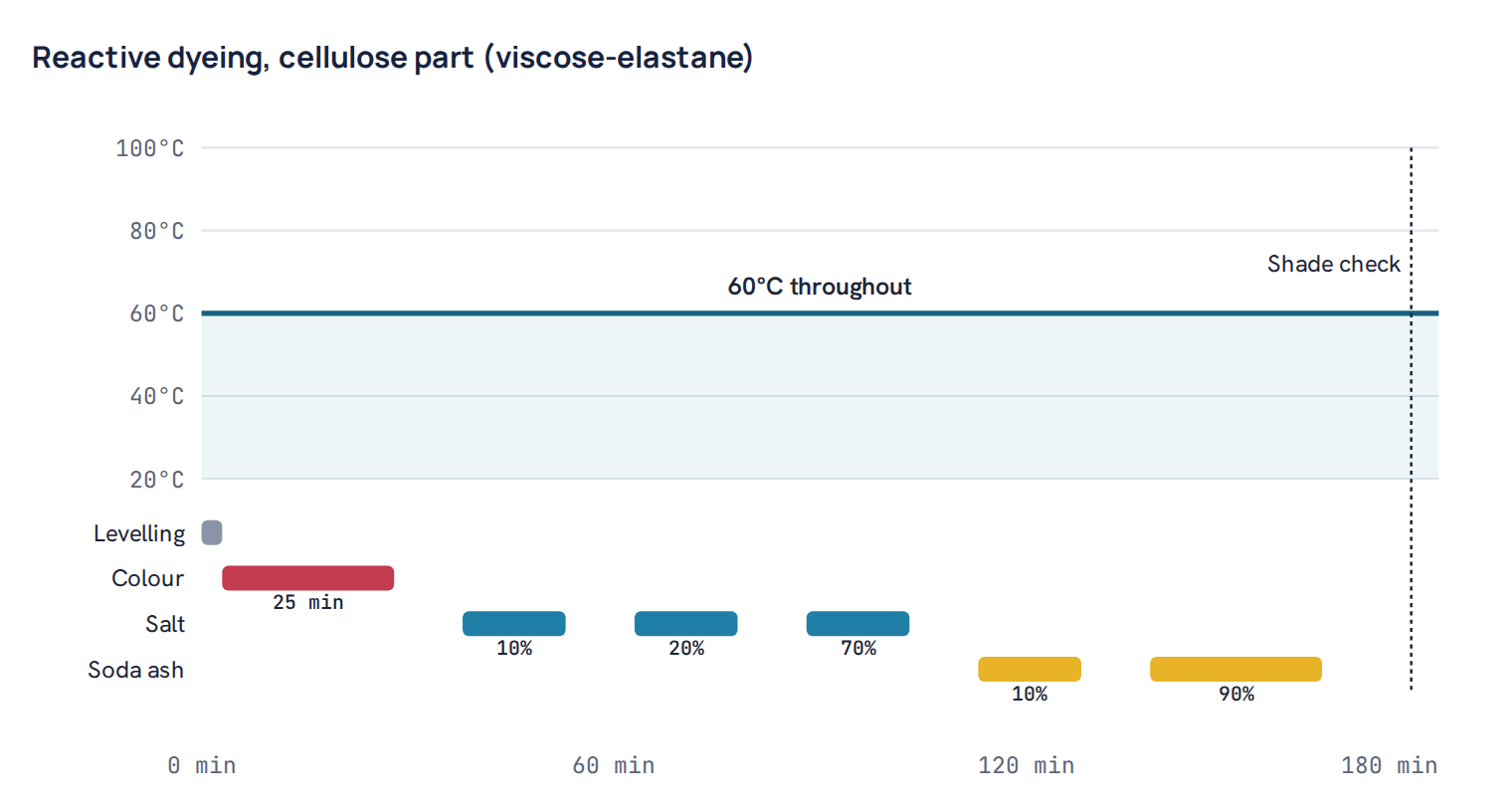
Common fault: scouring viscose at cotton temperatures. At 98°C with strong alkali the fibre swells and weakens, and the fabric comes out with crease marks and lower strength.
What viscose fabrics look like at delivery
From recent finishing data on viscose and viscose-elastane (see the full GSM and shrinkage study):
| Measure | Viscose (+ elastane) | Cotton + elastane |
|---|---|---|
| Batches in our records | 164 | 2355 |
| Median finished GSM vs required | -7.1% | -6.7% |
| Parts within ±5% of required GSM | 25% | 29% |
| Parts more than 5% light | 68% | 68% |
| Median length shrinkage | -9% | -6% |
| Parts within 5% length shrinkage | 23% | 41% |
| Heat set | 76% | 97% |
Viscose is the hardest fibre to hold to size: only 23% of parts kept length shrinkage within 5%, and two out of three finish light.
Limitations of viscose-elastane
- Strength. Viscose is weak, especially when wet. Blends with viscose can lose strength, and shade variation can come up between batches and between the two fibres.
- Light GSM and high shrinkage. Fix GSM in knitting and plan compaction for the shrinkage.

Textile engineer with 14+ years in dyeing and fabric development. He writes every guide on Dyeing Solution from real production work. Full profile