Micro modal is modal spun into much finer fibres, about 1 decitex or less, giving a lighter, softer, silkier and more fluid fabric. Modal vs micro modal on feel, breathability, durability, pilling, dyeing and price, with modal washing data from our records.
At a glance
1.3 vs 1.0dtex fineness
Silkierand lighter
6%modal shrinkage
Mesh bagfor washing
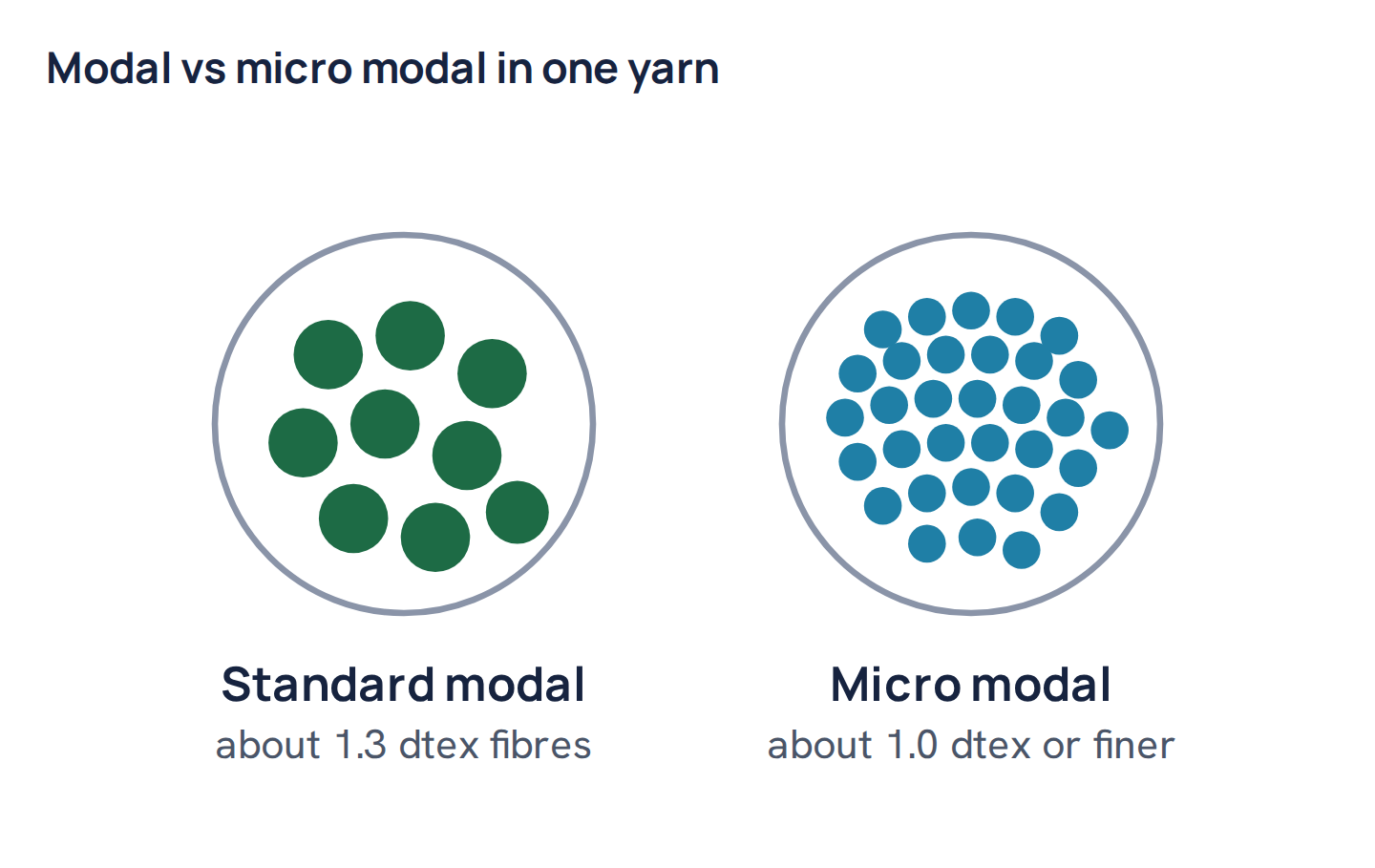
Micro modal is modal made with much finer fibres. Both are the same regenerated cellulose fibre made from beech or other wood pulp. The difference is fibre fineness: standard modal fibres are typically around 1.3 decitex, while micro modal fibres are about 1 decitex or finer, which puts them in the microfibre range. Finer fibres make a lighter, smoother, silkier and more fluid fabric that feels almost weightless next to the skin. Micro modal is used mainly for premium underwear, bras, camisoles and lightweight tees; it costs more and is a little more delicate.
This guide explains what modal and micro modal are, how fibre fineness changes a fabric, modal vs micro modal on feel, breathability, durability, pilling and price, how both are dyed, what our records show about modal fabrics in washing, and which to choose. It draws on our dye-house work with modal and our finishing records of more than 370 modal-blend batches.
What modal is
Modal is a regenerated cellulose fibre made from wood pulp, usually beech, by a modified viscose process that gives longer, better-aligned cellulose chains. It is softer and stronger when wet than ordinary viscose, absorbs moisture well and stays soft after washing. See what is modal fabric.
What micro modal is
Micro modal is the same fibre spun much finer. Fibre fineness is measured in decitex (dtex), the weight in grams of 10,000 metres of fibre. Standard modal for apparel is typically around 1.3 dtex; micro modal is about 1.0 dtex or finer. A microfibre is generally defined as a fibre finer than about 1 dtex, so micro modal is the microfibre form of modal. In practice, “micro modal” simply means very fine modal.
Modal vs micro modal compared
| Point | Modal | Micro modal |
|---|---|---|
| Fibre fineness | About 1.3 dtex | About 1.0 dtex or finer |
| Feel | Soft, smooth, silky | Even softer, very smooth, almost weightless |
| Drape | Fluid | Very fluid, clings softly |
| Typical fabric weight | Light to medium | Very light |
| Breathability | High | High; light fabrics feel cooler |
| Durability | Good | Slightly more delicate |
| Pilling | Low | Low, but fine fabrics can snag |
| Price | Higher than cotton | Higher than modal |
| Typical uses | T-shirts, loungewear, underwear, sheets | Premium underwear, bras, camisoles, fine tees |
How fibre fineness changes the fabric
- Softer hand: finer fibres bend more easily, so the fabric feels softer and smoother.
- More fluid drape: the fabric follows the body closely without stiffness.
- Lighter fabrics: fine yarns can be knitted into very thin jersey that is still opaque enough for underwear.
- More surface area: more fibre surface per gram, which helps moisture spread and evaporate.
- More delicate: very fine fibres and thin fabrics are easier to snag and wear through.
Breathability and comfort
Both modal and micro modal absorb more moisture than cotton (regain about 11–12% against about 8%) and feel cool against the skin. Micro modal fabrics are usually lighter, so they feel airier and dry a little faster. For underwear and sleepwear, both are very comfortable; micro modal feels the most “barely there”. For sport with heavy sweating, both hold moisture and dry more slowly than technical synthetics.
Durability and pilling
Modal’s smooth fibres resist pilling, and micro modal shares that. Because micro modal fabrics are thinner, they are a little more prone to snags, thinning and holes over time, especially at friction points. Gentle washing in a mesh bag makes a big difference to the life of micro modal underwear.
How modal and micro modal are dyed
Both take reactive dyes like cotton, giving bright, clean shades with a slight lustre. Because modal is weaker when wet and takes up dye quickly, it gets a gentle scour, an enzyme treatment for a clean surface, and salt added in portions at 80°C before the bath is cooled for the soda. Micro modal, with its larger fibre surface, takes dye even faster and can need more dye for the same depth, so dyers control the start of dyeing carefully to keep the shade even. Modal-elastane is heat set first. See the 100% modal knit dyeing process.
For cotton-modal, lyocell, viscose and modal, the salt goes in at 80°C and the bath is cooled to 60°C for the soda.
What our records show about modal fabrics in washing
In our finishing records of 374 modal-blend batches, the median length shrinkage after the wash test was 6%, with the worst tenth at about 10%. Light parts gained a median 14.6% in weight after washing, and only 27% of parts finished within ±5% of the required GSM, because modal relaxes and closes up when wet. The same tendency applies to micro modal fabrics. For a wearer, this means a new modal or micro modal garment may feel slightly snugger and thicker after its first wash, and that hot washing and drying make it worse. See shrinkage by fibre.
Common mistake: washing micro modal underwear in a hot cycle with towels and jeans. The fine fabric snags, thins and loses shape quickly. Wash it at 30°C in a mesh bag with other delicates and dry it low.
Modal vs micro modal vs cotton
Cotton is sturdier, cheaper and tolerates hotter washes, but feels drier and can stiffen. Modal is the soft, silky upgrade for everyday underwear and T-shirts. Micro modal is the luxury tier for the lightest, smoothest underwear and lingerie. Many people choose modal or cotton for daily basics and micro modal for special pieces.
How to tell modal from micro modal
- Weight: micro modal fabrics are usually noticeably lighter and thinner in the hand.
- Drape: lift a corner; micro modal flows and clings softly, standard modal drapes but holds a little more body.
- Surface: micro modal feels almost slippery and very even; standard modal is smooth but slightly fuller.
- Price: micro modal garments usually cost more for the same style.
- Label: brands normally state micro modal explicitly, because it is a selling point.
Is micro modal sustainable?
Micro modal shares modal’s environmental profile: renewable wood as the raw material and biodegradable fibre, but a viscose-type process whose chemicals must be recovered properly. The finer fibre does not change that picture much. Certifications for the fibre producer and the finished product are the best guide. Blends with elastane are not fully biodegradable, because elastane is synthetic.
Which should you choose?
- Everyday underwear and T-shirts: modal or cotton-modal; soft and durable.
- Premium underwear, bras and camisoles: micro modal for the softest, lightest feel.
- Sleepwear: either; modal for a little more substance, micro modal for a lighter feel.
- Sensitive skin: both are gentle; wash new pieces before wearing.
- Budget: modal gives most of the comfort for less.
Worked example. A brand designs two briefs: a core line in 95% modal, 5% elastane at a mid-range price, and a premium line in 95% micro modal, 5% elastane. The micro modal brief is lighter and silkier; the modal brief is slightly sturdier and more forgiving in the wash. Both are dyed with the same reactive route, but the micro modal fabric needs more careful dye control to stay even.
How to care for modal and micro modal
- Wash at 30°C on a gentle or delicate cycle, ideally in a mesh bag.
- Use mild detergent; avoid bleach and heavy softener.
- Line dry or tumble on low.
- Do not iron elastic; iron fabric on low to medium if needed.
Is micro modal worth the price?
For items worn directly against the skin all day, such as underwear, bras and camisoles, many people find micro modal’s lighter, smoother feel worth the extra cost. For T-shirts, loungewear and sheets, standard modal gives most of the comfort with a little more durability for less money.
Summary
- Micro modal is modal spun into much finer fibres, about 1 dtex or less.
- It is softer, lighter and more fluid than standard modal, and more delicate.
- Both are breathable, absorbent and low-pilling, and are dyed with reactive dyes.
- Modal blends shrank a median 6% in our records and gain weight after washing.
- Choose modal for everyday comfort, micro modal for premium underwear; wash both cool and gently.
Questions
What is the difference between modal and micro modal?
Micro modal is the same fibre spun much finer, about 1 dtex or less against about 1.3 dtex, so it makes a lighter, softer, more fluid fabric.
Is micro modal better than modal?
It is softer and lighter, which suits premium underwear. Standard modal is slightly sturdier and cheaper for everyday use.
Is micro modal breathable?
Yes. Like modal it absorbs moisture well and feels cool, and its lighter fabrics feel airy.
Does micro modal shrink?
A little, like modal. Our modal-blend records show a median 6% length shrinkage, so wash cool and dry low.
Does micro modal pill?
It resists pilling well, but thin micro modal fabrics can snag and thin with rough washing.

Textile engineer with 14+ years in dyeing and fabric development. He writes every guide on Dyeing Solution from real production work. Full profile