Why fabric shrinks in the wash, and how much each fibre really shrinks: median results from more than 14,000 knit batches in our records, from 3% for polyester to 9% for viscose, plus how to keep shrinkage down.
At a glance
3%polyester median
6%100% cotton median
9%viscose median
14,262knit batches in our records
Most fabrics shrink a little after washing, and some shrink a lot. Cotton, viscose (rayon), modal and linen shrink most, because their fibres swell in water and because knit fabric is stretched during manufacture and relaxes back when wet. Polyester shrinks least, unless it is exposed to high heat. How much a garment shrinks depends on the fibre, the knit structure and, above all, on how well the fabric was finished at the factory.
For a deeper answer on one fibre, see the separate guides: does polyester shrink, does cotton shrink, does linen shrink and does rayon shrink.
This guide explains why fabric shrinks, how much each fibre typically shrinks, using the median results from our own finishing records of more than 14,000 knit batches, which fabric structures shrink most, and how both factories and you at home can keep shrinkage down.
Why fabric shrinks after washing
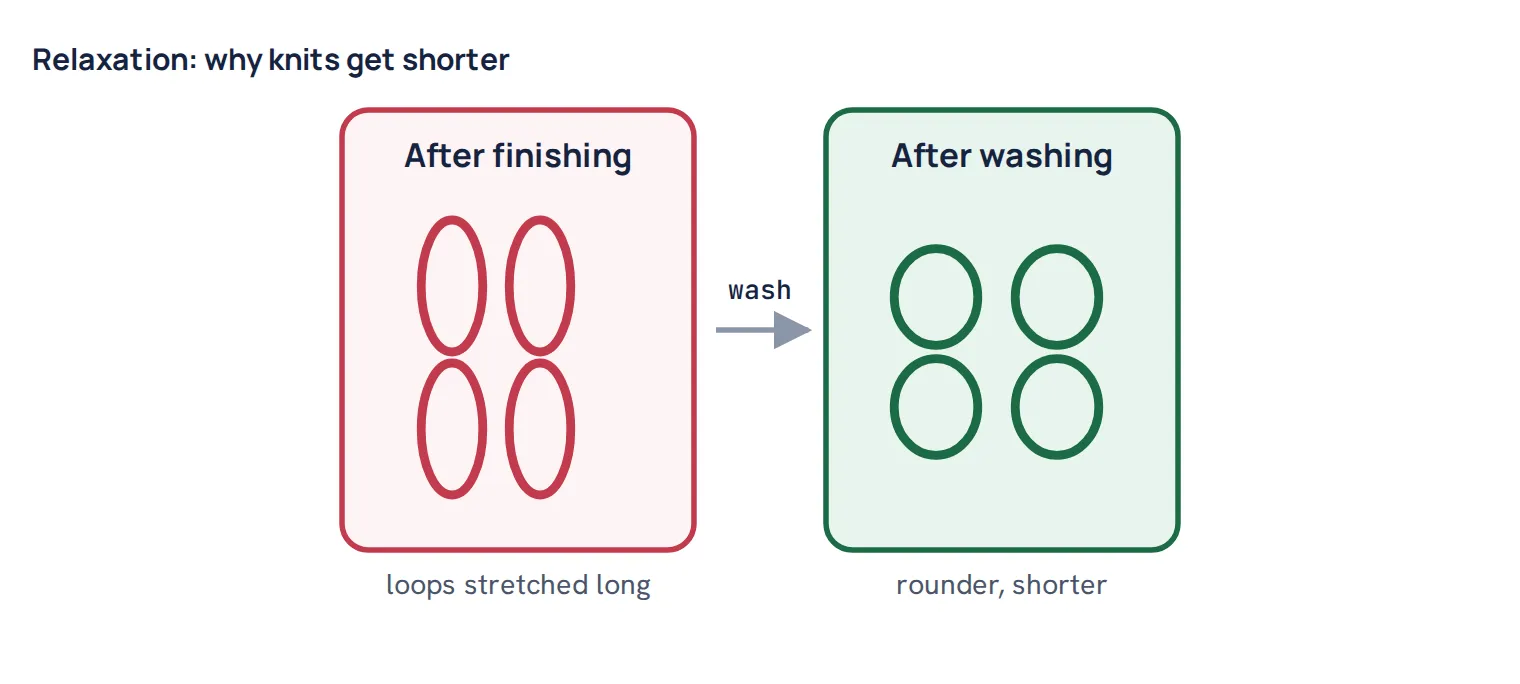
- Relaxation shrinkage. During knitting, dyeing and finishing, fabric is pulled in length. When it gets wet and tumbles, the loops relax back towards their natural shape and the fabric gets shorter. This is the main cause in cotton knits.
- Swelling shrinkage. Cellulose fibres (cotton, viscose, modal, lyocell, linen) swell in water, the yarns get thicker and pull the structure together.
- Thermal shrinkage. Synthetic fibres such as polyester and nylon shrink if heated above the temperature at which they were heat set, for example in a very hot dryer or under a hot iron.
- Felting. Wool shrinks by felting when its scales lock together with heat and agitation; that is a separate case not covered here.
How much each fibre shrinks: our records
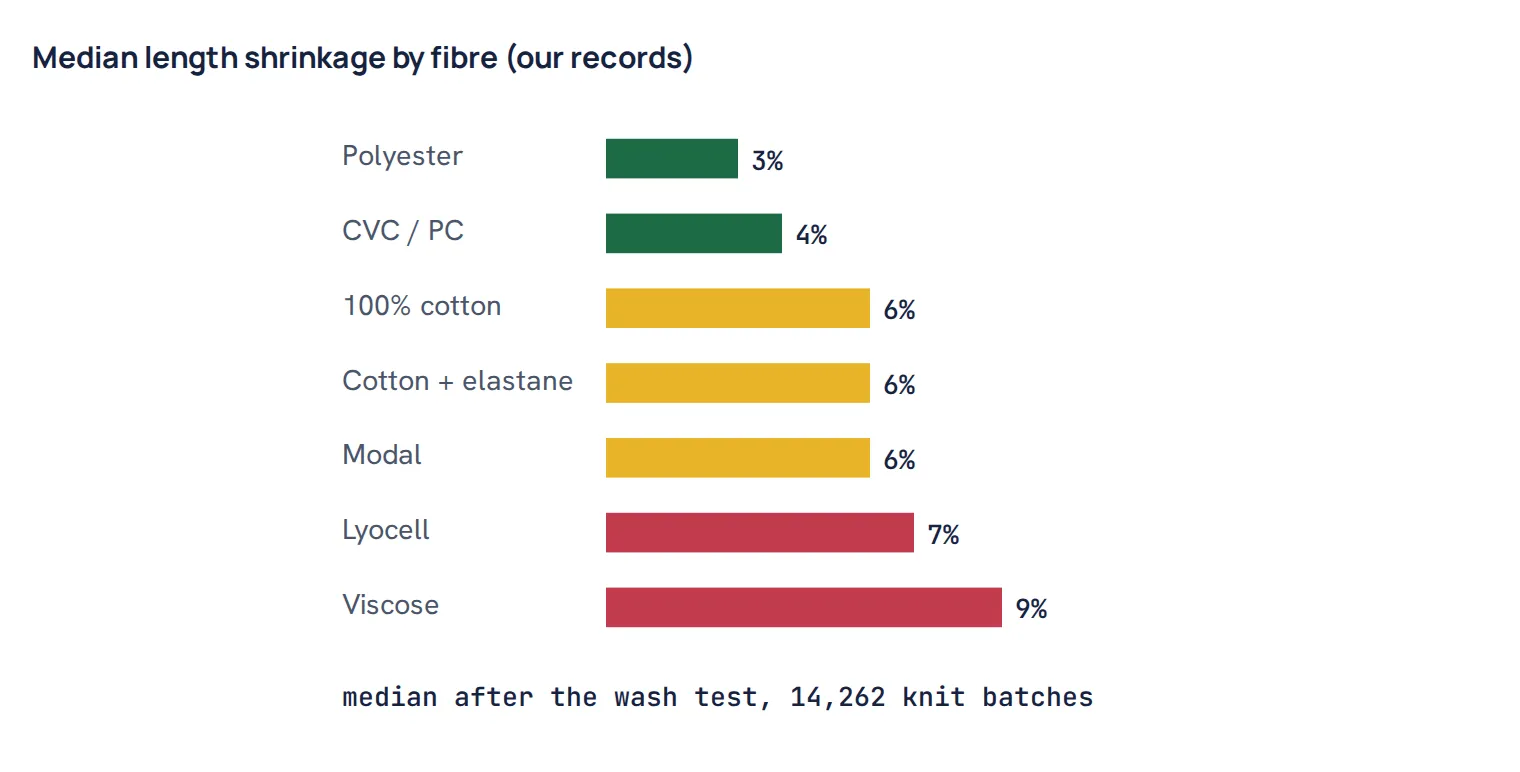
The figures below are median length shrinkage after the dye-house wash test, from 14,262 knit batches in our finishing records, with the worst tenth of parts shown alongside. Width shrinkage was much smaller, a median of about 2% for most families.
| Fibre family | Batches | Median length shrinkage | Worst 10% |
|---|---|---|---|
| Polyester (+ elastane) | 166 | 3% | 7% |
| Cotton/poly (CVC, PC) | 2,514 | 4% | 7% |
| Poly/viscose (PV) | 135 | 4% | 10% |
| Nylon blends | 40 | 4% | 8% |
| 100% cotton | 7,429 | 6% | 10% |
| Cotton + elastane | 2,355 | 6% | 10% |
| Modal blends | 374 | 6% | 10% |
| Lyocell blends | 300 | 7% | 12% |
| Viscose (+ elastane) | 164 | 9% | 14% |
The full study, with GSM results, is in the knit GSM and shrinkage study.
Fibre by fibre
Does cotton fabric shrink after washing?
Yes. In our records, 100% cotton knit shrank a median 6% in length, and the worst tenth 10% or more. Most of it happens in the first one to three washes, especially with hot water and tumble drying. Full guide: does cotton shrink.
Does viscose (rayon) shrink after washing?
Yes, more than cotton: a median 9%, with the worst tenth at 14% or more. Viscose swells strongly in water and is weak when wet, so it relaxes and distorts easily. Rayon is another name for viscose and behaves the same; see viscose and its blends. Full guide: does rayon shrink.
Does modal or lyocell shrink?
Modal and lyocell are stronger regenerated cellulose fibres than viscose, but in knit form they still shrank a median 6% and 7%, and they were among the hardest fabrics to finish on target for weight.
Does linen shrink after washing?
Linen can shrink several percent in its first hot washes, mainly in length, if it was not pre-shrunk. Washing at moderate temperatures and avoiding very hot drying keeps it under control. Full guide: does linen shrink.
Does polyester shrink after washing?
Very little in normal washing: a median 3% in our records for polyester knits, most of it from relaxation of the knit, not the fibre. Polyester does shrink if heated above its heat-setting temperature, so very hot dryers, irons and radiators can shrink or distort it; see heat setting explained. Full guide: does polyester shrink.
Does CVC shrink?
Less than cotton: a median 4%. The polyester part does not shrink and holds the cotton steady, which is why CVC is the most predictable fabric we finish.
Structure matters too
For 100% cotton, the knit structure changed median length shrinkage clearly: single jersey 5%, rib and interlock 7%, fleece and terry 8%, waffle 8% and pique 10%. Pique shrinks most in length because its tuck loops relax after washing; waffle shrinks a lot in width as its cells close up.
Common mistake: judging shrinkage from fabric straight off the stenter. Fabric that has just been finished is still under tension; let it relax and run a proper wash test before declaring it in tolerance.
How factories control shrinkage
Dye houses reduce shrinkage at the finishing stage: drying the fabric with overfeed so it is not stretched in length, compacting it to push the loops back together, and setting width correctly. Lab tests then check the result after washing. Even so, in our 316 outside lab reports, 115 of 297 shrinkage results failed (39%), most often on 100% cotton and cotton-elastane. A factory tumble test showing more than 5% length shrinkage was a strong warning sign; see why knit fabric fails the shrinkage test.
How to stop clothes shrinking at home
- Wash at 30°C or the lowest temperature on the label.
- Avoid tumble drying cotton, viscose and modal; dry flat or on a line.
- Do not iron polyester or blends on a high setting.
- For viscose and modal, use a gentle cycle and do not wring.
- Buy garments labelled pre-shrunk, or wash a new cotton garment once before altering its length.
Worked example. A 70 cm long 100% cotton T-shirt shrinks a median 6% in length, about 4 cm, in its first washes; a viscose T-shirt of the same length shrinks a median 9%, about 6 cm. A CVC T-shirt would lose about 3 cm. That is why many brands size cotton and viscose tops slightly long.
Summary
- Fabric shrinks mainly because stretched knit loops relax and cellulose fibres swell in water.
- In our records: polyester 3%, CVC 4%, cotton 6%, lyocell 7%, viscose 9% median length shrinkage.
- Pique and fleece shrink more than single jersey in length.
- Wash cool and avoid hot tumble drying to keep shrinkage down.
Questions
Does cotton fabric shrink after washing?
Yes. In our records 100% cotton knit shrank a median 6% in length after washing, with the worst tenth at 10% or more. Most shrinkage happens in the first washes.
Does viscose fabric shrink after washing?
Yes, more than cotton. Viscose knit shrank a median 9% in length in our records, and the worst tenth 14% or more.
Does polyester shrink after washing?
Very little in normal washing, a median 3% in our records. It can shrink if exposed to very high heat in a dryer or under an iron.
Does linen shrink after washing?
Linen can shrink several percent in its first hot washes if it was not pre-shrunk, mostly in length.
How do I stop clothes shrinking?
Wash at 30°C or the lowest label temperature, avoid tumble drying cotton and viscose, dry flat or on a line, and do not iron polyester on high heat.

Textile engineer with 14+ years in dyeing and fabric development. He writes every guide on Dyeing Solution from real production work. Full profile