The selvage (selvedge) is the tightly finished long edge of woven fabric that does not fray. How it is formed, selvage vs raw edge, finding the grain, what printing and pin holes on the selvage mean, the stenter, selvedge denim, knit edges, and whether to cut it off.
At a glance
Nofraying
Straightgrain guide
Pin holesfrom stenter
Shuttleloom denim
The selvage (also spelled selvedge) is the tightly finished edge running along both long sides of a woven fabric, formed as the weft yarn turns back at the end of each pass on the loom. Because the weft loops around the outermost warp yarns, the selvage does not fray. It is usually a little denser than the body of the fabric and often carries printed text, colour dots or pin holes from finishing. Selvage matters for sewing because it shows the straight grain, and in denim, “selvedge denim” means fabric woven on narrow shuttle looms with a clean, self-finished edge, often marked with a coloured line.
This guide explains how selvage is formed, selvage vs raw edge and cut edge, why selvage is useful for finding the grain, what the printing and pin holes on selvage mean, selvedge denim, selvage on knit fabric, and whether to cut selvage off before sewing. It is written from the textile-processing side, where selvage behaviour on the stenter affects width, shrinkage and shade.
How selvage is formed
On a loom, the warp yarns run lengthwise and the weft yarn is inserted across them. At each edge, the weft either turns back (on shuttle looms) or is cut and held by special edge structures (on modern shuttleless looms). Either way, the edge is bound so it will not unravel. Weavers often add extra or stronger warp yarns at the edges, or use a different weave, so the selvage can withstand the tension of weaving and finishing.
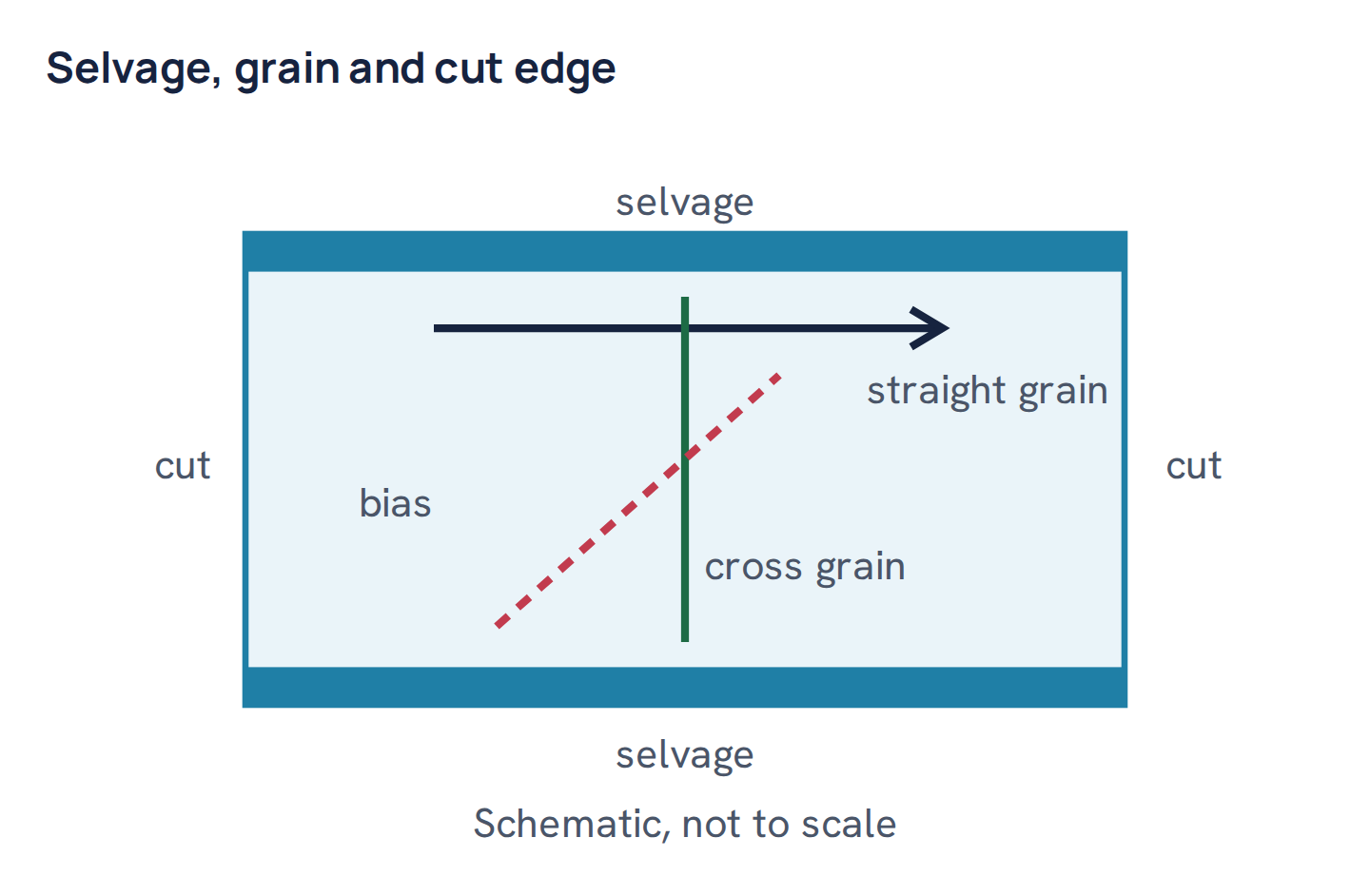
Selvage vs raw edge vs cut edge
| Edge | Where | Frays? |
|---|---|---|
| Selvage | Long sides, made on the loom | No |
| Cut edge (raw edge) | Ends of the length, or any cut | Yes, on wovens |
| Finished edge | Hemmed, overlocked, bound or pinked | No |
Why selvage helps you find the grain
The selvage runs exactly along the warp, so it marks the straight grain (lengthwise grain). Pattern pieces usually carry a grainline arrow that must be laid parallel to the selvage. Cutting on grain keeps garments hanging straight and stops seams twisting. The cross grain runs at right angles to the selvage, and the bias runs at 45 degrees, where woven fabric stretches most.
Printing, dots and pin holes on the selvage
- Printed text: designer or mill name, collection, fibre content or care information.
- Colour dots or swatches: on printed fabrics, show each ink colour used in the print, so you can match thread and coordinate fabrics.
- Pin holes: left by the pins or clips on the stenter frame that held the fabric edges while it was dried and set to width.
- Different weave or colour: a stronger edge structure, or in denim, a coloured identification line.
The selvage and the stenter
In finishing, woven fabric is held by its selvages on a stenter frame, stretched to the set width and dried or heat set. The selvage must be strong enough to hold the pins or clips without tearing. If the selvage is tighter or looser than the body, the fabric can develop wavy or tight edges, or “selvage curl”. Shade can also vary near the selvage if the edges dry or heat differently from the centre, which is why shade is checked across the width. See side-centre-side shade variation.
Selvedge denim
Selvedge denim is woven on traditional shuttle looms, which are narrower and slower than modern projectile or air-jet looms. Because the shuttle carries the weft continuously back and forth, both edges form a clean, self-finished selvedge, often with a coloured line, traditionally red, woven into the edge. Jeans makers place the selvedge along the outseam, so it shows when the cuffs are rolled. Selvedge denim is associated with heritage quality, but the selvedge itself does not guarantee better cotton or dyeing; it shows how the fabric was woven.
Does knit fabric have a selvage?
Circular-knit fabric comes off the machine as a tube, so it has no selvage until it is slit open. Open-width knits often have a finished edge after slitting and stenter finishing, sometimes glued or stitched to stop curling, and often with pin holes. These edges are not true woven selvages, but they are trimmed off in cutting in the same way.
Common mistake: using the selvage as the edge of a garment seam allowance. Selvage is often tighter than the body of the fabric and can shrink differently, causing puckered seams after washing. Trim it off, or clip it every few centimetres, unless the design deliberately uses it, as with selvedge denim outseams.
Should you cut off the selvage?
- For most garments, yes; cut patterns inside the selvage.
- Use it as a grain guide before cutting.
- Keep it on selvedge denim outseams or decorative projects.
- Save printed selvages from quilting cottons; they show colour references and fabric details.
- For quilting, many quilters remove selvages because they shrink differently.
Uses for selvage scraps
Quilters and crafters often collect printed selvages for small projects such as pouches, bookmarks and patchwork, using the printed text as decoration. Narrow selvage strips also make sturdy ties and drawstrings.
Worked example. A home sewer lays a trouser pattern with the grainline at a slight angle to the selvage to save fabric. After washing, the legs twist towards the front. Re-cutting with the grainline exactly parallel to the selvage gives straight-hanging legs.
Selvage on different fabrics
- Quilting cotton: printed selvage with designer name and colour dots.
- Shirting and suiting: narrow, neat selvage, sometimes with woven mill names on fine wools.
- Linen: often a slightly heavier selvage that can shrink more than the body.
- Silk and satin: fine selvage, sometimes in a contrasting colour.
- Denim: clean selvedge on shuttle-loom fabric, cut edge on wide-loom fabric.
Wide looms vs shuttle looms
Modern projectile, rapier and air-jet looms weave much wider fabric at high speed. They cut the weft at each edge and use special binding (leno or tucked edges) to stop fraying, giving a slightly fringed or tucked selvage rather than a clean turned edge. Shuttle looms weave narrower cloth more slowly with a continuous weft, giving the classic clean selvage. Both edges are functional; the difference is mostly about appearance and production method.
Why the selvage can shrink differently
The selvage often has extra or tighter warp yarns, or a different weave, to cope with loom and stenter tension. After washing, it can shrink more or less than the body of the fabric. That is why patterns are usually cut away from the selvage, and why some sewers pre-wash fabric and clip the selvage before cutting so the fabric lies flat.
How to use the selvage when pre-washing
Before pre-washing a long length of woven fabric, overlock or zigzag the cut ends to stop fraying. After washing and drying, fold the fabric in half lengthwise so the selvages meet; if the fold does not lie flat, gently pull the fabric on the bias to straighten the grain. Press, then lay out pattern pieces with grainlines parallel to the selvage.
Selvage and fabric width
Fabric width is usually measured from selvage to selvage, sometimes stated as “usable width” excluding the selvages and any pin-hole area. When buying fabric, check whether the width includes the selvage, because a printed selvage of a few centimetres on each side reduces the area you can cut from. Width matters for pattern layout and yardage calculations.
What if the selvage is wavy?
A wavy or rippled selvage usually means it was stretched or dried under different tension from the body. It is a cosmetic fault and is normally cut away. If the waviness extends into the body, the fabric may not lie flat and should be pressed or returned.
Summary
- The selvage is the self-finished, non-fraying long edge of woven fabric.
- It runs along the straight grain and is a guide for cutting.
- Printing, colour dots and pin holes on the selvage carry useful information.
- Selvedge denim is woven on shuttle looms with clean edges.
- Trim selvages off most garments, as they can shrink and pucker.
Questions
What is the selvage of a fabric?
The tightly finished long edge of woven fabric, made on the loom, that does not fray.
Is it selvage or selvedge?
Both spellings are correct. Selvage is more common in the US; selvedge in the UK and in denim.
Should I cut off the selvage before sewing?
Usually yes, because it can be tighter and shrink differently. Use it first as a guide to the straight grain.
What is selvedge denim?
Denim woven on narrow shuttle looms with clean, self-finished edges, often with a coloured line, shown on rolled-up jean cuffs.
What are the holes along the selvage?
Pin holes from the stenter frame that held the fabric edges during drying and finishing.

Textile engineer with 14+ years in dyeing and fabric development. He writes every guide on Dyeing Solution from real production work. Full profile