Linen is cellulose and takes the same dyes as cotton, but it dyes lighter and less evenly. Why, how linen-cotton blends behave, what to check before dyeing linen pants or curtains, and how a dye house dyes linen.
At a glance
Cellulosesame dyes as cotton
Lightertypical linen result
No enzymein our linen process
Seed coatmain buyer complaint
Yes, linen can be dyed, and it takes the same dyes as cotton. Linen comes from the flax plant and is cellulose, so fibre reactive dyes, direct dyes, all-purpose home dyes and natural dyes all work on it. It is a little harder to dye evenly than cotton, though: linen fibres are stiffer, more tightly packed and less absorbent, so shades often come out lighter, with a natural slubby or “heathered” look. With the right preparation that look can be beautiful; without it, linen can end up streaky.
This guide covers what makes linen different, how linen-cotton blends behave, what to expect when dyeing linen pants and other garments, and how a dye house prepares and dyes linen knit fabric.
Is linen easy to dye?
Moderately. Compared with cotton, linen:
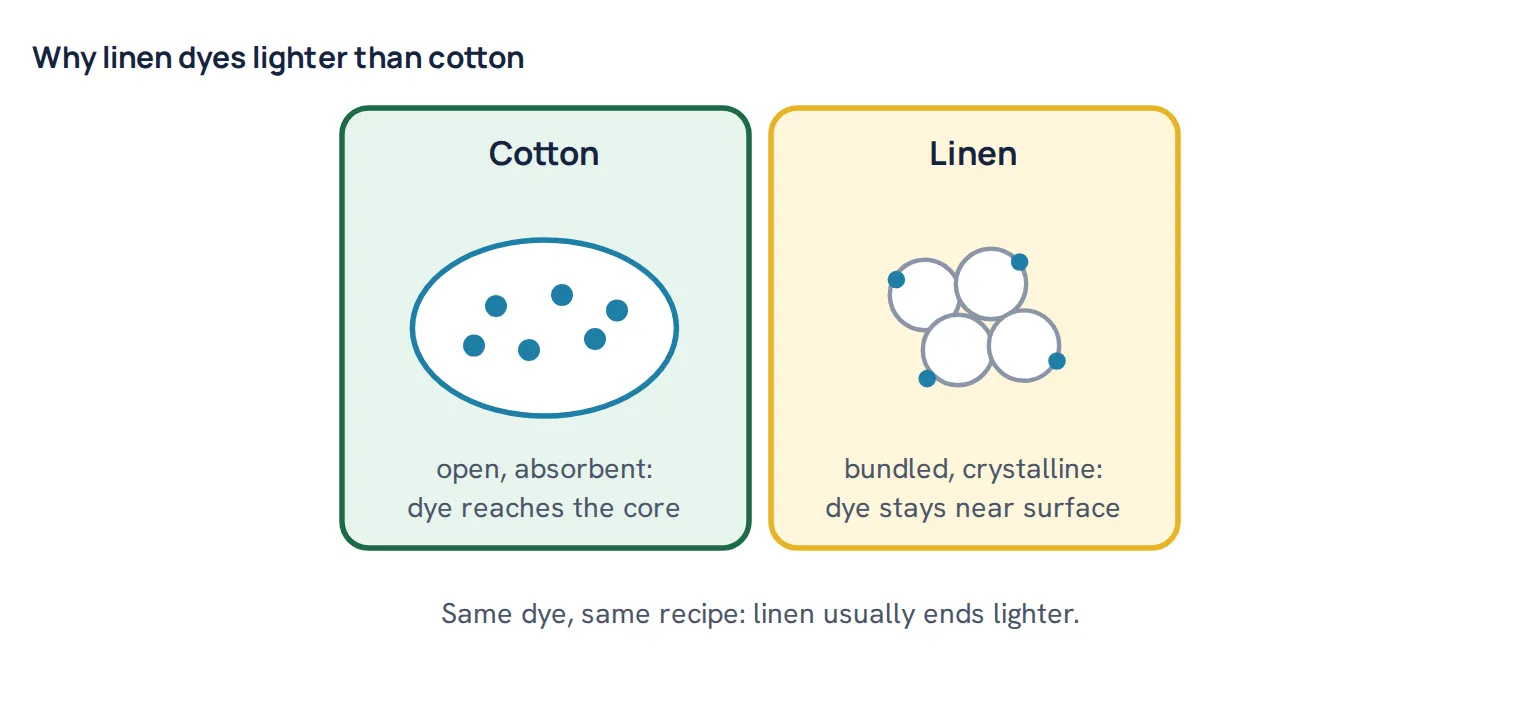
- absorbs dye more slowly, because its cellulose is more crystalline and its fibres are bundled together, so less dye gets into the core;
- shows natural colour variation, from thick and thin places in the yarn and from flax’s own off-white to grey-beige colour;
- carries impurities such as wax, pectin and small dark specks of seed coat (shive), which resist dye and show as dark or light spots;
- creases sharply, and those creases can trap dye or block it during dyeing.
So linen is easy to colour, but harder to colour perfectly evenly. A pale, slightly uneven shade is normal; a deep, flat colour needs good preparation and a well-controlled process.
How a dye house prepares and dyes linen
In our linen knit process, the fabric gets a gentler preparation than cotton: a soda scour-bleach at about 70°C, then reactive dyeing at 60°C and fixing, and no enzyme, because enzymes attack linen’s surface and weaken it. The main buyer complaint on linen knit is not shade but seed coat: dark specks of flax shive that remain in the yarn and stand out on pale colours. The full route is in the linen knit dyeing process.
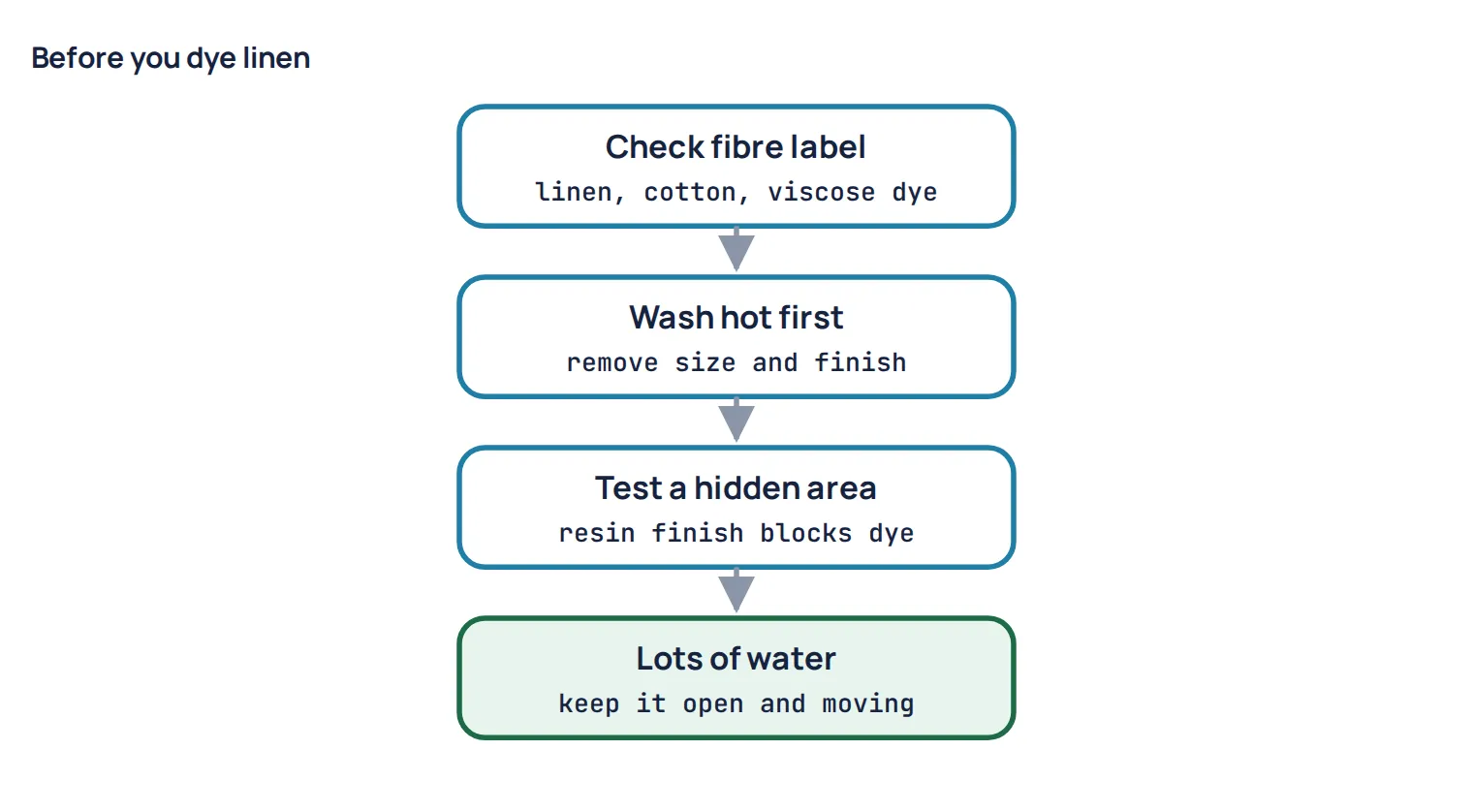
The lesson for home dyeing is the same: wash linen thoroughly first to remove sizing and finishes, keep it moving in plenty of water so creases do not set, and expect the natural specks to stay visible in pale shades.
Can you dye linen-cotton blend?
Yes, and it is often easier than pure linen. Both fibres are cellulose, so one dye colours both. The cotton usually takes the dye a little deeper than the linen, which gives a soft, two-tone “melange” effect, especially in medium and dark shades. If you want a flat, even colour, choose a deeper shade and allow a longer dyeing time so the linen catches up.
| Fabric | Dye | Typical result |
|---|---|---|
| 100% linen | Reactive, all-purpose, natural | Lighter, slubby, natural look |
| Linen-cotton | Same as linen | Cotton slightly deeper, soft two-tone |
| Linen-viscose | Same as linen | Viscose much deeper, clear flecks |
| Linen-polyester | Cellulose dye + disperse | Home dye colours the linen only |
Can you dye linen pants, shirts and curtains?
Usually yes, with three checks first:
- Read the label. “100% linen” or “linen-cotton” will dye; “linen look” may be polyester, which will not.
- Look for finishes. Many linen garments have a crease-resist or easy-care resin finish. It can block dye, giving pale, patchy areas. A long hot wash before dyeing helps, but some finishes cannot be removed at home.
- Check the thread. Garments are often sewn with polyester thread, which stays the original colour. White stitching on a dyed garment is very common.
Curtains add size: a large piece needs a large volume of water and constant stirring to avoid streaks. Sun-faded linen curtains also have uneven fibre damage, so faded areas can dye differently from protected areas.
Common mistake: dyeing a crumpled linen garment in a small pot. Linen creases sharply, and dye collects along the folds or misses them, leaving streaks that cannot be washed out. Use more water than you think and keep the garment open and moving.
Linen with natural dyes
Linen has a long history with natural dyes, especially indigo and madder. Like cotton, it needs a tannin and an alum mordant for most natural dyes to hold. Expect soft, earthy colours that fade gently over time. See natural dyes and mordants for how mordants work.
Does linen shrink when dyed?
It can. Linen that has not been pre-shrunk may shrink several percent in a hot bath, more in length than in width. Washing it hot before dyeing lets it shrink first, so the dyed garment does not change size later. Knit linen relaxes further and gets heavier after washing, which is why finished linen knit is checked after a wash test, not straight from the finishing machine.
Worked example. A white linen shirt dyed navy comes out mid-blue with lighter flecks and white stitching. The flecks are the flax yarn’s thick and thin places and the stitching is polyester thread. Both are normal. For a deeper, flatter navy, a second dyeing gives more depth; nothing will dye the polyester thread at home.
Summary
- Linen is cellulose and takes the same dyes as cotton.
- It dyes lighter and less evenly, with a natural slubby look.
- Wash off finishes first, use plenty of water and avoid creases.
- Linen-cotton dyes as one fabric with a soft two-tone; linen-polyester only partly.
- Expect polyester thread and seed-coat specks to stay visible.
Questions
Is linen easy to dye?
It is easy to colour but harder to dye perfectly evenly than cotton. Linen is stiffer and more crystalline, so shades are usually lighter with a natural slubby look.
Can you dye linen-cotton blend?
Yes. Both fibres are cellulose, so one dye colours both. The cotton usually dyes slightly deeper, giving a soft two-tone effect.
Can you dye linen pants?
Usually yes, if the label says linen or linen-cotton. Check for crease-resist finishes, which can block dye, and expect polyester stitching to stay its original colour.
Why did my dyed linen come out streaky?
Usually because of creases in a crowded pot or a finish left on the fabric. Wash linen hot first, use plenty of water and keep it moving.
Does linen shrink when dyed?
It can shrink several percent if it was not pre-shrunk. Wash it hot before dyeing so the shrinkage happens first.

Textile engineer with 14+ years in dyeing and fabric development. He writes every guide on Dyeing Solution from real production work. Full profile