Viscose dyes easily with the same dyes as cotton, often deeper. The risks are its low wet strength and high shrinkage. What to expect for viscose-elastane, viscose-polyester, viscose-linen and viscose-nylon blends.
At a glance
Easytakes cotton-type dyes
9%median length shrinkage
+17.5%weight gain after wash
2 dyesneeded for viscose-poly
Yes. Viscose (rayon) is one of the easiest fibres to dye. It is made from wood cellulose, the same basic material as cotton, so it takes the same dyes: fibre reactive dyes, direct dyes and the all-purpose dyes sold for home use. It often dyes even deeper and brighter than cotton. The difficulties are not the colour but the fabric: viscose is weak when wet, it can shrink a lot, and blends with polyester or nylon need a second type of dye.
This guide explains how viscose behaves in a dye bath, what to expect from viscose-elastane, viscose-polyester, viscose-linen and viscose-nylon blends, and how a dye house protects the fabric, using our own finishing records.
Why viscose dyes so well
Viscose is regenerated cellulose: wood pulp is dissolved and spun back into fibre. Its molecules are less tightly packed than in cotton, so it soaks up water and dye more readily. In a reactive dye bath it absorbs dye quickly and can reach a full, rich shade with less dye than cotton. The same is true of modal and lyocell, which are also regenerated cellulose; see what modal fabric is.
The flip side is that the dye strikes fast. If dye or alkali is added too quickly, viscose can come out patchy, which is why industrial recipes dose slowly and keep the temperature moderate.
The real risks: wet strength and shrinkage
Viscose loses a large part of its strength when wet, commonly quoted at around half of its dry strength. Twisting, wringing or hard agitation in a hot dye bath can stretch, distort or even tear it. It also swells and relaxes in water, so it shrinks and gets heavier after washing.
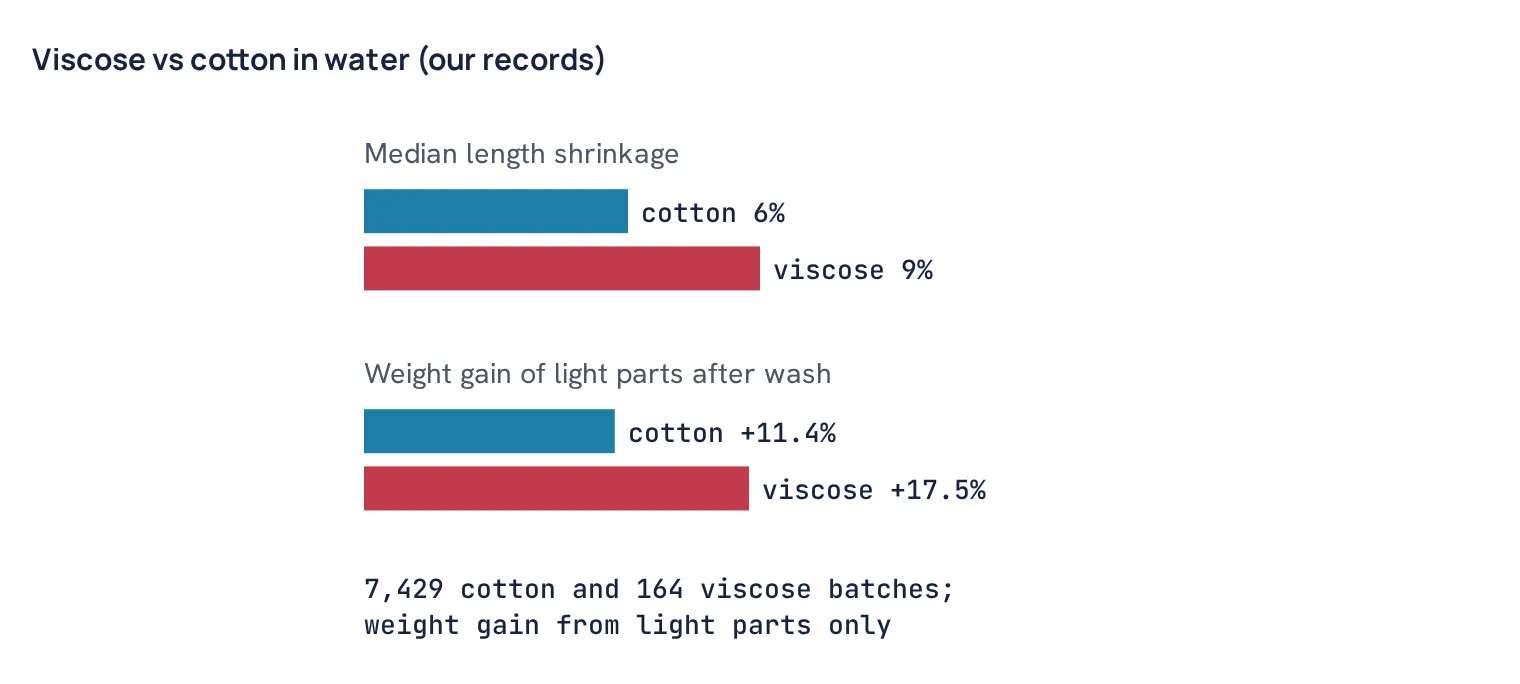
Our finishing records show how much. Across 164 viscose batches, the median length shrinkage after the wash test was 9%, and the worst tenth shrank 14% or more. Light viscose parts gained a median 17.5% in weight when washed, the most of any fibre family we track. Only about a quarter of viscose parts kept length shrinkage within 5% (see the GSM and shrinkage study).
Can you dye viscose with all-purpose home dye?
Yes. All-purpose home dyes contain dyes for cellulose, and viscose takes them well, usually as deep as cotton or deeper. Fastness is limited, as with any direct-type dye: expect some bleeding in the first washes unless a dye fixative is used (see how a dye fixative works). Fibre reactive dyes give better wash fastness at lower temperatures, which also suits viscose’s weak wet strength.
Viscose blends: what each one needs
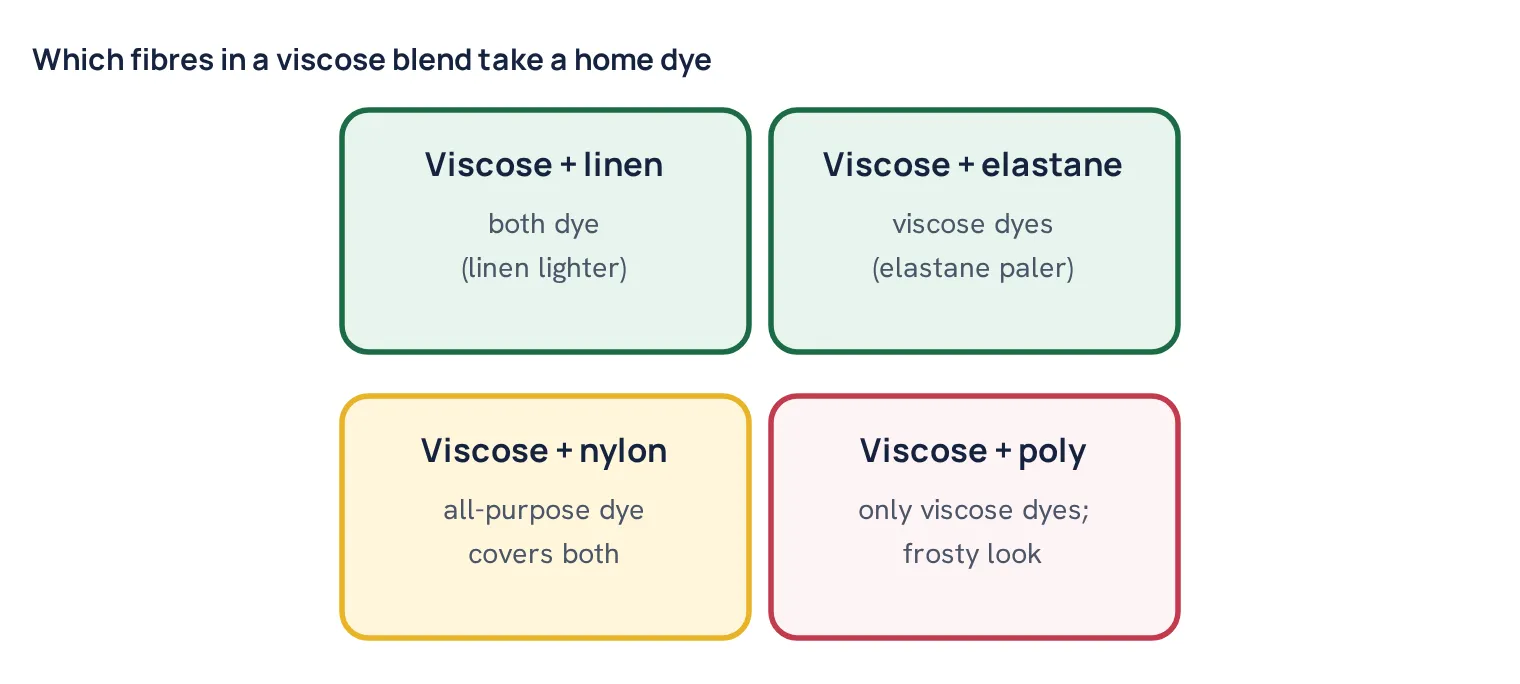
| Blend | Dyes needed | What to expect |
|---|---|---|
| Viscose-elastane | One: reactive or all-purpose | Viscose dyes; elastane stays paler; avoid boiling |
| Viscose-linen | One: both are cellulose | Viscose dyes deeper than linen, giving a slubby, two-tone look |
| Viscose-polyester (PV) | Two: disperse + reactive | Home dye colours only the viscose; polyester stays light |
| Viscose-nylon (polyamide) | Two: acid + reactive, or all-purpose | All-purpose dye covers both, but shades may differ |
Can you dye viscose and elastane fabric?
Yes. The viscose takes the dye and the elastane, a small part of the fabric, takes little. In normal wear the elastane is hidden inside the knit, so the fabric looks evenly coloured, but stretched areas may look lighter. The bigger issue is heat: long boiling weakens elastane. In a dye house, viscose-elastane is heat set first, then given a mild scour and dyed with reactive dye at about 60°C, with no enzyme; see the viscose-elastane dyeing process.
Can you dye viscose and polyester (PV)?
Only partly with home dyes. The viscose part takes cellulose dyes; the polyester part needs disperse dye at high temperature. The result of a home dye on a PV fabric is a heathered or “frosty” look, with the polyester fibres staying pale. Factories dye PV in two stages, disperse at 130°C for the polyester, a reduction clear, then reactive at 60°C for the viscose; see the polyester-viscose dyeing process.
Can you dye viscose and linen blend?
Yes, because linen is also cellulose. Linen is stiffer and more crystalline than viscose, so it usually dyes a little lighter, and the slubby linen yarns can show as lighter flecks. Many people like that look. If the fabric has been given a crease-resist or easy-care finish, that finish can block dye in places, so test a hidden area first.
Can you dye viscose with natural dye?
Yes. Viscose behaves like cotton with natural dyes: it needs a tannin and a mordant, usually alum, to hold the colour, and it gives soft, muted shades with lower fastness than synthetic dyes. See natural dyes and mordants.
Common mistake: wringing a wet viscose garment hard after dyeing. Wet viscose is weak; twisting it stretches the knit, distorts seams and can leave permanent marks. Squeeze gently, roll in a towel and dry flat.
How to protect viscose during any colour project
- Pre-wash it the way you will wash it later, so it does its shrinking before you judge the colour or the fit.
- Keep the temperature moderate. Reactive dyes for viscose work at about 40–60°C; there is no need to boil.
- Give it plenty of water so it can move freely without being twisted.
- Handle it gently when wet: no wringing, no hard spinning, dry flat.
- Rinse until the water runs clear so loose dye does not bleed later.
Worked example. A viscose midi dress measured 110 cm long. After a hot wash it may shrink 9% in length, the median in our records, which is about 10 cm. If the dress is dyed without a pre-wash, the colour may come out fine but the dress will no longer fit. Wash it first, check the length, then decide whether to dye.
Summary
- Viscose (rayon) dyes easily with reactive, direct and all-purpose dyes, often deeper than cotton.
- It is weak when wet and shrinks a lot: a median 9% in length in our records.
- Viscose-elastane and viscose-linen dye with one dye; viscose-polyester needs two.
- Use moderate temperatures, lots of water and gentle handling.
Questions
Can you dye viscose fabric?
Yes. Viscose is regenerated cellulose and takes fibre reactive, direct and all-purpose dyes very well, often deeper than cotton.
Can you dye viscose with all-purpose dye?
Yes. All-purpose dyes contain dyes for cellulose, which colour viscose well. Expect some bleeding in the first washes unless a fixative is used.
Does viscose shrink when dyed?
It can. In our records viscose shrank a median 9% in length after washing, with the worst tenth at 14% or more, so pre-wash it before dyeing.
Can you dye viscose and polyester blend?
Only partly with home dyes. The viscose takes the dye but the polyester needs disperse dye at high temperature, so the fabric looks frosty or heathered.
Can you dye viscose and elastane fabric?
Yes. The viscose dyes and the elastane stays paler but is mostly hidden. Avoid long boiling, which weakens the elastane.

Textile engineer with 14+ years in dyeing and fabric development. He writes every guide on Dyeing Solution from real production work. Full profile