Polyester only takes disperse dye, and it needs high heat: 130°C in a dye house, about 100°C at home. What to expect for polyester tops, satin, curtains, mesh, scuba and polyester-spandex.
At a glance
Dispersethe only dye for polyester
130°Cdye-house temperature
100°Chome pot limit
Light–mediumrealistic home shades
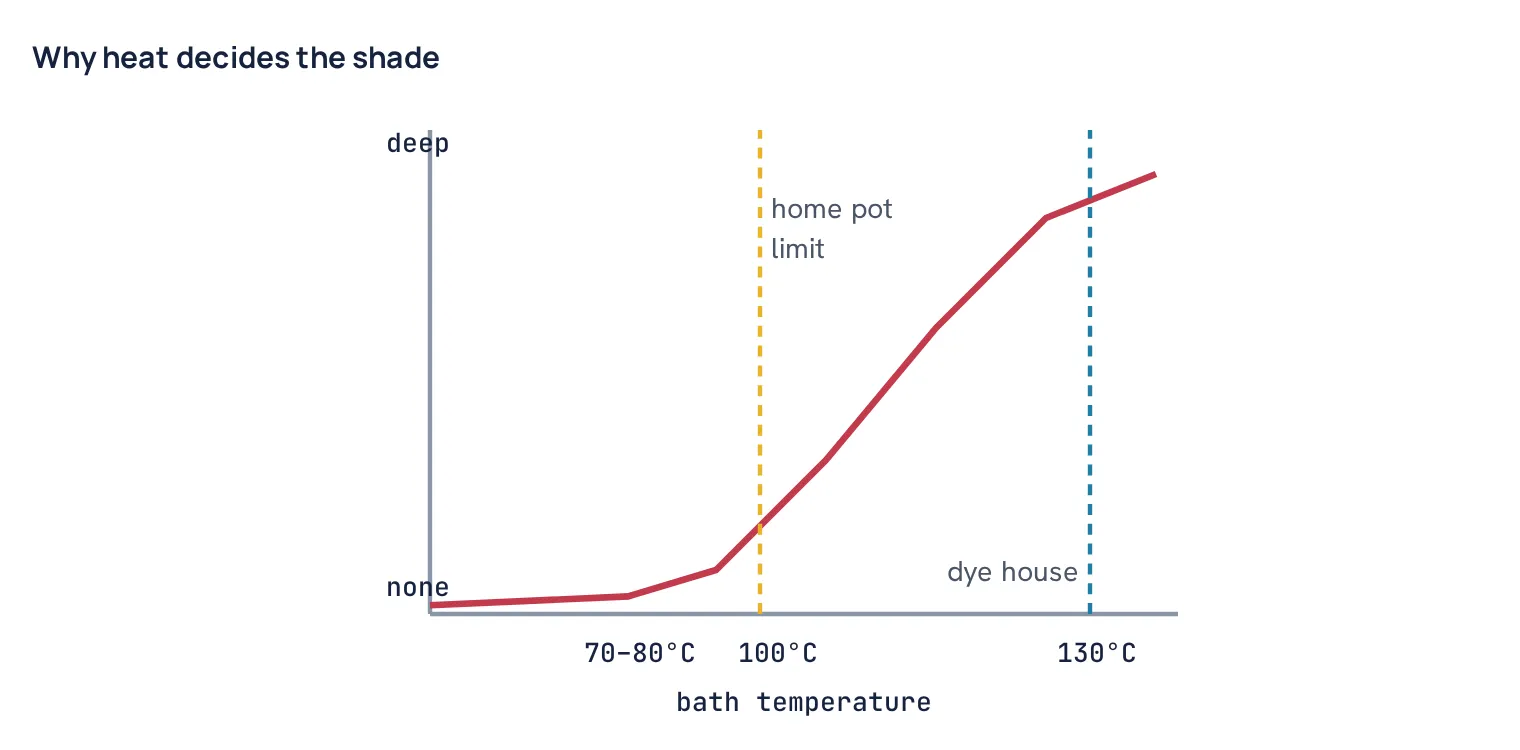
Yes, you can dye polyester, but not with ordinary fabric dye. Polyester needs a special type of dye, called disperse dye, and it needs a lot of heat: in a dye house it is dyed at 130°C under pressure. At home you can reach only about 100°C, so you can get light to medium shades with a dye made for synthetics, but deep, rich colours are very hard. The all-purpose dyes sold in supermarkets, made mainly for cotton, will only tint polyester or stain it until the first wash.
This guide explains why polyester is so hard to dye, what does and does not work, and what to expect for polyester satin, curtains, mesh, scuba and polyester-spandex blends. It answers the question from the dye-house side, so you can decide whether a project is worth trying.
Why polyester resists dye
Cotton is full of tiny water-loving channels, so a water-soluble dye can soak in and attach. Polyester is the opposite. It is a plastic fibre that hardly absorbs water, its molecular chains are packed tightly, and it has no chemical groups for a cotton-type dye to hold onto. A water-soluble dye just sits on the surface and rinses away.
The only practical way in is a small, non-ionic dye molecule that dissolves into the plastic, and that only happens when the fibre is hot enough for its chains to loosen. That point, the glass transition, is roughly 70–80°C in water. Above it, dye starts to enter; the hotter the bath, the faster and deeper it goes. Industrial dyeing uses 130°C for exactly this reason. The chemistry is covered in how disperse dyes work on polyester.
What works and what does not
| Dye type | On polyester | Why |
|---|---|---|
| All-purpose home dye | Pale tint at best, often washes out | Mostly made of dyes for cotton and wool |
| Synthetic-fibre home dye | Light to medium shades | Contains disperse dye, but limited to about 100°C |
| Fibre reactive dye | No | Bonds to cellulose; polyester has nothing to bond to |
| Natural dyes, coffee, tea | Faint stain, not lasting | No affinity for polyester |
| Fabric paint or spray | Yes, as a surface colour | Sits on top with a binder; can stiffen the fabric |
| Industrial disperse dyeing | Full shade range | 130°C under pressure with dispersing agents |
Common mistake: expecting a black polyester garment from a home pot. Deep black needs a lot of dye inside the fibre, which needs 130°C. At 100°C you usually end with charcoal or a dark grey, and the first wash may show staining from loose dye on the surface.
Can you dye polyester and spandex?
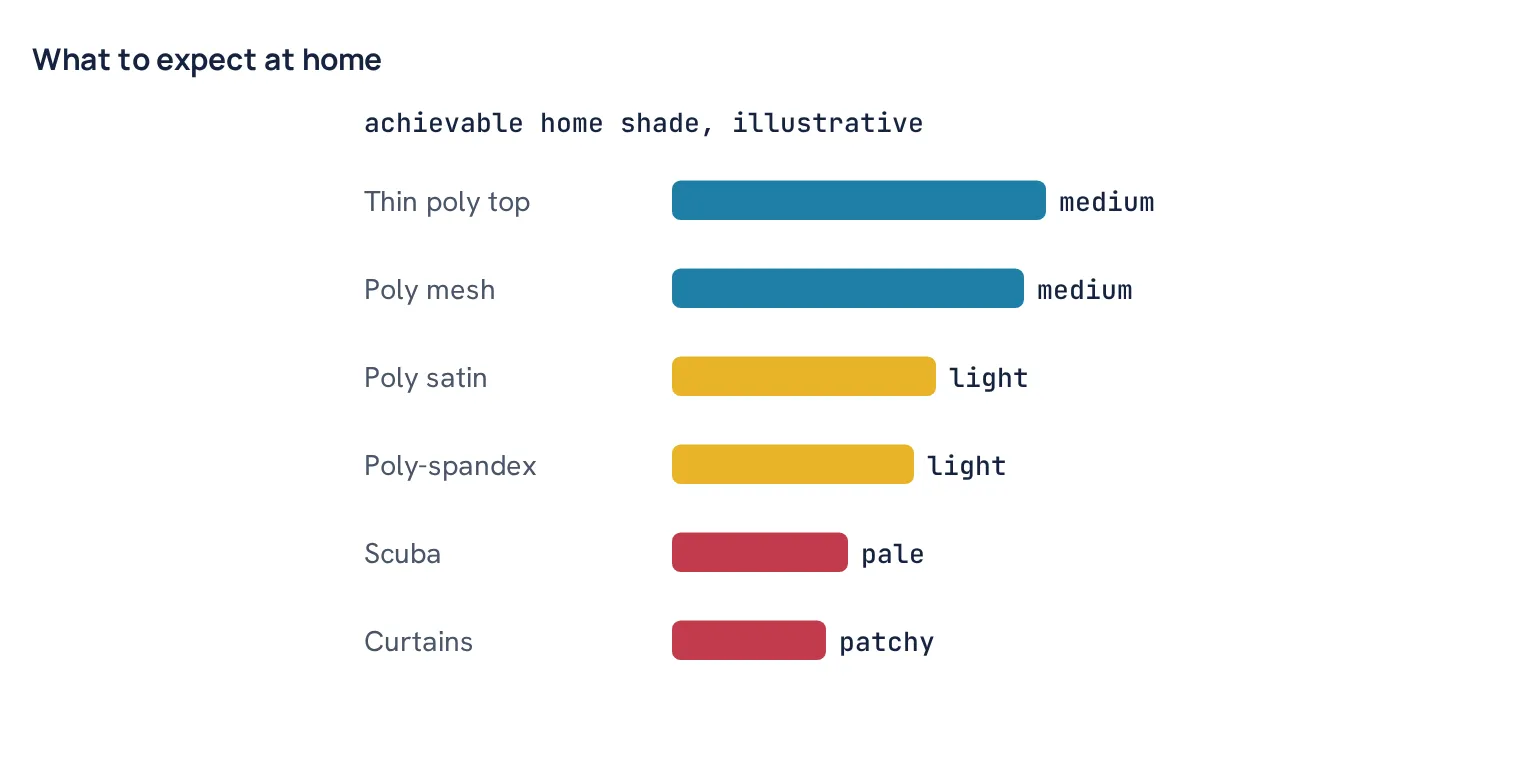
Polyester-spandex (polyester-elastane) is the fabric of leggings and sportswear. The polyester part behaves as above. The spandex part is a different polymer that takes some disperse dye but often dyes lighter, so stretched areas can look paler. Spandex is also damaged by long boiling, which can weaken its stretch. In a dye house this blend is heat set first and then dyed at 130°C, or lower (around 120°C) for weaker elastane; see the polyester-elastane dyeing process. At home, results are pale, and the fabric can lose some recovery.
Polyester satin, curtains, mesh and scuba
- Polyester satin. The smooth, shiny surface shows any unevenness, and the long floats of yarn on the face mark easily from creasing in a hot pot. Expect light shades and possible streaks.
- Polyester curtains. The size of the fabric is the main problem: it needs a large volume of very hot water and constant movement to dye evenly. Most curtain dyeing at home ends patchy. Many curtains also have a coating or a blackout backing that will not dye.
- Mesh. Polyester mesh can be dyed like any polyester, and its open structure lets dye liquor flow through easily. In a dye house it is often heat set first so the holes keep their shape; see the mesh fabric dyeing process.
- Scuba. Scuba is a thick double knit, usually polyester or cotton-polyester with elastane. It is dyed in factories on both faces at high temperature, and at home the thick, springy fabric rarely takes an even, deep shade. See the scuba fabric dyeing process.
Does fabric dye work on polyester?
It depends which dye. “Fabric dye” on a supermarket shelf usually means an all-purpose mix that colours cotton, linen, wool and nylon reasonably well, but polyester only faintly. Dyes labelled for synthetics or polyester contain disperse dyes and do work, within the limits of home temperatures. Check the label for the fibres it is designed for; if polyester is not named, it will not dye polyester properly.
Better options than dyeing
When the goal is a strong colour change on polyester, these often work better:
- Buy the colour you want. Polyester is cheap to buy in almost any shade, because factories dye it properly at 130°C.
- Fabric paint or spray for small areas. It sits on the surface, so test it for stiffness and rub-off.
- Sublimation printing for white polyester. It uses the same disperse dye chemistry, transferred with a heat press at about 200°C, so colours are bright and permanent on white or light polyester.
- Professional dyeing for valuable items, from a dye works with high-temperature equipment.
Worked example. A 100% polyester white sports top, 150 GSM, dyed at home with a synthetic dye at a simmer for an hour, can reach a fair medium blue. The same dye on a 300 GSM polyester-spandex scuba skirt gives only a pale tint, with lighter seams where the elastane stretches. The thinner, all-polyester fabric gives the dye an easier path at a temperature the pot can reach.
Safety notes
Dyeing polyester at home means a large pot of near-boiling water for a long time. Use a pot kept only for dyeing, never for food, work with good ventilation, wear gloves and keep children and pets away. Some synthetic dye kits include a carrier or dye accelerant; follow the label and do not add household chemicals to make the dye “stronger”.
Summary
- Polyester can be dyed, but only with disperse dye and high heat.
- All-purpose dyes and natural dyes give a faint, short-lived tint.
- At home you can reach light to medium shades; deep colours need 130°C.
- Satin, curtains, scuba and polyester-spandex are harder than thin polyester tops.
- For strong colour, buy dyed polyester, use paint for small areas, or sublimation on white.
For the full picture of which dye suits which fibre, see dye classes explained.
Questions
Can you dye polyester with all-purpose fabric dye?
Only faintly. All-purpose dyes are mostly made for cotton and wool, so on polyester they give a pale tint that may wash out. Use a dye made for synthetics.
Can you dye polyester black at home?
Rarely. Deep black needs dyeing at about 130°C under pressure. At home you usually get charcoal or dark grey.
Can you dye polyester and spandex?
Partly. The polyester takes disperse dye, but the spandex often dyes lighter and can lose stretch if boiled for long, so home results are usually light and uneven.
Can mesh fabric be dyed?
Polyester mesh can be dyed with disperse dye like other polyester, and its open structure helps even dyeing. Nylon mesh takes acid or all-purpose dye more easily.
Can you dye scuba fabric?
It is very difficult at home. Scuba is thick and usually contains polyester and elastane, so it needs high-temperature dyeing on both faces, which only a factory can do well.

Textile engineer with 14+ years in dyeing and fabric development. He writes every guide on Dyeing Solution from real production work. Full profile