Enzyme washed fabric is treated with a cellulase enzyme that removes loose surface fibre, for a softer, cleaner surface and less pilling. How it works, fabric vs garment vs denim, and why too much enzyme makes holes.
At a glance
Cellulaseeats loose fibre ends
Lesspilling
80°Cstops the enzyme
Holesif overdone
Enzyme washed means the fabric or garment was treated with a cellulase enzyme that removes loose surface fibres from cotton. The result is a cleaner, smoother, softer surface that pills less, and on coloured garments a slightly faded, worn-in look. In a dye house the same treatment is called bio-polishing, and most buyers ask for it on cotton knits. On denim, enzymes are used instead of stones to give the washed, faded look.
This guide explains how enzyme washing works, enzyme washed fabric vs garments and denim, what it does to softness, pilling and colour, and the risk most guides do not mention: too much enzyme weakens the fabric and can make holes.
How enzyme washing works
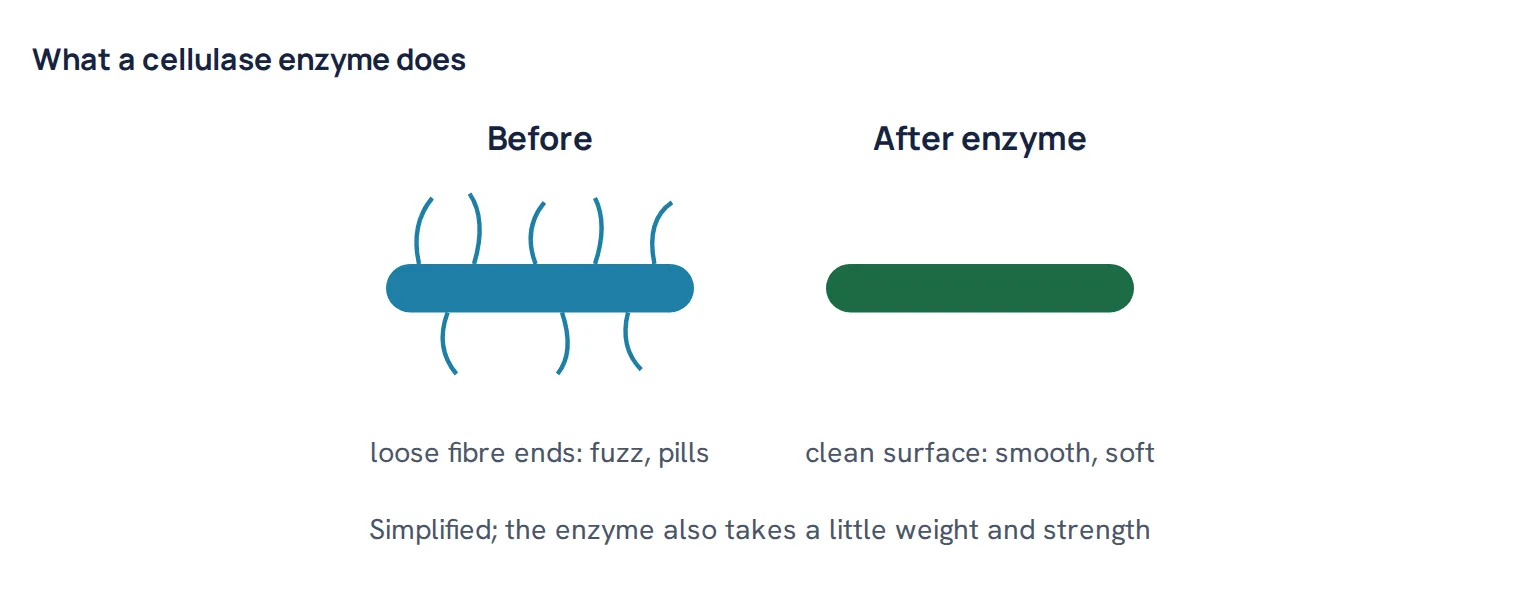
Cotton fabric has tiny fibre ends sticking out of the yarn surface. They make the fabric look slightly fuzzy, feel less smooth and, after washing and rubbing, roll into pills. A cellulase enzyme is a protein that breaks down cellulose, the material cotton is made of. In a warm, slightly acidic bath it attacks the exposed fibre ends first, because they are the easiest to reach, and the machine’s movement knocks them off. The fabric surface becomes clean and smooth.
The enzyme does not stop by itself. After the set time the bath is heated (in our process to 80°C) or the pH is changed to deactivate it; otherwise it keeps eating into the yarn and weakens the fabric.
Enzyme washed fabric, garments and denim
- Fabric (bio-polishing): done in the dye house on rolls of knit fabric, usually before dyeing for cotton. The aim is a clean face and less pilling. In our 100% cotton process the enzyme comes after scouring and bleaching and before dyeing, then the bath is taken to 80°C to stop it.
- Lyocell: for lyocell the enzyme comes after dyeing, to remove the fuzzy surface (fibrillation) created in wet processing; see what is lyocell.
- Yarn-dyed fabric: stripes and checks are only washed, not dyed, so the enzyme wash is the main treatment: we run it at pH 4.5 for 45 to 60 minutes, cut a sample, check the hairiness, and stop when it is right. See the yarn-dyed enzyme wash process.
- Garments: sewn T-shirts and sweatshirts are tumbled with enzyme in a washing machine for a soft, slightly faded, vintage look; see garment dyeing vs fabric dyeing.
- Denim: enzymes remove indigo-dyed surface fibre unevenly, giving the faded, worn look that stones used to give, with less damage to machines.
What enzyme washing does
| Effect | Result |
|---|---|
| Surface | Cleaner, smoother, less fuzz |
| Hand feel | Softer, smoother, better drape |
| Pilling | Less pilling in wear |
| Colour | Brighter on fabric; slightly faded look on garments and denim |
| Weight and strength | A small loss; too much enzyme causes a big loss |
The risk: too much enzyme makes holes
Enzyme treatment always takes a little weight and strength from cotton. On a well-constructed fabric this does not matter. On a loose or weak fabric, or with too strong a dose, too long a time or a missed stop step, the enzyme keeps going and the fabric fails its bursting strength test or develops pin holes.
We have seen this on our own floor: a loose fleece batch developed scattered pin holes and larger holes after processing. Swatches cut after each stage showed the damage was already there in the swatch taken after the enzyme step, before dyeing. Over-treatment with enzyme is one of the recurring causes of bursting fails in our lab reports, alongside elastane rib and loose fabric. See why knit fabric fails bursting strength.
Common mistake: giving a loose, light or already weakened fabric the same enzyme dose and time as a firm standard fabric. Reduce the dose or time, check a sample during the treatment, and always stop the enzyme with heat or pH at the end.
Is enzyme washed fabric good quality?
Yes. Enzyme washing is a sign of a finished, quality cotton fabric: it feels softer, looks cleaner and pills less. Mercerised cotton is the usual exception; it goes to dyeing without enzyme to protect its lustre. The only downside is that too much enzyme weakens the fabric, which a good mill controls.
How to care for enzyme washed clothes
- Wash at 30–40°C, inside out, with similar colours.
- Avoid harsh rubbing and very long washes, which bring fuzz back.
- Line dry or tumble dry on low.
Worked example. A buyer complains that a cotton jersey T-shirt pills after a few washes. If the fabric was not bio-polished, adding an enzyme step before dyeing is usually the first fix, together with a combed or compact yarn. If it was polished, check the yarn quality and the brushing or tumbling before blaming the enzyme.
Summary
- Enzyme washed means treated with cellulase enzyme to remove loose surface fibre.
- It gives a cleaner, softer surface and less pilling; on garments and denim, a worn-in look.
- In the dye house it is called bio-polishing; for cotton it usually comes before dyeing.
- The enzyme must be stopped with heat or pH, or it keeps weakening the fabric.
- Too much enzyme on loose fabric causes pin holes and bursting fails.
Questions
What does enzyme washed mean?
The fabric or garment was treated with a cellulase enzyme that removes loose fibre ends from the cotton surface, making it smoother, softer and less likely to pill.
Is enzyme washed the same as bio-polishing?
Yes, in the dye house the treatment of fabric with cellulase enzyme is called bio-polishing. On garments and denim it is usually called enzyme washing.
Does enzyme washing make clothes softer?
Yes. Removing the fuzzy surface fibres gives a smoother, softer hand and better drape.
Is enzyme washed denim the same as stone washed?
They give a similar faded look. Enzymes replace or reduce stones, removing indigo-dyed surface fibre with less damage to machines.
Can enzyme washing damage fabric?
Yes, if overdone. The enzyme breaks down cellulose, so too strong a dose, too long a time or a missed stop step weakens the fabric and can cause holes and bursting fails.

Textile engineer with 14+ years in dyeing and fabric development. He writes every guide on Dyeing Solution from real production work. Full profile