Pre-shrunk fabric is shrunk at the mill before sewing, so it shrinks less at home, but not zero. How pre-shrinking works, how much shrinkage is still normal, and how each fibre behaves, from 14,262 knit batches in our records.
At a glance
Compactinghow knits are pre-shrunk
47%cotton parts within 5%
82%CVC parts within 5%
14,262knit batches
Pre-shrunk means the fabric was shrunk on purpose at the mill, before the garment was cut and sewn, so it shrinks less when you wash it. It does not mean the garment will never shrink. A pre-shrunk cotton T-shirt can still shrink a few percent in the first washes, especially in length and if it is tumble dried hot. This guide explains how fabric is pre-shrunk, why it still shrinks a little, how much is normal, and how to keep shrinkage down, using data from 14,262 knit batches in our finishing records.
Why fabric shrinks in the first place
Every wet process in a dye house pulls the fabric. Knit fabric runs through dyeing machines, squeezers and the stenter under tension, and it comes out longer and narrower than its natural relaxed shape. Cotton and viscose fibres also swell in water. When the garment is washed at home, the tension is released, the loops relax back, and the fabric gets shorter. That is shrinkage. For the fibre-by-fibre numbers see does fabric shrink after washing.
How fabric is pre-shrunk
Pre-shrinking is done at the end of finishing, before the fabric is delivered for cutting:
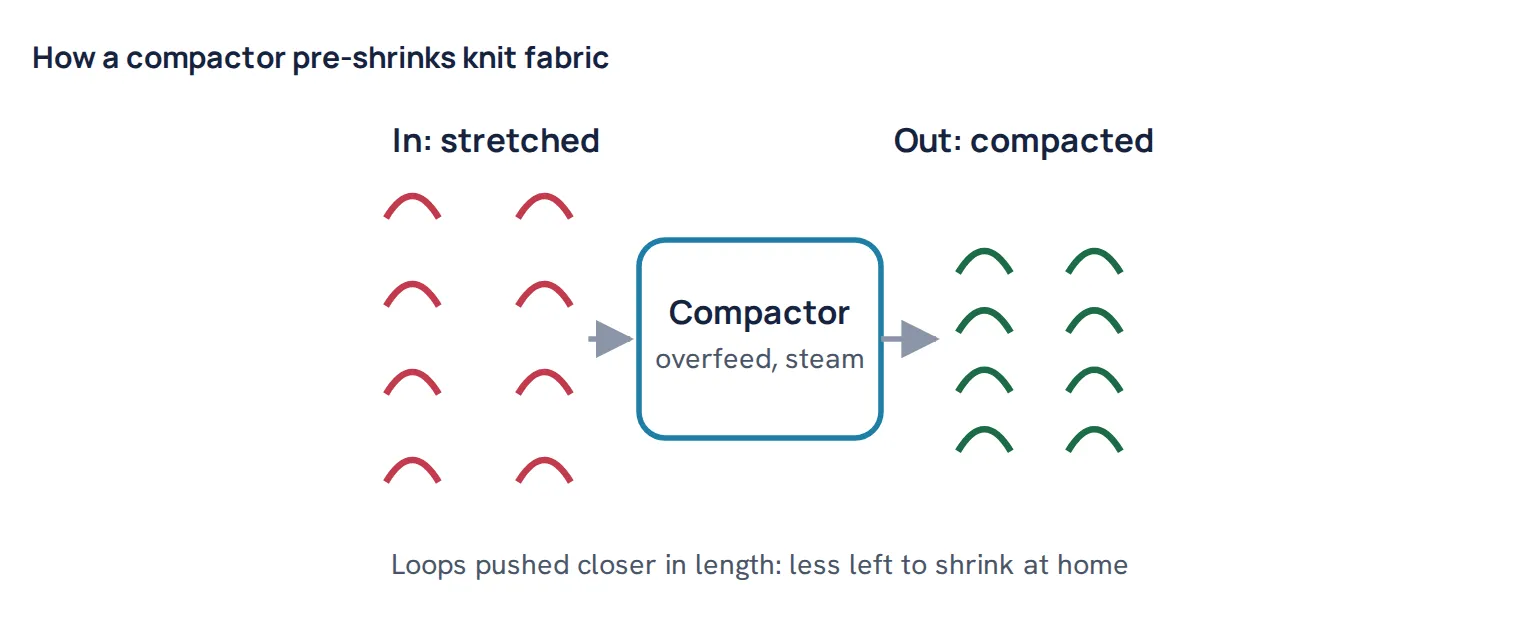
- Knit fabric: compacting. The fabric is fed into a compactor faster than it leaves (called overfeed), with steam and heat, so the loops are pushed closer together in length. This puts back the length that was stretched in processing.
- Relax drying: some fabrics are dried without tension so they can shrink freely before compacting.
- Woven fabric: sanforizing. Woven cotton such as denim and shirting is mechanically compressed against a rubber belt. “Sanforized” is the name for this woven pre-shrinking process.
- Garment washing: some garments are washed after sewing, which shrinks the whole piece before sale.
Will pre-shrunk cotton still shrink?
Usually a little, yes. Pre-shrinking removes most of the shrinkage, not all of it, and how much is left depends on the fibre, the fabric structure and how carefully it was finished. Buyers normally accept a few percent: a common requirement for knit garments is within about 5% after the specified wash test.
Our records show how far finishing gets. The share of fabric parts that kept length shrinkage within 5% after the wash test:
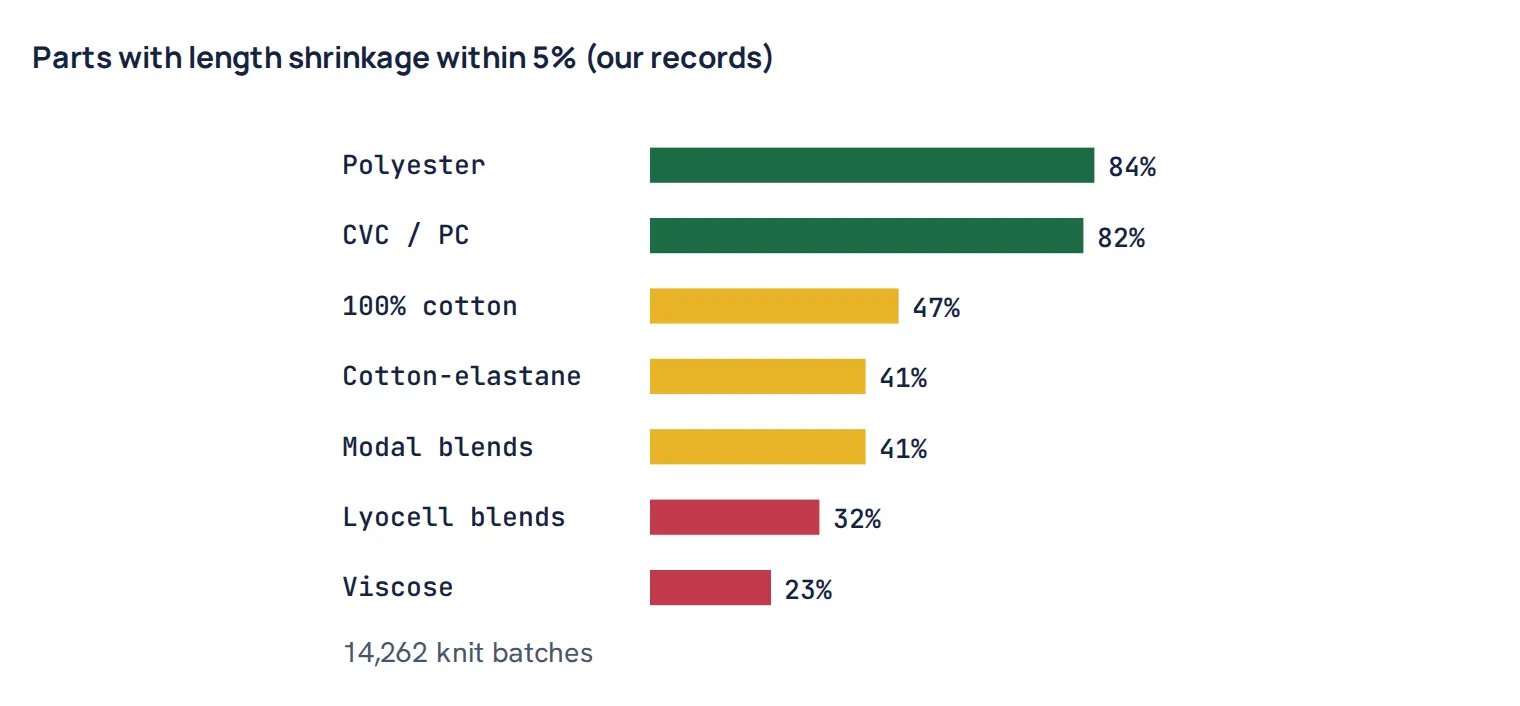
So “pre-shrunk 100% cotton” is a real improvement, but cotton knit still has a median length shrinkage of about 6% in our records, and fabrics like rib, fleece and pique shrink more than plain jersey. Viscose and lyocell, even when finished carefully, shrink more again. See does cotton shrink.
Mills check this with a standard wash test on every lot; see how shrinkage of knit fabric is tested.
Pre-shrunk vs shrink-to-fit
Most T-shirts, polos and sweatshirts are sold pre-shrunk so the size on the label stays close to the size you wear. A few garments, mainly raw denim, are sold unshrunk or “shrink-to-fit” on purpose: the buyer is expected to soak them so they shrink and mould to the body. If a label does not say pre-shrunk or sanforized, expect more shrinkage.
Common mistake: trusting “pre-shrunk” and tumble drying on high heat. Heat and tumbling relax the fabric further than a line dry, so a pre-shrunk cotton T-shirt can still lose noticeable length. The label promise assumes normal washing, not a hot dryer.
How to keep pre-shrunk clothes from shrinking
- Wash at 30°C, or the lowest temperature on the label.
- Line dry or dry flat; if you use a dryer, choose low heat and remove items slightly damp.
- Do not stretch wet garments; reshape gently and let them dry.
- For a planned fit, buy pre-shrunk polyester-cotton blends, which shrink far less than 100% cotton.
Worked example. A shop buys “pre-shrunk 100% cotton” T-shirts and a customer reports one size shorter after the first wash. The fabric itself may be within the mill’s 5% tolerance, but a hot tumble dry adds more shrinkage on top. A cotton-polyester (CVC) blend, which stayed within 5% in 82% of parts in our records, would give a more stable fit for a customer who uses a dryer.
Summary
- Pre-shrunk means the fabric was shrunk at the mill, by compacting (knits) or sanforizing (wovens), before sewing.
- It reduces shrinkage but does not remove it; a few percent is normal.
- In our records 84% of polyester and 82% of CVC parts stayed within 5% shrinkage, but only 47% of cotton and 23% of viscose.
- Hot tumble drying adds shrinkage even to pre-shrunk clothes.
- Wash cool and line dry to keep the size you bought.
Questions
What does pre-shrunk mean?
The fabric was shrunk on purpose at the mill, by compacting for knits or sanforizing for wovens, before the garment was cut and sewn, so it shrinks less when washed.
Will pre-shrunk cotton shrink?
Usually a little. Pre-shrinking removes most shrinkage, not all. In our records cotton knit still had a median length shrinkage of about 6% after the wash test.
Does pre-shrunk mean it will not shrink in the dryer?
No. Hot tumble drying relaxes the fabric further and can add shrinkage even to pre-shrunk clothes. Use low heat or line dry.
What is the difference between pre-shrunk and sanforized?
Sanforized is a specific pre-shrinking process for woven cotton, such as denim and shirting. Knit fabric is pre-shrunk by compacting.
Which fabrics shrink least?
Polyester and cotton-polyester blends. In our records 84% of polyester and 82% of CVC/PC parts stayed within 5% length shrinkage, against 47% of 100% cotton.

Textile engineer with 14+ years in dyeing and fabric development. He writes every guide on Dyeing Solution from real production work. Full profile