Brushed cotton has a soft, raised nap made by wire rollers; peached fabric has a short, velvety one. How brushing and peaching are done, brushed cotton vs flannel, and the trade-offs in strength and pilling we see in finishing.
At a glance
Wire rollersraise the nap
Peachedshort, velvety
Warmerthan unbrushed
1,688fleece entries
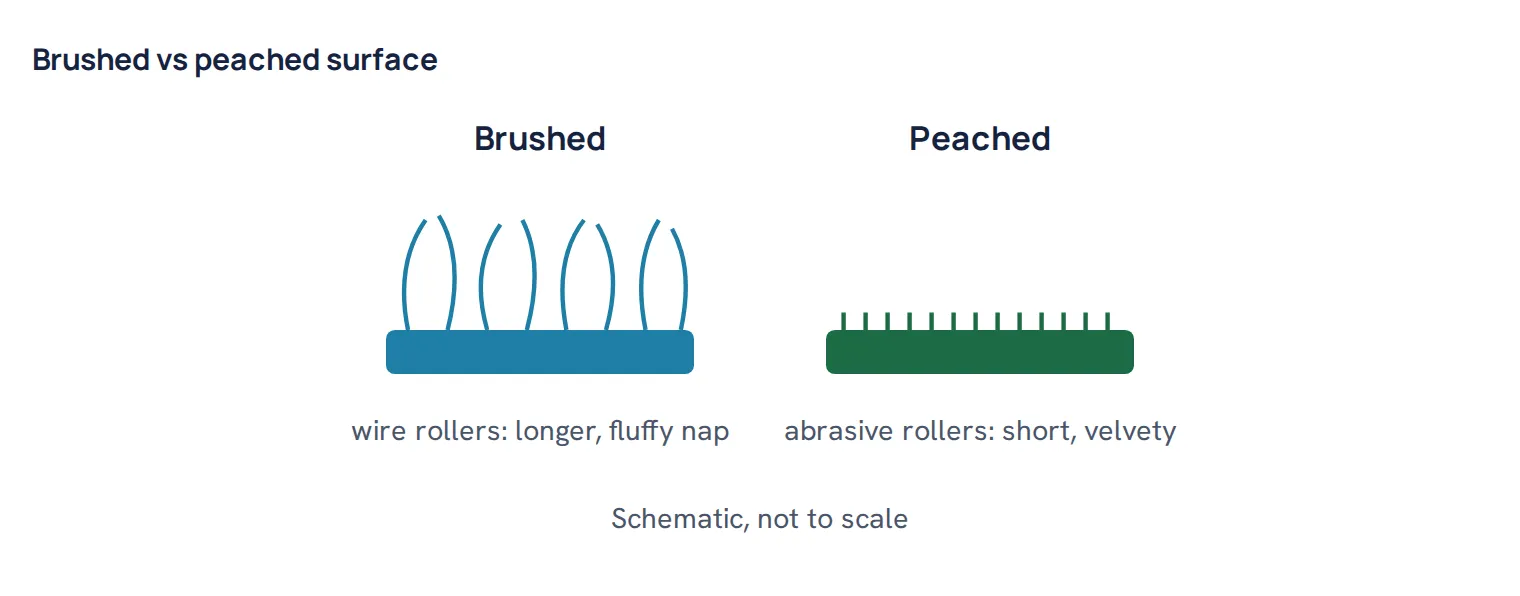
Brushed cotton is cotton fabric whose surface has been brushed with fine wire rollers to lift the fibres into a soft, fuzzy nap. The raised fibres trap air, so brushed cotton feels softer and warmer than the same fabric unbrushed. It is used for flannel shirts, pyjamas, bedding, sweatshirt and hoodie linings, and baby clothes. A gentler version, called peached or peach-finished fabric, uses abrasive rollers to give a short, velvety surface like the skin of a peach.
This guide explains how brushing and peaching are done, brushed cotton vs flannel and regular cotton, what brushing changes in the fabric, and the trade-offs we see in finishing and testing.
How fabric is brushed
Brushing, also called raising, is a dry finishing step done after dyeing. The fabric passes over a set of rollers covered with fine, bent wire points. The points catch fibres in the yarn and pull them partly out of the yarn, forming a soft pile. The number of passes, the roller speeds and the fabric tension decide how much pile is raised. After brushing, the pile can be sheared to an even height and then the fabric goes to the stenter and compactor.
In knitted fleece the back of the fabric has long loop floats from a separate loop yarn; brushing opens these into the familiar fluffy inside of a sweatshirt. See the fleece fabric development guide, built on 1,688 fleece entries in our register.
What is peached fabric?
Peaching (also called sanding or emerising) rubs the fabric face against rollers covered with a fine abrasive. It cuts and raises very short fibres instead of pulling out long ones, so the surface feels smooth and velvety rather than fluffy. Peach finish is common on cotton and polyester T-shirts, shirts and sheets that should feel “brushed soft” without looking fuzzy.
Brushed cotton vs flannel vs regular cotton
| Fabric | Surface | Feel and use |
|---|---|---|
| Regular cotton | Flat, unbrushed | Cool, crisp or smooth; year-round |
| Peached cotton | Very short nap | Velvety, soft; tees, sheets, shirts |
| Brushed cotton | Raised nap, one or both sides | Soft, warmer; pyjamas, shirts, bedding |
| Flannel | Heavily brushed woven cotton or wool | Warmest, fuzziest; winter shirts, sheets |
| Brushed fleece (knit) | Brushed loop back | Warm inside of sweatshirts and hoodies |
Flannel is essentially a heavily brushed fabric, so most flannel is brushed cotton, but not all brushed cotton is as heavy or fuzzy as flannel.
The trade-offs of brushing
Brushing improves softness and warmth, but it pulls fibres out of the yarn, and that has a cost:
- Weight and strength: more brushing gives a fuller nap but costs weight and bursting strength.
- Pilling: loosened fibres can tangle into pills in wear. In our lab reports, most pilling fails were fleece and terry fabrics tested at 2,000 Martindale rubs; see why fleece and sweatpants pill.
- Even moisture first: the fabric must be evenly dry before brushing, or the pile comes out uneven.
- Shade: brushing can change how the colour looks, because raised fibres scatter light; so the shade is best checked after brushing, not before.
Common mistake: adding extra brushing passes to make a fleece feel fuller. The back looks softer at delivery, but the fabric loses weight and strength and the loose fibres pill sooner. Fix fullness in the knitting (loop yarn and stitch length), not with more brushing.
How to care for brushed cotton
- Wash at 30–40°C, inside out, to protect the nap.
- Use a gentle cycle; avoid washing with rough fabrics like denim or with zips and Velcro.
- Tumble dry low or line dry; high heat flattens and shrinks the nap.
- Do not iron the brushed side directly; iron on the reverse if needed.
Worked example. A brand wants a softer feel on a 300 GSM cotton sweatshirt fleece. Rather than brushing harder, the mill can adjust the loop yarn and stitch length to give a fuller back with normal brushing, keep shearing light, and check pilling and bursting on a washed sample before bulk.
Summary
- Brushed cotton has a raised, fuzzy nap made by wire rollers after dyeing.
- Peached fabric has a much shorter, velvety nap made by abrasive rollers.
- Flannel is a heavily brushed fabric; brushed fleece is the soft inside of sweatshirts.
- Brushing adds softness and warmth but costs strength and can raise pilling.
- Wash inside out, gently, and dry on low heat to keep the nap.
Questions
What is brushed cotton?
Cotton fabric whose surface has been brushed with fine wire rollers to raise a soft nap, making it softer and warmer than unbrushed cotton.
What is brushed fabric?
Any fabric, cotton, polyester or a blend, that has been mechanically brushed (raised) to lift fibres into a soft surface.
What is peached fabric?
Fabric rubbed with fine abrasive rollers to create a very short, velvety surface, softer than plain fabric but less fuzzy than brushed.
Is brushed cotton the same as flannel?
Flannel is a heavily brushed fabric, so most flannel is brushed cotton, but brushed cotton can be lighter and less fuzzy than flannel.
Does brushed cotton pill?
It can, because brushing loosens fibres. Gentle washing inside out and low-heat drying help; heavy brushing increases the risk.

Textile engineer with 14+ years in dyeing and fabric development. He writes every guide on Dyeing Solution from real production work. Full profile