White clothes turn yellow from body oils and sweat, detergent and softener residue, chlorine bleach on synthetics, hard or iron-rich water, heat-set stains and storage yellowing. How to tell the cause, how to whiten yellowed clothes safely, prevention, and how factories keep whites white.
At a glance
Oilsand sweat
Chlorineyellows synthetics
Oxygenbleach soak
Phenolicstorage yellowing
White clothes turn yellow after washing for a handful of common reasons: built-up body oils and sweat, too much detergent or fabric softener left in the fibres, chlorine bleach reacting with protein stains or synthetic fibres, hard or iron-rich water, heat from the dryer setting stains, and storage problems such as phenolic yellowing from packaging. Most yellowing is a residue or stain problem rather than damage to the fibre, so it can usually be removed with the right wash. Prevention is simpler: wash whites regularly, use the right amount of detergent, avoid chlorine bleach on synthetics and protein stains, and store them clean and dry.
This guide explains each cause of yellowing on white clothes, how to tell which one you have, how to whiten yellowed clothes safely, how to prevent yellowing, and how factories test and prevent yellowing in white fabrics. It is written from the dye-house side, where we bleach and optically brighten white cotton and nylon and test fabrics for phenolic yellowing.
The main causes of yellowing
| Cause | What you see | Typical fabrics |
|---|---|---|
| Body oils and sweat build-up | Yellow collars, underarms, cuffs | Cotton and synthetics |
| Antiperspirant reaction | Yellow, stiff underarm stains | All, especially cotton |
| Detergent or softener residue | Dull, yellowish, slightly stiff overall | All |
| Chlorine bleach on synthetics or protein | Overall yellowing after bleaching | Polyester, nylon, spandex, wool, silk |
| Hard or iron-rich water | Dingy yellow or orange tint | All |
| Heat setting stains | Hidden stains turn yellow after drying or ironing | All |
| Phenolic yellowing | Yellow at folds or edges in storage | Nylon, polyester, spandex, light shades |
| Age and light | Slow overall yellowing | Nylon, spandex, some finishes |
Body oils, sweat and deodorant
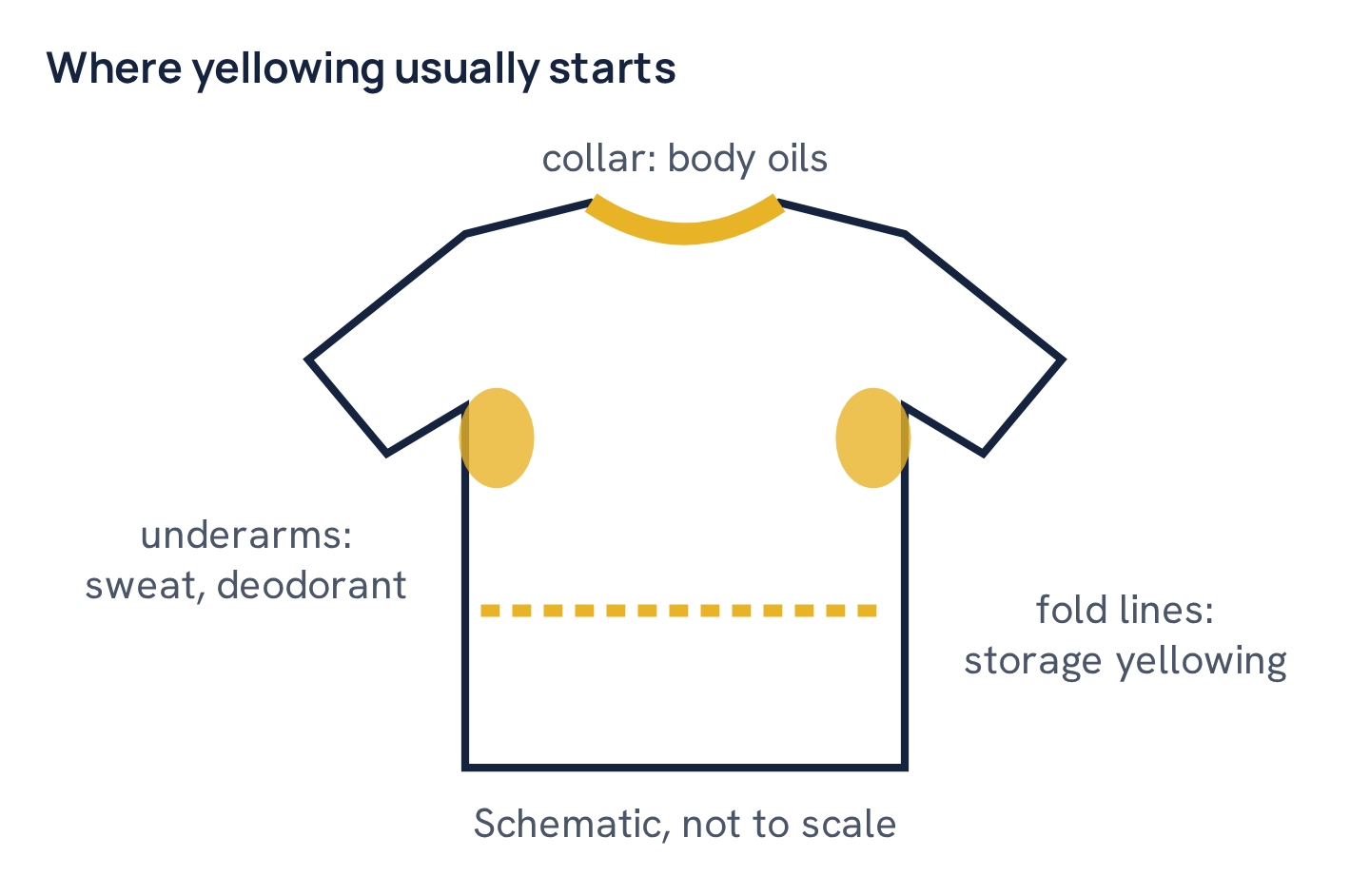
Sebum (skin oil) and sweat contain fats and proteins that are not fully removed by cool or short washes. Over many wears they build up and oxidise to a yellow colour, starting at the collar, cuffs and underarms. Aluminium-based antiperspirants combine with sweat to form stiff yellow deposits in underarms. Heat from the dryer or iron sets these stains further.
Detergent and fabric softener residue
Using too much detergent, especially in a cold or quick wash, or overloading the machine, leaves residue in the fibres that traps dirt and gives a dull, yellowish cast. Fabric softener builds up in layers, particularly on towels and synthetics, and can yellow over time. Less product and a good rinse often brighten whites noticeably.
Chlorine bleach yellowing
Chlorine bleach works well on white cotton but reacts with protein stains (sweat, blood, food) and can turn them yellow. It also yellows and weakens polyester, nylon, spandex, wool and silk, and can react with some optical brighteners and finishes. Many “white” sports tops and underwear are synthetic or contain spandex, so chlorine bleach turns them yellow rather than whiter. Use oxygen-based bleach for these instead.
Hard water and iron
Minerals in hard water combine with detergent and soil to leave a greyish-yellow film. Iron and manganese in the water supply can give a yellow or orange tint, which chlorine bleach makes worse. A water softener, a detergent designed for hard water or a rust-removing laundry treatment helps. See water quality in textile dyeing for how the same minerals affect industrial dyeing.
Phenolic yellowing in storage
Phenolic yellowing happens when white or pale garments are stored in contact with packaging materials such as some plastics, cardboard or polybags that release phenolic antioxidants (for example BHT) or nitrogen oxides. These react with the fabric, often under slightly alkaline conditions, to form yellow compounds, typically along folds and edges in contact with the packaging. It is especially common on nylon, spandex and polyester whites. Factories test for this risk and adjust the final pH and finishes. See phenolic yellowing test, causes and prevention and nylon white optical brightening.
Common mistake: trying to whiten yellowed polyester or nylon sports tops with chlorine bleach. The bleach makes the yellowing worse and weakens the elastane. Use an oxygen-based bleach soak instead and wash at the warmest temperature the label allows.
How to whiten yellowed clothes
- Check the label for fibre and maximum temperature.
- Pre-treat collars and underarms with liquid detergent or a stain remover; work it in and leave for 15–30 minutes.
- Soak in warm water with an oxygen-based bleach (sodium percarbonate) for several hours or overnight.
- Wash at the warmest temperature allowed, with the right amount of detergent.
- Rinse well and skip fabric softener.
- Air dry; check stains are gone before using a dryer, which can set remaining stains.
- For iron or rust tints, use a rust-removing laundry product rather than chlorine bleach.
How to prevent yellowing
- Wash whites after every wear, especially shirts and sportswear.
- Use enough water and the right detergent dose; don’t overload.
- Wash whites separately from colours.
- Let antiperspirant dry before dressing, or use less.
- Avoid chlorine bleach on synthetics, spandex, wool and silk.
- Store whites clean and dry in breathable cotton bags, not plastic or cardboard.
How factories keep whites white
White cotton is scoured, bleached with hydrogen peroxide and often treated with optical brightening agents, which absorb ultraviolet light and emit blue light to make fabric look brighter. White nylon and polyester are brightened with brighteners suited to those fibres. Factories control the final pH to reduce phenolic yellowing risk and test whites for whiteness and yellowing before dispatch.
Worked example. A customer’s white polyester-spandex gym tops turned yellow after a few months. They had been bleached with chlorine every few washes. Switching to an overnight oxygen-bleach soak followed by a normal wash restored most of the whiteness, and stopping chlorine bleach prevented further yellowing.
How to tell which cause you have
- Only collars and underarms are yellow: body oils, sweat or antiperspirant.
- Whole garment looks dull and dingy: detergent or softener build-up, or hard water.
- Yellowing appeared right after bleaching: chlorine bleach on synthetics or protein stains.
- Yellow or orange tint across all whites: iron in the water.
- Yellow lines along folds after storage: phenolic yellowing from packaging.
- Spots that appear after drying or ironing: invisible stains set by heat.
White sportswear and synthetics
White polyester, nylon and spandex sportswear yellows more easily than cotton because oily sweat compounds cling to synthetic fibres, chlorine bleach damages them, and optical brighteners on synthetics can fade. Wash sportswear soon after use, use a detergent designed for synthetics, avoid fabric softener and chlorine bleach, and use an oxygen-bleach soak every few weeks.
Yellowed baby clothes in storage
Baby clothes stored for months often come out with yellow spots, usually from milk, food or skin oils that were not fully washed out and oxidised over time. A soak in oxygen-based bleach and a warm wash usually removes them. Before storing, wash clothes thoroughly, dry them completely and store them in breathable cotton bags rather than plastic boxes.
Does sunlight help?
Drying white cotton in sunlight has a mild bleaching effect and can reduce light yellowing. It is less effective on synthetics, and long sun exposure can yellow nylon and spandex. Use sun drying for cotton whites, and shade drying for synthetic whites and swimwear.
Optical brighteners and whiteness
Many detergents contain optical brighteners that coat fabric and make it look whiter by reflecting blue light. Washing whites in a detergent without brighteners, or in very hard water, can make them look slightly yellow by comparison. Using a detergent with brighteners for whites, and not overdosing, keeps them looking bright. Brighteners can fade in strong sunlight, which is another reason to dry synthetic whites in the shade.
When yellowing is permanent
If yellowing comes from fibre damage, for example old nylon or spandex degraded by heat, chlorine and light, or cotton scorched by an iron, it cannot be washed out. Stain-based yellowing usually can. Try two or three oxygen-bleach soaks before deciding a garment is beyond rescue.
Summary
- Yellowing comes from body oils, sweat, residue, chlorine bleach, water minerals, heat and storage.
- Collars and underarms yellow first; fold lines suggest storage yellowing.
- Oxygen-based bleach soaks remove most yellowing safely.
- Avoid chlorine bleach on synthetics and spandex.
- Wash whites often and store them clean in breathable bags.
Questions
Why do my white clothes turn yellow?
Usually body oils and sweat build-up, detergent or softener residue, chlorine bleach on synthetics, hard water or heat-set stains.
How do I get yellow stains out of white clothes?
Pre-treat, soak in oxygen-based bleach, wash at the warmest allowed temperature and air dry.
Why does bleach turn white clothes yellow?
Chlorine bleach reacts with protein stains and yellows polyester, nylon, spandex, wool and silk.
What is phenolic yellowing?
Yellowing caused by chemicals from packaging such as some plastics and cardboard reacting with stored fabric, often along folds.
How do I keep white clothes white?
Wash them often, use the right detergent dose, avoid chlorine bleach on synthetics and store them clean in breathable bags.

Textile engineer with 14+ years in dyeing and fabric development. He writes every guide on Dyeing Solution from real production work. Full profile