Polyester is warm when it is made into lofty fabrics such as fleece, pile and synthetic fill, and it stays warm when damp. Thin polyester is not warm, just stuffy. How fabrics keep you warm, polyester vs cotton and wool, winter layering and choosing warm polyester.
At a glance
Loftmakes warmth
0.4%water uptake
Warmwhen damp
Fleecebest form
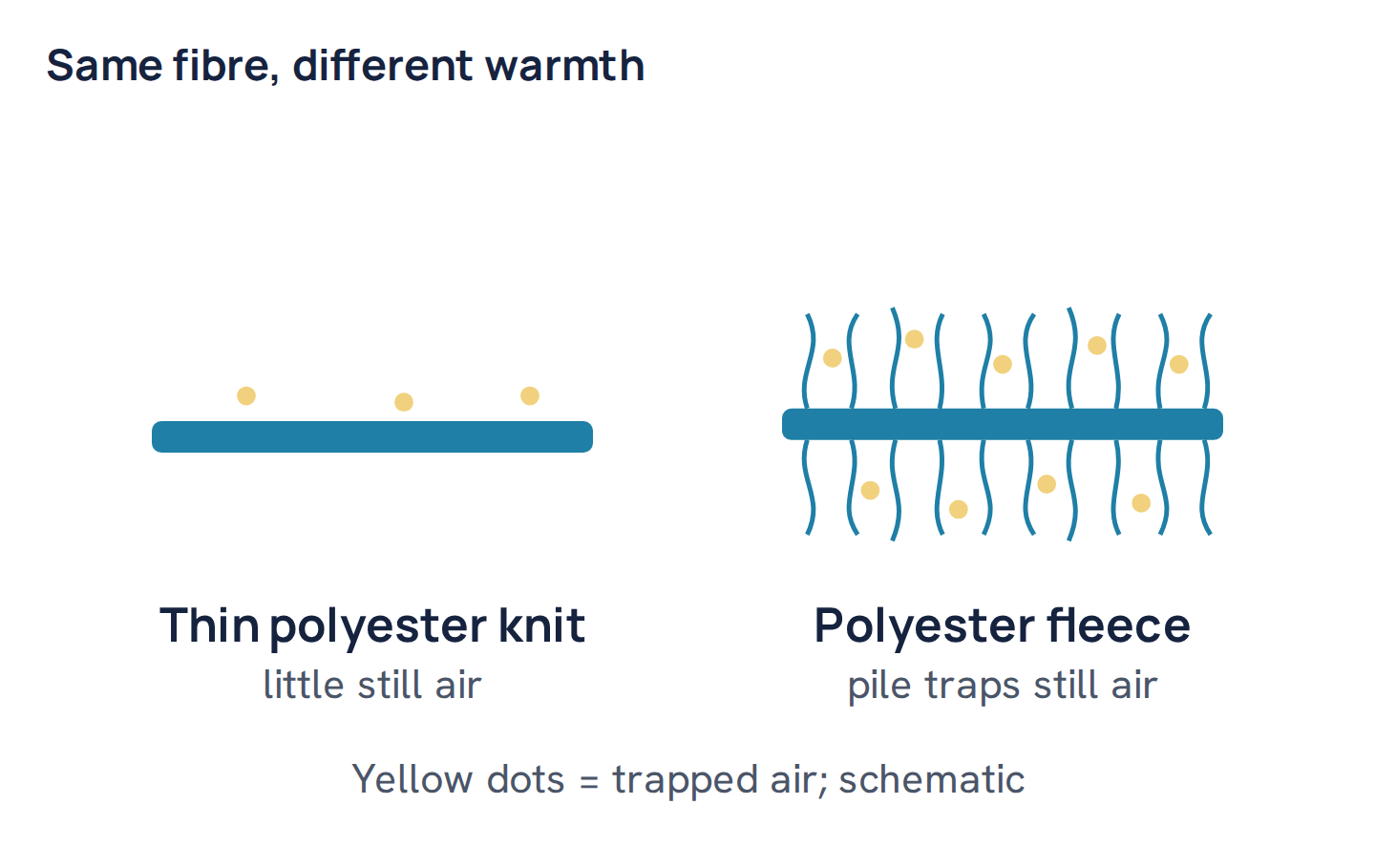
Polyester can be very warm, but only when it is made into a warm fabric. The fibre itself does not hold heat in any special way. What makes clothing warm is trapped, still air, and polyester is excellent at forming structures that trap air: fleece, pile, wadding and quilted fill. That is why polyester fleece jackets and synthetic-filled coats are among the warmest everyday garments. A thin, smooth polyester shirt, on the other hand, is not warm at all; it just feels stuffy because it does not absorb sweat.
This guide explains how fabrics keep you warm, why polyester fleece and fill work so well, polyester vs cotton and wool for warmth, why polyester stays warm when damp, polyester for winter base layers and coats, and how to choose a warm polyester garment. It draws on how we process polyester and blended fleece in the dye house, and on our finishing records.
What really keeps you warm
Your body heats the air next to your skin. Clothing keeps you warm by holding that air still so it cannot carry heat away. Three things decide how warm a garment is:
- Thickness and loft: more trapped air means more insulation. A thick, fluffy fabric is warmer than a thin, dense one of the same weight.
- Wind resistance: wind pushes cold air through open fabrics; a tight outer layer stops it.
- Moisture: wet fabric conducts heat away from the body much faster than dry fabric. A fibre that stays drier keeps you warmer.
The fibre matters mostly through how well it can be made into lofty structures and how it handles moisture. On both counts polyester does well.
Is polyester warm?
| Polyester fabric | Warmth | Why |
|---|---|---|
| Polar fleece | High | Brushed pile on both sides traps lots of air; light for its warmth |
| Sherpa and high-pile fleece | Very high | Deep, fluffy pile like sheepskin |
| Synthetic insulation (fibrefill) | Very high | Lofty fibre batts in quilted coats and sleeping bags |
| Brushed polyester jersey | Medium | Raised surface adds a little loft |
| Thin polyester T-shirt or blouse | Low | Thin and smooth, traps little air |
| Polyester mesh | Very low | Open structure lets air flow; made for cooling |
So “is polyester warm?” really depends on which polyester. A polyester fleece is warm; a polyester sports mesh is cool.
Is polyester warmer than cotton?
For the same structure, the difference is small when both are dry. The big difference appears when they get damp. Cotton absorbs a lot of moisture (about 8% regain, and far more when wet) and holds it; a damp cotton sweatshirt chills you quickly, which is why outdoor guides warn against cotton in the cold. Polyester absorbs almost nothing (about 0.4%), so a polyester fleece stays light and keeps much of its insulation even when damp from sweat or drizzle, and it dries fast.
There is a comfort trade-off. Indoors or in mild weather, a cotton hoodie feels more breathable and less stuffy than a polyester one. Outdoors in cold, damp conditions, or when you are moving and sweating, polyester is usually the warmer choice.
Is polyester warmer than wool?
Wool and polyester fleece are both warm. Wool has natural crimp that creates loft, it can absorb a lot of moisture vapour without feeling wet, and it keeps some warmth when damp. Polyester fleece is lighter for the same warmth, dries much faster, is cheaper and is easier to wash. Wool resists odour better and feels less clammy for long wear. Many people use both: a polyester fleece mid-layer for active days, a wool sweater for everyday warmth.
Why polyester stays warm when wet
Because polyester takes up almost no water, its fibres do not swell and collapse when wet the way cotton’s do. Water sits on and between the fibres and can be shaken or wrung out. The fabric keeps its loft, so the trapped-air insulation survives. This is why synthetic insulation is preferred over down in very wet climates: down clumps and loses most of its warmth when soaked, while polyester fill keeps much of its loft.
Polyester in winter layers
- Base layer: a thin polyester knit next to the skin moves sweat away and dries fast, so you stay drier and warmer when active. Merino wool is the main alternative.
- Mid layer: polyester fleece traps air and keeps warmth when damp; the classic mid-layer.
- Insulation: polyester fill in jackets and vests; warm, light, and reliable in wet weather.
- Outer layer: densely woven or coated polyester blocks wind and rain, keeping the insulation dry.
Does polyester trap heat?
Yes, and that is both its strength and its weakness. In cold weather, trapped air means warmth. In warm weather, plain polyester can feel hot and stuffy, because it does not absorb sweat and dense polyester fabrics let little vapour escape. Polyester sportswear solves this with open knits, mesh panels and shaped fibres that move sweat to the surface to evaporate. For casual wear in heat, cellulose fibres such as cotton, rayon or linen usually feel cooler.
How polyester fleece is made
Polyester fleece is knitted with loop yarns on one or both faces, dyed, dried, then brushed with fine wire rollers to raise the pile, and often sheared to an even height. Anti-pill fleece is treated so the fibres hold together better. Because polyester is thermoplastic, the fabric is heat set to keep its size, and it must be finished at moderate temperatures so the dye does not migrate. CVC and polyester-rich fleece in our finishing records were the most dimensionally stable fabrics we finish: cotton-polyester blends shrank a median 4% in length after the wash test, against 6% for 100% cotton and 8% for cotton fleece and terry. See the fleece dyeing and finishing flowchart.
Common mistake: wearing a thin polyester fashion top on a cold day because “polyester is warm”. Thin, smooth polyester traps very little air. Warmth comes from loft: choose a fleece, a brushed knit or an insulated layer.
Polyester vs down for warmth
Down, the fluffy under-plumage of ducks and geese, is the warmest insulation for its weight when dry, and it packs very small. Polyester fill is a little heavier and bulkier for the same warmth, but it keeps much more of its loft when wet, dries faster, is easier to wash and costs less. For dry, cold conditions and lightweight packing, down wins; for wet climates, active use and easy care, polyester fill is often the better choice.
Is polyester warm in bedding?
Polyester is common in duvets, pillows and blankets. Polyester-filled duvets are warm, light and washable, and suit people with feather allergies. Polyester fleece blankets are very warm and cosy. Polyester microfiber sheets, though, can feel warm and slightly clammy because they do not absorb sweat; hot sleepers often prefer cotton percale or linen sheets with a polyester or wool duvet on top.
How to choose a warm polyester garment
- Look at loft, not weight: a fluffy, springy fleece is warmer than a flat, heavy knit.
- Check both sides: double-sided fleece is warmer than single-brushed.
- Add a wind-blocking outer layer, since fleece lets wind through.
- For wet climates, prefer synthetic fill over down.
- For active use, choose a breathable fleece or grid fleece that vents moisture.
Worked example. On a cold, drizzly hike, a cotton hoodie absorbs sweat and rain, gets heavy and chills you on the first rest stop. A polyester fleece of similar thickness under a light wind shell stays lighter, keeps most of its loft, and dries during the walk. At home on a dry evening, the cotton hoodie would feel just as warm and more comfortable.
How to care for warm polyester
- Wash fleece inside out, cool, with a gentle cycle.
- Skip fabric softener, which flattens pile and reduces wicking.
- Tumble dry low or air dry; high heat can melt or flatten the pile.
- Shake out and brush fleece lightly to restore loft.
Summary
- Polyester is warm when made into lofty fabrics: fleece, pile and insulation.
- Thin, smooth polyester is not warm; it just feels stuffy.
- Polyester stays warm when damp because it absorbs almost no water.
- It is often warmer than cotton outdoors, and lighter and quicker drying than wool.
- Choose loft, add a wind layer, and dry fleece on low heat.
Questions
Is polyester warm?
It is when made into fleece, pile or insulation that traps still air. A thin, smooth polyester shirt is not warm, though it can feel stuffy.
Is polyester warmer than cotton?
When dry, similar for the same structure. When damp, polyester is warmer because it absorbs almost no water and keeps its loft, while wet cotton chills you.
Does polyester keep you warm when wet?
Mostly yes. Polyester does not soak up water, so fleece and synthetic fill keep much of their loft and insulation when damp, and dry fast.
Is polyester good for winter?
Yes, as a base layer, fleece mid-layer or insulated jacket, especially for active or wet conditions.
Is polyester warmer than wool?
Both are warm. Polyester fleece is lighter and dries faster; wool resists odour and feels less clammy for long wear.

Textile engineer with 14+ years in dyeing and fabric development. He writes every guide on Dyeing Solution from real production work. Full profile