Cotton modal is a blend of cotton and wood-based modal, often 50/50, 60/40 or 70/30, that is softer, smoother and drapier than cotton. Blend ratios, how it feels, how it is dyed, and what our records of 374 modal-blend batches show about shrinkage and weight.
At a glance
50/50common blend
6%median shrinkage
+14.6%weight after wash
Silkystays soft
Cotton modal is a fabric made from a blend of cotton and modal fibres, usually knitted into a soft, smooth jersey or rib. Cotton is a natural seed fibre; modal is a regenerated cellulose fibre made from wood pulp, usually beech. Blended together, they give a fabric that is softer, smoother and drapier than plain cotton, keeps its softness after washing, and costs less than 100% modal. Common ratios are 50/50, 60/40 and 70/30, often with a few percent elastane for stretch. Cotton modal is used for T-shirts, underwear, pyjamas, loungewear and fitted tops.
This guide explains what cotton modal is, why the two fibres are blended, common blend ratios, how cotton modal feels and performs, how it is dyed and finished in the dye house, what our records show about its shrinkage and weight, and how to care for it. It draws on our finishing records of more than 370 modal-blend batches and on our cotton-modal dyeing route.
What cotton modal is made of
Cotton modal yarn is spun from a mixture of cotton and modal staple fibres, so every yarn contains both. Cotton brings natural feel, strength (especially when wet), breathability and lower cost. Modal brings a silky, smooth surface, fluid drape, high moisture absorption and the ability to stay soft after many washes. Because both are made of cellulose, they behave similarly in dyeing and blend smoothly.
For the two fibres on their own, see what is modal fabric and what is cotton jersey.
Common cotton modal blends
| Blend | Character | Typical uses |
|---|---|---|
| 70% cotton / 30% modal | Mostly cotton feel with extra smoothness | Everyday T-shirts, basics |
| 60% cotton / 40% modal | Noticeably softer, more drape | Premium tees, loungewear |
| 50% cotton / 50% modal | Very soft, silky, fluid | Underwear, pyjamas, fitted tops |
| Cotton modal + 5% elastane | Soft with stretch and recovery | Briefs, bras, fitted tees, leggings |
The more modal, the softer and drapier the fabric, and the more care it needs in processing and washing.
How cotton modal feels and performs
- Softness: clearly softer and smoother than 100% cotton; stays soft wash after wash.
- Drape: falls closer to the body; less boxy than cotton.
- Breathability and moisture: both fibres absorb moisture; modal absorbs more and feels cool, so cotton modal is comfortable next to the skin and in sleepwear.
- Colour: takes reactive dyes brightly, with a slight lustre from the modal.
- Pilling: generally low; modal’s smooth fibres pill less than many cottons.
- Strength: good, though modal is weaker when wet than cotton, so gentle washing helps.
Cotton modal vs 100% cotton vs 100% modal
| Point | 100% cotton | Cotton modal | 100% modal |
|---|---|---|---|
| Softness | Good | Very good | Excellent |
| Drape | Stiffer | Fluid | Very fluid |
| Durability in hot washing | Best | Good | Needs care |
| Price | Lowest | Medium | Highest |
| Ease of finishing on weight (our records) | 47% of parts on target | Harder | Modal blends 27% on target |
What our records show about cotton modal
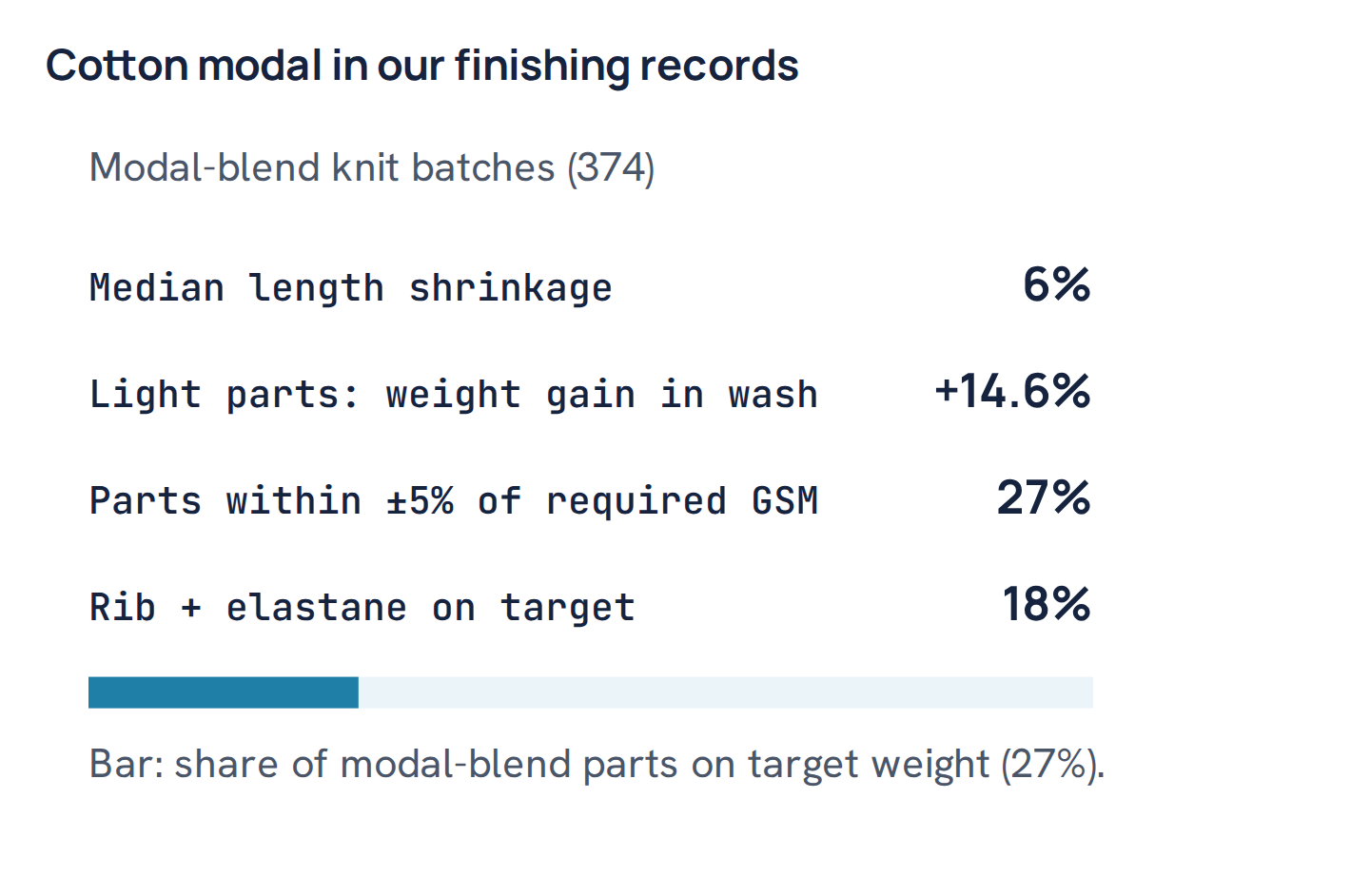
Cotton modal is a lovely fabric to wear and one of the harder fabrics to finish exactly. In our finishing records of 374 modal-blend batches, the median length shrinkage after the wash test was 6%, the same as 100% cotton knit, with the worst tenth around 10%. The bigger issue is weight. Light modal-blend parts gained a median 14.6% in weight after washing, because the fabric relaxes and closes up in water, and only 27% of modal-blend parts finished within ±5% of the required GSM. Cotton-modal rib with elastane was the hardest of all: only 18% of parts were within GSM tolerance.
For a mill, this means cotton modal should be finished a little light, relaxed and checked on a washed sample, rather than finished to the target weight straight off the stenter. For a shopper, it means a cotton-modal tee may feel a little thicker and slightly smaller after the first wash.
How cotton modal is dyed
Both fibres are cellulose, so cotton modal is dyed in one bath with reactive dyes, like cotton. The differences are in the details, because modal is weaker when wet and takes dye quickly:
- A gentler scour and bleach than for 100% cotton.
- Enzyme treatment for a clean, smooth surface.
- Salt added in portions at a higher temperature, then the bath cooled for the alkali, so the dye goes on evenly.
- Gentle machine handling and anti-crease agent, because wet modal creases and marks easily.
- Heat setting first for cotton-modal with elastane.
For cotton-modal, lyocell, viscose and modal, the salt goes in at 80°C and the bath is cooled to 60°C for the soda.
The full route is in the cotton-modal dyeing process.
Common mistake: finishing a cotton-modal rib to the required GSM straight off the stenter. It keeps relaxing and gains weight in the buyer’s wash test, so a fabric that measured perfectly at the mill fails afterwards. Finish slightly light, relax, and test a washed sample.
How to tell cotton modal from 100% cotton
- Feel: cotton modal feels smoother, cooler and more slippery; plain cotton feels drier and slightly more textured.
- Drape: hold a cotton modal tee by the shoulders and it hangs softly with fluid folds; cotton holds a boxier shape.
- Lustre: cotton modal often has a faint sheen, especially in dark colours.
- Weight in the hand: cotton modal can feel heavier for its thickness because modal is dense and drapey.
- Label: the fibre content is the only sure guide; percentages are confirmed in the lab by fibre analysis. See how fibre content is tested.
Is cotton modal sustainable?
It shares the footprints of both fibres. Conventional cotton needs a lot of water and, in many places, pesticides; organic cotton reduces this. Modal is made from wood, often from managed forests, and needs little irrigation, but its production uses chemicals that must be recovered and treated properly. Modal from producers with closed-loop recovery and forest certification is the more responsible choice. Both fibres are biodegradable under suitable conditions, unlike polyester, although elastane in a stretch blend is not.
Cotton modal vs cotton polyester
Both blends aim to improve on plain cotton, but in different directions. Cotton modal improves softness, drape and moisture comfort, while keeping a natural, breathable feel. Cotton polyester (CVC or PC) improves size stability, wrinkle resistance and durability, at the cost of some breathability and a tendency to hold pills. In our records cotton-polyester blends were the most stable fabrics we finish, with a median 4% shrinkage; modal blends shrank a median 6% and were among the hardest to finish on weight. Choose cotton modal for comfort, cotton polyester for easy care; see what is poly cotton.
What cotton modal is used for
- Underwear and bras: soft, smooth, absorbent, often with elastane.
- T-shirts: premium basics with drape and a soft hand.
- Pyjamas and loungewear: cool and comfortable to sleep in.
- Fitted tops and dresses: cotton modal with elastane for a smooth fit.
- Baby clothes: soft next to the skin, with cotton’s familiarity.
Worked example. A brand wants a premium 160 GSM T-shirt that feels softer than its cotton tee. A 60/40 cotton-modal single jersey gives the softness and drape. Because modal blends gained a median 14.6% in weight after washing in our records, the mill knits it slightly lighter, finishes it a few percent under target, and approves the GSM on a washed sample, so the finished tee lands close to 160 GSM in the customer’s hands.
How to care for cotton modal
- Wash at 30°C on a gentle cycle, inside out.
- Use a mild detergent; avoid bleach.
- Line dry or tumble on low heat.
- Iron on medium if needed.
- Expect a little shrinkage and slight thickening in the first wash.
Summary
- Cotton modal blends cotton with wood-based modal, often 50/50, 60/40 or 70/30.
- It is softer, smoother and drapier than cotton, and stays soft after washing.
- In our records modal blends shrank a median 6% and were hard to finish on weight.
- It is dyed like cotton, with gentler handling and salt added at 80°C.
- Wash cool and gently, and dry low.
Questions
What is cotton modal?
A fabric spun from a blend of cotton and modal fibres, giving a softer, smoother, drapier fabric than plain cotton at a lower cost than 100% modal.
Is cotton modal better than cotton?
It is softer and drapes better and stays soft after washing. Cotton is sturdier in hot washing and cheaper.
Does cotton modal shrink?
Yes, a little. Our modal-blend knit records show a median 6% length shrinkage, and the fabric can gain weight after washing.
What is cotton modal used for?
T-shirts, underwear, bras, pyjamas, loungewear and fitted tops, often with a few percent elastane.
How do you wash cotton modal?
At 30°C on a gentle cycle, inside out, then line dry or tumble on low heat.

Textile engineer with 14+ years in dyeing and fabric development. He writes every guide on Dyeing Solution from real production work. Full profile