Yes, cotton is breathable: it absorbs moisture and lets air through, which is why it is the go-to fabric for T-shirts and summer clothes. Which cotton fabrics breathe best, cotton vs polyester, linen and rayon, cotton for hot weather and sport, and care.
At a glance
~8%moisture regain
Lightbreathes best
Slowto dry
6%median shrinkage
Yes, cotton is a breathable fabric. Cotton is a natural cellulose fibre that absorbs moisture well, lets air and water vapour pass through, and feels comfortable against the skin, which is why it is the default fabric for T-shirts, underwear, bed sheets and summer clothes. How breathable a cotton garment feels depends heavily on how it is made: light, open cotton such as voile, poplin or single jersey breathes very well; heavy, dense cotton such as denim, canvas or thick fleece breathes much less. Cotton’s main weakness is that it holds moisture and dries slowly.
This guide explains what breathability means, why cotton breathes well, which cotton fabrics breathe best, how cotton compares with linen, polyester, rayon and modal, whether cotton is good for hot weather and for sport, and how to choose and care for cool cotton clothing. It is written from the knit dyeing and finishing side, where we handle thousands of cotton batches every year.
What breathable means
“Breathable” combines three things:
- Air permeability: how easily air moves through the fabric, set mainly by its weight, density and structure.
- Moisture absorption: how much sweat the fibre can take up. Cotton absorbs about 8% of its weight in moisture at normal conditions and much more when wet; polyester absorbs about 0.4%.
- Vapour transfer and drying: how quickly moisture can move through the fabric and evaporate.
Cotton scores well on the first two and moderately on the third. It feels breathable because it takes sweat off the skin and lets air through, but in heavy sweating it can become saturated and stay damp.
Why cotton breathes well
Cotton fibres are hollow, twisted ribbons of cellulose. Cellulose carries many water-attracting hydroxyl groups, so the fibre draws moisture in readily. The natural twist and irregular surface leave small spaces between fibres in the yarn, and spun cotton yarn is slightly hairy, which keeps the fabric from lying completely flat against the skin. Together these give cotton its familiar soft, dry, comfortable feel in normal wear.
Which cotton fabrics breathe best?
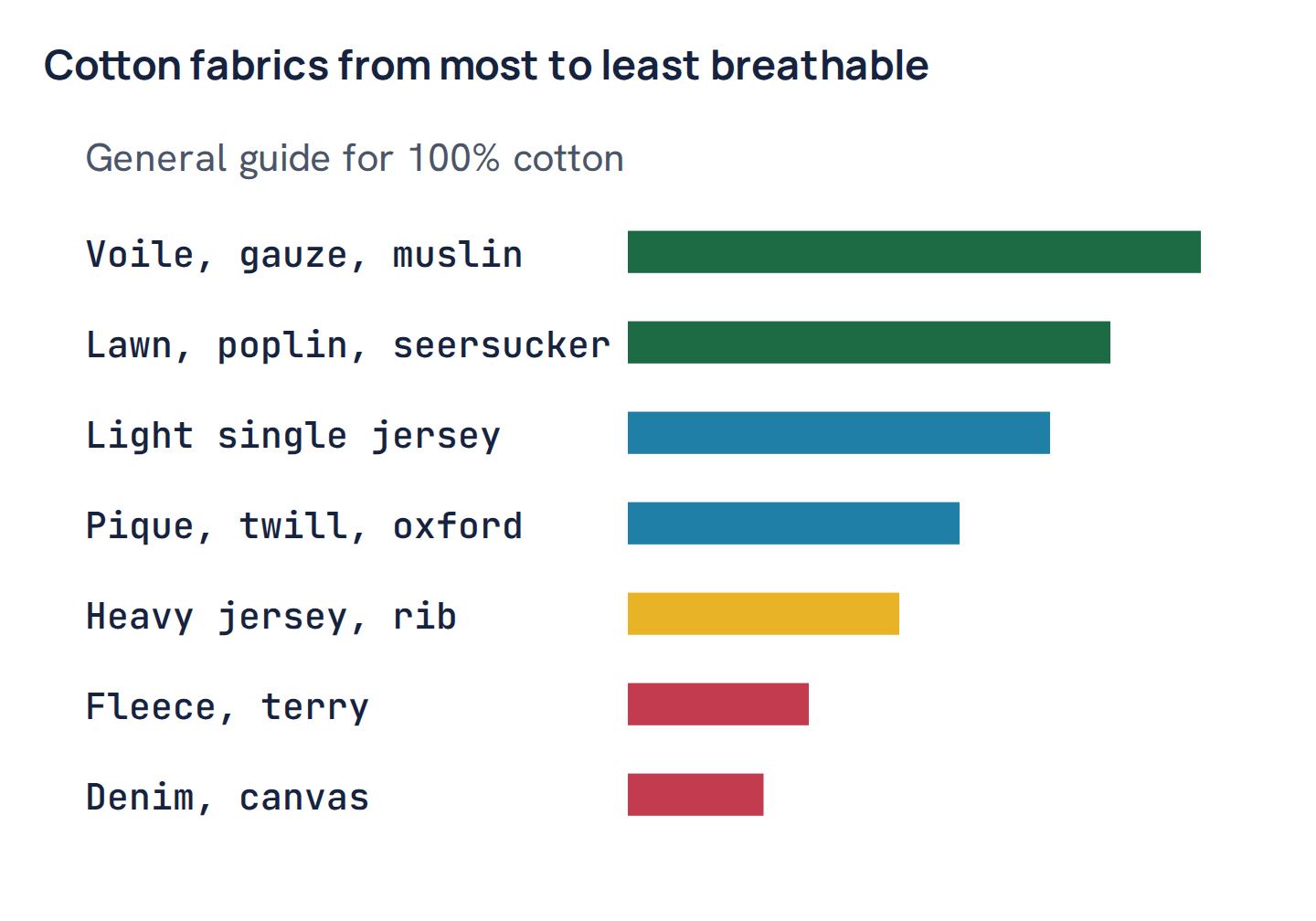
- Voile, gauze and muslin: very light, open plain weaves; among the coolest fabrics there are.
- Lawn and poplin: fine, light woven cottons for shirts and summer dresses.
- Seersucker: puckered stripes hold the fabric away from the skin, letting air circulate.
- Single jersey: the T-shirt knit; light jersey around 130–160 GSM breathes well. Our development records run from about 135 GSM for light jersey to about 240 GSM for heavy jersey.
- Pique: the polo-shirt knit; its textured cells let some air through.
- Fleece, denim and canvas: dense or lofty and warm; least breathable.
See what is cotton jersey and what is pique fabric.
Is cotton good for hot weather?
Yes, light cotton is one of the best everyday fabrics for heat. It absorbs sweat, lets air through and feels comfortable. For the hottest, most humid days, linen and very light cotton voile feel cooler still, and rayon feels cool and fluid. Cotton’s limit appears when you sweat a lot: it absorbs the sweat, gets heavy, clings and dries slowly, which can feel sticky and, in wind or air conditioning, chilly.
Cotton vs polyester for breathability
For everyday wear, cotton is more breathable than plain polyester. Polyester absorbs almost no moisture, so in heat a plain polyester shirt can feel clammy. Technical polyester sportswear is different: it is engineered to move sweat along the fibres to the outside and dry fast, so during exercise it can feel drier than cotton. A good rule: cotton for casual wear and heat, technical polyester for intense sport. Cotton-polyester blends sit in between: less absorbent than cotton, more stable in size; see what is poly cotton.
Cotton vs linen, rayon and modal
| Fibre | Breathability | Feel | Drying |
|---|---|---|---|
| Linen | Very high | Crisp, cool, textured | Faster than cotton |
| Cotton | High | Soft, dry, familiar | Slow |
| Rayon (viscose) | High, very absorbent | Cool, silky, fluid | Slow |
| Modal | High | Smooth, soft, cool | Slow |
| Plain polyester | Low | Smooth, can feel clammy | Fast |
Is cotton good for sport and sweating?
For light activity, yes. For running, hiking and the gym, cotton is often a poor choice: it soaks up sweat, gets heavy, rubs, and stays wet. In cold or windy conditions a wet cotton layer chills you quickly. Technical polyester, nylon or merino wool handle heavy sweat better. Cotton remains fine for walking, yoga and casual sport in mild weather.
What makes one cotton T-shirt more breathable than another
- Weight: a 140 GSM tee breathes better than a 220 GSM heavyweight tee.
- Yarn: fine, combed or ring-spun yarns make lighter, smoother, airier fabrics; see what is ring spun cotton.
- Knit tightness: a looser knit lets more air through.
- Fit: a relaxed fit lets air move; a tight fit traps heat.
- Colour: dark colours absorb more sunlight and feel hotter outdoors.
- Finish: heavy softeners or coatings can reduce absorbency; enzyme-washed cotton feels smoother without blocking moisture.
Common mistake: wearing a heavyweight cotton tee for a summer run. It absorbs sweat, doubles in weight, clings and chafes. For exercise in heat, choose a light technical knit; keep the heavy cotton tee for casual wear.
Is cotton good for sleeping?
Cotton is one of the most popular fabrics for sheets and pyjamas because it breathes, absorbs night sweat and feels soft. Percale, a crisp, plain-weave cotton sheet, feels cool and is a favourite for hot sleepers; sateen feels smoother and slightly warmer; cotton jersey sheets feel like a soft T-shirt. People who sweat heavily at night sometimes prefer linen or lyocell, which dry faster, but for most people cotton bedding is a comfortable, easy-care choice.
Is cotton good for babies and sensitive skin?
Cotton is the traditional choice for baby clothes and for people with sensitive skin or eczema, because it is soft, breathable and absorbs moisture, which helps keep the skin from overheating. Comfort also depends on finishing: residual chemicals, harsh softeners and some dyes can irritate, so washing new items before use and choosing products tested for restricted substances matters as much as the fibre. Well-washed, plain cotton jersey or interlock is about as gentle as fabric gets; see what is interlock fabric.
Organic, combed and mercerised cotton
Labels such as organic, combed or mercerised describe how the cotton was grown or processed, not how breathable it is. Organic cotton is grown without synthetic pesticides and fertilisers; it breathes the same as conventional cotton of the same construction. Combed cotton has short fibres removed, so the yarn is smoother and the fabric can be lighter and finer. Mercerised cotton is treated with caustic soda under tension for lustre and strength; it can feel slightly smoother and cooler. In each case the weight and openness of the fabric still decide how breathable it is.
Does breathable cotton shrink?
Yes. In our finishing records of 7,429 batches of 100% cotton knit, the median length shrinkage after the wash test was 6%, with single jersey at about 5% and pique at about 10%. Light, open cotton fabrics are often the most likely to relax, so wash them cool and avoid hot tumble drying. See does cotton shrink.
Worked example. For a hot, humid city holiday, a light 140 GSM cotton jersey tee or a cotton poplin shirt in a pale colour, cut loose, will feel comfortable all day. For a long hike in the same heat, a light polyester or merino top will keep you drier. For the evening, a linen or cotton voile shirt feels coolest of all.
How to keep cotton comfortable
- Wash at 30–40°C; avoid heavy fabric softener, which can reduce absorbency.
- Line dry or tumble low to limit shrinkage.
- Choose lighter weights and looser fits for summer.
- Rinse out sweat promptly to avoid yellow underarm marks.
Summary
- Cotton is breathable: it absorbs moisture and lets air through.
- Light, open cottons breathe best; heavy, dense ones breathe least.
- Cotton is excellent for casual hot-weather wear but dries slowly when soaked.
- It breathes better than plain polyester; technical polyester is better for heavy sweating.
- Cotton knit shrank a median 6% in our records, so wash cool.
Questions
Is cotton breathable?
Yes. Cotton absorbs moisture well and lets air and vapour pass through. Light, open cotton fabrics breathe best.
Is cotton good for hot weather?
Yes, light cotton is one of the best everyday fabrics for heat. Linen and cotton voile feel cooler still.
Is cotton more breathable than polyester?
For everyday wear, yes. Plain polyester absorbs almost no moisture. Technical polyester sportswear dries faster during heavy sweating.
Which cotton fabric is the most breathable?
Light, open fabrics such as voile, gauze, muslin, lawn and poplin, followed by light single jersey.
Is cotton good for running?
Not ideal. Cotton soaks up sweat, gets heavy and dries slowly. A light technical knit or merino is better for running.

Textile engineer with 14+ years in dyeing and fabric development. He writes every guide on Dyeing Solution from real production work. Full profile