Cotton socks are softer and better for everyday low-sweat wear; polyester socks dry faster, last longer and suit sport and long days on your feet. Moisture, blisters, odour, warmth, durability and blends compared, with which socks to choose for each use.
At a glance
8% vs 0.4%moisture uptake
Fewerblisters with synthetics
Cottoneveryday comfort
Blendsbest of both
Cotton socks are softer and more comfortable for everyday, low-sweat wear; polyester socks dry faster, last longer and are better for sport and long days on your feet. Cotton absorbs sweat and holds it, so cotton socks feel pleasant when you are sitting or walking, but they get soggy, lose their cushioning and can cause blisters when you sweat a lot. Polyester absorbs almost nothing and moves sweat away from the skin, so polyester sports socks stay drier. Most good socks are actually blends, with nylon for strength and a little elastane for fit.
This guide compares cotton and polyester socks on comfort, moisture, blisters, odour, warmth, durability, pilling and care, explains what common sock blends mean, and helps you choose socks for everyday wear, the office, running, hiking and winter. It is written from the knitting and textile side, using what we know about how each fibre behaves with moisture, rubbing and washing.
Cotton vs polyester socks at a glance
| Point | Cotton socks | Polyester socks |
|---|---|---|
| Feel | Soft, natural, breathable | Smooth, slightly synthetic |
| Moisture | Absorbs sweat, stays damp | Absorbs little, moves sweat, dries fast |
| Blisters | Higher risk when wet | Lower risk when designed for sport |
| Odour | Moderate | Can hold odour more |
| Warmth when wet | Poor, chills feet | Better, keeps more warmth |
| Durability | Moderate; thins at heel | High; strong fibre |
| Shape and size | Can shrink and sag | Keeps size and shape |
| Pilling | Pills wear off | Pills stay on |
| Price | Low to medium | Low |
Moisture: the key difference
Your feet have many sweat glands and can produce a lot of moisture, especially inside closed shoes. What the sock does with that sweat decides how your feet feel:
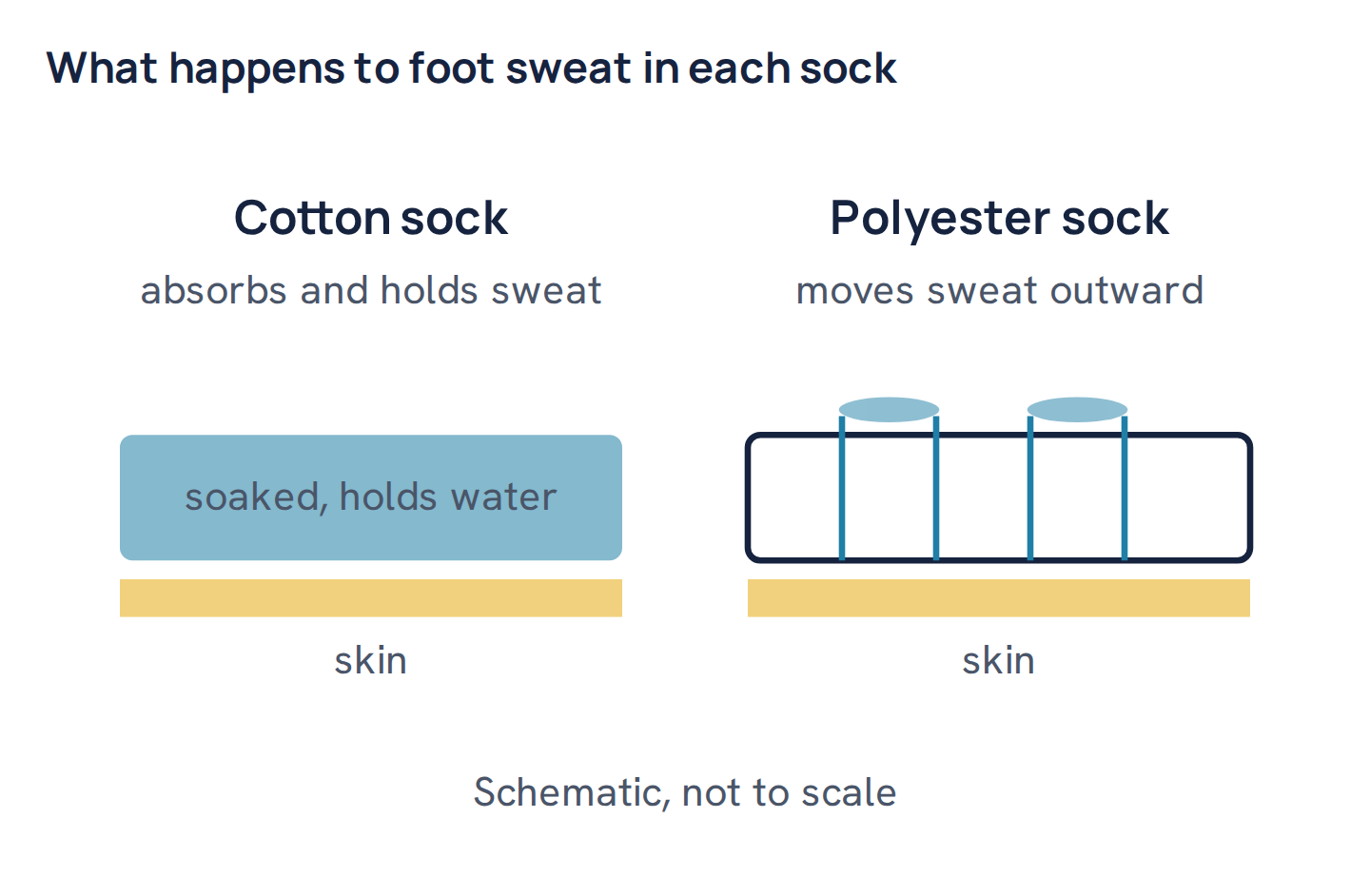
- Cotton absorbs about 8% of its weight in moisture under normal conditions and far more when wet. It takes sweat away from the skin at first, but it holds it, so the sock becomes damp, heavier and slower to dry.
- Polyester absorbs only about 0.4%. Sweat stays on and between the fibres, and in a well-designed sports sock it is drawn along the yarns to the outside, where it can evaporate. The sock stays drier against the skin.
Which socks prevent blisters?
Blisters form when skin is rubbed repeatedly, and wet skin blisters much more easily than dry skin. Damp cotton socks also bunch, stretch and lose cushioning, adding friction. That is why runners and hikers are often advised to avoid 100% cotton socks. Polyester, nylon and merino wool sports socks stay drier and keep their shape, which reduces blisters. A good fit matters too: socks that are too big wrinkle, and socks that are too small pull at the heel.
Odour: which smells worse?
Foot odour comes from bacteria breaking down sweat. Polyester tends to hold odour-causing compounds more than cotton, so polyester socks can smell sooner and keep the smell after a cool wash. Cotton socks stay damp longer, which also lets bacteria grow. Merino wool socks are known for resisting odour better than either. Washing socks promptly, inside out, and letting shoes dry fully between wears helps more than the fibre choice.
Warmth and winter
For cold weather, dry warmth and wet warmth are different. A thick cotton sock is warm when dry, but once damp from sweat or snow it chills the foot. Polyester and acrylic thermal socks, and especially wool socks, keep more warmth when damp. For winter hiking and skiing, wool or synthetic blends are the usual choice; cotton is best kept for indoor and casual wear.
Durability, shape and pilling
Polyester and nylon are much stronger than cotton and resist abrasion, so synthetic-rich socks wear through less at the heel and toe and keep their shape after many washes. Cotton socks can shrink a little in hot washes and lose their elasticity over time. On the other hand, polyester socks show pills that stay attached, while cotton pills usually wear away. In our knit records, 100% cotton knit shrank a median 6% in length after the wash test and polyester knit a median 3%, which matches what many people notice with socks.
What common sock blends mean
- Mostly cotton with nylon and elastane (for example 75/23/2): soft and breathable, with nylon for strength and elastane for fit. A good everyday sock.
- Polyester with nylon and elastane: a typical sports sock; dries fast and lasts.
- Acrylic blends: soft and warm, cheap, but pill readily.
- Merino wool with nylon: warm, odour-resistant, good for hiking and winter.
- Cotton-polyester blends: a compromise: softer than polyester, quicker drying than cotton.
Common mistake: wearing thick 100% cotton socks for a long hike in summer. They soak up sweat within an hour, rub, bunch and cause blisters. Pack polyester, nylon or merino hiking socks instead and keep cotton for the evening.
Sock construction matters as much as fibre
Two socks with the same fibre can feel completely different, because of how they are knitted:
- Terry cushioning: loops knitted inside the sole add comfort and absorb impact, but hold more moisture.
- Mesh zones: open knitting over the top of the foot lets heat and moisture escape.
- Arch bands: a tighter band with more elastane keeps the sock from slipping and bunching.
- Seamless or hand-linked toes: flat toe seams reduce rubbing and blisters.
- Reinforced heel and toe: extra nylon where wear is greatest.
- Gauge and density: a finer, denser knit lasts longer and pills less.
A well-designed cotton-rich sock with mesh and an arch band can feel better than a cheap, loose polyester one, and the reverse is also true.
Bamboo and other alternatives
“Bamboo” socks are usually made from viscose produced from bamboo pulp. They feel very soft and smooth and absorb moisture like cotton, or more, but dry slowly and are weaker when wet, so they suit everyday wear rather than sport. Merino wool socks are the main alternative for active and outdoor use: warm, odour-resistant and comfortable over a wide temperature range. Nylon-rich socks, used for dress and sheer socks, behave much like polyester: smooth, strong and quick drying.
Which socks should you choose?
- Everyday and office: cotton-rich socks with nylon and elastane.
- Running and gym: polyester or nylon sports socks with targeted cushioning.
- Hiking: merino wool or synthetic hiking socks.
- Winter: wool or synthetic thermal socks.
- Sensitive skin: soft combed cotton or bamboo-viscose blends, washed before first wear.
- Diabetic or medical needs: follow medical advice; specialist socks often use moisture-moving synthetics and seamless toes.
How long do socks last?
Sock life depends on fibre, construction and use more than on price. Everyday cotton-rich socks worn once a week in rotation usually last a year or more before the heel thins; worn daily in hard shoes, much less. Polyester and nylon-rich sports socks resist abrasion better and keep their cushioning longer, though they may look pilled. Replace any sock once the heel or ball of the foot looks thin or shiny, since a thin sock rubs and blisters.
How to wash cotton and polyester socks
- Turn socks inside out to clean the inner surface and reduce pilling.
- Wash at 30–40°C; hotter washes shrink cotton and weaken elastane.
- Skip fabric softener on sports socks; it blocks moisture-moving finishes.
- Air dry or tumble on low heat.
- Rotate pairs and let shoes dry between wears.
Worked example. A nurse working 12-hour shifts tries two kinds of socks. Cotton crew socks feel soft at the start but are damp and slack by midday, and her feet ache. Polyester-nylon socks with a cushioned sole and arch band stay drier and keep their shape all shift. She keeps cotton socks for weekends and switches to the synthetic pairs for work.
Summary
- Cotton socks are soft and breathable but hold sweat and dry slowly.
- Polyester socks absorb little, dry fast, keep their shape and last longer.
- For sport and long days, polyester, nylon or merino socks reduce blisters.
- Polyester can hold odour; cotton stays damp; wash promptly either way.
- Most good socks are blends: cotton or polyester with nylon and elastane.
Questions
Are cotton or polyester socks better?
Cotton socks are better for everyday comfort with little sweating. Polyester socks are better for sport and long days because they dry fast and keep their shape.
Do polyester socks make your feet sweat?
No, they do not cause sweat, but they hold odour more. Good polyester sports socks move sweat away and keep feet drier than cotton.
Why are cotton socks bad for running?
Cotton absorbs sweat and stays wet, bunches and loses cushioning, which increases friction and blisters.
Which socks are best for smelly feet?
Merino wool socks resist odour well. Whatever the fibre, wash socks promptly and let shoes dry between wears.
Why do socks contain nylon and elastane?
Nylon adds strength and abrasion resistance at the heel and toe; elastane gives stretch and keeps the sock in place.

Textile engineer with 14+ years in dyeing and fabric development. He writes every guide on Dyeing Solution from real production work. Full profile