Polyester is a fibre and satin is a weave, so polyester is not satin by default, but most satin today is polyester satin. Polyester satin vs silk satin, satin vs sateen and charmeuse, how to tell them apart, hair and sleep, breathability and care.
At a glance
Fibrepolyester
Weavesatin
Cheaperthan silk
Ironon low
Polyester is a fibre; satin is a weave. So polyester is not satin by default, but much of the satin sold today is made from polyester. Satin describes a weave in which the yarns float over several others, creating a smooth, glossy face and a dull back. Satin can be made from silk, polyester, nylon, acetate or viscose. Polyester satin is the most common because it is cheaper and easier to care for than silk satin. Likewise, polyester is not silk: silk is a natural protein fibre from silkworms, though polyester can be made to look silky.
This guide explains what satin is, how polyester satin differs from silk satin, satin vs sateen and charmeuse, how to tell polyester satin from silk, how they feel and perform for skin, hair, sleep and heat, and how to care for polyester satin. It is written from the textile-processing side, where we work with the fibres and dyes that make these fabrics look and behave the way they do.
What is satin?
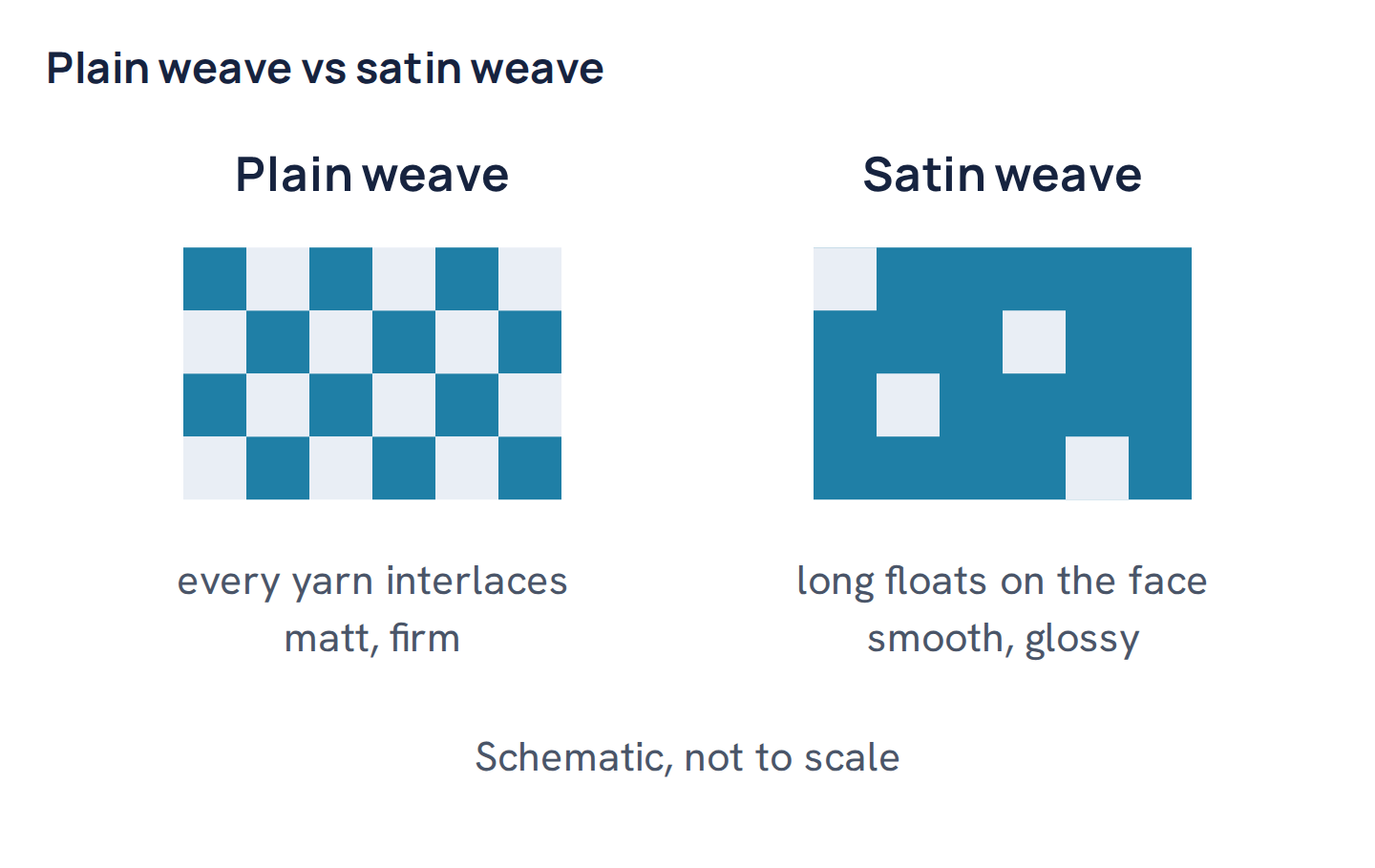
Satin is one of the three basic weaves, alongside plain weave and twill. In a satin weave, each warp yarn floats over four or more weft yarns before going under one (or the reverse). The long floats lie smoothly side by side and reflect light, giving satin its shine and slippery feel. The back is dull because it shows the short interlacing points. Satin weaves work best with smooth, lustrous filament yarns, which is why silk and polyester filament are ideal.
Is polyester satin or silk?
| Term | What it is |
|---|---|
| Polyester | A synthetic fibre (PET), made from petroleum |
| Silk | A natural protein fibre made by silkworms |
| Satin | A weave, made from any fibre, with a glossy face |
| Polyester satin | Satin weave made from polyester filament |
| Silk satin / charmeuse | Satin weave made from silk |
| Sateen | Satin-type weave made from spun cotton (or other staple) yarns |
Polyester satin vs silk satin
| Point | Polyester satin | Silk satin |
|---|---|---|
| Feel | Smooth, slippery, can feel slightly plasticky | Smooth, soft, warm, fluid |
| Shine | Bright, sometimes glassy | Deep, soft lustre |
| Breathability | Low; does not absorb sweat | Better; absorbs some moisture |
| Temperature | Can feel warm and clammy | Regulates temperature better |
| Strength and care | Strong, machine washable, wrinkle resistant | Delicate, often hand wash or dry clean |
| Static | Builds static | Less static |
| Cost | Low | High |
Satin vs sateen vs charmeuse
Sateen uses a satin-type weave with spun cotton yarns, giving a soft sheen that is popular for bed sheets. Charmeuse is a lightweight satin, often silk or polyester, with a very glossy face and dull back, used for blouses and lingerie. Duchess satin is heavy and stiff, used for bridal gowns. Crepe-back satin has a satin face and a crepe-textured back, so it can be used either side.
How to tell polyester satin from silk
- Price and label: real silk is expensive and the label says silk or mulberry silk.
- Lustre: silk shimmers with soft colour changes; polyester often has a uniform, brighter shine.
- Warmth: rub it between your fingers; silk warms quickly, polyester stays cool and slick.
- Burn test (on a thread only): silk burns slowly, smells like burning hair and leaves a crushable ash; polyester melts, smells chemical and leaves a hard bead. Do this safely, on a loose thread, away from anything flammable.
Polyester satin for hair and sleep
Satin pillowcases and bonnets are popular because the smooth surface reduces friction on hair, which can mean less frizz and breakage, and less creasing on the face. Polyester satin gives much of that smoothness at low cost. Silk does the same with better breathability and a softer feel, and absorbs less moisture from hair than cotton does. The friction benefit comes mainly from the satin weave; the comfort and temperature difference comes from the fibre.
Is polyester satin breathable?
Not very. Polyester fibre absorbs almost no moisture and satin is tightly woven, so polyester satin can feel warm and sticky in hot weather or for hot sleepers. Silk, cotton sateen or lyocell sateen are cooler choices. See is polyester good for hot weather.
Dyeing polyester satin
Polyester satin is dyed with disperse dyes at high temperature, usually around 130°C under pressure, which gives excellent colour fastness and very bright, rich shades. Because satin’s long floats reflect light strongly, any unevenness in dyeing shows clearly, so satin needs careful levelling. Silk is dyed with acid or reactive dyes at much lower temperatures. See how disperse dyes work on polyester.
Common mistake: ironing polyester satin on a hot setting. Polyester softens and the shiny face can glaze or melt, leaving a permanent shiny patch. Iron on low, on the reverse side, with a pressing cloth.
Uses of polyester satin
- Evening and bridesmaid dresses, blouses and skirts.
- Linings for jackets and coats.
- Pyjamas, robes and lingerie.
- Pillowcases, bonnets and scarves.
- Ribbons, decorations and upholstery trims.
How to care for polyester satin
- Wash cool (30°C) on a gentle cycle, inside out, or hand wash.
- Use a mesh bag to avoid snags; satin floats catch easily.
- Avoid rough fabrics, zips and hooks in the same load.
- Line dry or tumble on low; remove promptly.
- Iron on low on the reverse if needed.
Worked example. Two black satin pillowcases: one polyester, one mulberry silk. Both feel smooth and reduce hair friction. The polyester case is cheaper, survives machine washing easily and dries quickly, but feels warm on a hot night. The silk case feels cooler and softer but needs gentle washing. For budget and easy care, polyester satin is fine; for comfort in heat, silk is better.
Polyester satin vs nylon and acetate satin
Satin is also woven from nylon and acetate. Nylon satin is strong and smooth, often used in lingerie and linings, and feels a little softer than polyester. Acetate satin has a beautiful lustre and drape and is used for linings and evening wear, but it is weaker, creases easily and is damaged by some solvents. Viscose satin drapes well and breathes better than polyester but creases and can shrink. Polyester satin wins on durability, colour fastness, wrinkle resistance and price.
Does polyester satin snag?
Yes, more than plain-weave fabrics. The long floats that make satin shine can be pulled by rough nails, jewellery, Velcro and zips, leaving a raised loop. Wash satin in a mesh bag and keep it away from rough items. If a snag appears, gently ease the pulled float back with a needle from the reverse side rather than cutting it.
Polyester satin and static
Polyester builds static in dry conditions, so satin dresses and linings can cling to tights or legs. Washing with a small amount of fabric conditioner, using an anti-static spray, or wearing a natural-fibre slip underneath reduces cling. Humid weather reduces static naturally.
Is polyester satin good quality?
It depends on the yarn and weave. Good polyester satin uses fine filament yarns, a high thread density and a well-controlled finish, giving a soft, fluid hand and a gentle shine. Cheap polyester satin is often thin, stiff and glassy, frays easily at seams and shows every crease. Feel the weight and drape, look at how the light moves across it, and check that seams are neatly finished before buying.
Is polyester satin good for dresses?
Polyester satin is widely used for evening, prom and bridesmaid dresses because it holds bright, even colour, resists creasing better than silk and is affordable. It drapes less fluidly than silk charmeuse and can look shinier under flash photography. Heavier polyester satins and crepe-back satins give a more expensive look. Line the bodice with a breathable fabric for comfort on long evenings.
Polyester satin and sustainability
Polyester satin is made from fossil fuels and sheds microfibres, but it lasts well and needs little ironing or dry cleaning. Recycled polyester satin reduces the need for new raw material. Silk is natural and biodegradable but needs careful, often resource-intensive care.
Summary
- Polyester is a fibre; satin is a weave; silk is a natural fibre.
- Most satin today is polyester satin.
- Polyester satin is cheaper and easier to care for; silk satin breathes better and feels softer.
- Satin’s smoothness helps hair and skin; the fibre decides comfort in heat.
- Wash polyester satin cool and iron it on low.
Questions
Is polyester satin?
Not by default. Polyester is a fibre and satin is a weave, but much of the satin sold today is woven from polyester.
Is polyester silk?
No. Silk is a natural protein fibre from silkworms; polyester is a synthetic fibre that can be made to look silky.
Is polyester satin good for hair?
Yes, the smooth satin weave reduces friction on hair. Silk does the same with better breathability.
What is the difference between satin and sateen?
Satin is usually woven from filament yarns such as silk or polyester; sateen uses spun yarns such as cotton.
Is polyester satin breathable?
Not very. It absorbs little moisture and is tightly woven, so it can feel warm in heat.

Textile engineer with 14+ years in dyeing and fabric development. He writes every guide on Dyeing Solution from real production work. Full profile