Fabric sizing is a temporary coating that makes yarns or fabric stiffer, stronger and smoother. Why warp yarns are sized for weaving, common size materials, why size must be removed before dyeing, desizing methods, sizing vs starch, home sizing sprays and how to remove sizing.
At a glance
Warpyarns sized
Desizebefore dyeing
Iodinespot test
Washesout at home
Fabric sizing is a temporary coating applied to yarns or fabric to make them stiffer, stronger and smoother. In textile manufacturing, sizing usually means warp sizing: coating warp yarns with starch or synthetic size before weaving so they can survive the friction and tension of the loom without breaking or fuzzing. That size is later removed in desizing before dyeing. In home sewing and laundry, “sizing” also refers to spray-on products that give fabric body and crispness while ironing. Sizing is related to starch but is not identical: sizing typically gives a lighter stiffness and sits more on the fibre surface.
This guide explains what sizing is, why warp yarns are sized, the main size materials, how sizing is applied, why it must be removed before dyeing, what happens if it is not, sizing vs starch, fabric sizing sprays at home, and how to remove sizing from new fabric. It is written from the wet-processing side, where removing size properly is one of the first steps in preparing woven cotton for dyeing.
Why warp yarns are sized
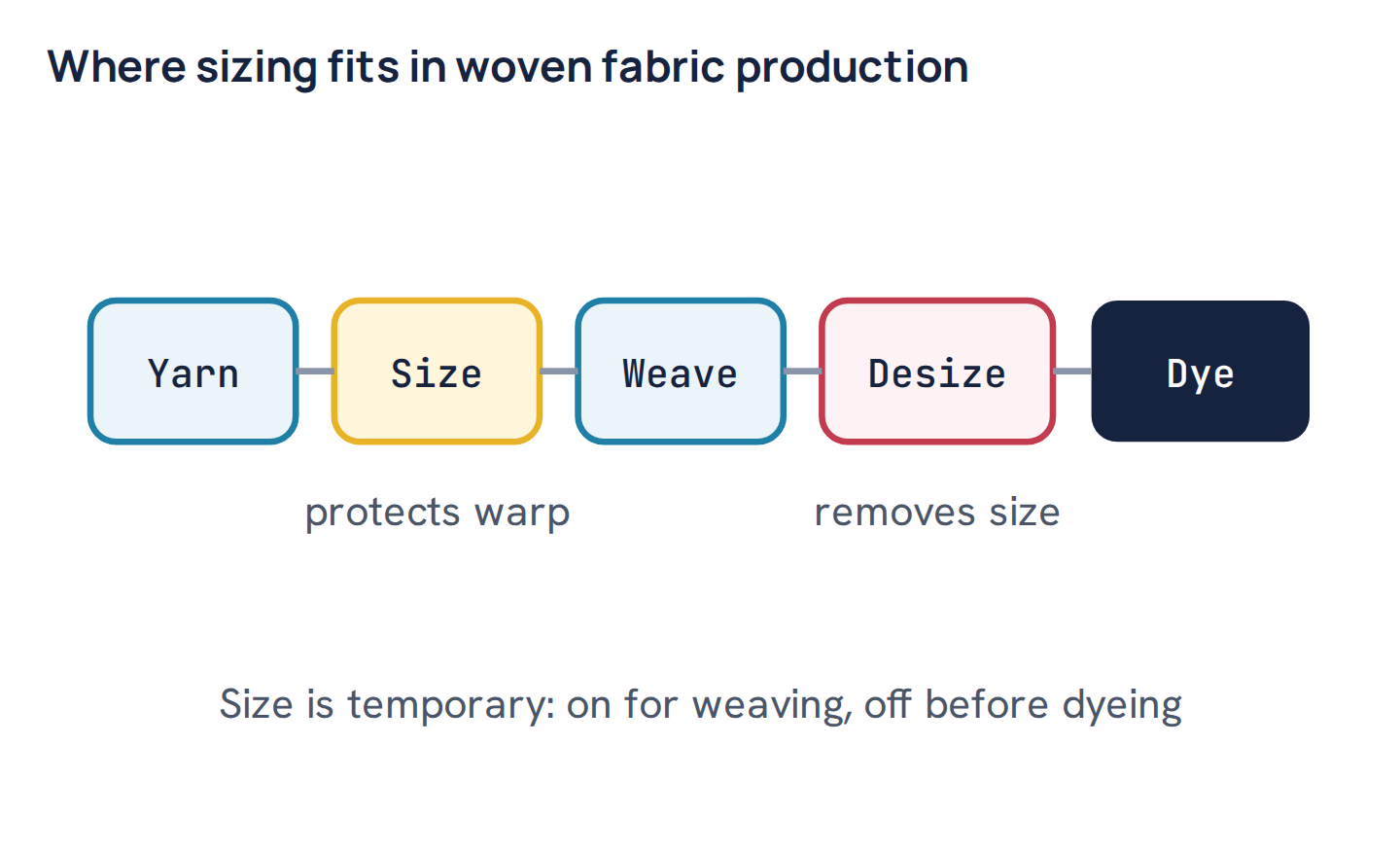
During weaving, warp yarns are under constant tension and are rubbed by the heddles, reed and shuttle or weft carrier thousands of times. Unprotected yarns would fray, break and shed fibre, stopping the loom. Sizing coats the yarn with a thin film that:
- binds loose fibres to the yarn surface, reducing hairiness;
- increases strength and abrasion resistance;
- smooths the yarn so it slides through the loom;
- reduces breaks and improves weaving efficiency.
Weft yarns are usually not sized because they are under less tension. Knitted fabrics are generally not sized either; knitting yarns are often waxed or oiled instead to reduce friction.
Common size materials
| Size | Used for | Removed by |
|---|---|---|
| Starch and modified starch | Cotton and cotton blends | Enzymes (amylase) or oxidative desizing |
| Polyvinyl alcohol (PVA) | Cotton, polyester-cotton, fine yarns | Hot water washing |
| Carboxymethyl cellulose (CMC) | Cotton blends | Water washing |
| Acrylic sizes | Polyester and synthetic filament | Alkaline washing |
| Additives: waxes, softeners | All, to lubricate | Scouring |
How sizing is applied
Warp yarns are drawn from a creel of beams through a size box containing hot size solution, then squeezed between rollers to control how much size stays on, and dried over heated cylinders. The sized yarns are wound onto a weaver’s beam. The amount of size picked up is controlled closely: too little and the warp breaks on the loom; too much and the yarn becomes stiff and brittle, and desizing becomes harder.
Why size must be removed before dyeing
Size coats the fibres and blocks water, chemicals and dye from reaching them evenly. If size is left on, scouring and bleaching work unevenly, dye takes up patchily, and the fabric can show streaks, light patches and poor absorbency. That is why woven cotton preparation starts with desizing, usually with amylase enzymes that break down starch into soluble sugars that wash away. See uneven dyeing causes and dyeing auxiliaries explained.
Desizing methods
- Enzymatic desizing: amylase enzymes at controlled temperature and pH break down starch; gentle and widely used.
- Oxidative desizing: hydrogen peroxide or persulphate breaks down size; can be combined with scouring.
- Hot water washing: for water-soluble sizes such as PVA.
- Acid steeping: older method using dilute acid; risks fibre damage.
After desizing, fabric is tested for residual size, often with an iodine spot test that turns blue-black where starch remains.
Common mistake: skipping or shortening desizing to save time on a woven cotton order. The residual starch causes uneven dye uptake and poor wettability, and the defect only shows after dyeing, when it is too late to fix cheaply. An iodine spot test before dyeing catches it.
Sizing vs starch
In everyday language, starch and sizing are often used interchangeably, but in home laundry products they differ. Spray starch, from corn, wheat or rice starch, gives firm stiffness and crispness and suits cotton and linen shirts. Spray sizing is lighter, often based on modified starch or synthetic polymers, gives body without stiffness and is suited to synthetics and blends that do not take starch well. Both wash out.
Fabric sizing at home
Quilters and sewers use sizing sprays to make fabric easier to cut accurately and to give it body for piecing, appliqué and pressing seams. It also helps lightweight or slippery fabrics behave. Sizing is temporary and washes out in the first wash. Spray lightly, let it soak in briefly, and press with a dry iron at a temperature suitable for the fibre.
New fabric and sizing
Bought fabric is usually desized and finished at the mill, but some fabrics, particularly cotton quilting fabrics and craft fabrics, are given a finishing size or starch to look crisp on the bolt. That finish washes out, which is why pre-washed fabric often feels softer and limper. Pre-washing also removes shrinkage before sewing.
How to remove sizing from fabric
- Wash the fabric in warm water with a normal detergent, following the fibre’s care needs.
- For heavy starch, a second wash may be needed.
- Rinse well, dry and press.
- Before printing or painting on fabric, always wash out sizing so inks and paints can bond evenly.
Worked example. A batch of woven cotton dyed navy shows pale streaks running along the warp. An iodine test on the undyed fabric from the same roll shows dark spots: residual starch size. Re-running the remaining fabric through a proper enzymatic desizing step before dyeing removes the streaks.
Sizing in polyester and synthetic fabrics
Filament polyester and nylon warp yarns are often sized with acrylic or polyester-based sizes to bind the filaments together and reduce snagging on the loom. These sizes are removed by alkaline scouring before dyeing. If residues remain, disperse dyes can dye unevenly and finishing chemicals may not bond. Synthetic size removal is usually combined with scouring in the same bath.
Sizing and denim
Denim warp yarns are dyed with indigo and then sized before weaving. Raw or “unwashed” denim keeps much of this size, which is why new raw jeans feel stiff and crisp. The size and some loose indigo come out in the first washes, softening the denim. Rinsed or washed denim has had most size removed at the factory.
Signs fabric still has sizing
- It feels stiff, papery or crisp, and softens after washing.
- Water drops sit on the surface instead of soaking in.
- An iodine drop turns blue-black on cotton (starch present).
- Dye or paint applied to it looks patchy.
Is sizing harmful?
Sizing materials such as starch, CMC and PVA are not considered harmful in clothing and are largely removed during processing or the first wash. Home sizing sprays are designed for fabric use; use them in a ventilated area and avoid breathing the spray.
Sizing, weaving efficiency and fabric quality
Good sizing is one of the biggest factors in weaving efficiency. Under-sized warps break often, stopping the loom and causing faults such as broken ends and thin places in the fabric. Over-sized warps become brittle, shed size dust and can break too. Mills control size concentration, viscosity, temperature, squeeze pressure and drying closely, and monitor the percentage of size picked up by the yarn. Consistent sizing means fewer weaving defects, which in turn means fewer faults showing up after dyeing.
Environmental side
Desizing produces effluent containing the removed size. Starch sizes are biodegradable but add organic load to wastewater; synthetic sizes such as PVA can be recovered and reused in some mills. Choosing recoverable sizes and efficient desizing reduces water and chemical use.
Sizing vs finishing
Sizing is temporary and is meant to be removed; finishing is the last stage of processing and is meant to stay, at least for a while. Softeners, resins and functional finishes are applied after dyeing to set the final handle and performance. See what is fabric finish.
Summary
- Sizing is a temporary coating that strengthens and smooths yarns or fabric.
- Warp yarns are sized to survive weaving; size is removed by desizing before dyeing.
- Starch, PVA, CMC and acrylic sizes are common.
- Residual size causes uneven dyeing and poor absorbency.
- Home sizing sprays add temporary body and wash out.
Questions
What is sizing in fabric?
A temporary coating, usually starch or a synthetic polymer, that strengthens and smooths yarns or adds body to fabric.
Why are warp yarns sized?
To survive the tension and friction of weaving without breaking, fraying or shedding fibre.
What is desizing?
Removing the size from woven fabric, usually with enzymes or hot washing, before scouring, bleaching and dyeing.
What is the difference between sizing and starch?
Starch gives firm stiffness; sizing gives lighter body and suits synthetics and blends. Both are temporary.
How do you remove sizing from fabric?
Wash the fabric in warm water with detergent, rinse well and dry; heavy starch may need a second wash.

Textile engineer with 14+ years in dyeing and fabric development. He writes every guide on Dyeing Solution from real production work. Full profile