Bamboo fabric, usually bamboo viscose, is softer, silkier, cooler and more absorbent than cotton; cotton is stronger, more stable, cheaper and genuinely natural. How each is made, comfort, strength, shrinkage data from our records, antibacterial claims, sustainability, labelling and care.
At a glance
9%viscose shrinkage
6%cotton shrinkage
Softerbamboo
Strongercotton
Bamboo fabric is usually softer, silkier, cooler and more absorbent than cotton, while cotton is stronger, more stable in washing, cheaper and a genuinely natural fibre. Most “bamboo” clothing and bedding is bamboo viscose (bamboo rayon): bamboo pulp dissolved and spun into regenerated cellulose fibre. That gives it a lovely drape and a smooth, cool feel, but it is weaker when wet, shrinks more and needs gentler care than cotton. Cotton is the dependable, hard-wearing everyday fibre. For softness and coolness, bamboo wins; for durability, easy care and value, cotton wins.
This guide compares cotton and bamboo fabric on how they are made, softness, breathability, moisture, strength, shrinkage, pilling, antibacterial claims, sustainability, labelling, cost and care, and uses our finishing records for viscose and cotton knits to show how they behave. It is written from the dye-house floor, where we dye and finish both cotton and viscose knits.
How each is made
Cotton is a natural seed fibre: picked, cleaned, carded, spun and then knitted or woven. Its fibre is a twisted, flat ribbon of cellulose, which gives cotton its matt look and soft, slightly dry hand.
Bamboo viscose starts as bamboo stalks, which are pulped and treated with caustic soda and carbon disulphide to make a viscose solution, then extruded into an acid bath to regenerate cellulose fibres. The finished fibre is smooth and round, with a slight sheen. A smaller amount of bamboo fibre is made by the lyocell solvent process. See bamboo rayon vs viscose and lyocell bamboo fabric.
Cotton vs bamboo at a glance
| Point | Cotton | Bamboo viscose |
|---|---|---|
| Fibre type | Natural seed fibre | Regenerated cellulose |
| Feel | Soft, matt, familiar | Very soft, silky, cool |
| Drape | Holds shape | Fluid, drapey |
| Moisture regain | About 8% | About 13% |
| Wet strength | Stronger when wet | Weaker when wet |
| Shrinkage | Moderate | Higher |
| Pilling | Low to moderate | Can pill with rubbing |
| Durability | High | Moderate |
| Price | Lower | Higher |
What our records show
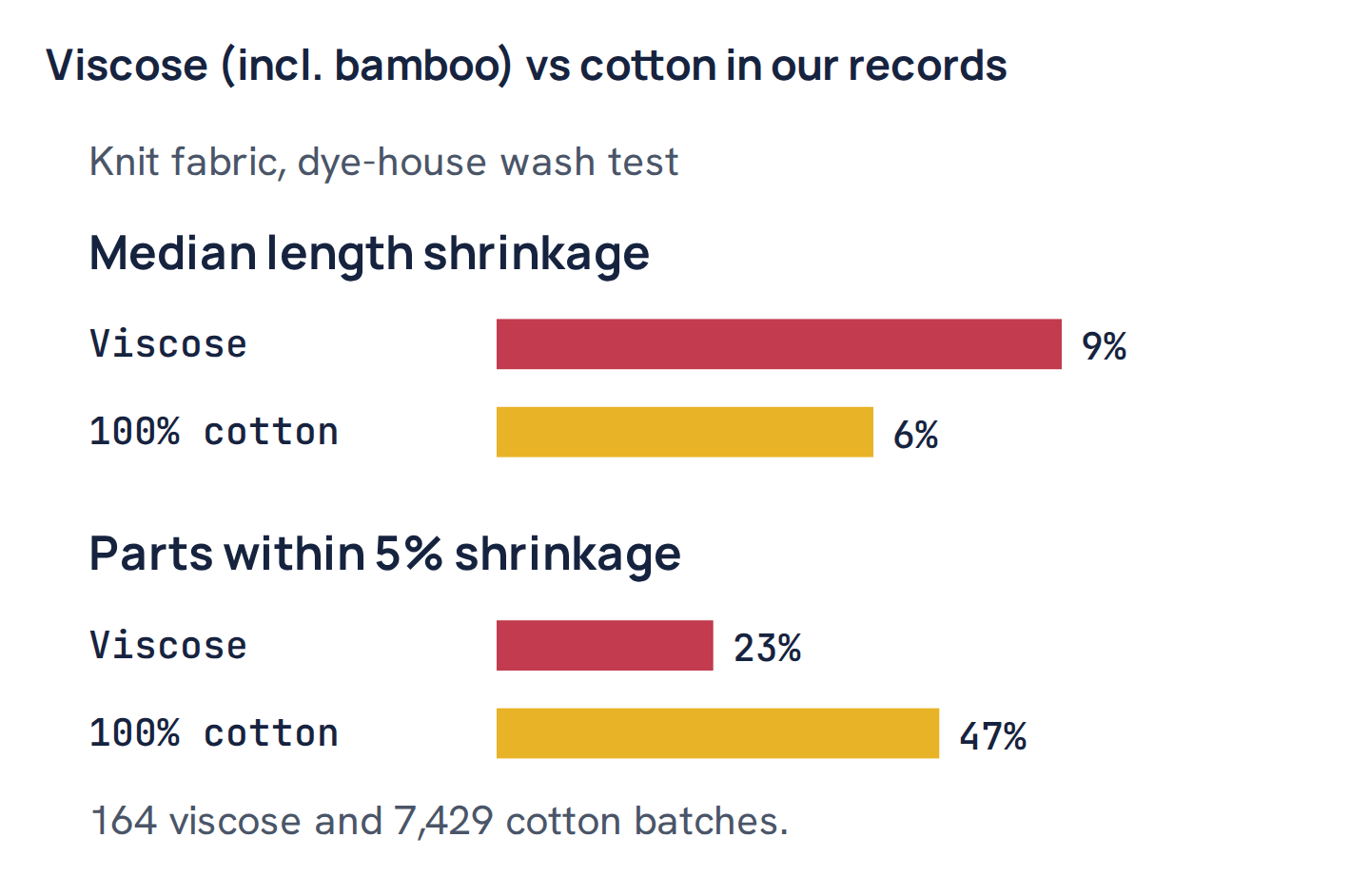
Bamboo viscose behaves as viscose in processing, so our viscose records are a good guide. In 164 viscose knit batches, the median length shrinkage after the wash test was 9%, with the worst tenth at 14% or more, and only 23% of parts kept shrinkage within 5%. In 7,429 batches of 100% cotton knits, the median was 6% and 47% of parts kept shrinkage within 5%. Light viscose parts also gained a median 17.5% in weight after washing as the fabric relaxed and closed up. In practice, bamboo garments need more careful washing to keep their size.
Softness and comfort
Bamboo viscose feels noticeably smoother and silkier than standard cotton, with a cool touch and a gentle sheen. It drapes close to the body, which suits loungewear, sleepwear and underwear. Cotton feels soft but slightly drier and holds more shape; long-staple cottons such as pima feel smoother than ordinary cotton. See pima vs Egyptian cotton.
Breathability and moisture
Both breathe well. Bamboo viscose absorbs more moisture and feels cooler in heat and at night, which is why bamboo sheets and pyjamas are popular with hot sleepers. Cotton absorbs well too but can feel damp longer in heavy sweating. See is cotton breathable.
Strength and durability
Cotton is stronger when wet than dry, so it tolerates machine washing well. Viscose loses much of its strength when wet, so bamboo garments can stretch, distort or tear if handled roughly in the wash, and seams can pucker. Over time, cotton usually lasts longer, especially in items washed frequently.
Antibacterial and odour claims
Bamboo is often advertised as naturally antibacterial. The living plant has some natural defences, but the viscose process dissolves the plant completely, so these do not survive in meaningful amounts. Any antibacterial effect in bamboo viscose usually comes from an added finish. Both bamboo and cotton hold less odour than polyester because they absorb sweat. See is bamboo fabric toxic.
Sustainability
Bamboo grows quickly with little irrigation and few pesticides, which sounds very green. But turning it into viscose uses chemicals, and the impact depends on how well the factory recovers and treats them. Conventional cotton uses farmland and often irrigation and pesticides; organic and better-managed cotton reduce this. Bamboo lyocell, made with a recovered solvent, is generally the cleaner bamboo route. Both cotton and bamboo viscose are biodegradable when not blended with synthetics.
Labelling
In several markets, rules say bamboo viscose must be labelled as viscose or rayon made from bamboo, not just “bamboo”. A label saying “bamboo viscose” or “rayon from bamboo” tells you it will behave like viscose. “Lyocell from bamboo” behaves like lyocell: stronger and more stable.
Common mistake: washing bamboo sheets at 60°C and tumble drying them hot like cotton sheets. Bamboo viscose shrinks and weakens in heat, so the fitted sheet can stop fitting the mattress and the fabric may pill. Wash bamboo at 30–40°C and dry low or on a line.
Cotton-bamboo blends
Cotton-bamboo viscose blends, often 70/30 bamboo-cotton or similar, combine bamboo’s softness and coolness with cotton’s strength and stability. They are common in T-shirts, socks, babywear and towels. They still shrink more than pure cotton, so gentle washing helps.
Which should you choose?
- Choose bamboo viscose for very soft, cool sleepwear, sheets, underwear and loungewear, if you will wash it gently.
- Choose cotton for everyday clothing, towels, kids’ clothes and anything washed often or hard.
- Choose a bamboo-cotton blend for softness with better durability.
- Choose bamboo lyocell if you want bamboo with more strength and a cleaner process.
Care for each
- Cotton: wash 30–40°C (60°C for whites and towels if needed), tumble low to medium.
- Bamboo viscose: wash 30°C on gentle, do not wring, line dry or tumble low, no bleach.
- Both: avoid heavy fabric softener, which reduces absorbency.
Worked example. A hot sleeper switches from cotton percale to bamboo viscose sheets and sleeps cooler. After a year of 40°C washes and low drying, the bamboo sheets are softer than ever but have pilled slightly where the body rubs; the old cotton sheets still look crisp. Comfort favours bamboo; durability favours cotton.
Cotton vs bamboo towels
Bamboo-cotton towels feel very soft and absorb water quickly, and their smooth fibres give a slight sheen. Pure cotton terry towels are more durable, tolerate hotter washes and keep their loops better over years of use. Bamboo-rich towels can lose loops and shed fibres sooner if washed hot. For everyday bath towels in a busy home, cotton is the practical choice; for a soft, luxurious feel, a bamboo-cotton blend washed at moderate temperatures works well. See what is terry cloth.
Cotton vs bamboo socks
Bamboo socks are soft, absorbent and comfortable, and they are usually blended with nylon and elastane for strength and fit. Cotton socks are similar and generally a little more durable and cheaper. For hiking and sport, wool or synthetic blends usually perform better than either. See cotton vs polyester socks.
Cotton vs bamboo for babies and sensitive skin
Both are popular for babywear. Bamboo viscose feels exceptionally soft and smooth; cotton, especially organic and combed cotton, is soft, tough and tolerates frequent hot washing. For sensitive skin, both are good choices because they are smooth and absorbent. The bigger factors are dyes, finishes and fit, so look for recognised safety certifications and wash new items before use.
Does bamboo pill more than cotton?
Bamboo viscose can pill where it rubs, especially in sheets and leggings, because its smooth staple fibres can migrate to the surface and the wet-weak fibres are easily abraded in washing. Cotton also pills, but pills often break off. Gentle washing, washing inside out and avoiding rough items in the same load slow pilling for both.
If you love the feel of bamboo but want fewer care worries, a bamboo-cotton blend is a sensible middle path.
Summary
- Most bamboo fabric is bamboo viscose, a regenerated cellulose fibre.
- Bamboo is softer, cooler and more absorbent; cotton is stronger and more stable.
- In our records viscose shrank a median 9% against 6% for cotton.
- Bamboo’s natural antibacterial claim does not survive the viscose process.
- Wash bamboo cool and gently; cotton tolerates harder washing.
Questions
Is bamboo better than cotton?
Bamboo viscose is softer and cooler; cotton is stronger, more stable and easier to care for. The better choice depends on use.
Is bamboo fabric softer than cotton?
Yes, bamboo viscose usually feels smoother and silkier than standard cotton.
Does bamboo shrink more than cotton?
Usually yes. In our knit records viscose shrank a median 9% in length against 6% for cotton.
Is bamboo fabric antibacterial?
Not naturally once it is made into viscose. Any antibacterial effect usually comes from an added finish.
Are bamboo sheets better than cotton sheets?
Bamboo sheets feel cooler and softer, which suits hot sleepers; cotton sheets are more durable and easier to wash.

Textile engineer with 14+ years in dyeing and fabric development. He writes every guide on Dyeing Solution from real production work. Full profile