Yes, cotton is flammable: it ignites fairly easily, burns with a flame and leaves soft ash, though it does not melt like polyester. What makes cotton fabrics burn faster, cotton vs polyester and wool in a fire, sleepwear rules, flame-resistant cotton and safety tips.
At a glance
Burnsreadily
No meltunlike polyester
Brushedburns fastest
FR cottonself-extinguishes
Yes, cotton is flammable. Cotton is made of cellulose, which ignites fairly easily and burns with a steady flame, leaving soft grey ash and often glowing embers. Loose, fluffy and brushed cotton fabrics such as fleece and flannelette catch and spread flame faster than tight, heavy ones. Untreated cotton does not melt like polyester, which is why it is preferred near open flames in some trades, but it does burn readily. Flame-resistant (FR) cotton is ordinary cotton given a chemical treatment so it resists burning.
This guide explains how cotton burns, what makes some cotton fabrics more flammable than others, cotton vs polyester, wool and other fibres in a fire, safety standards for clothing and children’s sleepwear, flame-resistant cotton, and practical safety tips. It is written from the textile-processing side, where we know how fabric structure and finishing change how a fabric behaves.
How cotton burns
Cotton is a cellulose fibre. When it is heated enough, it breaks down and gives off flammable gases that ignite. Typical behaviour:
- Ignition: cotton ignites relatively easily in an open flame.
- Burning: it burns with a yellow flame and keeps burning after the flame source is removed.
- Smell: like burning paper.
- Residue: soft, light grey ash that crumbles easily; it may continue to glow (afterglow).
- No melting: cotton chars and burns away rather than melting or dripping.
Textile labs use this burn behaviour as a quick first check of fibre type, alongside chemical and microscopic tests; see how fibre content is tested.
What makes a cotton fabric more or less flammable?
The fibre is only part of the story. The fabric structure has a large effect:
- Raised or brushed surfaces (fleece, flannelette, chenille, terry) have loose fibres with lots of air around them, so flame can flash quickly across the surface.
- Light, loose fabrics such as gauze or voile ignite more easily than heavy, tight ones such as denim or canvas.
- Loose-fitting garments such as wide sleeves, robes and nightgowns are more likely to touch a flame and have air on both sides to feed it.
- Weight: heavier fabrics take longer to ignite and burn more slowly.
- Finishes: some softeners and finishes slightly change burning; flame-retardant finishes greatly reduce it.
- Blends: cotton-polyester can be more hazardous than either fibre alone, because the cotton can act as a wick that keeps molten polyester burning.
Cotton vs polyester in a fire
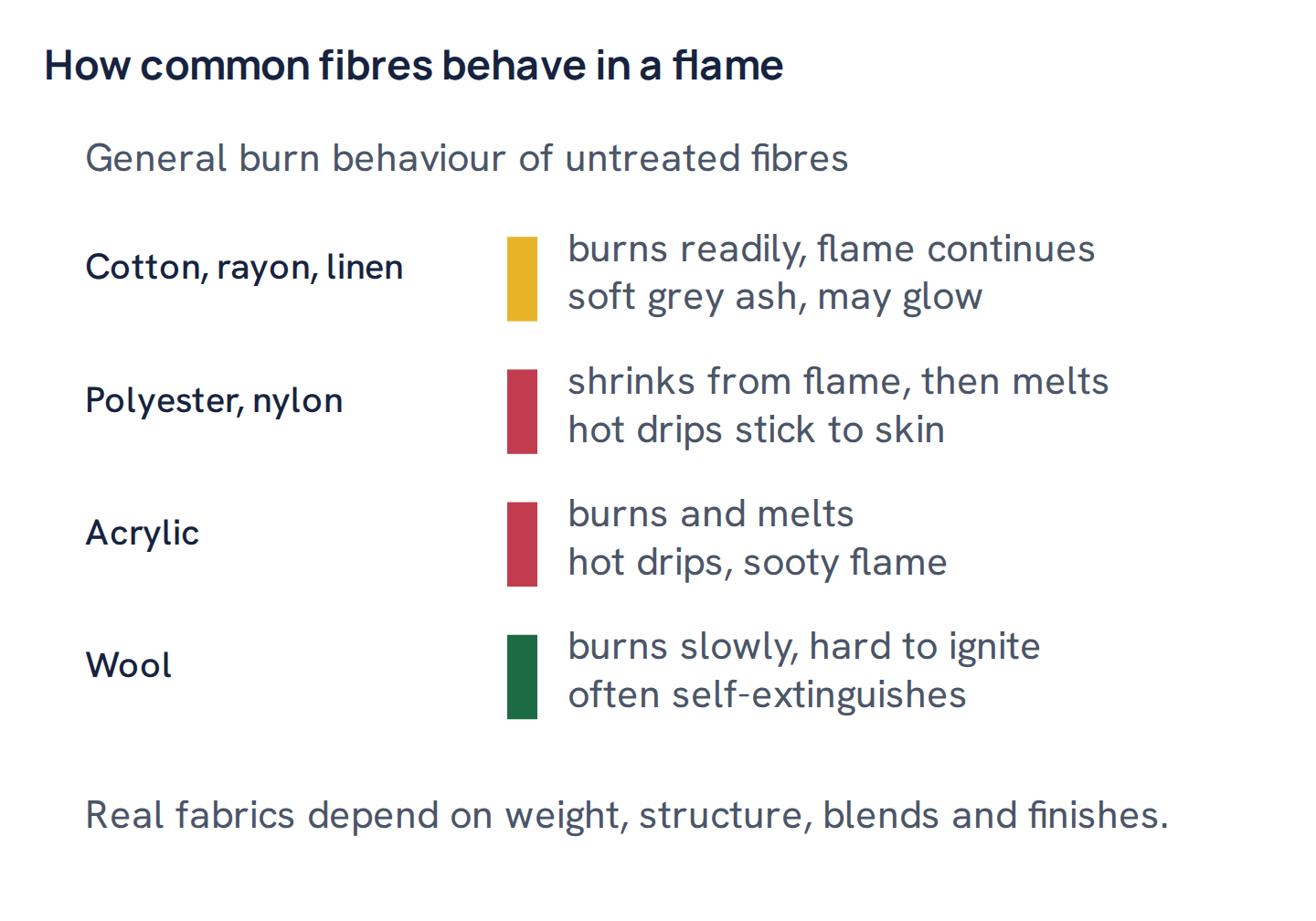
This is the comparison most people ask about. Cotton ignites more easily and burns readily, but it does not melt. Polyester tends to shrink away from a small flame and can be harder to ignite in some fabrics, but once it burns it melts, and the hot, sticky liquid can stick to skin and cause deep burns. For people working near sparks, molten metal or open flames, untreated cotton is often preferred over plain synthetics, and flame-resistant fabrics are preferred over both. For ordinary daily wear, both are generally safe; the risk lies in specific situations, such as cooking over gas, open fires or candles.
Is cotton safe for children’s sleepwear?
Children’s sleepwear has special rules in several countries because of the higher risk of burns. In the United States, children’s sleepwear sizes above 9 months must either be flame resistant, meeting specific tests, or be snug-fitting, because snug garments are less likely to contact a flame and have less air to feed it. Cotton pyjamas for children are therefore often sold as “snug-fitting” with a label saying the garment is not flame resistant. General clothing in the US must also meet a basic flammability standard that excludes the most dangerous fast-burning fabrics. Rules differ between countries, so follow local labels and guidance.
What is flame-resistant cotton?
Flame-resistant (FR) cotton is cotton or a cotton-rich blend treated with a durable chemical finish that changes how the cellulose breaks down in heat, so it chars instead of producing flammable gases. FR cotton self-extinguishes when the flame source is removed and does not melt. It is used in protective workwear for electricians, welders, oil and gas workers and firefighters’ station wear. The treatment is applied in finishing, and the garment must be cared for according to the label to keep its protection, for example avoiding bleach and certain softeners.
FR treatment is one of many functional finishes applied to cotton after dyeing; others include antimicrobial and water-repellent finishes; see antimicrobial finish.
Common mistake: drying cotton towels, cloths or garments stained with cooking oil or massage oil in a hot tumble dryer, or leaving them in a warm pile. Oils left in cotton can heat up by themselves as they oxidise and, in rare cases, ignite. Wash oily textiles thoroughly, dry them fully and cool them before stacking.
Cotton and lint fires
Cotton lint, the fluffy fibre that collects in dryer filters and vents, is very flammable because it is fine, loose and full of air. Lint build-up is a known cause of dryer fires. Clean the lint filter every load and the vent duct regularly. In textile mills, cotton dust and fly are also a fire hazard, which is why mills control dust and use careful housekeeping.
Cotton compared with other natural fibres
| Fibre | Ease of ignition | Burning | Residue |
|---|---|---|---|
| Cotton | Easy | Steady flame, may glow | Soft grey ash |
| Linen | Easy | Similar to cotton | Soft ash |
| Rayon / viscose | Easy | Burns quickly | Little ash |
| Wool | Hard | Slow, often self-extinguishes | Crushable black bead, smells of hair |
| Silk | Moderate | Burns slowly, may self-extinguish | Crushable dark bead |
Wool’s natural resistance to burning is why it is traditionally used for blankets and some protective clothing. Cotton, linen and rayon are all cellulose fibres and burn in a similar way.
How flammability is tested
For clothing, labs use standard tests in which a strip of fabric is held at an angle or vertically and exposed to a small flame for a set time. They record how long it takes for the flame to spread a set distance, whether it keeps burning after the flame is removed, and how much of the sample is destroyed. Fabrics with raised surfaces are often tested both as received and after washing, because washing can remove loose fibres or finishes. These tests separate normal clothing fabrics from the rare, very fast-burning ones that are not allowed for sale.
Practical cotton fire-safety tips
- Roll up or avoid loose cotton sleeves when cooking over gas or open flames.
- Keep brushed cotton robes and nightwear away from heaters, candles and fireplaces.
- For children’s sleepwear, choose snug-fitting cotton or labelled flame-resistant garments.
- Clean the dryer lint filter every time and the vent regularly.
- Do not dry oily cotton rags in a hot dryer; wash them thoroughly first.
- For work near sparks or flames, wear proper FR clothing, not ordinary cotton or polyester.
- If clothing catches fire: stop, drop and roll.
Cotton blends and flammability
Blending changes burn behaviour. Cotton-polyester blends combine cotton’s tendency to burn with polyester’s melting, and the cotton can support the burning polyester, so some blends can be among the more hazardous fabrics in a fire. Cotton-wool blends are harder to ignite than cotton alone. Cotton with a small amount of elastane behaves mostly like cotton. FR cotton blends with special fibres are designed for protective clothing.
Worked example. A cook wears a loose brushed-cotton flannel shirt in a kitchen with gas burners. The raised surface and loose sleeves make it easy for flame to catch and spread. A close-fitting, heavier cotton twill chef’s jacket is much safer, and an FR-treated jacket safer still. A polyester shirt in the same kitchen would add the risk of melting.
Cotton near open flames at home
The practical risks are everyday ones: loose sleeves near a gas hob, candles near curtains, or cotton tea towels left close to a burner. Roll up or choose fitted sleeves when cooking, keep fabrics away from open flames and heaters, and never leave lint building up in a tumble dryer, because dry cotton lint ignites easily.
Summary
- Cotton is flammable: it ignites easily, burns with a flame and leaves ash.
- Brushed, light and loose cotton fabrics burn fastest; heavy, tight ones slowest.
- Cotton does not melt like polyester, which melts and drips.
- Children’s sleepwear must usually be snug-fitting or flame resistant.
- FR cotton is treated to self-extinguish and is used in protective workwear.
Questions
Is cotton flammable?
Yes. Cotton ignites fairly easily, keeps burning with a flame and leaves soft grey ash. It does not melt.
Is cotton more flammable than polyester?
Cotton ignites more easily, but polyester melts and drips when it burns, which can cause severe burns. Each has different risks.
Which cotton fabrics are most flammable?
Light, loose and brushed or raised fabrics such as fleece, flannelette and gauze, especially in loose-fitting garments.
Is cotton safe for children’s pyjamas?
Many countries require children’s sleepwear to be flame resistant or snug-fitting. Cotton pyjamas are usually sold as snug-fitting.
What is flame-resistant cotton?
Cotton treated with a durable chemical finish so it chars and self-extinguishes instead of burning; used in protective workwear.

Textile engineer with 14+ years in dyeing and fabric development. He writes every guide on Dyeing Solution from real production work. Full profile