Bamboo rayon and viscose are essentially the same fibre: viscose made with bamboo as the cellulose source. How bamboo rayon is made, labels and marketing claims, bamboo vs cotton, modal and lyocell, the environmental picture, and how to care for it.
At a glance
Samefibre
Viscoseprocess
9%viscose shrinkage
Claimsoften misleading
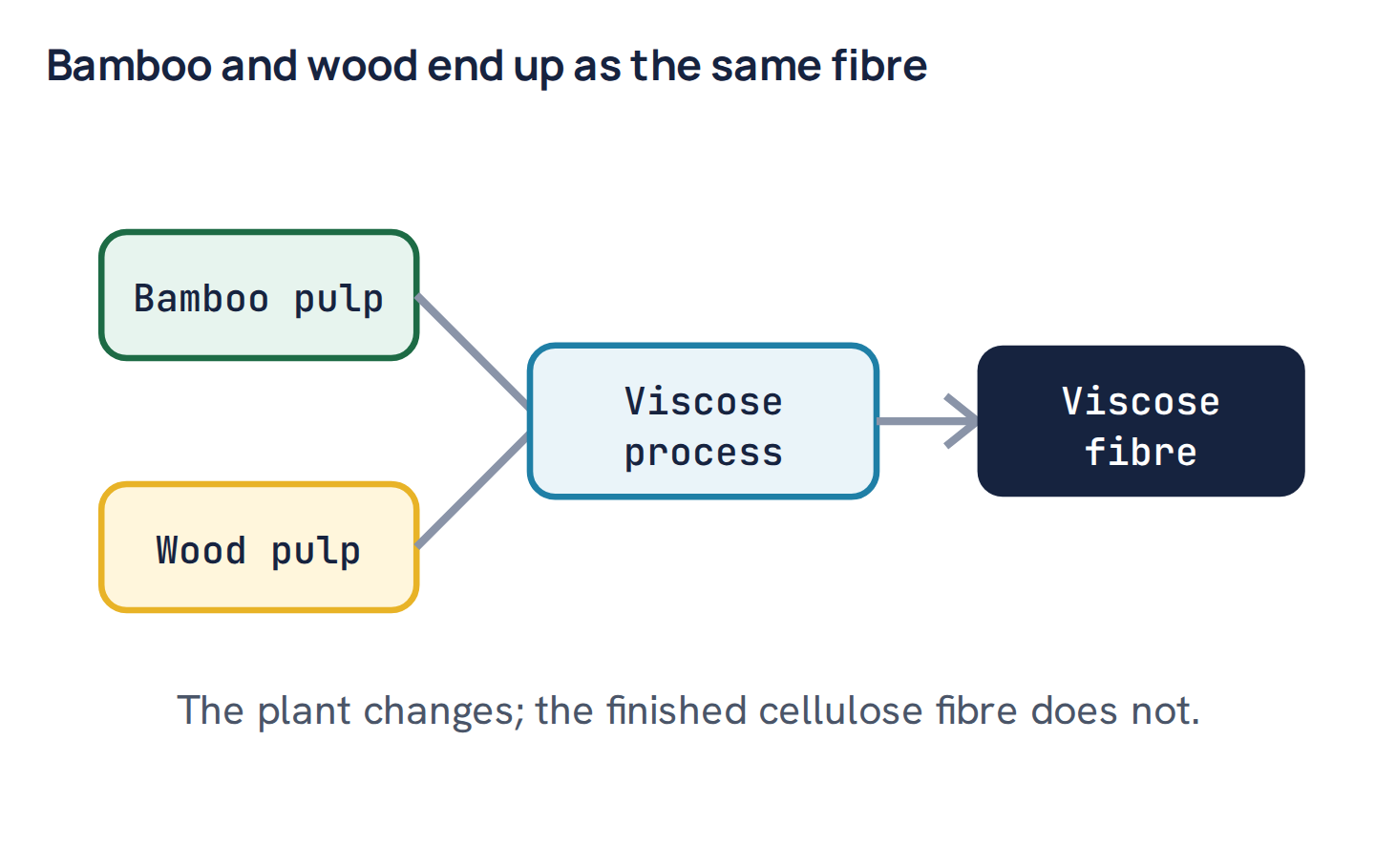
Bamboo rayon and viscose are essentially the same fibre. “Viscose” is the name of the process that turns cellulose into fibre; “rayon” is the general name for that fibre, especially in the US. When the cellulose comes from bamboo instead of wood such as beech, pine or eucalyptus, the result is sold as “bamboo rayon”, “rayon from bamboo” or “viscose from bamboo”. Once the bamboo has been dissolved and re-formed, the finished fibre behaves like any other viscose: soft, cool, drapey and absorbent, but weak when wet and prone to shrinking.
This guide explains how bamboo rayon is made, why it is labelled the way it is, bamboo rayon vs viscose vs “bamboo” fabric, how it compares with cotton, modal and lyocell, what is true and untrue in bamboo marketing, how it behaves in dyeing and washing, and how to care for it. It is written from the dye house, where viscose from any source is processed the same way.
How bamboo rayon is made
The viscose process works the same whatever plant the cellulose comes from:
- Pulping: bamboo stalks are chipped and cooked to extract cellulose pulp.
- Steeping: the pulp is soaked in sodium hydroxide (caustic soda).
- Xanthation: the cellulose reacts with carbon disulphide to form a soluble compound.
- Dissolving: this is dissolved into a thick, honey-like solution called viscose.
- Spinning: the solution is pushed through fine holes into an acid bath, where the cellulose re-forms as filaments.
- Washing and cutting: the filaments are washed, often cut into staple fibre, and spun into yarn.
By the end, nothing of the bamboo’s original structure remains; only the cellulose molecules. That is why the fibre is chemically the same as viscose made from wood. See what is viscose fabric.
Bamboo rayon vs viscose: is there any difference?
In the finished fabric, very little. Differences in feel between two “bamboo” fabrics and two “viscose” fabrics come from yarn count, knit or weave, finishing and quality, not from the plant. A soft bamboo-viscose jersey and a soft beech-viscose jersey of the same weight will feel and behave almost identically. That is why regulators in several countries require such products to be labelled as “rayon made from bamboo” or “viscose from bamboo”, not simply “bamboo”.
| Name on label | What it usually is |
|---|---|
| Viscose / rayon | Regenerated cellulose from wood or other plants |
| Viscose from bamboo / bamboo rayon | The same fibre, with bamboo as the cellulose source |
| “Bamboo fabric” or “100% bamboo” | Almost always bamboo viscose; the plain name is misleading |
| Bamboo lyocell | Cellulose from bamboo made by the lyocell solvent process |
| Bamboo linen / mechanical bamboo | Rare; fibre extracted mechanically, coarse like linen |
What about “natural” and “antibacterial” bamboo claims?
Bamboo is a fast-growing plant that needs little irrigation or pesticide, which is a genuine advantage at the farm stage. But the claims often made for bamboo fabric, such as being natural, antibacterial or UV-protective, usually refer to the raw plant, not to the finished viscose fibre. The chemical viscose process removes the plant’s natural compounds, so bamboo viscose does not keep any antibacterial property the plant may have. Regulators in the US, Canada and elsewhere have challenged such claims. If a fabric is antibacterial, it is because a finish was added, not because of bamboo.
How bamboo rayon feels and performs
- Very soft and smooth, with a cool, silky handle.
- Highly absorbent and breathable, comfortable in heat and for sleepwear.
- Fluid drape; hangs close to the body.
- Bright colours from reactive dyes.
- Weak when wet, so it can stretch, distort and wear faster.
- Shrinks a lot if washed hot; in our records viscose knit shrank a median 9% in length.
- Creases easily in woven forms.
Bamboo rayon vs cotton, modal and lyocell
| Fibre | Softness | Wet strength | Median shrinkage (our knit records) |
|---|---|---|---|
| Bamboo viscose / viscose | Very high | Low | 9% |
| Modal | Very high | Medium | 6% (blends) |
| Lyocell | High | High | 7% (blends) |
| Cotton | Good | High | 6% |
If you like bamboo viscose’s feel but want better durability, modal and lyocell are stronger members of the same family; see what is modal and what is lyocell.
Where bamboo viscose is used
- Bed sheets and pillowcases: very soft and cool; popular with hot sleepers, though they wrinkle and need gentle washing.
- Pyjamas and loungewear: smooth, breathable and drapey.
- Socks: soft and absorbent, usually blended with nylon and elastane for strength and fit.
- Underwear and baby clothes: soft next to the skin.
- Towels: absorbent and soft, often blended with cotton for strength.
- T-shirts and tops: fluid jersey, often with a little elastane.
How to tell what you are buying
Because “bamboo” is used loosely in marketing, read the fibre content carefully:
- “Viscose from bamboo” or “rayon made from bamboo”: the most common, honest label for bamboo viscose.
- “Lyocell from bamboo”: made by the solvent process; stronger and generally cleaner.
- “Bamboo” alone, or “100% bamboo”: usually viscose; the label is incomplete.
- “Bamboo cotton” or a percentage blend: check what share is viscose and what is cotton; the cotton adds strength.
- Certifications for the finished product and the fibre producer tell you more about safety and chemical recovery than the word bamboo does.
Environmental picture
Bamboo grows quickly and regenerates without replanting, which is a real benefit. The concern is processing: the viscose process uses carbon disulphide and caustic soda, which can pollute air and water and harm workers if not recovered and treated. Whether bamboo viscose is more sustainable than wood viscose depends far more on the factory’s chemical recovery than on the plant. Bamboo processed by the lyocell route, with a recovered solvent, is generally the cleaner option.
How bamboo viscose is dyed and finished
In the dye house, viscose is viscose: bamboo viscose follows the same gentle route as any other. It gets a mild scour at about 70–80°C, no enzyme treatment, and reactive dyeing at around 60°C, with careful handling because the wet fibre is weak. After drying, it is compacted to bring the length back, and wash-tested. Bamboo viscose with elastane is heat set first. See the 100% viscose knit dyeing process.
Common mistake: washing “bamboo” pyjamas or sheets hot because they are sold as natural and durable. They are viscose, which is weak when wet and shrinks most of any common fibre. Wash cool and gently, and dry on low or flat.
Worked example. Two sets of soft T-shirts: one labelled “viscose from bamboo”, one “100% viscose”. Both are 160 GSM single jersey. They feel almost the same, drape the same, and both shrink a few centimetres if tumble dried hot. The plant source made no practical difference; the knit, weight and finishing did.
Is bamboo viscose good for sensitive skin?
Many people with sensitive skin find bamboo viscose comfortable, because its fibres are smooth and round, it absorbs moisture well and it feels cool. That comfort comes from the viscose fibre, not from anything special in bamboo, so beech viscose or modal feels much the same. As with any fabric, dyes and finishes matter more than the plant: wash new items before wearing and choose products tested for restricted substances.
How to care for bamboo rayon
- Wash cold or at 30°C on a gentle cycle, inside out.
- Use mild detergent; avoid bleach.
- Do not wring; press water out.
- Dry flat or line dry; tumble only on low if the label allows.
- Iron on low to medium heat.
Should you pay more for bamboo viscose?
Because bamboo viscose and wood viscose end up as the same regenerated cellulose fibre, the plant source alone does not make one softer, cooler or longer lasting. Differences you can feel come from fibre fineness, yarn quality, knit construction and finishing. When comparing two garments, look at the fabric weight, the knit, the care label and any third-party certification rather than the word bamboo.
Summary
- Bamboo rayon is viscose made with bamboo as the cellulose source.
- The finished fibre is essentially the same as viscose from wood.
- “Natural” and “antibacterial” bamboo claims usually do not apply to the finished fibre.
- Bamboo viscose is soft, cool and absorbent but weak when wet and shrinks: a median 9% for viscose knit in our records.
- Wash cool and gently; consider modal or lyocell for more durability.
Questions
Is bamboo rayon the same as viscose?
Essentially yes. Bamboo rayon is viscose made from bamboo cellulose; after processing it is the same regenerated cellulose fibre as viscose from wood.
What is the difference between rayon and viscose?
None in practice. Viscose is the process and the common name outside the US; rayon is the general US name for the same fibre.
Is bamboo fabric natural?
Most bamboo fabric is viscose made from bamboo through a chemical process, so it is semi-synthetic, not a natural fibre like cotton.
Is bamboo viscose antibacterial?
Not inherently. The viscose process removes the plant’s natural compounds. Any antibacterial effect comes from an added finish.
Does bamboo rayon shrink?
Yes, like other viscose. Our viscose knit records show a median 9% length shrinkage, so wash it cool and dry it gently.

Textile engineer with 14+ years in dyeing and fabric development. He writes every guide on Dyeing Solution from real production work. Full profile