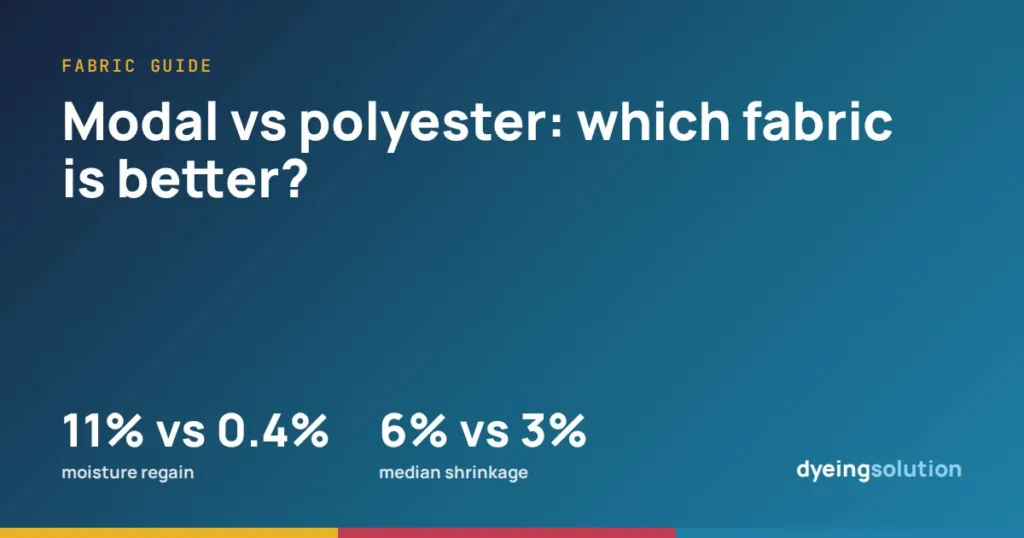
Modal is softer, more breathable and more absorbent; polyester is stronger, dries faster, barely shrinks and costs less. Modal vs polyester compared point by point, with shrinkage data from our finishing records, plus blends and which to choose for each garment.
At a glance
11% vs 0.4%moisture regain
6% vs 3%median shrinkage
Softvs durable
2 dyesfor blends
Modal is softer, more breathable and more absorbent than polyester; polyester is stronger, dries faster, barely shrinks and costs less. Modal is a regenerated cellulose fibre made from wood pulp, usually beech, close to cotton in chemistry. Polyester is a synthetic made from oil. Modal is the comfort choice for underwear, sleepwear and soft T-shirts; polyester is the durability and easy-care choice for sportswear, workwear and outerwear. Many fabrics blend the two to get softness with stability.
This guide compares modal and polyester on feel, breathability, moisture, sweat and odour, durability, shrinkage, pilling, colour, care, sustainability and cost, with figures from our finishing records. It also covers modal-polyester blends and which fibre to choose for each kind of garment.
What each fibre is
Modal is made by dissolving wood cellulose and re-forming it as fibre, using a modified viscose process that produces longer, better-aligned cellulose chains. It is softer and stronger when wet than ordinary viscose, absorbs a lot of moisture and is biodegradable under suitable conditions. See what is modal fabric.
Polyester is polyethylene terephthalate, melted and spun into filament or staple fibre. It absorbs very little water, is strong and stable, and does not biodegrade in normal conditions.
Modal vs polyester at a glance
| Point | Modal | Polyester |
|---|---|---|
| Raw material | Wood cellulose | Oil-based polymer |
| Feel | Very soft, silky, cool | Smooth, can feel slick or warm |
| Moisture regain | About 11–12% | About 0.4% |
| Breathability in casual wear | High | Low unless engineered |
| Drying speed | Slow | Fast |
| Strength | Good dry, lower wet | High, wet or dry |
| Shrinkage (our knit records) | Median 6% (modal blends) | Median 3% |
| Pilling | Generally low | Pills stay attached on spun fabrics |
| Odour | Holds less odour | Can hold body odour |
| Static | Little | Can build static |
| Biodegradable | Yes, under suitable conditions | No |
| Price | Higher | Lower |
Comfort and breathability
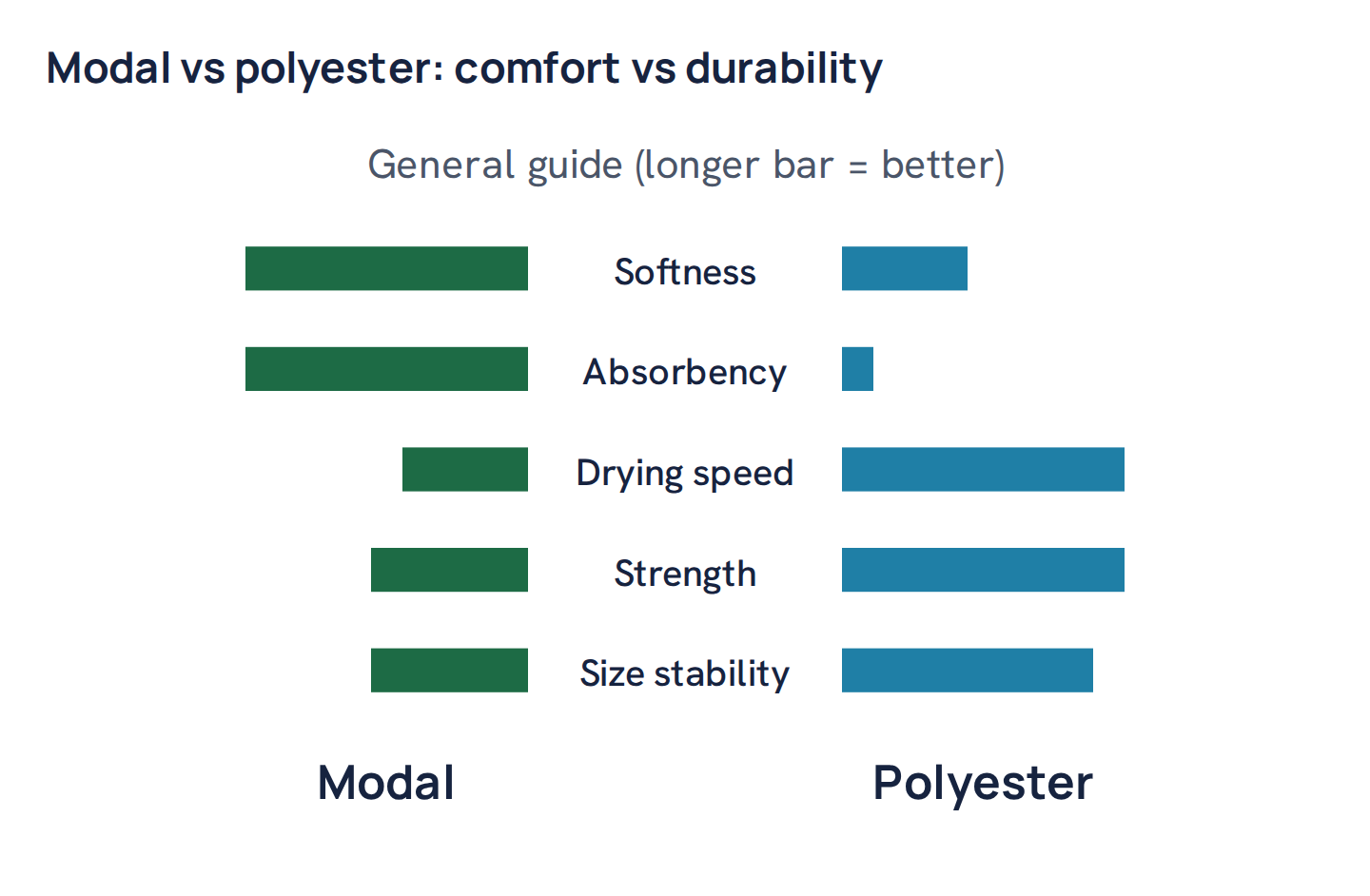
Modal wins for next-to-skin comfort. Its smooth, fine fibres feel silky, it absorbs sweat and feels cool, and it stays soft after many washes. That is why modal is so popular for underwear, bras, pyjamas and premium T-shirts. Plain polyester absorbs almost no moisture, so it can feel warm and clammy in casual wear, especially in heat. Technical polyester knits move sweat along the fibres and dry fast, which suits exercise, but for sitting, sleeping and everyday wear most people find modal more comfortable.
Durability, shrinkage and shape
Polyester is the tougher, more stable fibre. In our finishing records, polyester knit shrank a median 3% in length after the wash test, while modal blends shrank a median 6%, with the worst tenth around 10%. Modal blends were also hard to finish on target weight: only 27% of modal-blend parts finished within ±5% of the required GSM, and light parts gained a median 14.6% in weight after washing, because modal relaxes and closes up in water. Polyester keeps its size and shape, resists wrinkles and survives frequent, rough washing. Modal needs cooler, gentler care. See does polyester shrink.
Pilling and appearance
Modal’s smooth fibres pill relatively little and keep a clean surface. Spun polyester and polyester blends tend to pill, and the strong polyester fibres hold the pills on. Filament polyester pills much less but can snag. Modal keeps its colour and lustre well; polyester’s colour is also very durable once properly dyed and cleared.
Colour and dyeing
The two need completely different dyeing. Modal takes reactive dyes, like cotton, at moderate temperatures, giving bright, deep shades; because it is weaker wet, it needs gentle handling, and the salt is added at 80°C before the bath is cooled for the alkali. Polyester needs disperse dyes at about 130°C under pressure, followed by reduction clearing. A modal-polyester blend must be dyed with both dye classes, one for each fibre, which takes longer and costs more. See reactive vs disperse dye and the 100% modal knit dyeing process.
Odour and hygiene
Polyester tends to hold body odour more than cellulose fibres, because odour-causing compounds cling to its surface. Modal absorbs moisture and holds less odour, which is one reason it is preferred for underwear and sleepwear. Polyester sportswear often carries an odour-control finish for this reason.
Common mistake: drying modal underwear or tees on a hot cotton cycle because the polyester sports kit in the same load can take it. Polyester shrugs off the heat; modal relaxes, gains weight and can lose shape. Wash modal at 30°C and dry it low.
Modal-polyester blends
Blending gives a fabric that is softer and more breathable than polyester and more stable and durable than modal. These blends appear in T-shirts, loungewear, activewear tops and underwear, often with elastane. The more modal, the softer and more absorbent; the more polyester, the more stable and quick drying. A modal-polyester-elastane jersey is a popular “soft-touch” sportswear fabric.
How to tell modal from polyester
- Feel: modal is cool, soft and slightly heavy in the hand; polyester feels smoother, slicker and often warmer.
- Drape: modal falls in soft, fluid folds; polyester of the same weight is springier.
- Water drop: a drop soaks into modal quickly; on plain polyester it beads or spreads slowly.
- Crease test: crumple a corner for ten seconds; modal keeps soft creases, polyester springs back.
- Static: polyester clings and crackles in dry air; modal rarely does.
The label is the reliable answer; labs confirm fibre content with standard tests. See how fibre content is tested.
Cost and value
Polyester is one of the cheapest fibres to produce and care for, so polyester garments cost less to buy and run. Modal fibre costs more, and modal garments need gentler washing. In terms of value, modal earns its price in comfort and softness for underwear and sleepwear, while polyester earns its place in garments that must survive hard use and frequent washing.
Sustainability
Modal comes from wood, a renewable resource, and is biodegradable, but its production uses chemicals that must be recovered and treated; producers with closed-loop recovery and forest certification do this better. Polyester is made from fossil fuel, sheds microfibres in the wash and does not biodegrade; recycled polyester reduces new oil use. On balance, responsibly made modal is usually considered the lower-impact fibre, though polyester garments may last longer.
Which should you choose?
- Underwear and bras: modal or modal-elastane for softness and breathability.
- Pyjamas and loungewear: modal for cool, silky comfort.
- Running and gym: technical polyester for fast drying.
- Everyday T-shirts: modal blends for softness, polyester blends for easy care.
- Workwear and uniforms: polyester-rich fabrics for durability.
- Sensitive skin: modal, washed before first wear.
Worked example. A brand designing a sleep T-shirt and a gym T-shirt picks different fibres. The sleep tee uses a modal-elastane jersey: cool, silky and absorbent, washed cool. The gym tee uses a polyester-elastane technical knit with a wicking finish: it dries in minutes and keeps its size after daily hot washing. Each fibre is right for its job.
How to care for modal and polyester
- Modal: 30°C gentle wash, inside out; line dry or tumble low; iron medium.
- Polyester: 30–40°C normal wash; tumble low; avoid softener on sportswear; iron low if needed.
- Blends: follow the more delicate fibre, usually modal.
Modal vs polyester for sleep
For pyjamas and sheets, modal usually sleeps cooler: it absorbs night sweat and feels cool and smooth. Polyester sleepwear and microfiber sheets can feel warm and slightly clammy for hot sleepers, though they wrinkle less and dry quickly. People who feel cold at night may prefer brushed polyester; people who sleep hot usually prefer modal, cotton or linen.
Static and cling
In dry, heated or air-conditioned rooms, polyester builds static electricity, so skirts and dresses can cling to tights and crackle when removed. Modal holds a little moisture, which lets static drain away, so it rarely clings. Blends with modal or cotton reduce polyester’s static noticeably.
Summary
- Modal is softer, cooler and more absorbent; polyester is stronger, quicker drying and more stable.
- In our knit records polyester shrank a median 3% and modal blends 6%.
- Modal holds less odour; polyester can hold body odour.
- They need different dyes, so blends are dyed in two stages.
- Choose modal for comfort and sleep, polyester for sport and hard wear.
Questions
Is modal better than polyester?
For softness, breathability and next-to-skin comfort, yes. Polyester is better for durability, fast drying, size stability and price.
Is modal more breathable than polyester?
Yes. Modal absorbs about 11 to 12% moisture against about 0.4% for polyester, so it feels cooler and less clammy.
Does modal shrink more than polyester?
Yes. In our knit records modal blends shrank a median 6% in length and polyester 3%.
Is modal synthetic like polyester?
No. Modal is regenerated cellulose made from wood; polyester is a fully synthetic, oil-based fibre.
Why blend modal and polyester?
The blend is softer and more breathable than polyester and more stable and durable than modal.

Textile engineer with 14+ years in dyeing and fabric development. He writes every guide on Dyeing Solution from real production work. Full profile