Spandex (elastane) is not considered toxic to wear: finished spandex is a stable polymer used in small amounts and usually covered by other fibres. Where the real concerns come from, skin and tight fits, allergy, testing, heat setting, care and the environment.
At a glance
3–20%typical spandex
Coveredby other fibres
180–190°Cheat setting
Avoiddryer heat
Spandex (elastane) is not considered toxic to wear for most people. Finished spandex is a stable polyurethane-based polymer that is used in small amounts, usually 3–20%, in leggings, swimwear, underwear, socks, jeans and sportswear, and it is generally covered by other fibres in the yarn so it rarely touches the skin directly. Concerns about spandex are mainly about trace residues from manufacturing, dyes and finishes on the fabric, very tight fits that trap heat and sweat, and the environment. For people with a rare allergy to specific chemicals used in elastane or rubber, it can cause skin reactions.
This guide explains what spandex is, why finished spandex is considered safe, where the genuine questions come from, whether spandex is bad for your skin or health, tight clothing and comfort, how spandex fabrics are tested, how to choose and care for spandex garments, and the environmental side. It is written from the dye-house side, where we dye and heat set cotton-elastane, polyester-elastane and nylon-elastane fabrics every day.
What is spandex?
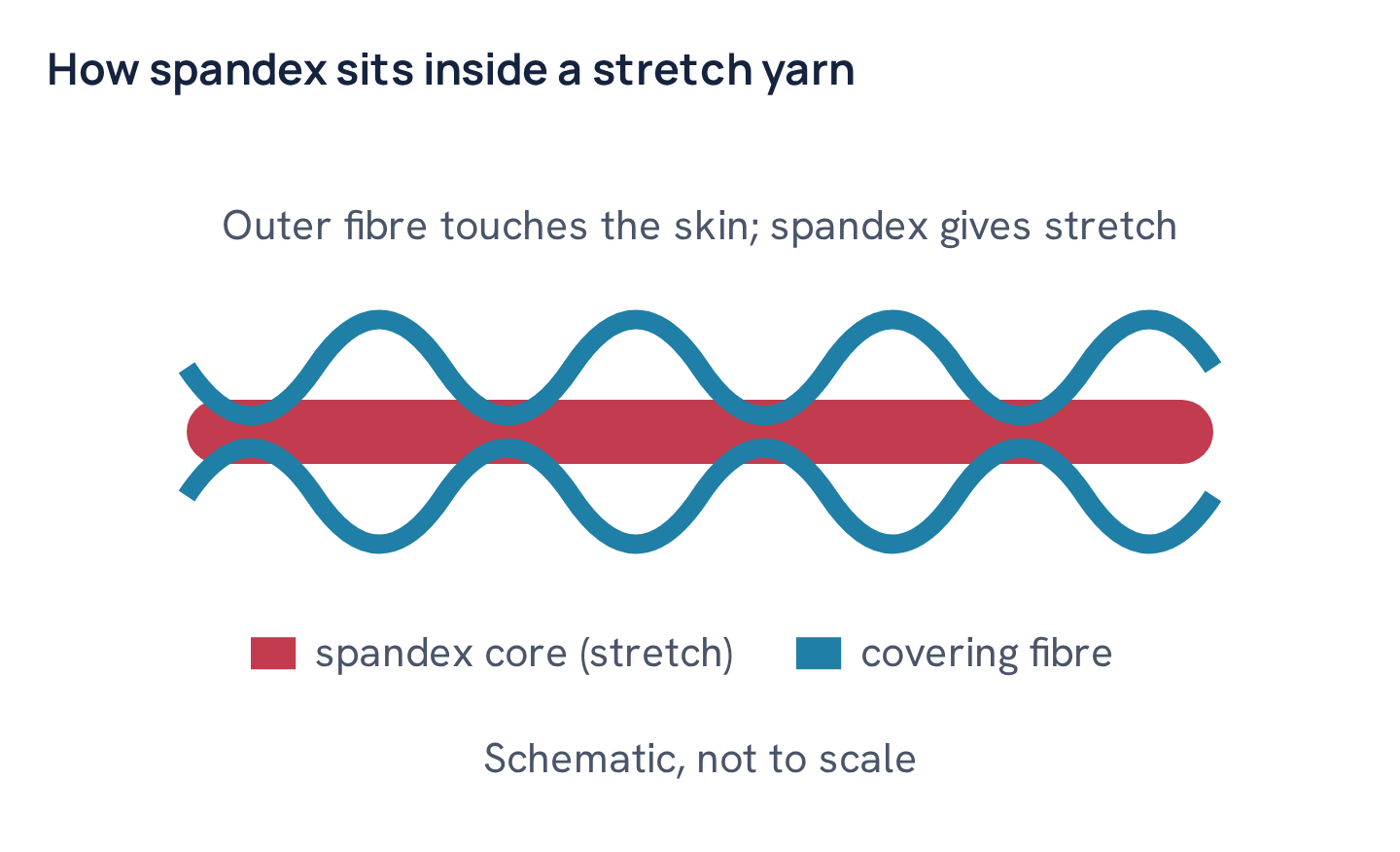
Spandex, also called elastane, is a synthetic fibre made from a segmented polyurethane. Its long molecules have soft, flexible segments that let it stretch to several times its length and hard segments that pull it back. It is almost never used alone: a few percent of spandex is combined with cotton, polyester, nylon, viscose or wool to give stretch and recovery. In many yarns the spandex core is wrapped or covered by the other fibre, so the outer surface you feel is mostly cotton, nylon or polyester. See what is elastane and is spandex polyester.
Why finished spandex is considered safe
- Stable polymer: once spun and processed, the polyurethane is chemically stable in normal wear.
- Small share: most garments contain 3–20% spandex.
- Often covered: the spandex core is usually wrapped in other fibres.
- Wet processing: scouring, dyeing, washing-off and finishing remove much of the loose residue.
- Long use: spandex has been used for decades in underwear, hosiery, medical compression garments and swimwear.
Where genuine questions come from
| Concern | What is behind it | Practical view |
|---|---|---|
| Manufacturing chemicals | Spandex is made from diisocyanates and solvents | Reacted and largely removed; residues are restricted and tested by many brands |
| Dyes and finishes | Disperse or acid dyes, softeners, antimicrobials | Rare skin reactions; wash before wearing |
| Allergy | Rare contact dermatitis linked to elastane or rubber chemicals | Affected people choose covered or spandex-free garments |
| Tight fit | Compression, heat and sweat trapped against skin | Comfort and hygiene issue, not toxicity |
| Environment | Fossil-based, hard to recycle in blends, sheds fibres | Environmental, not a wearing risk |
Is spandex bad for your skin?
For most people, no. Problems usually come from fit and moisture. Tight spandex garments such as leggings, shapewear and cycling shorts hold the fabric close to the skin; if the main fibre is polyester or nylon, sweat is not absorbed and can sit against the skin, especially in the groin, under the breasts and behind the knees. Warm, damp skin is more prone to chafing, rashes and fungal problems. Choosing a breathable or wicking main fibre, a cotton gusset, and changing out of sweaty gear promptly prevents most issues.
Spandex allergy
True allergy to spandex itself is uncommon. Some reported cases involve chemicals used in elastane manufacture or rubber accelerators in elastic bands. Symptoms are usually an itchy rash where the elastic touches the skin, such as waistbands and bra bands. People who react often find covered elastic bands, cotton-rich garments with low spandex, or spandex-free styles more comfortable.
Is tight spandex clothing bad for your health?
Normal leggings and stretch jeans are not harmful. Very tight shapewear or compression worn for long hours can cause discomfort, pressure marks and reduced breathability. Medical compression garments are a separate category designed to apply specific pressure; they should be fitted correctly. If tight clothing causes numbness, tingling or marks that do not fade, choose a looser size.
How spandex fabrics are tested
Brands typically test finished stretch fabrics for pH, formaldehyde, banned azo amines and other restricted substances, and for colour fastness to washing, rubbing and perspiration, which matter for skin contact. Physical tests include stretch and recovery, which show whether the spandex has been damaged in processing. See colour fastness to perspiration.
Heat setting spandex in the factory
Spandex fabrics are heat set on a stenter to stabilise their width and stretch. If the temperature or time is wrong, the spandex can be damaged and the fabric loses recovery, or it stays too powerful and shrinks. In our records, 97% of cotton-elastane parts were heat set as part of the process.
For cotton-elastane fabric the normal heat-setting temperature is 180 to 190 °C. We heat set Lycra fabric to control its stretch, which is normally very high.
Common mistake: tumble drying leggings and swimwear on high heat. Heat is what damages spandex most: it loses its snap, the fabric bags and shiny “grin-through” lines of exposed spandex can appear. Dry spandex garments flat or on low.
Spandex vs latex and rubber
Spandex is not rubber or latex. Natural rubber elastic contains latex proteins that can cause allergy; spandex does not contain natural latex, which is one reason it replaced rubber in most clothing. People with latex allergy often tolerate spandex, though elastic bands in some garments may still contain rubber.
Environmental side
Spandex is made from fossil fuels, and blends containing spandex are hard to recycle because the fibres are difficult to separate. Spandex also degrades in heat and chlorine, shortening garment life. Choosing durable stretch garments, washing cool and avoiding the dryer extend their life. These are environmental questions rather than risks to the wearer.
How to choose and care for spandex garments
- Wash new garments before the first wear.
- Choose breathable main fibres (cotton, modal, wicking polyester) for all-day wear.
- Look for cotton gussets in leggings and underwear.
- Wash cool, avoid bleach and fabric softener on activewear.
- Rinse swimwear after chlorine or salt water.
- Dry flat or on low heat.
Worked example. A customer reports itching from new shapewear. The garment is 78% nylon, 22% spandex with a rubber-based waistband. Switching to a cotton-elastane style with a covered waistband and washing it before wearing removes the problem. The trigger was moisture and the waistband material, not the spandex being toxic.
Spandex in underwear and socks
Most underwear contains some spandex for fit, usually 5–10% with cotton, modal or nylon. That small amount gives comfort and keeps the garment in place without making it unsafe. If underwear causes irritation, the usual causes are a tight waistband, trapped moisture in a synthetic main fibre or a dye or finish. Cotton or modal underwear with a cotton gusset and a covered waistband is the most skin-friendly choice. Socks use spandex in the cuff and sometimes throughout for a snug fit; looser cuffs help if socks leave deep marks.
Spandex and pregnancy or babies
Maternity wear uses spandex so garments can grow with the body, and there is no evidence that ordinary stretch clothing harms pregnancy. Comfort is the guide: choose garments that support without squeezing. For babies, cotton or cotton-elastane with low spandex is common because it is soft, absorbent and lets small garments stretch over the head. Wash all baby clothes before first use.
Signs spandex has broken down
When spandex degrades from heat, chlorine or age, the fabric loses its snap, bags at the knees and seat, and white or shiny threads can appear when the fabric is stretched. Degraded spandex is not toxic, but the garment will no longer fit or support as it did. Replacing worn swimwear and activewear is a matter of performance, not safety.
Is spandex safe for sleepwear?
Yes, but comfort matters more at night. A small share of spandex in cotton or modal pyjamas gives easy movement without trapping heat. Tight, high-spandex garments are less comfortable for sleep because they hold warmth and moisture against the skin. Loose, breathable sleepwear is the better choice for warm sleepers.
Summary
- Spandex is not considered toxic to wear.
- It is used in small amounts and usually covered by other fibres.
- Concerns come from residues, dyes, finishes, tight fits and environment.
- True spandex allergy is uncommon.
- Wash new garments, choose breathable blends and avoid heat.
Questions
Is spandex toxic to wear?
No. Finished spandex is a stable polymer and is not considered toxic to wear for most people.
Is spandex bad for your skin?
Not usually. Tight spandex can trap sweat and cause chafing; choose breathable blends and change out of sweaty clothes.
Can you be allergic to spandex?
Rarely. Some people react to chemicals in elastane or rubber elastic, usually where waistbands touch the skin.
Is spandex the same as latex?
No. Spandex is a polyurethane fibre and does not contain natural rubber latex.
What damages spandex?
Heat, chlorine, bleach and body oils. Wash cool and dry flat or on low.

Textile engineer with 14+ years in dyeing and fabric development. He writes every guide on Dyeing Solution from real production work. Full profile