Linen is not cotton: it comes from the flax stem, while cotton comes from seed hairs. Linen is cooler, stronger and dries faster but creases easily; cotton is softer, cheaper and easier to care for. Breathability, wrinkles, shrinkage, dyeing, blends and which to choose.
At a glance
Flaxvs seed hair
Coolerlinen
Softercotton
Creaseslinen more
Linen and cotton are both natural plant fibres, but they are not the same. Linen is made from the stem of the flax plant; cotton comes from the soft fibres around cotton seeds. Linen is stronger, cooler, more absorbent-feeling and dries faster, with a crisp texture and natural slubs, but it creases very easily and costs more. Cotton is softer, smoother, more stretchy in knits, cheaper and easier to care for. For hot weather and summer shirts, linen usually feels cooler; for everyday T-shirts, underwear and easy care, cotton is the practical choice.
This guide compares linen and cotton fibre by fibre: where each comes from, how they feel, breathability, strength, wrinkling, shrinkage, durability, dyeing, cost, care and the best uses for each. It also explains linen-cotton blends and how to tell the two apart. It is written from the wet-processing side, where we dye and finish both cotton and linen-blend knits.
Is linen cotton?
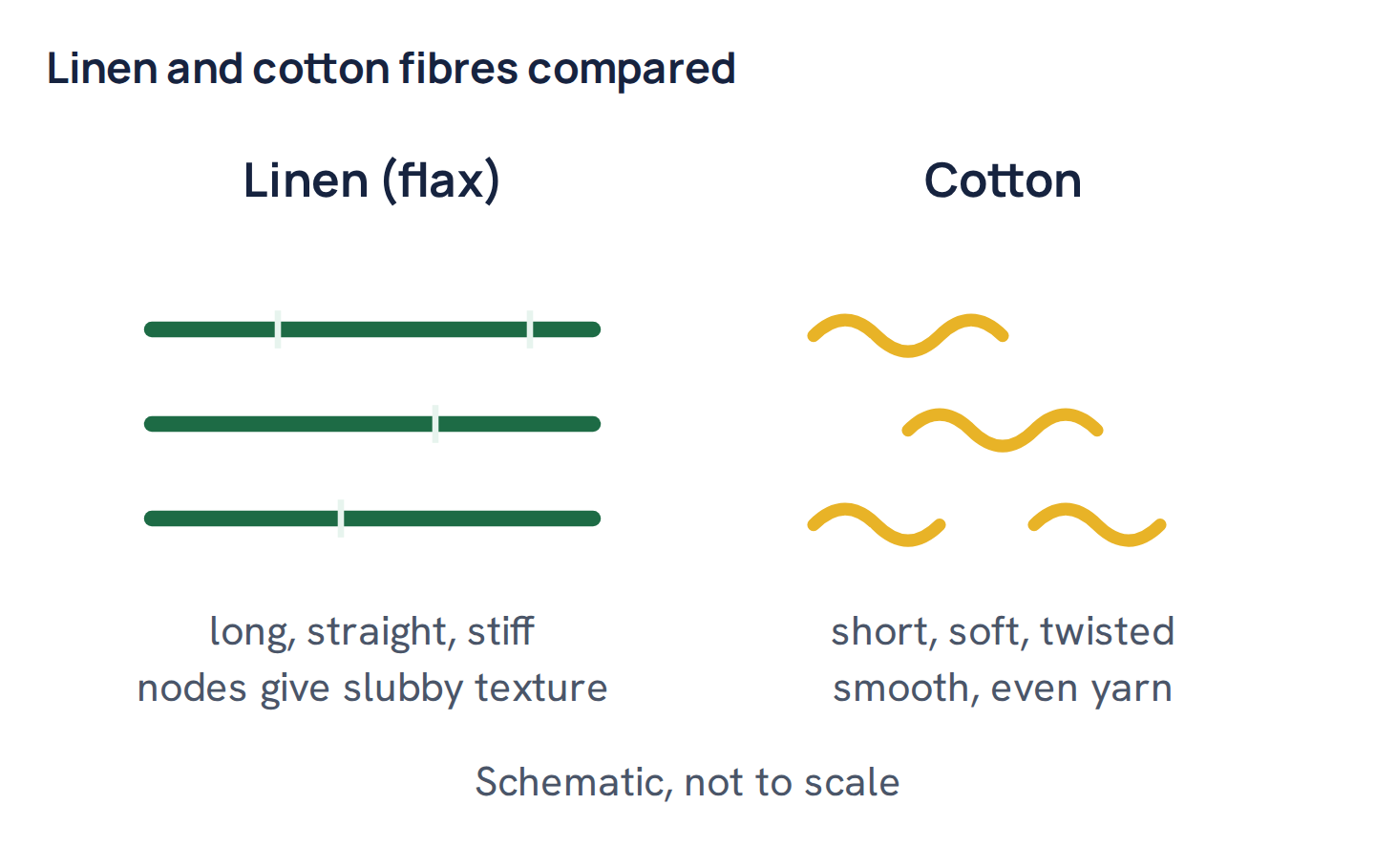
No. Linen is a bast fibre from the flax plant, separated from the stem by retting (controlled rotting), breaking and combing. Cotton is a seed-hair fibre picked from cotton bolls. Both are made mostly of cellulose, which is why they share some behaviour: both absorb water, both take reactive dyes, both burn rather than melt, and both can shrink. But the fibres look and behave differently. Linen fibres are long, stiff and smooth with natural nodes; cotton fibres are short, soft, twisted ribbons.
Linen vs cotton at a glance
| Point | Linen | Cotton |
|---|---|---|
| Source | Flax stem (bast fibre) | Cotton seed hair |
| Feel | Crisp, cool, textured, softens with washing | Soft, smooth, warm |
| Breathability | Very high | High |
| Moisture | Absorbs well, dries fast | Absorbs well, dries slowly |
| Strength | Very strong, stronger wet | Strong, stronger wet |
| Wrinkling | Creases very easily | Creases moderately |
| Stretch | Almost none | Little in wovens, good in knits |
| Shrinkage | Can shrink if washed hot | Can shrink if washed hot |
| Cost | Higher | Lower |
| Best for | Summer shirts, trousers, bedding, towels | T-shirts, underwear, jeans, everyday wear |
Which is cooler: linen or cotton?
Linen usually feels cooler. Its stiff fibres and typically open weave hold the fabric slightly away from the skin, letting air move, and linen takes up moisture quickly and releases it fast, so it does not stay damp against the skin as long as cotton. Cotton is also breathable, especially in light, open weaves such as voile or lawn, but it holds sweat longer and can cling when wet. In very hot, humid weather, a loose linen shirt is hard to beat. See is cotton breathable.
Strength and durability
Linen is one of the strongest natural fibres and gets stronger when wet. Linen bedding and towels can last for many years and soften with every wash. Cotton is also durable, and long-staple cottons make particularly strong yarns, but cotton fabrics generally wear and thin sooner than good linen. Linen’s weakness is abrasion at sharp folds: because the fibre is stiff, repeated creasing in the same place, such as a permanent fold line, can eventually break fibres. See pima vs Egyptian cotton for long-staple cottons.
Wrinkles: linen’s biggest drawback
Linen creases quickly and deeply because its fibres have low elasticity and do not spring back after bending. Many people accept the relaxed, rumpled look as part of linen’s character. Cotton also wrinkles, especially in plain wovens, but less than linen, and cotton knits wrinkle very little. Linen-cotton blends and linen-viscose blends wrinkle less than pure linen. Easy-care resin finishes can reduce creasing in both fibres.
Shrinkage
Both linen and cotton can shrink in hot washes and hot tumble drying because both are cellulose fibres that swell in water. Good mills pre-shrink or compact the fabric, and garment-washed linen has much of its shrinkage taken out before you buy it. In our knit finishing records, 100% cotton knits shrank a median 6% in length after the wash test. Wash both fibres cool to warm and avoid a hot dryer. See does linen shrink and does cotton shrink.
Dyeing and colour
Linen and cotton take the same dye classes, mainly reactive dyes. Linen’s smooth, compact fibre can dye slightly lighter and its slubs can show more colour variation, which gives linen its characteristic depth and texture. Cotton dyes evenly and gives bright, solid colours. In the dye house, linen-cotton knits are prepared and dyed much like cotton, with extra care for the stiffer linen fibre. See the linen knit dyeing process.
Linen-cotton blends
Blending linen with cotton combines linen’s coolness and texture with cotton’s softness, lower cost and easier care. A 55/45 linen-cotton fabric creases less than pure linen, feels softer from the start and is less expensive. Blends are common for summer trousers, shirts, dresses and bedding. The trade-off is a slightly less crisp, less “linen” look.
Common mistake: washing a new linen shirt hot and tumble drying it on high to soften it quickly. It may soften, but it can also shrink and develop permanent crease lines. Wash linen at 30–40°C, dry on low or line dry, and iron while slightly damp.
Cost: why linen is more expensive
Flax yields less fibre per hectare than cotton, and turning flax stems into spinnable fibre takes more steps: retting, breaking, scutching and hackling. Linen yarn is also harder to spin and weave at high speed. Together that makes linen fabric noticeably more expensive than cotton of a similar weight.
How to tell linen from cotton
- Look: linen has irregular slubs and a slightly lustrous, uneven surface; cotton is smoother and more uniform.
- Feel: linen feels crisp, cool and a little stiff; cotton feels soft and warm.
- Crease test: squeeze a corner in your hand; linen holds a sharp crease, cotton less so.
- Label: the fibre content label is the reliable answer.
Worked example. Someone choosing a summer shirt for a humid holiday compares a linen shirt and a cotton poplin shirt of similar weight. The linen shirt feels cooler and dries fast after sweating but looks creased after an hour. The cotton shirt looks neater but feels warmer and stays damp longer. For heat comfort, linen wins; for a neat office look, cotton or a linen-cotton blend is easier.
Which should you choose?
- Choose linen for hot climates, loose summer shirts and trousers, bedding you want to last, and a relaxed look.
- Choose cotton for T-shirts, underwear, jeans, everyday wear, easy care and lower cost.
- Choose a linen-cotton blend for a balance of coolness, softness, fewer wrinkles and price.
Linen vs cotton bedding
For sheets and duvet covers the choice is mostly about climate and feel. Linen bedding feels cool and slightly textured, handles night sweats well and gets softer every wash, but it looks rumpled and costs more. Cotton bedding, whether percale for a crisp, cool feel or sateen for a smooth, warmer feel, is softer from the start, easier to iron and cheaper. Hot sleepers often prefer linen or cotton percale; people who like a smooth, cosy feel usually prefer cotton sateen.
Linen vs cotton for towels and kitchen cloths
Linen towels are thin, absorb quickly, dry fast and do not leave lint on glass, which is why linen tea towels are popular for drying glasses. Cotton terry towels are thick and plush and absorb a lot of water but dry slowly. For bath towels most people prefer cotton terry; for kitchen and travel towels, linen or linen-cotton works well. See what is terry cloth.
Environmental footprint
Flax generally grows with little irrigation and fewer pesticides than conventional cotton, and almost the whole plant can be used. Cotton is often irrigated and can need more crop protection, although organic and better-managed cotton reduce this. Processing matters too: dyeing and finishing use water and energy for both fibres. Because linen lasts a long time, a well-made linen garment can have a lower footprint per wear.
Summary
- Linen is not cotton: linen comes from flax stems, cotton from seed hairs.
- Linen is cooler, stronger and dries faster; cotton is softer, cheaper and easier to care for.
- Linen wrinkles much more than cotton.
- Both can shrink in hot washes; wash cool and dry low.
- Linen-cotton blends balance the strengths of both.
Questions
Is linen cotton?
No. Linen is made from the stem of the flax plant; cotton is made from the fibres around cotton seeds. Both are cellulose fibres.
Is linen or cotton better for hot weather?
Linen usually feels cooler because it breathes well, absorbs moisture and dries quickly.
Does linen wrinkle more than cotton?
Yes. Linen fibres have low elasticity, so linen creases more easily and more deeply than cotton.
Why is linen more expensive than cotton?
Flax yields less fibre and needs more processing steps, and linen yarn is harder to spin and weave.
What is a linen-cotton blend?
A fabric mixing linen and cotton, softer, cheaper and less wrinkly than pure linen while keeping some of its coolness.

Textile engineer with 14+ years in dyeing and fabric development. He writes every guide on Dyeing Solution from real production work. Full profile