Nylon takes acid and all-purpose dyes easily; spandex (elastane) takes less dye and is damaged by heat. What to expect for nylon-spandex, 95/5 cotton-elastane, swimsuits and nylon-polyester, and how a dye house dyes them.
At a glance
Acid dyecolours nylon
Palerspandex when stretched
97%cotton-elastane heat set
Main fibredecides the result
Nylon dyes very well. Spandex (elastane, often sold as Lycra) dyes only partly. Nylon takes acid dyes easily, and the acid dye part of an all-purpose home dye colours it strongly, often more strongly than cotton. Spandex is a different polymer: it takes some dye but usually ends lighter, and it is easily damaged by long boiling, chlorine and harsh chemicals. So a nylon-spandex fabric can be dyed, but expect stretched areas to look paler and handle it gently. Whether a swimsuit, leggings or a cotton T-shirt with 5% elastane will dye depends on the main fibre, not the spandex.
This guide explains how each fibre takes dye, what to expect from nylon-spandex, polyester-spandex, cotton-elastane and swimwear, and how a dye house dyes these fabrics.
Nylon: an easy fibre to dye
Nylon (polyamide) has amino end groups along its chains. In an acidic bath these groups carry a positive charge, and acid dyes, which carry a negative charge, are pulled to them and held by ionic bonds. That is why nylon dyes quickly and brightly at around 90–100°C with a little acid such as vinegar or citric acid. The mechanism is in how acid dyes work on nylon.
The challenge with nylon is levelness, not depth. Acid dyes strike nylon fast, and small differences in the yarn show as stripes (barré). In a dye house the bath starts cool, the temperature rises slowly and the pH is lowered step by step so the dye goes on evenly.
Spandex (elastane): the difficult partner
Spandex is a polyurethane fibre. It takes some acid and disperse dye, but less than nylon and less evenly, and it can lose dye again in washing. More important, it does not like heat: long boiling, high-temperature drying and chlorine all weaken it, and a damaged spandex loses its recovery, so the fabric goes baggy.
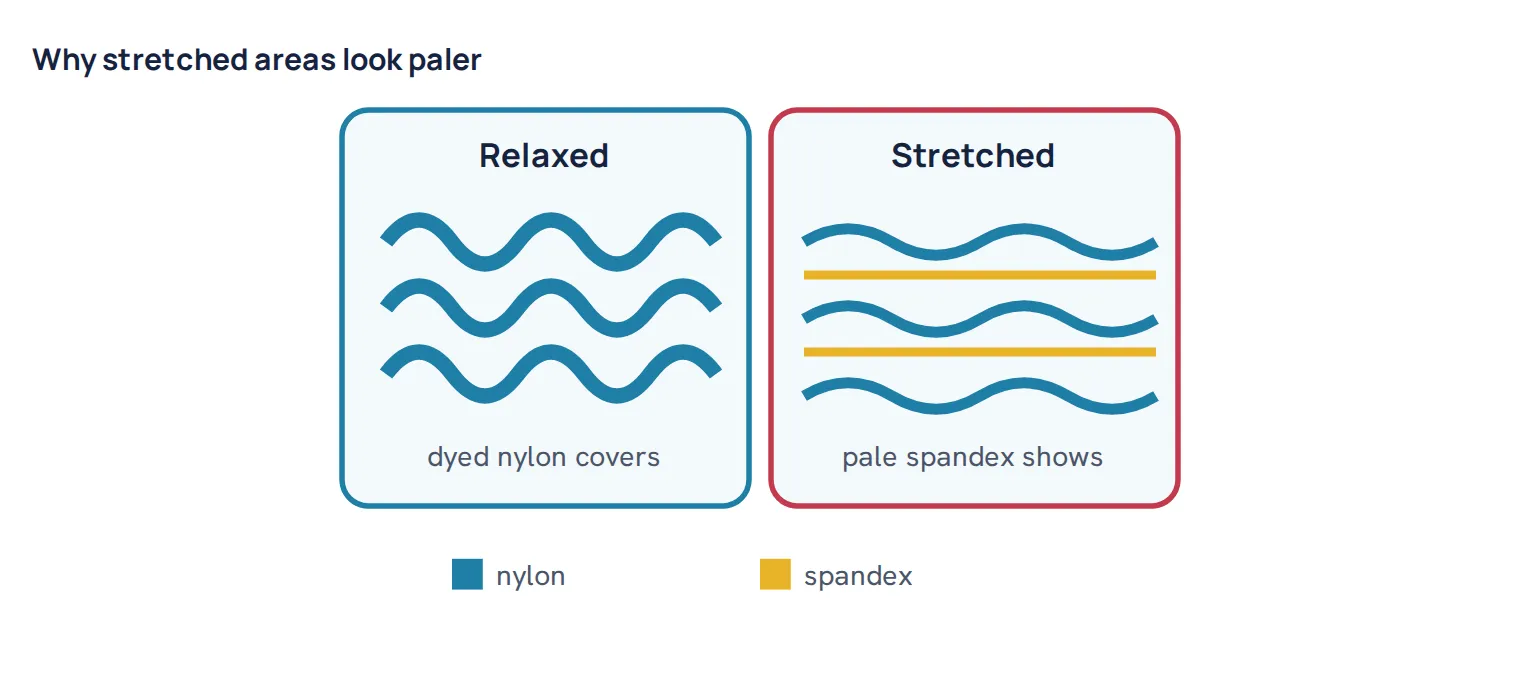
In most fabrics spandex is a small part, 3–20%, and it sits inside the knit wrapped by the other yarn. When the fabric is relaxed you see mainly the nylon or cotton; when it is stretched, the paler spandex shows through. That “grin-through” is the main visible problem when dyeing stretch fabrics.
Can you dye nylon and spandex?
Yes. The nylon takes the dye well; the spandex takes less. Use the lowest temperature that gives the shade, keep the time short and avoid boiling. Expect a slightly lighter shade when the fabric is stretched. In a dye house nylon-elastane is heat set at about 180°C first to fix its width and stretch, scoured without bleach, then dyed with acid dyes while the pH is slowly lowered up to about 98°C; see the nylon-elastane dyeing process.
Can you dye Lycra?
Lycra is a brand name for elastane (spandex). On its own it is rarely dyed; what people mean is a stretch fabric that contains it. The answer then depends on the main fibre: nylon-Lycra dyes well, cotton-Lycra dyes well, polyester-Lycra only lightly with home dyes.
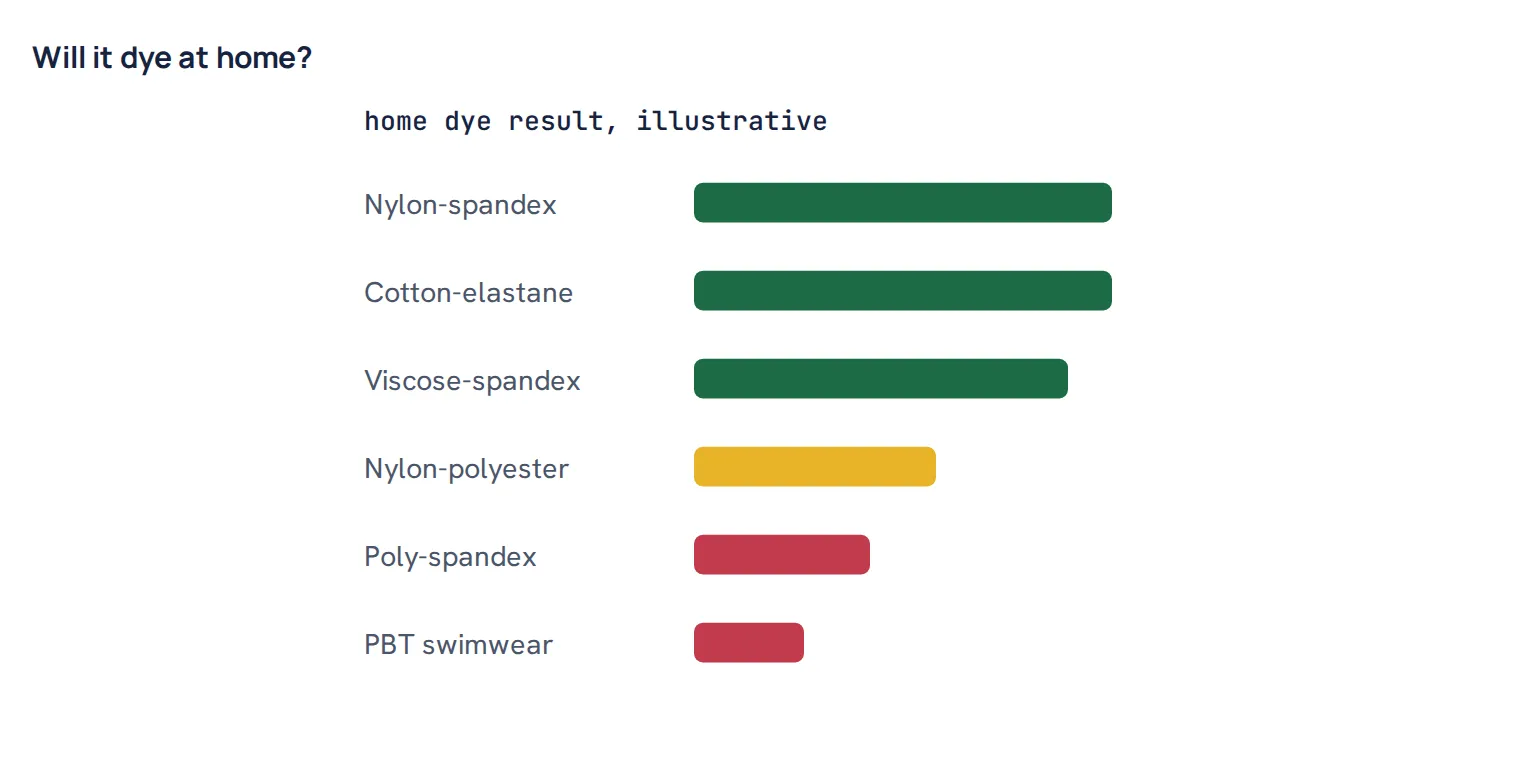
| Stretch fabric | Main fibre takes | Home result |
|---|---|---|
| Nylon-spandex (swimwear, tights) | Acid / all-purpose dye | Good, slightly paler when stretched |
| Cotton-spandex (95/5 tees, leggings) | Reactive / all-purpose dye | Good, like cotton |
| Viscose-spandex | Reactive / all-purpose dye | Good; handle gently, shrinks |
| Polyester-spandex (sportswear) | Disperse dye at high heat | Light shades only |
Can you dye 95% cotton, 5% elastane?
Yes. This is the classic stretch T-shirt and leggings fabric, and it dyes essentially like cotton, with reactive or all-purpose dyes. The 5% elastane stays paler but is almost invisible unless the fabric is stretched hard. Avoid boiling for long periods and avoid hot tumble drying afterwards. Factory cotton-elastane is heat set at 180–190°C before dyeing to stabilise it; in our records 97% of cotton-elastane parts were heat set (see the cotton-elastane dyeing process).
Can you dye a bathing suit?
Sometimes. Check the label first:
- Nylon-spandex swimsuits take acid and all-purpose dyes well. Expect some paleness at stretch points and a little loss of recovery if boiled.
- Polyester or “chlorine-resistant” swimsuits are usually polyester-based, often with a special polyester (PBT) that resists chlorine. These need disperse dye at high temperature and barely take home dyes.
- Printed swimsuits will still show the print underneath, because dye only adds colour; it cannot cover a darker pattern.
Swimwear dye also has a hard life: chlorine and sun both attack it. Even a well-dyed home swimsuit will fade faster than a factory-dyed one.
Can you dye nylon and polyester together?
Only the nylon will take a home dye properly. Nylon takes acid dyes; polyester needs disperse dye at high temperature. On a nylon-polyester fabric a home dye gives a two-tone or frosty look. In a factory this blend is dyed in stages: disperse dye at 130°C for the polyester, a reduction clear, then acid dye for the nylon; see the polyester-nylon dyeing process.
Common mistake: boiling leggings or swimwear for an hour to “get it deeper”. The nylon or cotton is usually done long before that, and the extra time only damages the spandex. The garment comes out the right colour but saggy at the knees and seat.
Worked example. Black nylon-spandex leggings faded to grey are re-dyed black with an all-purpose dye. The nylon goes back to a good black, but when you squat, a grey sheen shows where the spandex is stretched. That is the spandex taking less dye. A denser knit, or wearing them a size larger so they stretch less, hides it better than more dye.
Summary
- Nylon dyes easily with acid dyes and with all-purpose dyes.
- Spandex takes less dye and is damaged by heat and chlorine; stretched areas look paler.
- Stretch fabrics dye according to their main fibre: nylon and cotton yes, polyester barely.
- Check swimsuit labels: nylon-spandex dyes, polyester and PBT do not.
- Use the lowest temperature and shortest time that gives the shade.
Questions
Can you dye nylon and spandex fabric?
Yes. The nylon takes acid or all-purpose dye well, while the spandex takes less, so stretched areas may look slightly paler. Avoid long boiling, which weakens spandex.
Can you dye Lycra?
Lycra is a brand of elastane. A Lycra fabric dyes according to its main fibre: nylon-Lycra and cotton-Lycra dye well, polyester-Lycra only lightly at home.
Can you dye a 95% cotton 5% elastane shirt?
Yes. It dyes like cotton with reactive or all-purpose dye. The small amount of elastane stays paler but is hidden unless the fabric is stretched hard.
Can you dye a bathing suit?
Nylon-spandex swimsuits can be dyed with acid or all-purpose dye. Polyester or chlorine-resistant PBT swimsuits barely take home dyes.
Can you dye nylon and polyester together?
Only the nylon takes a home dye properly. The polyester needs disperse dye at high temperature, so the fabric ends two-tone.

Textile engineer with 14+ years in dyeing and fabric development. He writes every guide on Dyeing Solution from real production work. Full profile