Fixed dye stays; loose dye washes out in the first washes. How each dye type behaves in the wash, why deep shades bleed, how to keep the colour in, and whether fabric dye expires.
At a glance
Loose dyewhat bleeds first
Fixed dyefades slowly
Fixativefor direct dyes
Hourslife of dye mixed with soda
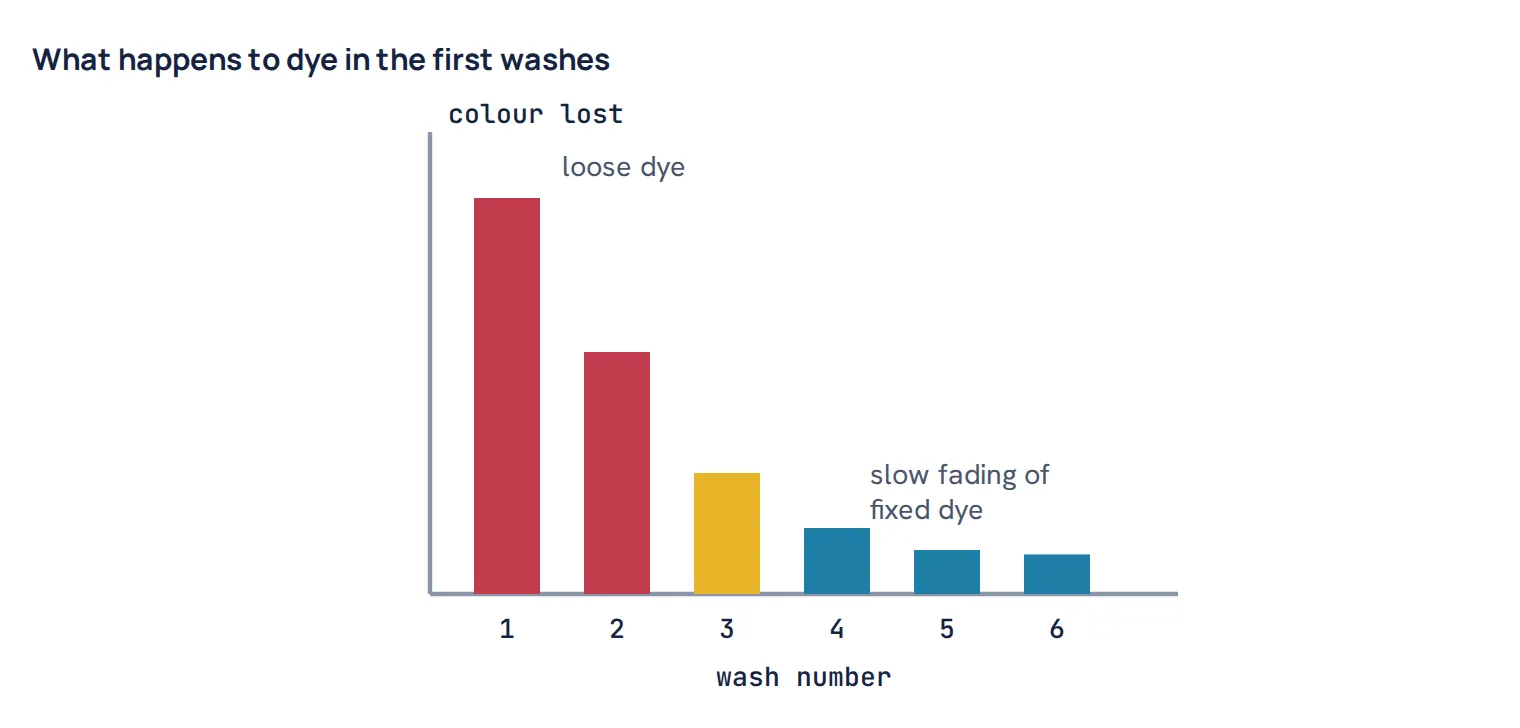
Properly fixed fabric dye does not wash out, but some colour always comes off in the first washes. That first colour is loose dye: dye that never bonded to or settled inside the fibre. Once it has been rinsed away, what stays is the fixed dye, and it fades only slowly with washing, light and wear. How much washes out, and how fast the rest fades, depends on which dye was used, which fibre it was used on and how well the fabric was rinsed afterwards.
This guide explains why dye comes out in the wash, how the different dye types compare, how to keep the colour in, and whether fabric dye expires on the shelf.
Fixed dye and loose dye
Every dyeing leaves dye in two states. Fixed dye is held inside the fibre: chemically bonded in the case of reactive dye on cotton, held by ionic bonds for acid dye on nylon, or dissolved inside the fibre for disperse dye on polyester. Loose dye is sitting on the surface or loosely in the fibre without being properly held. It is the loose dye that bleeds in the first washes, stains other clothes and comes off on your skin or a white towel.
In a dye house, the stage after dyeing is called the wash-off or soaping, and it exists to remove that loose dye before the fabric leaves the factory. For reactive dyes on cotton it means several hot rinses and a soaping at high temperature. When the wash-off is skipped or rushed, the garment bleeds for its first few washes and fails the colour fastness tests; see why knit fabric fails staining tests.
How each dye type behaves in the wash
| Dye on fibre | How it holds | In the wash |
|---|---|---|
| Reactive on cotton, viscose | Covalent bond | Very little loss once loose dye is washed off |
| Direct / all-purpose on cotton | Physical attraction only | Bleeds and fades steadily unless fixed |
| Acid on nylon, wool | Ionic bond | Good, some loss in hot washes |
| Disperse on polyester | Dissolved in fibre | Very good once surface dye is cleared |
| Natural dyes with mordant | Mordant complex | Fades gradually, more in hot or alkaline washes |
| Pigment / fabric paint | Binder film on surface | Wears off slowly with washing and rubbing |
Most home “all-purpose” dyes contain direct dyes for cotton and acid dyes for nylon and wool. On cotton, direct dyes are held only by physical attraction, so they keep bleeding a little in every warm wash. That is why home kits often include or recommend a dye fixative, which locks direct dye in place and greatly reduces bleeding. Fibre reactive dyes do not need a fixative: once washed off, they stay.
Why some colours wash out more
- Deep shades (black, navy, red, deep green) carry far more dye, so there is more loose dye to remove and more risk of bleeding.
- Reds and turquoises are often the hardest colours to fix fully.
- Hot washes remove more dye than cool washes, especially for direct and natural dyes.
- Strong detergents with optical brighteners or bleach can fade colours faster.
- Wrong dye for the fibre, such as an all-purpose dye on polyester, never really enters the fibre and washes out almost completely.
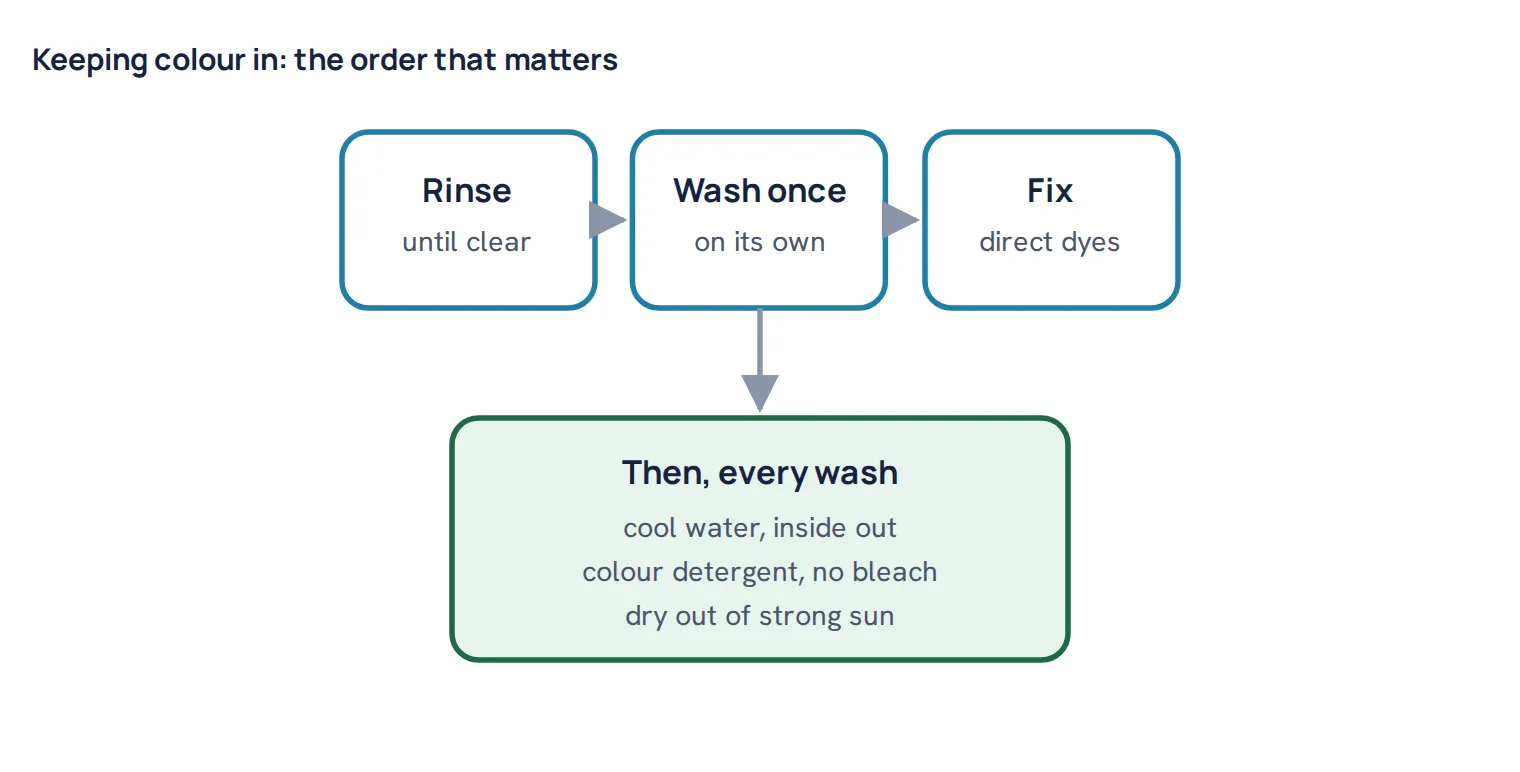
Common mistake: judging a newly dyed garment after one quick rinse. It may look perfect, but loose dye is still inside it. Rinse until the water runs clear, then wash once on its own before mixing it with other clothes.
How to keep the colour in
- Rinse thoroughly after dyeing: cool first, then warmer, until the water runs clear.
- Wash once on its own with a little detergent to remove the last loose dye.
- Use a fixative for direct or all-purpose dyes on cotton, linen and viscose.
- Wash cool (30–40°C), inside out, with a detergent for colours.
- Dry out of strong sun, which fades many dyes, especially on cotton.
Does fabric dye expire?
Dry dye powder keeps for a long time if it is kept dry, cool and sealed; many dyers use powders that are years old without problems. The risk is moisture. Damp powder can cake, and reactive dye powder that has absorbed moisture slowly reacts with the water and loses strength, giving paler results.
Liquid dyes and dissolved dye keep for a shorter time. Reactive dye that has been dissolved, and especially dye that has been mixed with soda ash, starts to react with water at once and loses most of its strength within hours. In a dye lab, reactive stock solutions are made fresh or kept only for a short time; see dye stock solutions.
| Form | Shelf life | Sign it has gone off |
|---|---|---|
| Dry powder, sealed, dry | Years | Caking, weaker colour |
| Liquid home dye | Often 1–3 years; see the pack | Separation, sediment, smell |
| Dissolved reactive dye | Days, best fresh | Paler results |
| Reactive dye with soda ash | A few hours | Much paler, poor fixation |
Worked example. A navy cotton T-shirt dyed with an all-purpose dye turns the rinse water blue for the first three washes and stains a white towel. The dye is direct-type and only loosely held. Rinsing to clear water, one hot wash on its own and a fixative step would have stopped most of the bleeding. A fibre reactive dye with a proper hot wash-off would bleed far less in the first place.
Summary
- Loose dye washes out in the first washes; fixed dye fades slowly.
- Reactive and disperse dyes hold best once washed off; direct dyes need a fixative.
- Deep shades, reds, hot washes and strong detergents increase loss.
- Dry dye powder lasts for years; dissolved reactive dye lasts hours to days.
Questions
Does fabric dye wash out?
Loose dye washes out in the first washes; properly fixed dye stays and fades only slowly. Rinse until the water runs clear and wash once on its own before mixing with other clothes.
Why does my dyed shirt keep bleeding?
Usually because it was dyed with a direct or all-purpose dye that is held only by physical attraction, or because it was not rinsed enough. A dye fixative and thorough rinsing reduce bleeding.
Does fabric dye expire?
Dry powder kept sealed and dry lasts for years. Liquid dyes last a shorter time, and dissolved reactive dye loses strength within days, or within hours once soda ash is added.
Which fabric dye lasts longest?
Fibre reactive dye on cotton and disperse dye on polyester give the best wash fastness once loose dye has been removed.
How do I stop dyed clothes fading?
Wash cool and inside out with a colour detergent, avoid bleach and optical brighteners, and dry out of strong sunlight.

Textile engineer with 14+ years in dyeing and fabric development. He writes every guide on Dyeing Solution from real production work. Full profile