Modal is a soft regenerated cellulose fibre made from wood pulp, stronger when wet than viscose. What it is made of, whether it is natural or plastic, modal vs cotton and polyester, shrinkage and dyeing, from 374 modal-blend batches in our records.
At a glance
Woodusually beech pulp
Not plasticregenerated cellulose
6%median length shrinkage
27%parts within GSM tolerance
Modal is a soft, smooth fibre made from wood pulp, usually beech. It is a type of regenerated cellulose, a close relative of viscose (rayon), but made by a modified process that gives a stronger fibre, especially when wet. Modal fabric feels silky, drapes well, absorbs moisture and keeps its softness after washing, which is why it is used so much in underwear, T-shirts, loungewear and blends with cotton.
This guide explains what modal fabric is made of, whether it is natural or plastic, modal versus cotton and polyester, whether modal shrinks, and how it behaves in dyeing, with figures from our records of more than 370 modal-blend batches.
What modal fabric is made of
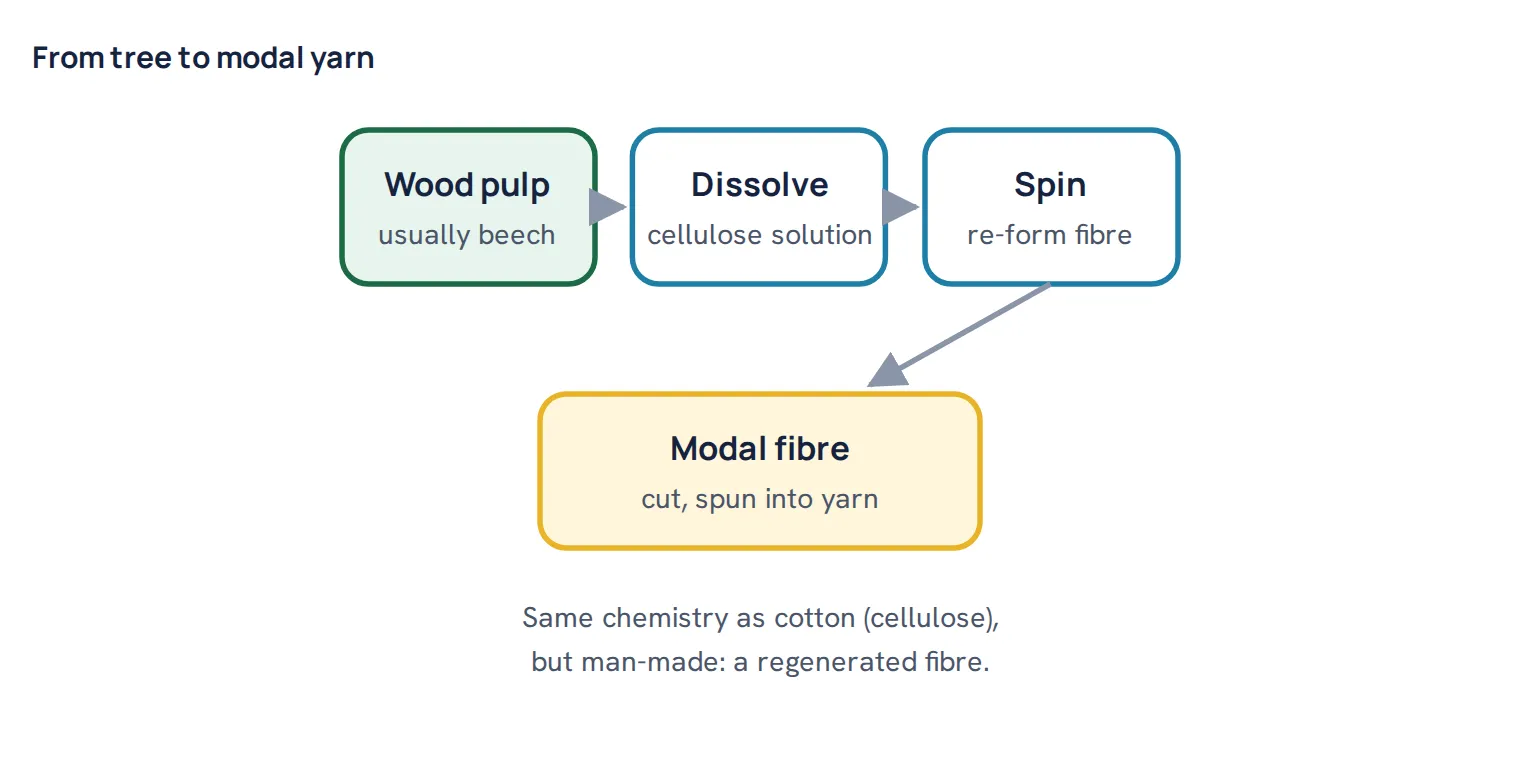
Modal starts as cellulose from trees. The wood is pulped, the cellulose is dissolved chemically, and the solution is pushed through fine holes into a bath where the cellulose re-forms as continuous filaments, which are cut into staple fibre and spun into yarn. The process is similar to viscose, but conditions are adjusted so the cellulose chains are longer and better aligned. That gives modal its main advantage: it is classed as a high wet modulus fibre, meaning it keeps much more of its strength and shape when wet than ordinary viscose.
Is modal natural? Is it plastic?
Modal is not plastic. It is cellulose, the same polymer as cotton and linen, and it is not made from oil like polyester or nylon. It is usually described as semi-synthetic or regenerated: the raw material is natural, but the fibre is formed in a factory. It is biodegradable under suitable conditions.
Is modal fabric toxic?
The finished fibre is not considered toxic and is widely used next to the skin. The concern is the manufacturing process, which, like viscose, uses chemicals that must be handled and recovered properly to protect workers and the environment. Producers that run closed-loop recovery and hold recognised environmental certifications address this; buyers who care should ask for that evidence.
Modal vs cotton
| Point | Modal | Cotton |
|---|---|---|
| Feel | Very soft, smooth, silky | Soft, more matt |
| Drape | Fluid, drapes well | Stiffer |
| Moisture | Absorbs more, feels cool | Absorbs well |
| Softness after washing | Stays soft | Can stiffen, especially in hard water |
| Pilling | Generally low | Moderate |
| Colour | Bright, deep shades | Good, slightly less brilliant |
| Cost | Higher | Lower |
Modal is often blended with cotton, for example 50/50 or 60/40, to add softness and drape to a cotton fabric at a lower cost than 100% modal.
Modal vs polyester
Polyester is made from oil, absorbs little water, dries fast and is very strong and stable. Modal is cellulose, absorbs moisture, feels cooler and softer next to the skin, and is more comfortable for underwear and sleepwear, but it is less durable and dries more slowly. Many sports and underwear fabrics blend the two.
Does modal shrink?
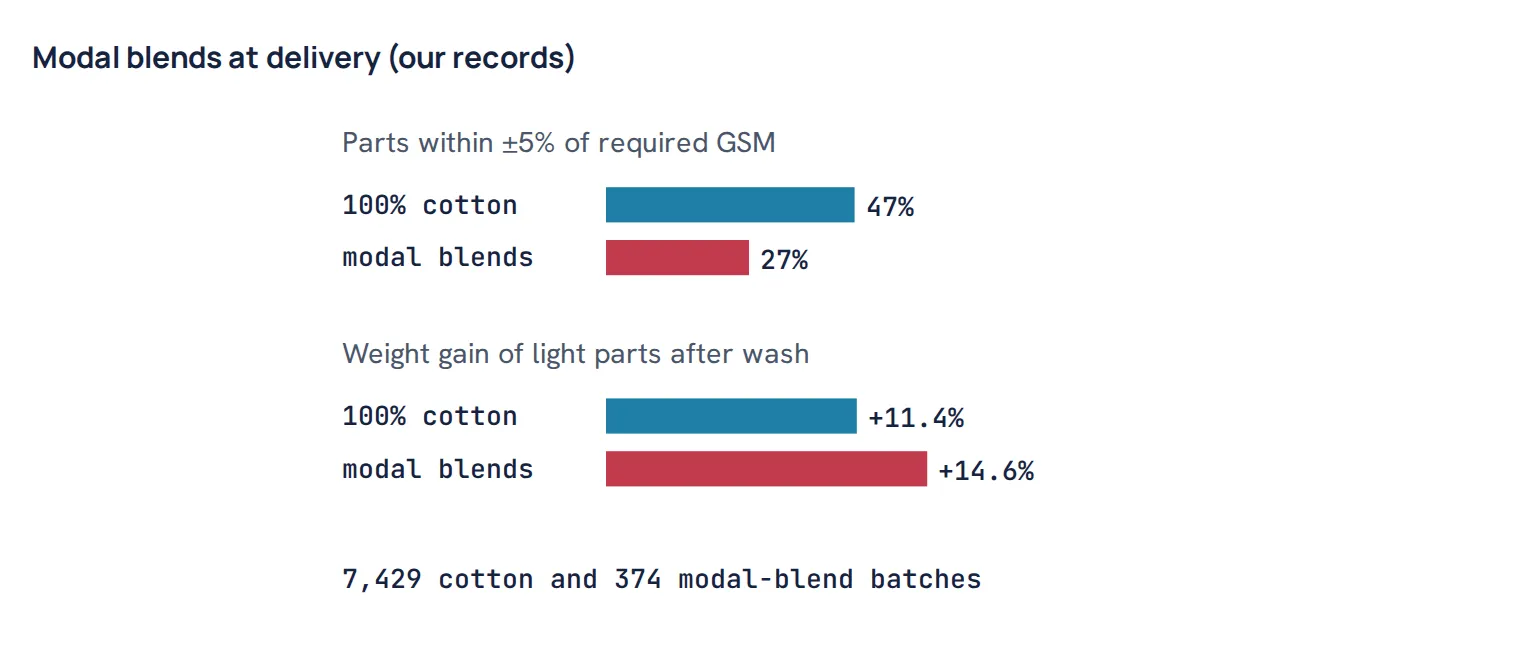
It can. Modal is more stable than viscose, but in knit form it still relaxes and shrinks after washing. In our finishing records of 374 modal-blend batches, the median length shrinkage after the wash test was 6%, with the worst tenth at 10%. Light modal parts gained a median 14.6% in weight after washing, and only 27% of modal-blend parts finished within ±5% of the required GSM, one of the lowest rates of any fibre family; see does fabric shrink after washing.
How modal is dyed
Modal takes reactive dyes very well, with bright, deep shades. In our process it gets a viscose-type scour, a full enzyme treatment for a clean surface, salt added at 80°C in three portions and soda ash in three steps; most modal-elastane is heat set first (89% of modal-blend parts in our records). Modal is weaker when wet than cotton, so it needs gentle handling in the machine. The full route is in the 100% modal knit dyeing process and the cotton-modal dyeing process.
Common mistake: finishing a cotton-modal rib to the required GSM straight off the stenter. It keeps relaxing and gains weight in the buyer’s wash test. In our records cotton-modal rib with elastane was the hardest of all, with only 18% of parts within GSM tolerance.
What modal is used for
- Underwear and bras: soft, absorbent, smooth against the skin.
- T-shirts and tops, often in cotton-modal blends.
- Pyjamas, loungewear and nightdresses.
- Leggings and fitted dresses with elastane.
- Bed linen and towels for a smoother handle.
Worked example. A 60/40 cotton-modal T-shirt fabric is ordered at 160 GSM. Because modal blends gained a median 14.6% in weight on washing in our records, finishing it at 160 risks a washed fabric well above tolerance. Finishing a few percent light, relaxing it and checking a washed sample before delivery gives a far better chance of a pass.
Summary
- Modal is regenerated cellulose from wood, stronger when wet than viscose.
- It is not plastic; it is semi-synthetic and biodegradable.
- It is softer, smoother and drapier than cotton and stays soft after washing.
- Modal knits shrank a median 6% in length in our records and are hard to finish on weight.
- It dyes brightly with reactive dyes but needs gentle handling.
Questions
What is modal fabric made of?
Modal is made from cellulose from wood pulp, usually beech, which is dissolved and spun back into fibre. It is a regenerated cellulose fibre like viscose.
Is modal fabric natural or synthetic?
It is semi-synthetic or regenerated: the raw material is natural wood cellulose, but the fibre is formed in a factory. It is not made from oil and is not plastic.
What is the difference between modal and cotton?
Modal is softer, smoother and drapier, absorbs more moisture and stays soft after washing. Cotton is more matt, a little stiffer, cheaper and stronger when wet.
Does modal fabric shrink?
It can. In our records modal-blend knits shrank a median 6% in length after washing, with the worst tenth at 10%.
Is modal good for underwear?
Yes. It is soft, smooth, absorbent and keeps its softness after washing, which is why it is widely used for underwear and loungewear.

Textile engineer with 14+ years in dyeing and fabric development. He writes every guide on Dyeing Solution from real production work. Full profile