Modal fabric is not considered toxic to wear: the fibre is cellulose, like cotton. The real questions are how it was made and what dyes and finishes were added. Fibre vs process vs finishes, modal for sensitive skin, certifications and safe washing.
At a glance
Celluloselike cotton
Not plasticbiodegradable
Processis the concern
Washbefore wearing
Modal fabric is not considered toxic to wear. Finished modal fibre is pure cellulose, the same natural polymer as cotton, and it is widely used next to the skin in underwear, bras, pyjamas and baby clothes. The real questions about modal are about how it is made, because like viscose it is produced with chemicals that must be handled and recovered properly, and about what finishes and dyes are added to the finished fabric. Those questions apply to almost every fabric, not just modal.
This guide explains what modal is made from, what is and is not toxic about it, the difference between the fibre, the process and the finishes, how modal compares with cotton, bamboo, polyester and lyocell, what certifications mean, and how to choose and wash modal if you have sensitive skin. It is written from the dye-house side, where we handle modal fabric and the dyes and chemicals that go onto it.
What modal is made from
Modal starts as cellulose from wood, most often beech. The wood is pulped, the cellulose is dissolved chemically, and the solution is pushed through fine holes into a bath where the cellulose re-forms as fibre. The process is a modified viscose process, adjusted so the cellulose chains are longer and better aligned. The result is a fibre that is softer and stronger when wet than ordinary viscose. See what is modal fabric for more detail.
Chemically, finished modal is regenerated cellulose. It is not made from oil, it is not plastic, and it is biodegradable under suitable conditions.
Is modal fabric toxic? Three separate questions
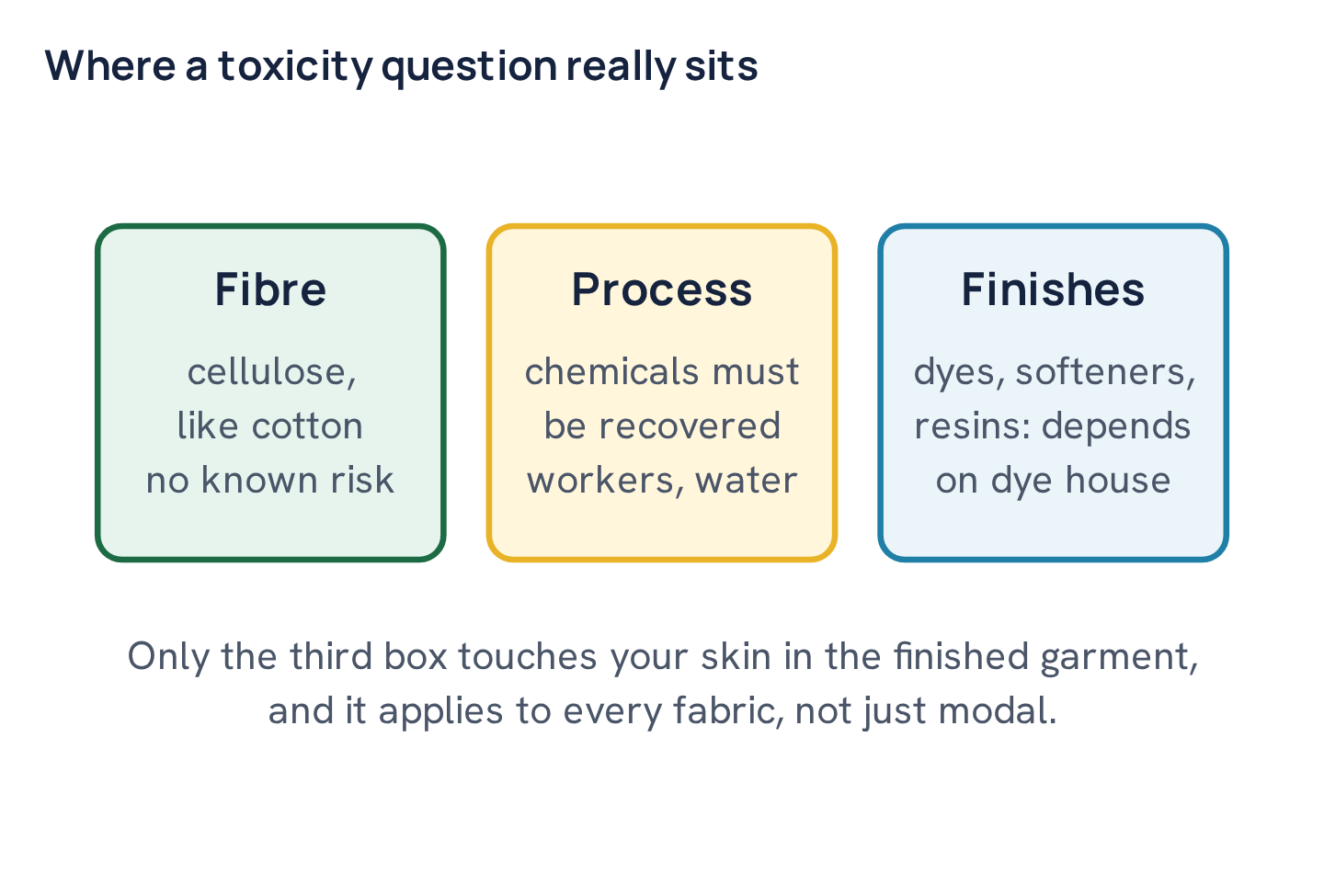
When people ask whether a fabric is toxic, they are usually mixing three different things. It helps to separate them:
- The fibre itself. Modal fibre is cellulose. There is no known health risk from wearing cellulose next to the skin; cotton is also cellulose.
- The manufacturing process. Making modal, like making viscose, uses chemicals including sodium hydroxide and carbon disulphide. These are hazardous for workers and the environment if they are not contained and recovered. This is a real concern, but it is about the factory, not about the garment you wear.
- What is added later. Dyes, softeners, easy-care resins and other finishes are applied in the dye house. Whether these leave anything harmful on the fabric depends on the chemicals used and on how well the fabric is washed off, and this is true for cotton, polyester and every other fabric too.
Is modal safe for underwear and sensitive skin?
For most people, yes. Modal is one of the most popular fibres for underwear, bras and sleepwear because it is smooth, soft and absorbent. Its fibres are fine and round, so there is little to scratch or irritate, and it stays soft after washing instead of stiffening. People who react to wool or to rough synthetic fabrics often find modal comfortable.
If you have very sensitive skin or eczema, the fibre is rarely the problem. Reactions usually come from dyes, residual chemicals, fragrance from detergents or elastic and trims. Washing new underwear before wearing it, choosing lighter colours and fragrance-free detergent, and buying tested products reduce the risk. If a reaction persists, ask a doctor rather than assuming the fibre is to blame.
What about dyes and finishes on modal?
Modal is dyed with the same reactive dyes as cotton. Reactive dyes bond chemically to the fibre, and after dyeing the fabric is soaped and rinsed hot to remove any dye that did not bond. Done properly, very little loose dye remains. Problems with dyes in general, such as certain banned azo dyes that can release restricted amines, are controlled by regulations and by buyer test requirements; see are fabric dyes safe.
Finishes are a separate matter. Softeners are common on modal and are generally mild. Easy-care resins, used mainly on woven shirting, are rarely used on modal knits. Fabrics for children and next-to-skin use are often tested for pH, residual chemicals and colourfastness before they are approved; see how fabric pH is tested.
Modal vs other fabrics on safety
| Fabric | Fibre | Main concerns |
|---|---|---|
| Modal | Cellulose from wood | Chemical recovery in production; finishes |
| Viscose / rayon | Cellulose from wood | Same as modal, often with weaker controls |
| “Bamboo” fabric | Usually viscose made from bamboo | Same as viscose; “natural bamboo” claims often misleading |
| Lyocell | Cellulose from wood, solvent process | Solvent is recovered and reused; generally seen as cleaner |
| Cotton | Natural cellulose | Pesticides and water in farming; finishes |
| Polyester | Oil-based polymer | Microfibre shedding; catalyst residues; not biodegradable |
On the garment you wear, modal sits with cotton and lyocell as a low-concern fibre. The differences are mostly about production and the environment.
What certifications tell you
Labels can help separate responsible modal from the rest:
- Product safety labels test the finished textile for a long list of restricted substances, such as certain dyes, heavy metals and formaldehyde. They tell you the garment itself was tested.
- Forest and fibre certifications show the wood came from managed sources and that the fibre producer meets environmental standards for chemical recovery and emissions.
- Brand-name modal from established fibre makers usually comes with documented closed-loop recovery of the process chemicals.
A plain “modal” label without any certification is not a sign of danger, but it tells you less about how the fibre was made.
Common mistake: assuming “made from beech trees” or “made from bamboo” means a fabric is untouched and chemical-free. Every wood-based fibre, modal, viscose and bamboo viscose, is made by dissolving cellulose with chemicals. The honest question is whether the producer recovers those chemicals, not whether they were used.
What “closed-loop” production means
You will often see modal and lyocell described as made in a “closed loop”. In a closed-loop process, the chemicals used to dissolve the cellulose are captured from the process streams and fed back in, instead of being released into the air or water. For modal, which is made by a viscose-type route, this means recovering sulphur compounds and other process chemicals and treating waste water. For lyocell, the solvent itself is recovered and reused at a very high rate.
The difference between a well-run and a poorly run plant is large. Viscose and modal plants without proper recovery have been linked to air and water pollution and to worker exposure. Plants with modern recovery systems reduce these emissions sharply. None of this changes what touches your skin, but it is the right basis for choosing between modal products on environmental grounds.
Questions to ask a supplier
- Who made the fibre, and does that producer publish its environmental performance?
- Is the finished fabric certified to a product safety standard for restricted substances?
- What finishes were applied, and was the fabric washed off after dyeing?
- Has the fabric been tested for pH, colourfastness and formaldehyde, especially for baby and children’s wear?
- Is the modal blended with anything else, and in what percentage?
A supplier that can answer these questions is usually a supplier that takes safety seriously.
Is modal plastic?
No. Modal is cellulose, not a petroleum polymer. It does not contain plastic, does not shed plastic microfibres in the wash the way polyester does, and breaks down in soil and water under suitable conditions. Modal blended with elastane or polyester does contain some synthetic fibre, so check the label if you want a plastic-free garment.
How modal behaves in the wash
Safety aside, modal needs some care. In our finishing records of 374 modal-blend batches, the median length shrinkage after the wash test was 6%, and modal blends were among the hardest fabrics to finish on target weight: only 27% of parts finished within ±5% of the required GSM, because modal relaxes and gains weight in washing. Gentle, cool washing keeps a modal garment close to its bought size and keeps its smooth surface.
Worked example. A parent wants soft pyjamas for a child with sensitive skin. A modal or cotton-modal pyjama set in a light colour, tested for restricted substances, washed once before wearing in a fragrance-free detergent, is a low-risk choice. If the child still reacts, the trims, elastic or detergent are worth checking before blaming the fibre.
How to wash modal for comfort and safety
- Wash new modal garments before the first wear to remove loose finish and dye.
- Use a mild, fragrance-free detergent; avoid heavy softener.
- Wash at 30°C on a gentle cycle, inside out.
- Line dry or tumble on low heat.
- Iron on medium if needed.
Summary
- Modal fabric is not considered toxic: the fibre is cellulose, like cotton.
- The concern is the production process, which must recover its chemicals.
- Dyes and finishes matter for every fabric; tested, certified products reduce the risk.
- Modal is soft and smooth and suits underwear and sensitive skin.
- Modal is not plastic; wash it cool and gently to keep its size and softness.
Questions
Is modal fabric toxic?
No, the finished modal fibre is cellulose and is not considered toxic to wear. Concerns relate to the chemicals used in manufacturing and to dyes and finishes, which apply to most fabrics.
Is modal safe for underwear?
Yes. Modal is widely used for underwear and bras because it is smooth, soft and absorbent. Washing new items before wearing reduces any residual finish.
Is modal plastic?
No. Modal is regenerated cellulose from wood. It does not contain plastic unless it is blended with synthetic fibres such as elastane or polyester.
Is modal better than bamboo fabric?
Most bamboo fabric is viscose made from bamboo, made by a similar chemical process. Modal is a stronger, more stable form of that fibre family.
How can I tell if modal is made responsibly?
Look for certifications covering the finished product and the fibre producer’s chemical recovery and wood sourcing.

Textile engineer with 14+ years in dyeing and fabric development. He writes every guide on Dyeing Solution from real production work. Full profile