
Yes, wool shrinks, mainly by felting: warm water and agitation lock its scaly fibres together, permanently. Why wool felts, shrinking in the dryer and in cold water, superwash wool, wool vs cotton, how to unshrink wool and how to wash it safely.
At a glance
Feltingmain cause
Heat + rubtriggers it
Superwashmachine safe
Dryflat
Yes, wool shrinks, and it can shrink a lot. Wool shrinks in two ways. First, like other knits, it relaxes a little after its first wash. Second, and much more seriously, it can felt: when wool is wet, warm and agitated, the tiny scales on each fibre lock together and the fabric pulls in permanently, becoming smaller, thicker and stiffer. A wool sweater washed hot in a normal machine cycle can shrink by a whole size or more. Washed cool and gently, or if it is labelled machine washable (superwash), it keeps its size well.
This guide explains why wool shrinks, whether wool shrinks in the dryer, in the wash and in cold water, how much it can shrink, what superwash wool is, how wool compares with cotton and synthetics, whether shrunken wool can be saved, and how to wash wool safely. Our own finishing records cover cotton, synthetic and cellulose knits rather than wool, so the wool figures here are general textile knowledge, not our data.
Why wool shrinks: felting
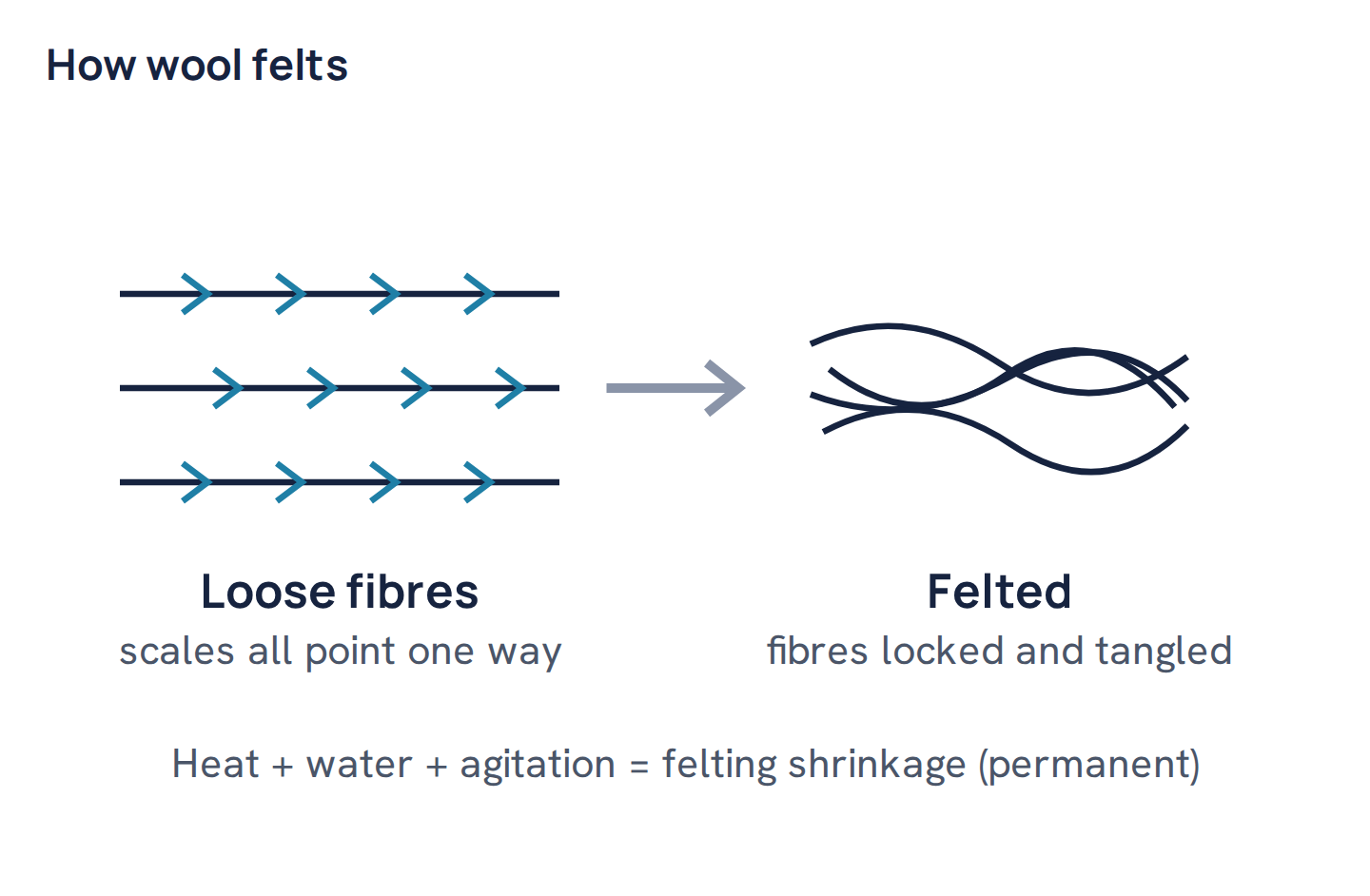
Under a microscope, a wool fibre is covered in overlapping scales, a little like roof tiles, all pointing towards the fibre tip. When wool is wet and warm, the fibres swell and become more mobile. Agitation, rubbing and squeezing push fibres past each other. The scales let fibres slide one way but catch them going back, so the fibres ratchet together and tangle. The fabric becomes denser and smaller. This is felting, and it is permanent.
The three things that drive felting are:
- Moisture: wet fibres move and swell.
- Heat: warm and hot water speeds felting, and sudden temperature changes make it worse.
- Agitation: tumbling, rubbing, wringing and squeezing push the fibres into each other.
Take away any one of these and felting slows down a lot. That is the basis of every wool care rule.
Relaxation shrinkage in wool
Separate from felting, wool knits and wovens can lose a little size in their first wash as the tension put in during spinning, knitting and finishing relaxes. This is the same kind of shrinkage cotton knits show, and it is usually small, a few percent. Good mills relax and steam wool fabric before it is cut and sewn to reduce this.
Does wool shrink in the dryer?
Yes, a tumble dryer is one of the fastest ways to shrink wool. The fabric is warm and damp, and it is tumbled and dropped continuously, which is exactly the combination that causes felting. Even a short cycle can shrink a sweater noticeably. Unless the label specifically allows tumble drying (some superwash wools do, on low), dry wool flat.
Does wool shrink in the wash?
It depends on temperature and agitation. A normal cotton cycle at 40°C or more, with strong drum action and a fast spin, can felt untreated wool badly. A dedicated wool or hand-wash cycle, at 30°C or below with gentle movement and a low spin, usually keeps the size. Hand washing in cool water, without rubbing, is safest.
Does wool shrink in cold water?
Much less. Cold water slows felting a lot, but it does not stop it if the wool is rubbed and agitated hard. A long, rough cold cycle can still felt a delicate knit. Equally, sudden changes between warm and cold water can shock the fibres and encourage felting. Keep the wash and rinse water at a similar cool temperature.
How much can wool shrink?
Relaxation shrinkage is small. Felting shrinkage has no fixed limit: a light felting might take a few percent off, while a hot wash and dry can shrink a sweater by a size or more and turn it thick and stiff. Felting is used on purpose to make boiled wool and felt, where fabric is shrunk hard to make it dense and wind-resistant.
What is superwash wool?
Superwash, or machine-washable, wool has been treated so its scales can no longer lock together. The usual treatment smooths or removes the scale edges and then coats the fibre with a thin polymer layer. The fabric can then be machine washed on a wool cycle, and sometimes tumble dried on low, without felting. The trade-offs are a slightly smoother, less “woolly” handle and the environmental footprint of the treatment. Check the care label: “machine washable” or “superwash” means treated wool.
Wool vs cotton and synthetics
| Fibre | Main shrinkage cause | Typical result if washed carelessly |
|---|---|---|
| Untreated wool | Felting (heat, water, agitation) | Large, permanent shrinkage and thickening |
| Superwash wool | Relaxation | Small shrinkage |
| Cotton knit | Relaxation and fibre swelling | Median 6% in length in our records |
| Rayon knit | Relaxation and strong swelling | Median 9% in length in our records |
| Polyester knit | Relaxation; heat above setting | Median 3% in length in our records |
Wool blended with nylon or polyester shrinks less than pure wool, because the synthetic fibres do not felt and help hold the structure. For shrinkage across fibres see does fabric shrink after washing.
Which wool garments shrink most?
Not all wool is equally at risk. How likely a garment is to shrink depends on the fibre and how the fabric is made:
- Loose, lofty knits such as chunky sweaters, beanies and soft scarves felt fastest, because the fibres have room to move and tangle.
- Fine, fluffy wools such as lambswool, angora blends and soft merino felt more readily than coarser, smoother wools.
- Tightly woven wool such as suit cloth and flannel is more stable, but still shrinks and distorts if washed hot.
- Wool socks felt at the heel and toe if washed hot, especially without nylon reinforcement.
- Boiled wool and felt are already felted, so they shrink much less in further washing.
- Wool with nylon or polyester shrinks less, because the synthetic fibres hold the structure.
Washing vs dry cleaning wool
Dry cleaning uses solvents instead of water, so the fibres do not swell and felting is avoided, which is why many wool coats, suits and tailored garments are labelled dry clean only. Their interlinings, shoulder pads and structure can also distort in water. Most wool sweaters, socks and base layers, however, wash well by hand or on a wool cycle. Follow the care label: if it allows hand washing, a cool, gentle hand wash is usually kinder to the wool than frequent dry cleaning.
Wool and moths, sweat and odour
One reason wool needs less washing than cotton is that it resists odour: its fibres absorb moisture vapour and hold it without feeling wet, and many people find wool base layers and socks stay fresh longer. Airing a sweater after wearing is often enough. When wool is stored dirty, though, clothes moths are attracted to the body oils and food traces, so always wash or clean wool before storing it for the season, and store it in breathable bags with moth protection.
Common mistake: putting a wool sweater in with the towels “just this once”. The hot water, heavy load and strong spin give the perfect conditions for felting, and the damage cannot be undone.
Can you unshrink wool?
Sometimes, a little. Felting cannot be reversed, but a slightly shrunken knit can often be relaxed and eased back:
- Fill a basin with lukewarm water and add a generous spoon of hair conditioner or a wool-safe conditioner.
- Soak the garment for 20–30 minutes so the fibres soften.
- Press out water gently; do not wring. Roll it in a towel.
- Lay it flat and gently stretch it towards its original shape, a little at a time, working evenly.
- Let it dry flat, reshaping as it dries.
This can recover a modest amount on a lightly shrunk sweater. A heavily felted garment stays felted; at that point it is best reused as felt.
How to wash wool without shrinking it
- Read the label: hand wash, wool cycle or dry clean.
- Use cool water, 30°C or less, and keep wash and rinse temperatures the same.
- Use a wool detergent; avoid enzymes made for protein stains, which can attack wool.
- Do not rub, scrub or wring; squeeze gently.
- Use the lowest spin, or roll the garment in a towel to remove water.
- Dry flat, away from direct heat and sun; never on a radiator.
- Air wool between wears; it often needs washing less than you think.
Worked example. Two identical lambswool sweaters are washed: one by hand in cool water and dried flat, the other in a 40°C cotton cycle and tumble dried. The first comes out the same size with a slightly softer handle. The second comes out a size smaller, thicker and stiffer, with a fuzzy, matted surface; that is felting, and it cannot be fully reversed.
Summary
- Wool shrinks mainly by felting: scales lock under heat, water and agitation.
- Dryers and hot, rough washes shrink wool fastest; cold, gentle washing is safe.
- Superwash wool is treated so it can be machine washed without felting.
- Felting is permanent; light shrinkage can be eased back with conditioner and gentle stretching.
- Wash cool, do not rub or wring, and dry flat.
Questions
Does wool shrink?
Yes. Wool relaxes slightly after washing and, more seriously, felts when wet, warm and agitated, which shrinks it permanently.
Does wool shrink in the dryer?
Yes, quickly. Warm, damp tumbling is ideal for felting. Dry wool flat unless the label allows low tumble drying.
Does wool shrink in cold water?
Much less, but hard agitation can still felt delicate wool. Keep wash and rinse water at a similar cool temperature and wash gently.
What is superwash wool?
Wool treated so its scales cannot lock together, usually by smoothing the scales and adding a thin polymer coating. It can be machine washed on a wool cycle.
Can you unshrink a wool sweater?
Light shrinkage can be eased back by soaking in lukewarm water with hair conditioner and gently stretching it flat. Felting cannot be reversed.

Textile engineer with 14+ years in dyeing and fabric development. He writes every guide on Dyeing Solution from real production work. Full profile