Polyester is not considered dangerous to wear for most people. The real issues are heat and sweat on sensitive skin, a few allergenic dyes, fire behaviour and microplastic shedding. Each concern explained from the dye house, with how to choose safer polyester.
At a glance
InertPET fibre
0.4%moisture regain
Meltsin fire
Washbefore wearing
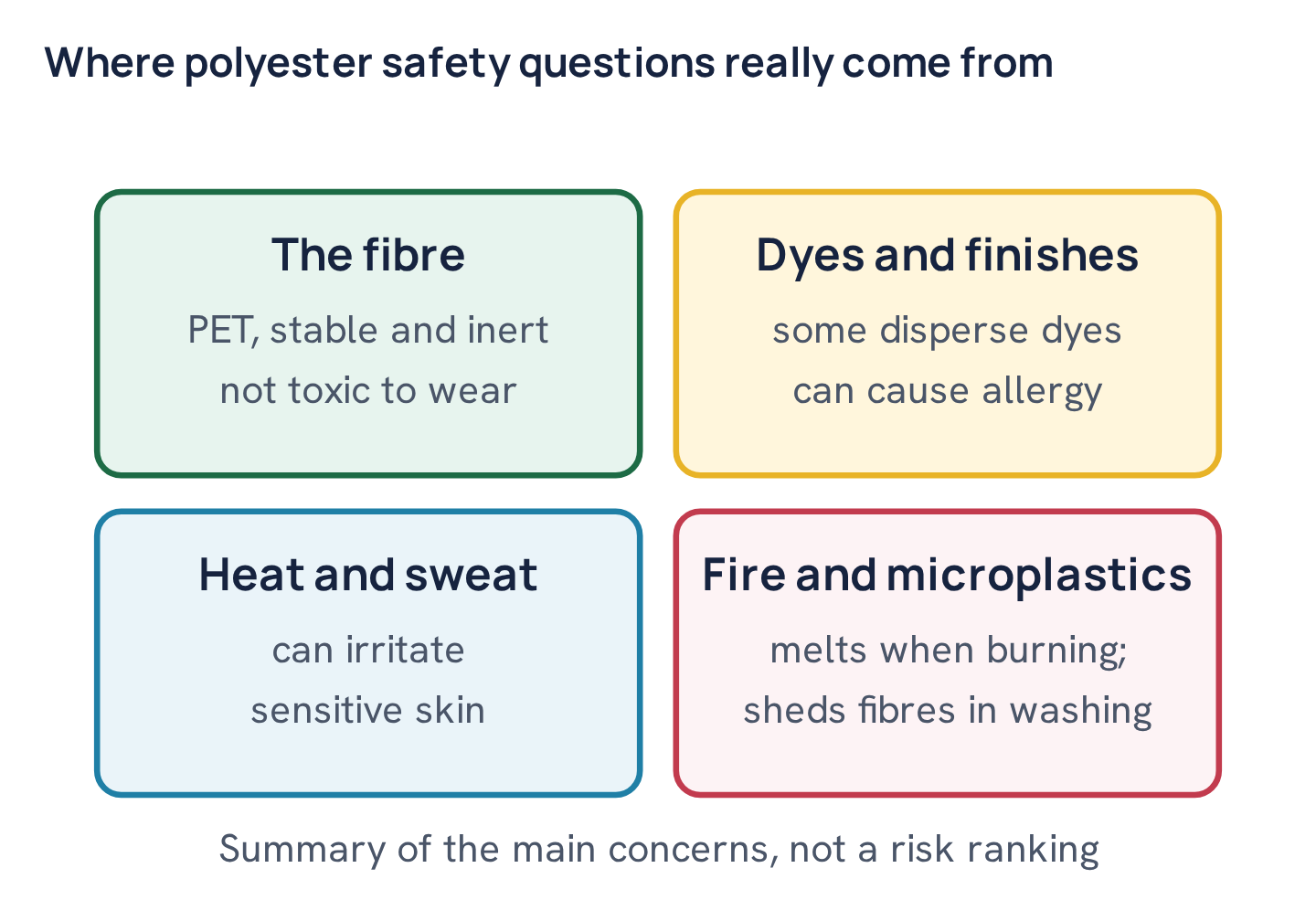
Polyester is not considered dangerous to wear for most people. It is one of the most widely used fibres in the world, in everything from T-shirts and sportswear to bedding and baby clothes, and regulators do not treat ordinary polyester clothing as a health hazard. The real issues are more specific: polyester traps heat and sweat, which can irritate some skin; certain dyes and finishes used on synthetics can cause allergies; it melts in a fire; and it sheds microplastic fibres in the wash. Knowing these lets you choose and use polyester sensibly.
This guide looks at the common worries about polyester one by one: is polyester safe, is it bad for your skin, what is in it, dyes and finishes, chemical residues, microplastics, fire safety, the claims about hormones and fertility, and how to choose safer polyester. It is written from the dye-house side, where we dye and finish polyester every day and see exactly what goes onto the fabric.
What polyester is
Clothing polyester is almost always polyethylene terephthalate (PET), the same polymer family used for drink bottles. It is made from petroleum-derived chemicals, melted, and spun into fibre. Finished PET is very stable and inert: it does not dissolve in water or sweat, it does not react with skin, and it is used in medical products such as surgical meshes and sutures. The fibre itself is not toxic.
Most questions about safety come from three other places: what is left from making the polymer, what is added in dyeing and finishing, and how the fabric behaves on the body and in the environment.
Is polyester bad for your skin?
For most people, no. But polyester can make some skin problems worse, mainly because of how it handles heat and moisture:
- It absorbs almost no sweat. Its moisture regain is about 0.4%, against about 8% for cotton. In heat, sweat can stay on the skin under a plain polyester garment, which can aggravate heat rash, chafing and some eczema.
- Odour. Polyester tends to hold body odour more than cotton, because odour-causing compounds bind to the fibre and bacteria thrive in the warm, damp layer.
- Static. In dry air polyester builds static, which some people find uncomfortable.
Technical sports polyester is engineered to move sweat along the fabric and dry quickly, which many people find comfortable during exercise. For sensitive skin in everyday wear, many dermatologists suggest cotton, modal or other cellulose fibres next to the skin.
Dyes on polyester and skin allergy
Polyester is dyed with disperse dyes, small molecules that dissolve into the fibre at about 130°C. A handful of disperse dyes, mostly certain blue, orange and red ones, are known skin sensitisers and have been linked to contact dermatitis, typically from dark, tight-fitting synthetic garments or linings. Many of these dyes are restricted by product safety standards and by brand restricted-substance lists, and responsible dye houses avoid them.
How well the fabric is dyed matters too. After disperse dyeing, polyester is reduction cleared to remove dye left on the fibre surface. Skipping or skimping on this step leaves loose dye that can rub off onto skin and other garments. On our floor reduction clearing is a must on dark and medium shades of polyester, and on polyester-elastane it is done on every shade. See how disperse dyes work on polyester.
Chemical residues: antimony and finishes
Most PET is made using an antimony compound as a catalyst, and small amounts remain bound in the polymer. Studies of normal clothing generally find that very little migrates out, and eco-labels set limits for extractable antimony. Other substances on polyester garments come from finishing, not from the fibre: softeners, water-repellent finishes, flame retardants on some technical products, and plastisol prints that may contain plasticisers. These vary from product to product, which is why third-party testing of the finished textile is the most useful reassurance. For dyes in general, see are fabric dyes safe.
Microplastics
Polyester garments shed tiny fibre fragments in the wash. These are a form of microplastic pollution, and they reach rivers and seas through waste water. This is mainly an environmental concern rather than a direct risk from wearing the garment. You can reduce shedding by washing full loads at lower temperatures, using shorter, gentler cycles, choosing liquid detergent, using a fibre-catching laundry bag or filter, and washing less often. Recycled polyester reduces the use of new oil but still sheds.
Is polyester flammable?
Polyester burns, but it behaves differently from cotton. Cotton catches fire easily and burns with a flame, leaving ash. Polyester tends to shrink away from a small flame, but once it burns it melts, and the hot, sticky melt can drip and stick to skin, causing deep burns. That is why many people working near open flames or hot metal, such as welders and some kitchen staff, wear cotton or flame-resistant fabrics rather than plain polyester. In everyday life the risk is small, but avoid loose polyester sleeves near gas hobs and campfires.
Polyester, hormones and fertility
You may see claims that polyester underwear lowers testosterone or affects fertility. These are mostly traced to very small, decades-old studies and to theories about static electricity and heat. They have not been established by robust modern research, and regulators do not classify polyester clothing as a reproductive hazard. What is well established is that keeping the groin cool helps sperm production, so loose, breathable underwear is a sensible choice for men trying to conceive, whatever the fibre. PET also does not contain bisphenol A, which is associated with other plastics.
Is polyester safe for babies and children?
Polyester is widely used in children’s clothing and bedding, often because it is durable and easy to wash. For babies, comfort and breathability matter most: polyester can feel warmer and hold sweat. Many parents prefer cotton or cotton-rich fabrics next to a baby’s skin. Whatever the fibre, look for products tested for restricted substances, wash new items before use, and follow sleepwear safety rules, which in some countries require flame-resistant or snug-fitting children’s sleepwear.
Common mistake: blaming the fibre for a rash from a new dark synthetic garment that was never washed. Excess dye or finish on the surface is a more likely cause. Wash new clothes, especially dark ones, before wearing, and if a reaction persists, see a doctor, who can test for specific dye allergies.
Recycled polyester: is it safer?
Recycled polyester is made by melting or chemically breaking down used PET, usually bottles, and spinning it into new fibre. Chemically the fibre is the same as new polyester, so it behaves the same way on the skin. Its main benefit is environmental: it uses less new oil. It still sheds microfibres and still depends on the same dyes and finishes, so the same checks apply.
Polyester compared with other fibres
| Fibre | Next-to-skin comfort | Main concerns |
|---|---|---|
| Polyester | Fine for most; warm and sweaty in heat | Heat and sweat, some dyes, melting in fire, microplastics |
| Nylon | Soft, smooth; similar heat issues | Similar to polyester; some dyes |
| Cotton | Breathable, absorbent | Farming impact; finishes; burns readily |
| Rayon, modal, lyocell | Soft, cool, absorbent | Production chemicals; finishes |
| Wool | Warm, can itch some people | Itch for sensitive skin; mothproofing finishes |
No fibre is completely free of concerns. For the garment you wear, the dyeing and finishing quality usually matters more than the fibre choice.
How to choose safer polyester
- Look for third-party product safety certification of the finished textile.
- Prefer lighter colours for next-to-skin wear if you have dye allergies.
- Choose technical, moisture-moving polyester for sport, and cellulose fibres for everyday next-to-skin wear if you have sensitive skin.
- Wash new garments before wearing them.
- Check that dark polyester does not rub colour off on a white cloth; heavy rubbing-off suggests poor clearing. See how to test clothes for colourfastness.
- Choose looser fits in hot weather to let air move.
Worked example. Someone with eczema finds a new black polyester workout top itchy. Washed twice, it is less irritating, which suggests surface dye or finish. Worn on a hot day for hours, it still feels uncomfortable because sweat stays on the skin. For that person a light-coloured technical top for short workouts, and a cotton or modal top for everyday wear, is a practical solution.
Summary
- Polyester fibre is stable and not considered toxic to wear.
- It holds heat and sweat, which can irritate sensitive skin.
- Some disperse dyes cause allergies; good dye houses avoid them and clear the dye thoroughly.
- Polyester melts when burning and sheds microplastics in the wash.
- Claims about hormones and fertility are not established; choose loose, breathable fits.
Questions
Is polyester dangerous to wear?
No, not for most people. The fibre is stable and inert. Practical concerns are heat and sweat on sensitive skin, some dyes, fire behaviour and microplastics.
Is polyester bad for your skin?
Usually not, but it absorbs almost no sweat, so in heat it can aggravate heat rash, chafing or eczema. Cellulose fibres feel more comfortable for some people.
Can polyester cause an allergy?
The fibre rarely does. A few disperse dyes used on synthetics are known skin sensitisers; reputable makers avoid them and clear the dye thoroughly.
Does polyester lower testosterone?
That claim comes from very small, old studies and is not established. Keeping the groin cool with loose, breathable underwear is sensible either way.
Is polyester safe for babies?
It is widely used, but many parents prefer cotton next to a baby’s skin for breathability. Choose tested products and wash before use.

Textile engineer with 14+ years in dyeing and fabric development. He writes every guide on Dyeing Solution from real production work. Full profile