Cotton underwear is better for everyday breathability and skin comfort; polyester underwear suits sport and heavy sweating because it dries fast. Breathability, hygiene, odour, fit, shrinkage, health claims and blends compared, with which to choose for each activity.
At a glance
Cottoneveryday wear
Polyestersport
6% vs 3%median shrinkage
Changeafter exercise
Cotton underwear is the better everyday choice for breathability and skin comfort; polyester underwear is better for sport, heavy sweating and quick drying. Cotton absorbs moisture and lets air through, which keeps skin comfortable in normal daily wear and is why doctors often recommend cotton for intimate areas. Polyester absorbs almost no moisture; in plain fabrics this can feel hot and trap sweat, but in technical knits it moves sweat away and dries fast, which suits exercise. Many modern briefs and boxers are blends with elastane, and some use modal or nylon for a smoother feel.
This guide compares cotton and polyester underwear on breathability, moisture, hygiene and odour, comfort, fit, durability, shrinkage and care, looks at the claims about polyester and men’s health, and helps you choose underwear for everyday wear, sport, hot weather and sensitive skin. It is written from the knit fabric side, where we dye and finish the jersey and rib fabrics most underwear is made from.
Cotton vs polyester underwear at a glance
| Point | Cotton underwear | Polyester underwear |
|---|---|---|
| Breathability | High | Low in plain fabrics; good in mesh or technical knits |
| Moisture | Absorbs sweat, dries slowly | Absorbs little, wicks and dries fast |
| Skin comfort | Soft, natural, gentle | Smooth; can feel warm or clammy |
| Odour | Lower | Can hold odour more |
| Fit retention | Can stretch and sag; better with elastane | Keeps shape well |
| Durability | Good | Very good |
| Shrinkage | Some, especially hot washed | Very little |
| Best for | Everyday wear, sleep, sensitive skin | Sport, hiking, hot active days |
Breathability and moisture
Underwear sits in a warm area where sweat collects. Cotton absorbs about 8% of its weight in moisture under normal conditions and lets air and vapour pass, so it keeps skin feeling dry in normal daily activity. If you sweat heavily, cotton fills up and stays damp. Polyester absorbs only about 0.4%. In plain, dense polyester fabrics the sweat stays against the skin; in technical polyester knits it is drawn along the fibres and spread on the outside to evaporate quickly. For exercise, that quick drying reduces chafing.
Hygiene and intimate health
For women, many health organisations advise cotton underwear, or at least a cotton gusset, for everyday wear, because breathable, absorbent fabric helps keep the area dry and reduces the warm, damp conditions in which yeast infections can develop. Synthetic underwear is fine for short periods of sport, but changing out of damp sportswear promptly is wise. For anyone with recurring irritation, plain, undyed or light cotton washed without fragrance is a sensible starting point, and a doctor’s advice is the right next step.
Polyester underwear and men’s health
Online claims say polyester underwear lowers sperm count or testosterone. These come mostly from very small, decades-old studies and have not been confirmed by robust modern research. What is well established is that sperm production is sensitive to heat, so tight, hot underwear of any fibre is not ideal for men trying to conceive. Loose, breathable underwear, often cotton boxers, is the usual advice. See are fabric dyes safe for the separate question of dyes.
Comfort, fit and durability
Pure cotton jersey underwear is soft but can stretch and sag over a day and lose shape after many washes. That is why most cotton underwear contains 3–8% elastane, which pulls the fabric back. Polyester and nylon keep their shape and colour very well and resist wear, so synthetic underwear often lasts longer. Modal, a soft wood-based fibre, is another popular choice: smoother and silkier than cotton, breathable, and good at keeping its softness; see what is modal fabric.
Shrinkage and washing
Cotton underwear shrinks if washed hot and tumble dried, especially in the first few washes. In our finishing records of 100% cotton knit, the median length shrinkage after the wash test was 6%, and cotton with elastane also shrank a median 6%. Polyester knit shrank a median 3%. Elastane is weakened by heat, so both cotton-elastane and polyester-elastane underwear last longer when washed at 30–40°C and dried on low heat. See does cotton shrink.
Underwear for hot climates and travel
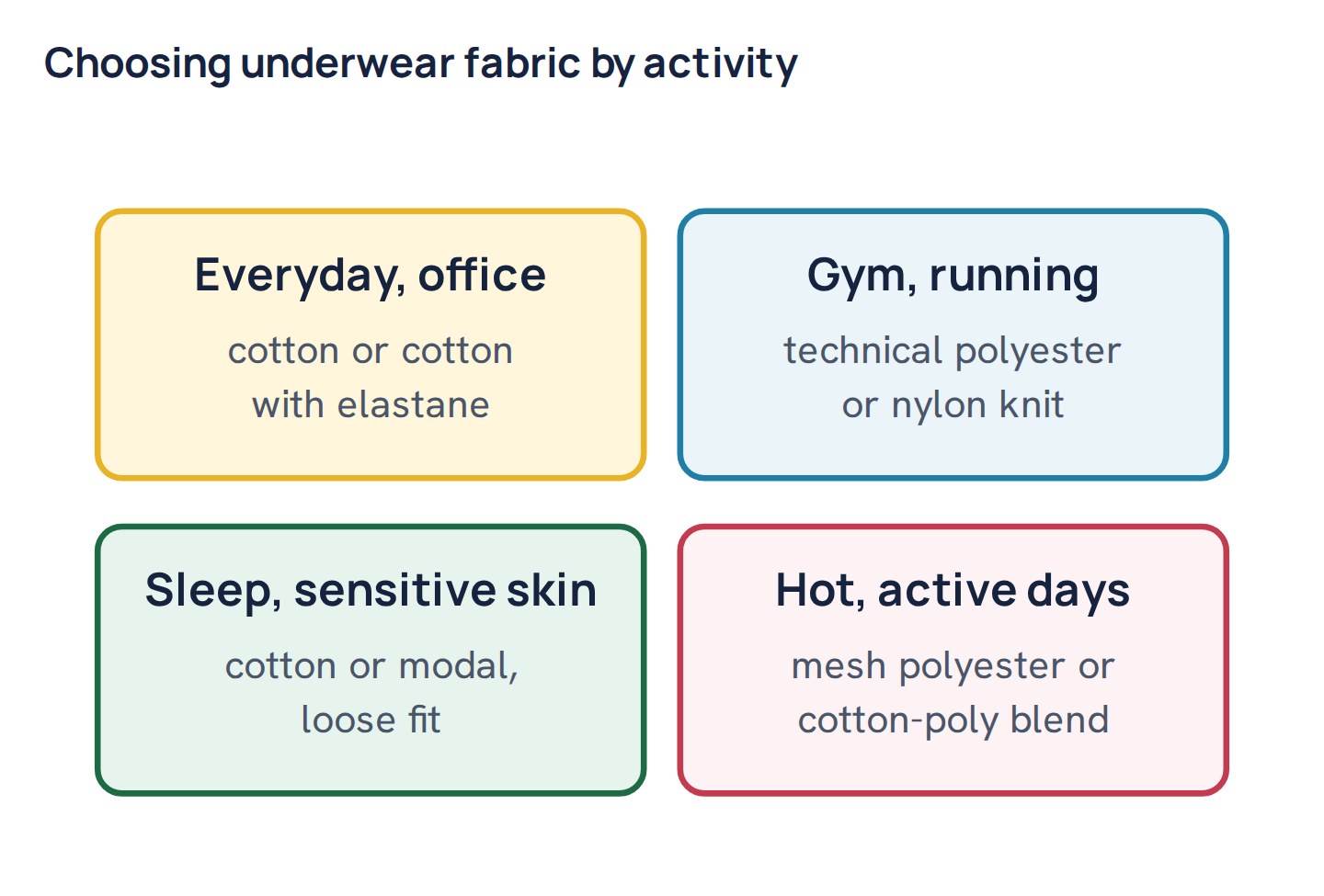
In hot, humid places, cotton underwear stays comfortable in normal activity but dries slowly after washing in a hotel room. Light polyester, nylon or merino underwear dries overnight and packs small, which is why travellers often take a few technical pairs. A good compromise is a cotton-polyester or cotton-modal blend for daily wear and one or two quick-dry pairs for active days.
Odour
Polyester tends to hold body odour more than cotton, because odour compounds stick to the fibre surface. Many sports underwear fabrics use odour-control finishes for this reason. Cotton holds less odour but stays damp longer. Merino wool underwear, used in outdoor gear, resists odour very well. Washing promptly and fully drying underwear is more important than the fibre choice.
Common mistake: wearing synthetic sports underwear all day after a morning workout. The damp, warm fabric against the skin for hours raises the risk of irritation and odour. Change into clean, dry cotton or modal underwear after exercise.
Blends and other fibres
- Cotton-elastane: the classic everyday brief or boxer brief; breathable with good fit.
- Cotton-polyester: keeps shape and size better than cotton, slightly less breathable.
- Modal or cotton-modal: silky, soft, breathable, popular for premium underwear.
- Nylon-elastane: smooth, thin, seamless and sporty; similar moisture behaviour to polyester.
- Polyester mesh: very breathable sports underwear.
- Merino wool: odour-resistant and temperature-regulating for travel and outdoors.
Underwear fabric construction
Most underwear is knitted, not woven, because knits stretch and move with the body. The common structures are:
- Single jersey: thin, light and soft; the usual fabric for briefs and boxer briefs, often with elastane.
- Rib: stretchier and closer-fitting, with fine vertical lines; used for vests and classic briefs.
- Interlock: smooth on both sides and a little thicker; soft and stable, used for children’s underwear.
- Mesh: open knits in polyester or nylon for maximum airflow in sports underwear.
- Microfibre knits: very fine polyester or nylon filaments for a smooth, seamless look under clothes.
See what is cotton jersey and what is interlock fabric.
Colour, dyes and sensitive skin
Underwear sits directly on sensitive skin for many hours, so dyeing and finishing quality matter. Cotton underwear is dyed with reactive dyes that bond to the fibre; polyester with disperse dyes, a few of which are known skin sensitisers and are restricted by product safety standards. Well-made underwear is thoroughly washed off after dyeing so little loose dye remains. If you react to dark underwear, try light colours, wash new items before wearing, and choose products tested for restricted substances. See how to test clothes for colourfastness.
How often should underwear be replaced?
There is no fixed rule, but signs of a worn-out pair are easy to see: elastic that no longer holds, fabric that has thinned or become see-through, holes, and stains or odour that do not wash out. Cotton underwear tends to show thinning and slack elastic first; polyester and nylon underwear may keep their shape longer but hold odour as they age. Rotating several pairs, washing at moderate temperatures and avoiding hot tumble drying all extend their life.
How to choose and care for underwear
- Match the fabric to the activity: cotton for daily wear, technical synthetics for sport.
- Look for a cotton gusset in women’s synthetic underwear.
- Choose a fit that is snug but not tight; too tight traps heat.
- Wash at 30–40°C (60°C for cotton if the label allows and hygiene demands), without heavy softener.
- Dry fully before wearing; tumble low or line dry.
- Replace underwear when the elastic is tired or the fabric thins.
Worked example. Someone who commutes by bike, works in an office and goes to the gym three evenings a week does well with two kinds of underwear: cotton-elastane briefs for the working day, and polyester or nylon sports briefs for the bike ride and gym, changed straight after exercise.
Summary
- Cotton underwear breathes well and suits everyday wear, sleep and sensitive skin.
- Polyester underwear dries fast and suits sport and heavy sweating.
- Plain polyester can feel hot; technical knits and mesh stay cooler.
- Claims about polyester and fertility are not established; avoid tight, hot underwear.
- Wash cool to protect elastane and limit cotton shrinkage.
Questions
Is cotton or polyester underwear better?
Cotton is better for everyday wear, sleep and sensitive skin. Polyester or nylon technical underwear is better for sport because it dries quickly.
Is polyester underwear bad for you?
Not for most people. It can feel hot and hold sweat in plain fabrics, so change out of damp sports underwear promptly.
Does polyester underwear lower sperm count?
That claim comes from very small, old studies and is not established. Heat matters, so loose, breathable underwear is sensible for men trying to conceive.
Why do doctors recommend cotton underwear?
Cotton is breathable and absorbent, which helps keep intimate areas dry and reduces conditions that favour irritation and yeast infections.
Does cotton underwear shrink?
Some, if washed hot and tumble dried. Our cotton knit records show a median 6% length shrinkage; wash at 30 to 40°C and dry low.

Textile engineer with 14+ years in dyeing and fabric development. He writes every guide on Dyeing Solution from real production work. Full profile