Bamboo fabric is not considered toxic to wear, but most of it is bamboo viscose made with chemicals that can harm workers and the environment. How bamboo fabric is made, viscose vs lyocell bamboo, natural and antibacterial claims, certifications and safe use.
At a glance
Viscosemost bamboo fabric
Cellulosesafe to wear
CS₂production concern
Lyocellcleaner route
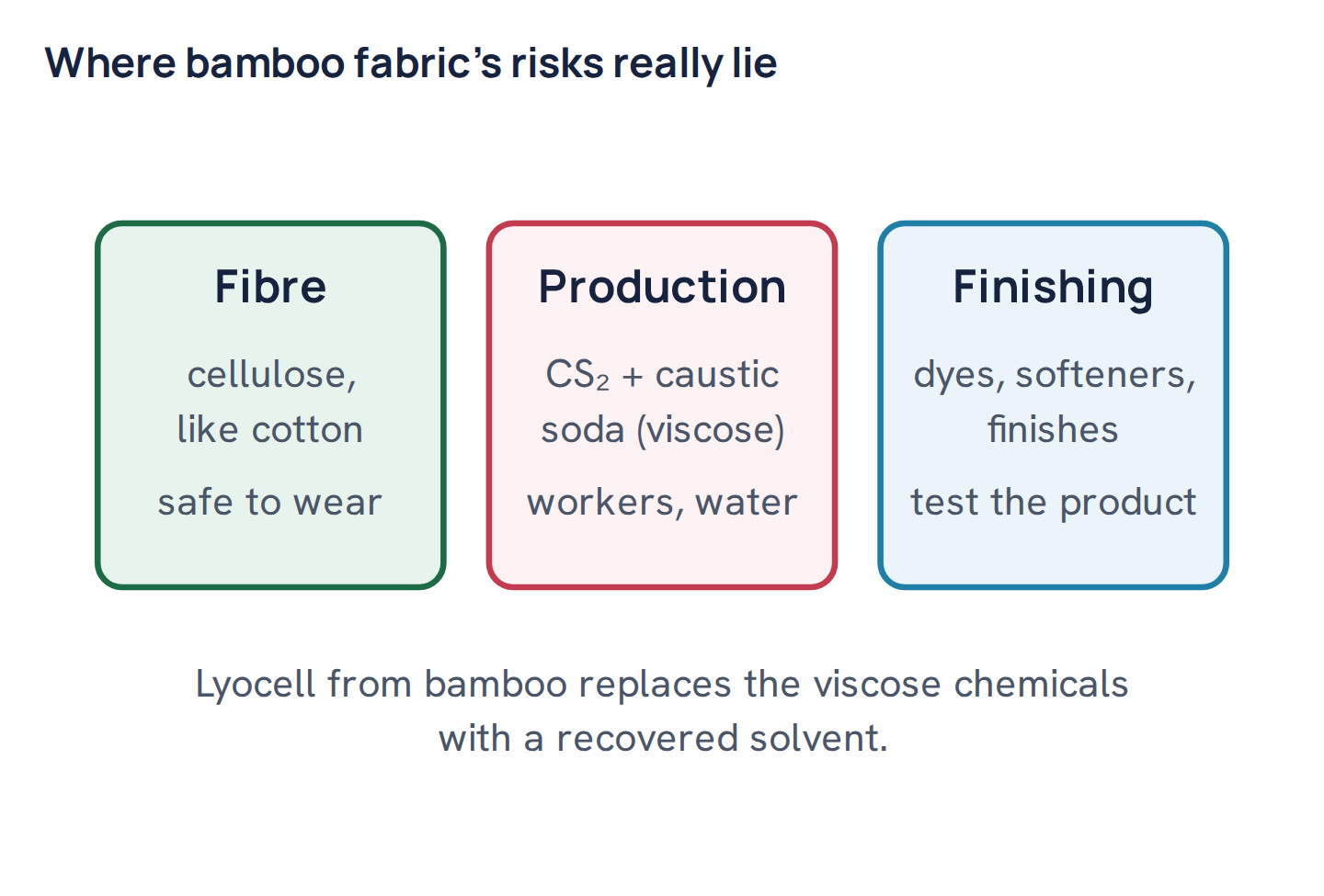
Bamboo fabric is not considered toxic to wear, but the way most of it is made can be harmful to workers and the environment. Almost all soft “bamboo” clothing and bedding is bamboo viscose (rayon): bamboo pulp dissolved with strong chemicals and re-formed into cellulose fibre. The finished fibre is cellulose, like cotton, and is widely worn next to the skin. The concerns are the chemicals used in production, carbon disulphide and caustic soda, and the dyes and finishes added later. Lyocell made from bamboo uses a recovered solvent and is generally considered the cleaner option.
This guide explains how bamboo fabric is made, what is and is not toxic about it, the three types of bamboo fabric, why “natural” and “antibacterial” claims are misleading, how bamboo compares with cotton, modal and polyester, what certifications tell you, and how to choose and wash bamboo safely. It is written from the dye-house side, where bamboo viscose is processed like any other viscose.
How bamboo fabric is made
Bamboo is a grass whose stems are hard and woody. To turn it into a soft fabric, the cellulose has to be extracted and re-formed. There are three routes:
- Bamboo viscose (rayon): by far the most common. Bamboo pulp is treated with caustic soda and carbon disulphide, dissolved into a viscous solution, and pushed through fine holes into an acid bath to form fibre.
- Bamboo lyocell: bamboo pulp is dissolved directly in an organic solvent that is recovered and reused, then spun into fibre. Cleaner and stronger.
- Mechanical bamboo (“bamboo linen”): the fibres are separated by crushing and natural retting, like linen. Rare, coarse and expensive.
See what is viscose fabric and what is lyocell fabric for the two main processes.
Is bamboo fabric toxic to wear?
No, not in normal use. The viscose process removes the chemicals from the fibre through washing, and the finished fibre is regenerated cellulose. Bamboo viscose sheets, socks, underwear and baby clothes are worn by millions of people. As with any fabric, what can cause skin problems is usually residual finish or dye, not the fibre, which is why washing new items before use and choosing tested products are good habits.
Why bamboo viscose production is a concern
Carbon disulphide is toxic to people at high exposure; long-term occupational exposure has been linked to nerve, heart and other health problems in viscose workers. It is also released to air if not captured. Caustic soda and sulphur compounds can pollute water if waste is not treated. Modern plants with good recovery systems capture most of these chemicals; plants without them can cause serious local pollution. This is a real issue, but it concerns the factory and its workers and neighbours, not the person wearing the finished garment.
Is bamboo fabric natural?
Bamboo viscose is not a natural fibre in the way cotton or linen is. The plant is natural; the fibre is chemically re-formed. That is why regulators in the US and Canada require labels such as “rayon made from bamboo” or “viscose from bamboo”, and have acted against products marketed simply as “natural bamboo”. Only mechanically processed bamboo fibre is a natural bast fibre, and it is uncommon.
Is bamboo fabric antibacterial?
The bamboo plant is often said to contain an antibacterial agent, but the viscose process dissolves and re-forms the cellulose, removing such compounds. Tests on bamboo viscose fabrics generally do not show built-in antibacterial properties that cotton viscose or wood viscose lack. If a bamboo product is antibacterial, it is because an antimicrobial finish was added in the dye house, and that finish should be declared and tested. See antimicrobial finish.
Bamboo vs cotton, modal and polyester on safety
| Fabric | Fibre | Main concerns |
|---|---|---|
| Bamboo viscose | Cellulose | Production chemicals; misleading claims; finishes |
| Bamboo lyocell | Cellulose | Generally cleaner process; finishes |
| Modal | Cellulose | Viscose-type process; recovery varies |
| Cotton | Natural cellulose | Farming water and pesticides; finishes |
| Polyester | Oil-based polymer | Microplastics; some dyes; not biodegradable |
On the garment you wear, bamboo viscose sits with cotton and modal as a low-concern fibre. The real differences are in production and the environment.
What certifications tell you
- Product safety certification tests the finished textile for restricted substances such as banned dyes, formaldehyde and heavy metals.
- Fibre producer certification covers how the viscose or lyocell plant manages chemicals, emissions and waste water.
- Forest or plantation certification covers where the bamboo was grown.
- Organic claims for bamboo usually refer to the plant, not to the chemical process that made the fibre.
Common mistake: paying extra for “organic bamboo” sheets on the belief that they are chemical-free. Organically grown bamboo still goes through the same viscose chemistry. If clean production matters to you, look for lyocell from bamboo or a certified fibre producer, and a safety label on the finished product.
How bamboo viscose is dyed
In the dye house, bamboo viscose is processed exactly like other viscose: a mild scour, reactive dyes at around 60°C, gentle handling because the fibre is weak when wet, soaping to remove unfixed dye, and softening. Done properly, little loose dye remains. Poor wash-off can leave dye that bleeds or rubs off, which is a quality issue rather than a fibre issue. See are fabric dyes safe.
Is bamboo safe for babies?
Bamboo viscose baby clothes and swaddles are popular because they are very soft and absorbent. They are not considered harmful to wear. For babies, choose products with a product safety certification, wash before first use, avoid fragrance and heavy softener, and follow sleep-safety rules for bedding and sleepwear.
How bamboo behaves in the wash
Because bamboo viscose is viscose, it is weak when wet and shrinks easily. In our finishing records of 164 viscose knit batches, the median length shrinkage after the wash test was 9%, the highest of any common fibre. Wash bamboo cool and gently and dry it low or flat; see does rayon shrink.
Worked example. A shopper compares two sets of baby swaddles: “100% natural bamboo, antibacterial” with no certification, and “viscose from bamboo” with a product safety label. The second is the safer, more honest choice: same fibre, but the label is accurate and the finished fabric has been tested. A third option, lyocell from bamboo, would also address production concerns.
Is bamboo better for the environment?
At the farm stage, bamboo has real advantages: it grows quickly, regenerates from its roots without replanting, and usually needs little irrigation or pesticide. The environmental cost moves to the factory. Bamboo viscose made without proper chemical recovery can have a worse footprint than well-made wood viscose, while bamboo lyocell made in a closed loop is among the better options. As with other fibres, the producer and the process matter more than the plant name on the label.
How to choose and wash bamboo safely
- Read the full label: viscose, lyocell or mechanical bamboo.
- Prefer certified finished products and certified fibre producers.
- Be sceptical of “natural”, “chemical-free” and “antibacterial” claims.
- Wash new items before use, cool and gentle, with mild detergent.
- Dry low or flat to limit shrinkage.
Questions to ask before buying bamboo
- Is it viscose, lyocell or mechanically processed bamboo?
- Who made the fibre, and do they publish how they recover their chemicals?
- Is the finished product tested for restricted substances?
- Has any antibacterial or other finish been added, and what is it?
- What is the full fibre content, including any cotton, polyester or elastane?
Washing new bamboo clothes before wearing
Washing any new garment before the first wear is a simple, sensible habit. It removes loose dye, excess finishing chemicals and dust from storage and transport. For bamboo viscose, use a cool, gentle wash and a mild detergent, then line dry. This does not change the fibre itself, but it leaves the fabric cleaner and softer against the skin, which matters most for babywear, underwear and bedding.
Summary
- Bamboo fabric is not considered toxic to wear; the finished fibre is cellulose.
- Most bamboo fabric is viscose, made with chemicals that can harm workers and the environment if not recovered.
- Bamboo lyocell uses a recovered solvent and is the cleaner choice.
- “Natural” and “antibacterial” claims usually do not apply to the finished fibre.
- Choose certified products and wash bamboo cool and gently.
Questions
Is bamboo fabric toxic?
Not to wear. The finished fibre is cellulose, like cotton. The concern is the viscose production process, which uses chemicals that must be recovered.
How is bamboo fabric made?
Mostly by the viscose process: bamboo pulp is dissolved with caustic soda and carbon disulphide and re-formed into fibre. Some is made by the cleaner lyocell process.
Is bamboo fabric natural?
Bamboo viscose is not a natural fibre; it is regenerated cellulose. Only rare mechanically processed bamboo is a natural bast fibre.
Is bamboo fabric antibacterial?
Not inherently. The viscose process removes the plant’s natural compounds; any antibacterial effect comes from an added finish.
Is bamboo safe for babies?
Yes, it is widely used. Choose certified products, wash before use and avoid heavy softener and fragrance.

Textile engineer with 14+ years in dyeing and fabric development. He writes every guide on Dyeing Solution from real production work. Full profile