Pique is a textured knit made with tuck stitches, the classic polo shirt fabric. How it is knitted, single and double Lacoste, micro and poly pique, pique vs jersey, and what our records of 600+ pique fabrics show about weight and shrinkage.
At a glance
Tuckstitch behind the texture
+22%heavier than jersey, same yarn
10%median length shrinkage
604pique records in our register
Pique (piqué) knit fabric is a textured knit with a small raised, honeycomb or waffle-like pattern on the face. It is the classic polo shirt fabric. The texture comes from tuck stitches: on some needles the yarn is held in a loop instead of being knitted, which pulls the surface into tiny cells. That structure makes pique breathable, firmer and more structured than plain jersey, and it hides creases and sweat marks well.
This guide explains how pique is knitted, the main types including Lacoste pique, micro pique and poly pique, what it is used for, pique versus cotton jersey, and what our development records of more than 600 pique fabrics show about weight and shrinkage.
How pique is knitted
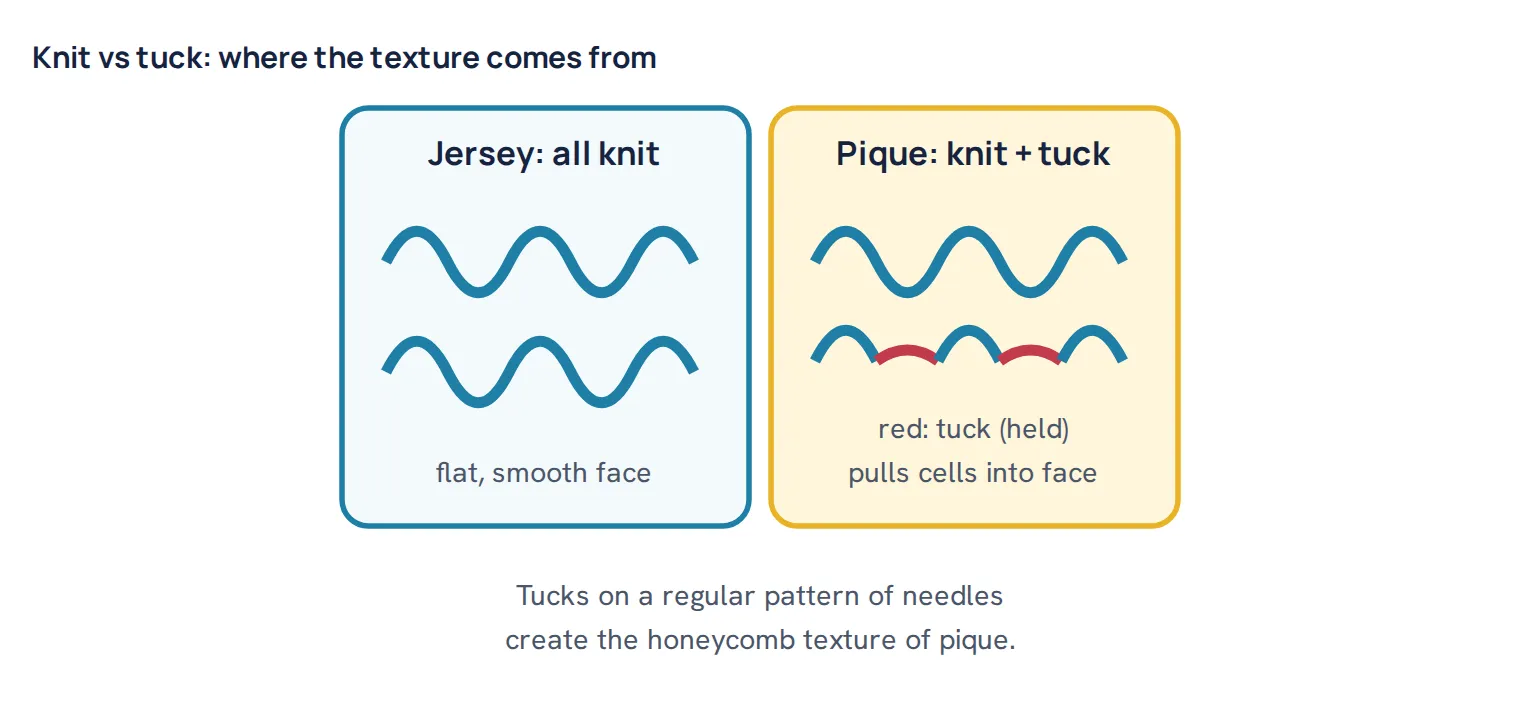
Pique is a single-jersey-based weft knit made on a circular machine. In a plain jersey every needle knits on every course. In pique, a set pattern of needles tucks on some courses: the needle takes the new yarn but keeps its old loop, so two loops sit on one needle until the next knit. The tucked loops pull the fabric into a regular texture of small cells.
- Single Lacoste (single pique): one tuck course in each repeat; a fine texture.
- Double Lacoste (double pique): two tuck courses in each repeat; a deeper, more pronounced texture and a heavier fabric.
“Lacoste” here is a trade term for the structure used on classic polos. The cam charts and settings are in the pique and Lacoste development guide.
Types of pique
| Type | What it is | Typical use |
|---|---|---|
| Cotton pique | 100% cotton, single or double Lacoste | Classic polo shirts |
| Micro pique | Very fine texture from finer yarn or gauge | Smart polos, golf and sports shirts |
| Poly pique | 100% polyester pique, often moisture-wicking | Sports polos, team and work shirts |
| CVC pique | Cotton-polyester blend | Workwear and promotional polos |
| Lycra pique | Pique with elastane | Fitted polos and dresses |
| Yarn-dyed pique | Knitted from coloured yarns | Striped polos |
What is pique fabric used for?
Pique’s main use is the polo shirt: the texture keeps the fabric slightly away from the skin, so it breathes, and the firm structure holds a collar and placket well. It is also used for summer dresses, children’s wear, sports tops, work and team shirts and casual jackets. Pique collars and cuffs are often knitted separately as flat-knit pieces that match the body colour.
Pique vs cotton jersey
Our development records show the difference clearly. The same 24/1 cotton yarn on the same 24 gauge machine was knitted as single jersey at a median 2.80 mm stitch length for a required 180 GSM, finishing about 176 cm wide. As pique it ran at a median 2.60 mm for a required 220 GSM and finished about 190 cm wide. In other words, pique is about 22% heavier and wider from the same yarn.
| Point | Cotton pique | Cotton single jersey |
|---|---|---|
| Surface | Textured, honeycomb | Smooth |
| Weight (same 24/1 yarn) | About 220 GSM | About 180 GSM |
| Breathability | Very good: air pockets | Good |
| Structure | Firmer, holds shape | Softer, drapier |
| Length shrinkage (our median) | 10% | 5% |
| Typical use | Polo shirts | T-shirts |
Does pique shrink?
Yes, more in length than jersey. In our finishing records, 100% cotton pique had a median length shrinkage of 10% after the wash test, against 5% for single jersey, because the tucked loops relax after washing. Pique also left finishing lighter than required more often than other structures. Good compaction and relaxed drying are essential; see the pique dyeing and finishing flowchart.
Common mistake: planning a striped pique polo from the greige stripe height. With 6 to 10.5% length shrinkage in our cotton pique records, the stripes get shorter by the same proportion after washing; plan the stripe and the compaction together.
Caring for pique
- Wash at 30–40°C, inside out, to protect the texture and colour.
- Reshape the collar while damp and dry flat or on a hanger.
- Avoid hot tumble drying for cotton pique, which increases length shrinkage.
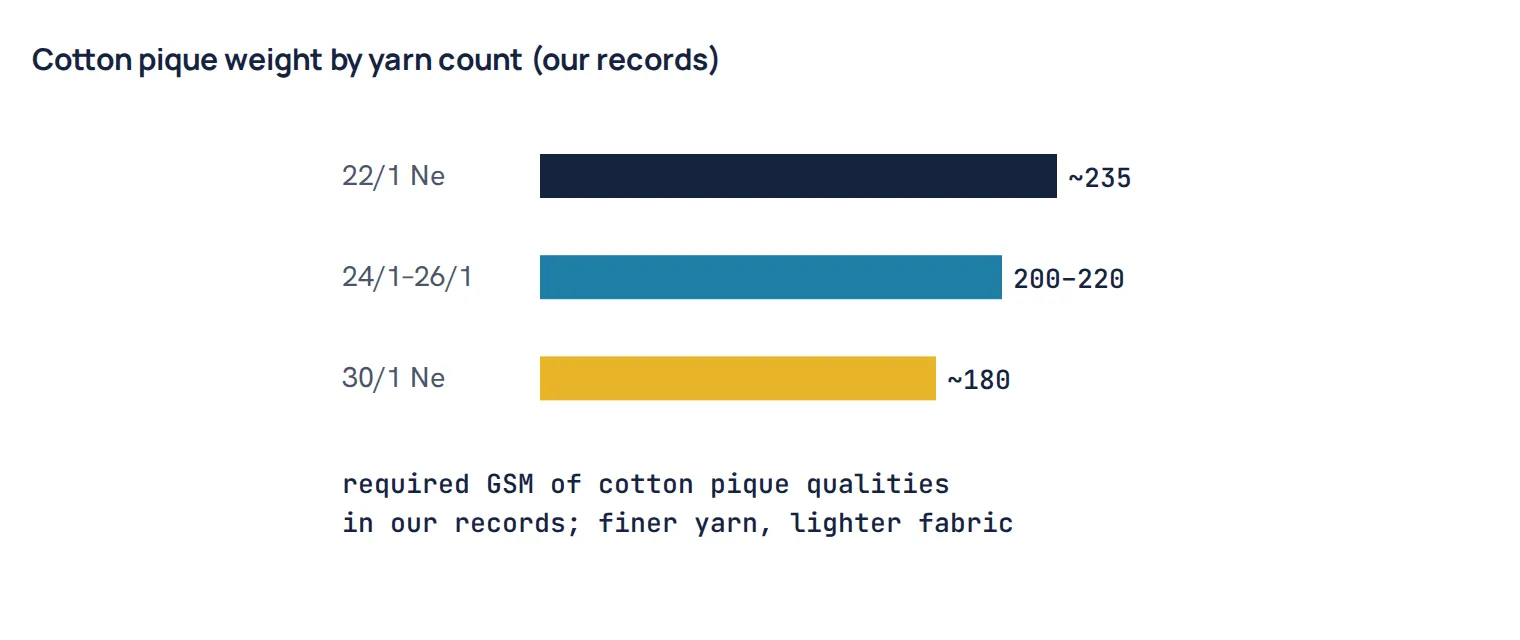
Worked example. A brand wants a 200 GSM cotton polo. In our records, 26/1 Ne cotton gives a 170 GSM jersey but a 200 GSM pique, so 26/1 on 24 gauge is a natural starting point. Because pique shrinks more in length, the finishing plan must include compaction to bring length shrinkage within the buyer’s usual 5% limit.
Summary
- Pique is a textured knit made with tuck stitches; it is the classic polo fabric.
- Single Lacoste has a fine texture, double Lacoste a deeper one; micro pique is finer still.
- From the same yarn, pique is about 22% heavier than jersey in our records.
- Cotton pique shrank a median 10% in length, twice single jersey; good finishing is key.
Questions
What is pique knit fabric?
Pique is a single-jersey-based knit in which some needles tuck instead of knitting, creating a small raised honeycomb texture on the face.
What is pique fabric polo?
It is the textured knit used for classic polo shirts. Its structure breathes well, holds the collar and placket and hides creases and sweat marks.
What is micro pique fabric?
Micro pique has a very fine pique texture, made with finer yarn or a finer gauge. It is used for smart polos and golf and sports shirts.
What is the difference between pique and cotton jersey?
Jersey is smooth and drapey; pique is textured, firmer and more breathable. From the same yarn, pique was about 22% heavier in our records.
Does pique fabric shrink?
Yes, more in length than jersey. In our records cotton pique shrank a median 10% in length after washing, against 5% for single jersey.

Textile engineer with 14+ years in dyeing and fabric development. He writes every guide on Dyeing Solution from real production work. Full profile