Microfiber means a fibre finer than 1 denier, so polyester is microfiber only when it is made that fine; most microfiber is polyester, often with nylon. What microfiber is, polyester vs nylon microfiber, uses, dyeing, shrinkage and care.
At a glance
< 1 denierfibre fineness
Mostlypolyester
80/20cleaning cloths
More dyesame shade
Polyester is not automatically microfiber, but most microfiber is polyester. “Microfiber” describes how fine the fibre is, not what it is made of: a microfiber is finer than one denier, thinner than a strand of silk. Polyester can be made as ordinary fibres or as microfibers. Microfiber can be made from polyester, nylon or a split blend of the two. So a polyester T-shirt may not be microfiber at all, while a microfiber cleaning cloth is usually polyester and nylon.
This guide explains what microfiber really means, how it is made, polyester microfiber vs ordinary polyester, polyester vs nylon microfiber, where microfiber is used, how it behaves in dyeing and washing, and how to read labels. It is written from the dye house, where microfiber polyester is one of the fabrics that needs the most care to dye evenly.
What does microfiber mean?
Fibre fineness is measured in denier (grams per 9,000 metres of fibre) or decitex (grams per 10,000 metres). A fibre finer than 1 denier, or about 1.1 decitex, is called a microfiber. For comparison:
- Ordinary polyester apparel fibres are often around 1.2–3 denier.
- Silk is a little over 1 denier.
- Cotton fibres are typically around 1.5 denier equivalent.
- Microfibers are below 1 denier; some special fibres go far below that.
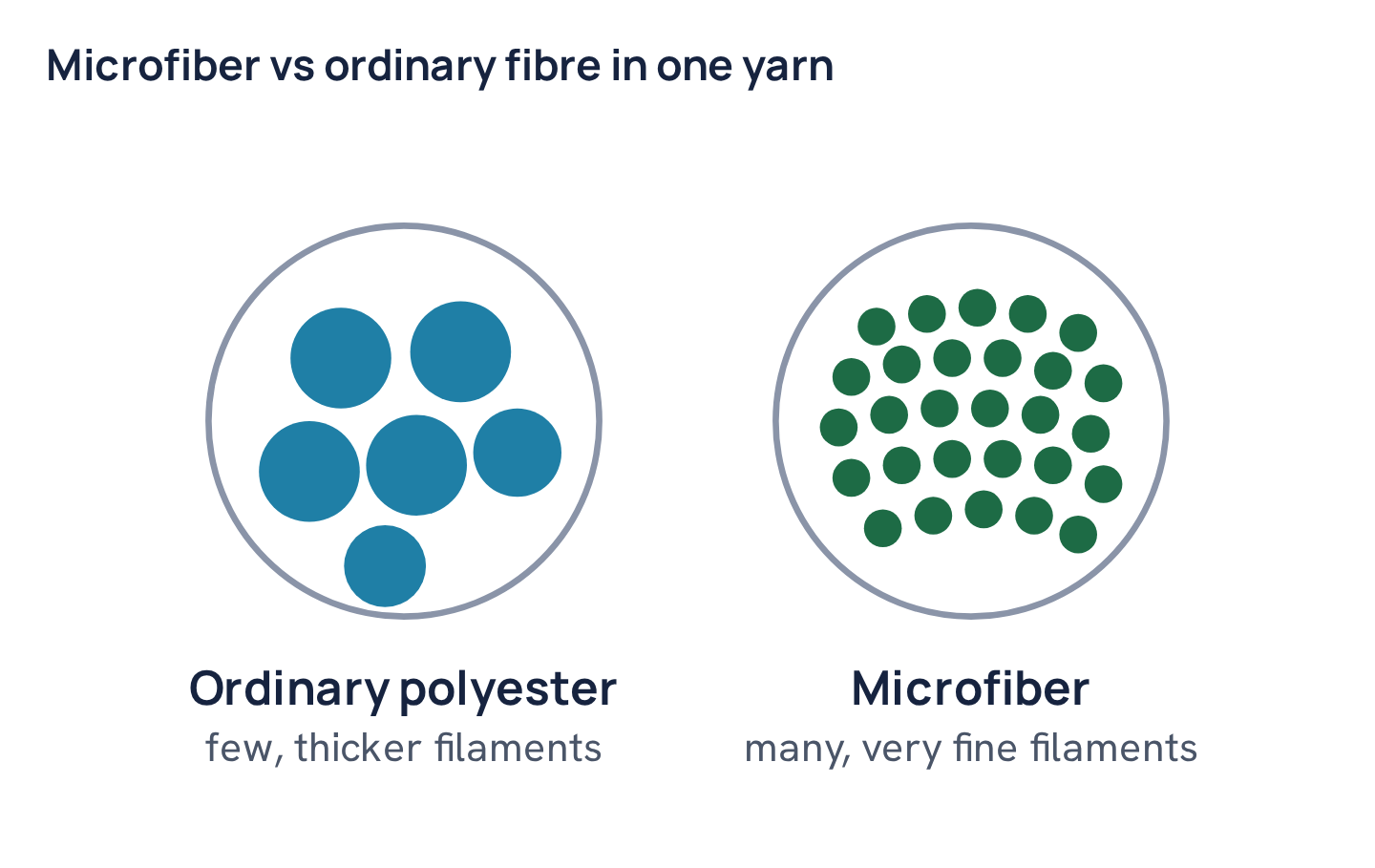
A yarn made from many very fine filaments is softer, drapes more and has a much larger surface area than a yarn of the same thickness made from fewer, thicker filaments. That surface area is why microfiber cloths pick up dust and water so well.
Is polyester a microfiber?
Only if it is made that way. Polyester fibre is produced by melting the polymer and pushing it through spinnerets with small holes. The size of the holes and the drawing process set the final fineness. Producers make polyester in many fineness grades, from coarse fibres for carpets and fillings to standard apparel fibres to microfibers. The fabric label usually just says “100% polyester”, so you cannot tell from the fibre name alone. Microfiber polyester fabrics are usually sold as “microfiber”, “peach skin”, “brushed microfiber” or “micro-polyester”.
Is all microfiber polyester?
No. The main types are:
- Polyester microfiber: the most common; used in sheets, sportswear, linings, faux suede and many cleaning products.
- Nylon microfiber: softer and more absorbent than polyester; used in underwear, swimwear and some premium cleaning cloths.
- Split polyester-nylon microfiber: fibres spun as a polyester-nylon combination and then split into wedge-shaped segments. Typical cleaning cloths are about 80% polyester and 20% nylon. The split edges trap dust and soak up water.
- Other microfibers: acrylic and even some regenerated cellulose fibres can be made very fine.
Polyester microfiber vs ordinary polyester
| Point | Polyester microfiber | Ordinary polyester |
|---|---|---|
| Fibre fineness | Below 1 denier | About 1.2–3 denier for clothing |
| Feel | Very soft, smooth, often peach-skin | Smooth, can feel slick or crisp |
| Drape | Fluid | Firmer |
| Wind and water resistance | Higher when densely woven | Lower |
| Cleaning and wicking | Excellent, large surface area | Moderate |
| Dyeing | Needs more dye for the same depth; harder to level | Easier |
| Pilling and snagging | Can snag; brushed types can pill | Pills stay attached |
Where microfiber is used
- Bed sheets: brushed polyester microfiber sheets are soft, inexpensive and wrinkle-resistant, but warmer and less breathable than cotton.
- Sportswear: fine polyester filaments move sweat along the fabric and dry quickly.
- Cleaning cloths and towels: split polyester-nylon microfiber traps dust and absorbs water.
- Faux suede and upholstery: microfibers make a soft, suede-like surface that resists stains.
- Linings and fashion fabrics: peach-skin microfiber has a soft, matt, drapey feel.
- Outerwear: densely woven microfiber is naturally wind and water resistant even before coating.
Microfiber in the dye house
Microfiber polyester is a challenge for dyers, and the reason explains a lot about the fabric. Because the fibres are so fine, the same weight of fabric has much more fibre surface. More surface means:
- More dye for the same shade: light reflects off more surfaces, so a microfiber needs noticeably more disperse dye than ordinary polyester to look as deep.
- Faster dye uptake: dye goes on quickly at the start, which makes uneven, streaky dyeing more likely unless the heating rate is slow and controlled.
- Lower fastness for the same recipe: with more dye near the fibre surface, wash and rubbing fastness can drop, so thorough reduction clearing is essential.
Polyester is dyed with disperse dyes at about 130°C under pressure, then reduction cleared to remove surface dye. On microfiber, the dyer usually slows the heating, chooses dyes with good levelling and high fastness, and clears carefully. See how disperse dyes work on polyester and the 100% polyester knit dyeing process.
Common mistake: using the same dye recipe for a microfiber polyester as for an ordinary polyester of the same colour. The microfiber comes out lighter and often uneven. Microfiber needs its own lab dip and a slower dyeing curve.
Does microfiber shrink?
Polyester microfiber behaves like other polyester: it barely shrinks in normal washing. In our finishing records polyester knit shrank a median 3% in length after the wash test. Like all polyester it can shrink or distort with high heat, so a very hot dryer or iron is the risk. Microfibers blended with cotton or rayon follow the cellulose part and shrink more. See does polyester shrink.
Microfiber vs cotton
| Point | Polyester microfiber | Cotton |
|---|---|---|
| Feel | Very soft, smooth, sometimes slick | Soft, natural, slightly drier |
| Breathability | Lower; warmer to sleep in | Higher |
| Moisture | Wicks and dries fast, absorbs little into the fibre | Absorbs a lot, dries slowly |
| Wrinkles | Few | More |
| Shrinkage (our knit records) | Median 3% (polyester) | Median 6% |
| Durability | Strong, keeps colour well | Strong, gets softer with washing |
| Static | Can build static in dry air | Little |
| Price | Usually lower | Usually higher |
Is microfiber breathable and safe?
Polyester microfiber breathes less than cotton because the fibre absorbs almost no moisture, although fine filaments do move sweat along the surface well, which is why it works in sportswear. In bedding and casual clothes, many people find it warmer and slightly clammy in hot weather. As for safety, polyester microfiber is widely used next to the skin and is not considered toxic to wear. As with any fabric, the dyes and finishes matter more than the fibre; products certified for restricted substances are the safer choice, especially for children.
Microfiber shedding
Synthetic fabrics release tiny fibre fragments in the wash, and very fine fibres can break into very small pieces. This is part of the wider concern about microplastics from textiles. Washing full loads at lower temperatures, using liquid detergent, avoiding long harsh cycles and using a fibre-catching wash bag or filter all reduce shedding. Choosing durable fabrics and washing less often also helps.
How to care for polyester microfiber
- Wash at 30–40°C; hot water is not needed and can set stains.
- Do not use fabric softener on microfiber cloths and towels: it clogs the fibres and reduces absorbency.
- Wash microfiber cleaning cloths separately from cotton to avoid lint.
- Tumble dry low or line dry; avoid high heat.
- Iron, if needed, on a low synthetic setting.
Worked example. You are choosing sheets. Brushed polyester microfiber sheets feel soft, resist wrinkles and cost little, but sleep warmer and can feel slightly clammy on hot nights. Cotton percale sheets breathe better and feel crisp but wrinkle and cost more. If you sleep hot, choose cotton; if you want easy care on a budget, microfiber.
Common microfiber finishes
The same microfiber yarn can be finished in very different ways. Brushed microfiber is sanded or brushed on one or both faces for a soft, slightly napped surface, common in sheets and loungewear. Peach skin is a very short, velvety nap that feels like the skin of a peach. Sueded microfiber is sanded more heavily to imitate suede for upholstery and jackets. Plain microfiber is left smooth, as in linings and sportswear. Brushed and sueded finishes feel softer but are more likely to show fuzz and pilling with rubbing.
How to read the label
- “100% polyester” alone: could be ordinary or microfiber.
- “Microfiber” or “micro-polyester”: a fine polyester fabric.
- “Polyester/polyamide 80/20” on a cloth: a split microfiber cleaning fabric.
- “Brushed microfiber” or “peach skin”: a microfiber with a softly sanded surface.
Summary
- Microfiber means fibre finer than 1 denier; it describes fineness, not material.
- Most microfiber is polyester, often blended or split with nylon.
- Not all polyester is microfiber; ordinary apparel polyester is thicker.
- Microfiber needs more dye and slower dyeing to stay even and fast.
- It barely shrinks, but avoid high heat and fabric softener.
Questions
Is polyester a microfiber?
Only if it is made from fibres finer than 1 denier. Polyester comes in many fineness grades; ordinary apparel polyester is thicker than microfiber.
Is microfiber polyester?
Usually. Most microfiber is polyester, and many cleaning cloths are split polyester-nylon, about 80/20. Some microfiber is nylon or other fibres.
Is microfiber better than polyester?
Microfiber is softer, drapier and better for cleaning and wicking. Ordinary polyester is easier to dye and can be more robust.
Does microfiber shrink?
Polyester microfiber barely shrinks in normal washing, like other polyester (a median 3% in our knit records). High heat can shrink or distort it.
Why should you not use softener on microfiber?
Softener coats the fine fibres and clogs the spaces between them, reducing absorbency and cleaning power.

Textile engineer with 14+ years in dyeing and fabric development. He writes every guide on Dyeing Solution from real production work. Full profile