Moisture-wicking fabric pulls sweat away from the skin and spreads it on the outside so it evaporates fast. What sportswear wicking fabric is made of, absorbing vs wicking, how mills make fabric wick, testing, wicking polyester vs cotton and merino, and care.
At a glance
Polyestermost common
Capillaryaction
Secondsdrop test
Nofabric softener
Moisture-wicking fabric is fabric designed to pull sweat away from your skin and spread it across the outside of the fabric so it evaporates quickly. Most wicking sportswear, including the shirts many brands sell under their own trademarked names, is made from polyester or nylon knits, sometimes with spandex, built with special fibre shapes, knit structures or finishes that move liquid by capillary action. The result is a shirt that feels drier, lighter and cooler during exercise than a cotton tee, which soaks up sweat and stays wet.
This guide explains what moisture-wicking fabric is made of, how wicking works, the difference between absorbing and wicking, the main ways mills make fabric wick, how wicking is tested, wicking polyester vs cotton vs merino, how to care for wicking clothes so they keep working, and how to choose them. It is written from the dye-house side, where we dye polyester sportswear and apply wicking finishes in finishing.
What wicking fabric is made of
- Polyester: the most common wicking fibre; strong, light, quick drying, low absorbing.
- Nylon: softer feel, very durable; used in premium training wear and leggings.
- Spandex: added for stretch and fit, typically 5–20%.
- Polypropylene: very low absorbency, used in some base layers.
- Merino wool: a natural fibre that manages moisture well in base layers.
- Blends with cotton or modal: softer, more natural feel, slower drying.
Absorbing vs wicking
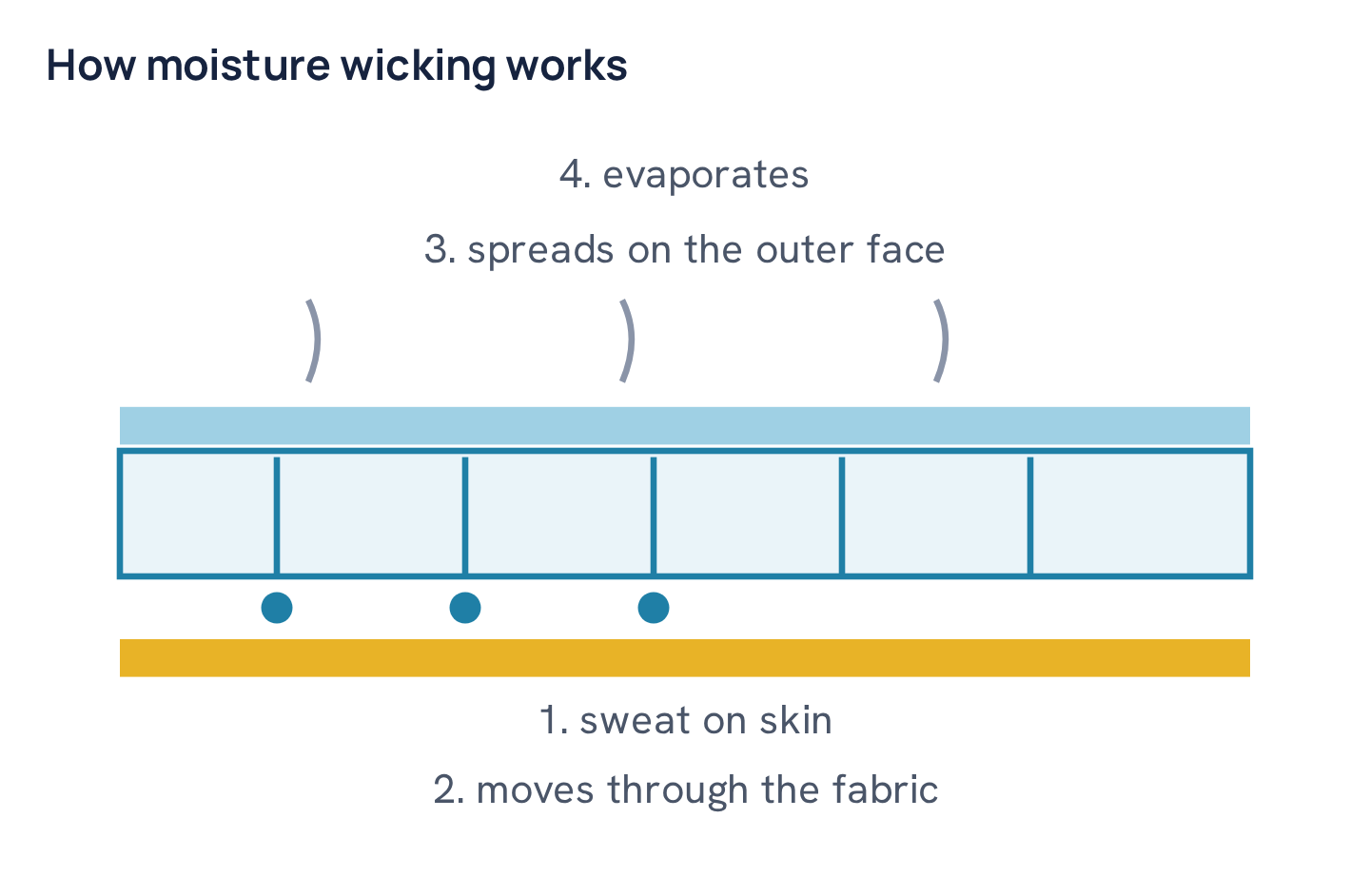
These are different. A fibre that absorbs, such as cotton, takes water inside the fibre itself. That feels comfortable for light sweat, but in heavy sweating the fibre fills up, the fabric gets heavy, clings and dries slowly. A wicking fabric moves liquid along the surface of the fibres and through the spaces between them, like water climbing a paper towel, and spreads it out so it can evaporate. Polyester absorbs almost nothing (about 0.4% moisture), so the water stays between the fibres where it can move and dry.
How mills make fabric wick
| Method | How it works |
|---|---|
| Fine or microfibre yarns | Many fine filaments create small capillary spaces that pull water along |
| Shaped fibres | Grooved or multi-lobed cross-sections add channels along the fibre |
| Two-face knits | A coarser, low-absorbing inner face and a finer, more absorbent outer face push moisture outward |
| Open knit structures | Mesh, birdseye and pique let air and vapour through |
| Hydrophilic finishes | A finish applied in the dye house makes the polyester surface attract water so it spreads |
The hydrophilic finish
Untreated polyester is water-repellent at the surface, so a drop can sit on it. Wicking finishes, usually applied after dyeing by padding the fabric and drying it on the stenter, coat the fibres with a thin hydrophilic layer so water wets the surface and spreads. Durable finishes are designed to survive many washes, but they can be blocked by fabric softener or residue. In most dye houses the finish is applied in the final stage, often together with the softener, and the fabric is then dried on the stenter. See dyeing auxiliaries explained.
Fabric with polyester must be finished at 100–110°C, not at the 140–150°C used for cotton. Hotter than that and the dye bleeds and the fastness fails.
How wicking is tested
Labs test wicking in a few simple ways. In a vertical wicking test, a strip of fabric is hung with its end in water and the height the water climbs in a set time is measured. In a drop test, a drop of water is placed on the fabric and the time it takes to disappear into the fabric is recorded; a good wicking fabric absorbs the drop in a few seconds. Drying-rate tests measure how quickly a wetted sample loses its water. Brands use these results to set standards for their performance lines.
Wicking polyester vs cotton vs merino
| Point | Wicking polyester | Cotton | Merino wool |
|---|---|---|---|
| Absorbs sweat | Very little | A lot | Some, inside the fibre |
| Drying speed | Very fast | Slow | Moderate |
| Feel when sweaty | Damp briefly, light | Wet, heavy, clingy | Warm even when damp |
| Odour | Can hold odour | Lower | Very low |
| Durability | Very high | Good | Moderate |
| Best for | Running, gym, team sports | Low-sweat everyday wear | Hiking, base layers |
See is polyester good for hot weather.
Wicking and odour
Polyester sportswear can smell more than cotton after workouts because oily sweat compounds stick to the hydrophobic fibre and bacteria grow there. Antimicrobial finishes help, as does washing soon after use at 30–40°C with a good detergent. Some fabrics combine wicking and antimicrobial finishes in one treatment. See antimicrobial finish.
Common mistake: washing sports shirts with fabric softener or dryer sheets. Softener coats the fibres and the hydrophilic finish, so the fabric stops wicking and starts to feel clammy and smell. Wash technical wear without softener, and use a sports detergent if odour builds up.
How to keep wicking clothes working
- Wash after each use, inside out, at 30–40°C.
- Skip fabric softener and dryer sheets.
- Use a modest amount of liquid detergent; too much leaves residue.
- Air dry or tumble on low; high heat can damage spandex and finishes.
- If wicking fades, a rinse with a technical sports wash can help restore it.
How to choose moisture-wicking clothing
- Look for polyester, nylon or merino as the main fibre.
- Check for “moisture wicking”, “quick dry” or a drop-test claim.
- Choose lighter weights and mesh panels for hot weather.
- For long hikes, consider merino or merino blends for odour control.
- Test at home: a drop of water should soak in within seconds.
Worked example. A team kit supplier compares two polyester jerseys. A drop of water sits on the first for over a minute; it has no wicking finish. On the second, made with fine filaments and a hydrophilic finish, the drop disappears in two seconds. In use, the second jersey stays lighter and dries quickly at half-time, while the first feels clammy.
Is moisture-wicking fabric good for everyday wear?
For office or relaxed wear in mild conditions, cotton and modal often feel more natural and comfortable. Wicking fabrics shine when you sweat a lot: sport, hot commutes, travel and outdoor work. Many brands now make everyday tees from cotton-polyester or modal-polyester blends that combine some wicking with a softer feel.
Wicking base layers for cold weather
In cold weather, wicking matters even more. Sweat trapped against the skin chills you quickly when you stop moving. A wicking base layer moves sweat outward to a mid-layer or shell, keeping the skin dry and warm. Polyester base layers dry fastest; merino base layers stay warm when damp and resist odour; blends combine both. Avoid cotton base layers for winter sports, because wet cotton loses insulation and feels cold.
Wicking socks and underwear
Feet sweat a lot, so wicking socks made from polyester, nylon, acrylic or merino blends help prevent blisters and cold feet. Wicking underwear made from polyester, nylon or modal-spandex blends suits sport and travel. For everyday underwear, many people still prefer cotton or modal for softness. See cotton vs polyester socks and cotton vs polyester underwear.
Recycled polyester and wicking
Recycled polyester wicks just as well as virgin polyester when it is made into the same yarn, knit and finish. Many sportswear lines now use recycled polyester without any loss in performance.
Is wicking fabric worth it?
If you exercise, travel in heat or work outdoors, yes: a good wicking shirt keeps you drier and lighter and dries overnight in a hotel room. For sitting at a desk in mild weather, the benefit is small, and many people prefer the feel of cotton or modal. Choose by activity, not by label claims alone, and check the fabric with a simple water-drop test before relying on it.
Colour does not change wicking, but light colours stay cooler in direct sun, which helps on hot runs and rides.
Summary
- Moisture-wicking fabric moves sweat away from the skin and dries fast.
- It is usually polyester or nylon, sometimes with spandex or merino.
- Wicking comes from fine or shaped fibres, two-face knits and hydrophilic finishes.
- Cotton absorbs and holds sweat; wicking fabric spreads it and dries.
- Avoid fabric softener so the wicking keeps working.
Questions
What is moisture-wicking fabric made of?
Usually polyester or nylon, often with spandex. Merino wool and some blends also manage moisture well.
How does moisture-wicking fabric work?
Fine fibres and channels pull sweat through the fabric by capillary action, spread it on the outside and let it evaporate.
Is cotton moisture wicking?
No. Cotton absorbs and holds sweat, so it stays wet and dries slowly.
Why did my sports shirt stop wicking?
Fabric softener or detergent residue often blocks the wicking finish. Wash without softener and rinse well.
Is moisture-wicking fabric good for hot weather?
Yes, especially when you are active. For relaxing in heat, light cotton or linen can feel more natural.

Textile engineer with 14+ years in dyeing and fabric development. He writes every guide on Dyeing Solution from real production work. Full profile