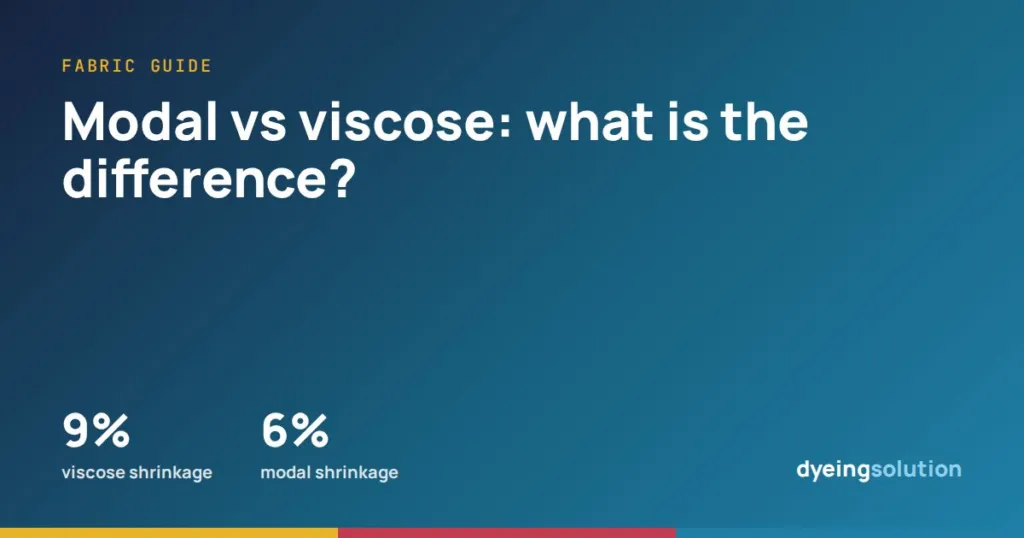
Modal and viscose are both rayon made from wood pulp, but modal is a high wet modulus rayon: stronger when wet, more stable and softer after washing. How each is made, softness, strength, shrinkage data from our records, breathability, dyeing, sustainability and care.
At a glance
9%viscose shrinkage
6%modal shrinkage
Strongermodal when wet
Drapierviscose
Modal and viscose are both types of rayon: regenerated cellulose fibres made from wood pulp. The difference is in how they are made and how they behave. Modal is a “high wet modulus” rayon: it is spun under modified conditions that make it stronger, especially when wet, more stable in washing and softer after repeated laundering. Ordinary viscose is cheaper and very drapey and absorbent, but it is weak when wet, shrinks more and can lose shape. In short, modal is the upgraded, more durable version of viscose.
This guide explains what rayon, viscose and modal are, how modal is made differently, how the two compare on softness, strength, shrinkage, breathability, pilling, dyeing, cost and care, what our finishing records show about viscose and modal knits, and which to choose. It is written from the dye-house floor, where we dye and finish both 100% viscose and modal-blend knits.
Rayon, viscose and modal: the family
Rayon is the general name for regenerated cellulose fibres. Viscose is the most common rayon, made by the viscose process: wood pulp is treated with caustic soda and carbon disulphide to make a viscous solution, which is extruded into an acid bath to regenerate cellulose filaments. Modal uses a modified viscose process, with different conditions and often pulp from beech wood, that produces fibres with a more ordered structure and higher wet strength. Lyocell is a third type, made by dissolving pulp directly in a recovered solvent. See what is viscose fabric and what is modal fabric.
Modal vs viscose at a glance
| Point | Modal | Viscose |
|---|---|---|
| Type | High wet modulus rayon | Standard rayon |
| Feel | Very soft, smooth, stays soft | Soft, silky, can stiffen after washing |
| Drape | Good | Very fluid |
| Wet strength | Good | Low (roughly half its dry strength) |
| Shrinkage | Moderate | High |
| Shape retention | Good | Can stretch or distort when wet |
| Moisture regain | ~11–12% | ~13% |
| Pilling | Low | Low to moderate |
| Cost | Higher | Lower |
| Typical uses | Underwear, tees, sleepwear, bedding | Dresses, blouses, linings, summer tops |
What our records show
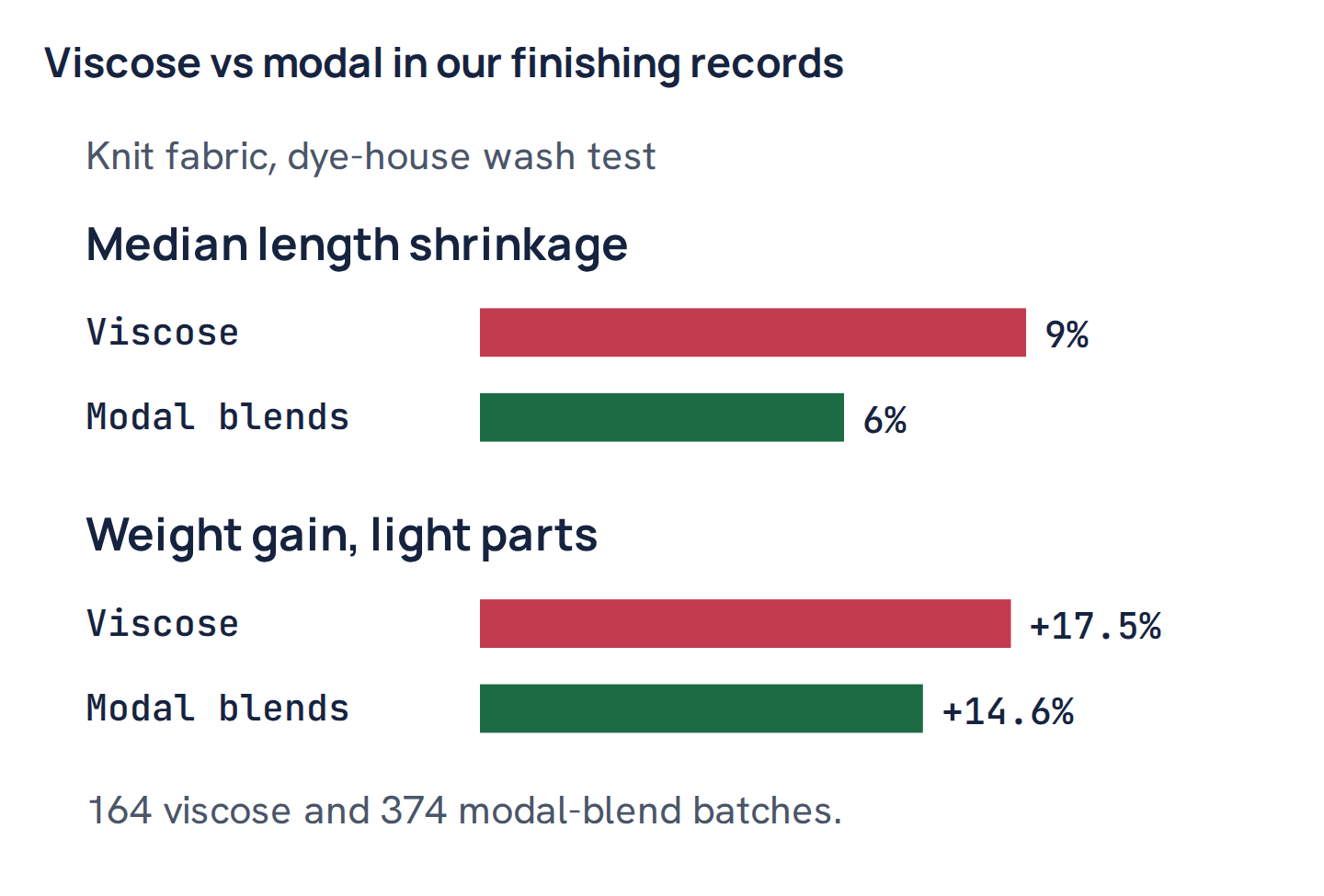
The practical difference between the two shows clearly in finishing. In our records, 100% viscose knits (164 batches) had a median length shrinkage of 9% after the wash test, with the worst tenth at 14% or more; only 23% of viscose parts kept length shrinkage within 5%. Modal-blend knits (374 batches) had a median length shrinkage of 6%, with the worst tenth at 10%. Both fibres gained weight after washing as the fabric relaxed: light viscose parts by a median 17.5% and light modal parts by 14.6%.
We do nothing special for lyocell or viscose. They are dyed and finished the normal way. After the stenter we check the parameters. If the length has grown or the width has come down, or the fabric needs some other correction, we set the compactor to adjust for it and then run the fabric.
Softness and feel
Both fibres feel soft and smooth when new. Modal’s advantage is that it stays soft: it resists the stiffening and harshness that can build up in cotton and, to a lesser degree, viscose after many washes, especially in hard water. Viscose often has a more fluid, liquid drape, which is why it is popular for flowing dresses and blouses. Modal has a slightly fuller hand that suits close-fitting knits.
Strength and durability
Viscose loses a large part of its strength when wet, so it can stretch, tear or distort in the wash and should be handled gently. Modal keeps much more of its strength when wet, so modal garments survive machine washing better and hold their shape. That wet strength is the main technical reason modal costs more.
Breathability and comfort
Both are highly breathable and absorbent and feel cool on the skin. Viscose absorbs slightly more moisture; in practice both feel similar in heat. Modal is often preferred for underwear and sleepwear because it keeps its softness and fit; viscose is often preferred for loose summer clothing because of its drape. See is rayon breathable.
Dyeing
Both are dyed with reactive dyes and give bright, rich colours, often brighter than cotton. Both absorb dye and swell quickly, so salt, alkali and temperature need careful control for level dyeing. See the 100% viscose dyeing process and the 100% modal dyeing process.
For cotton-modal, lyocell, viscose and modal, the salt goes in at 80°C and the bath is cooled to 60°C for the soda.
Sustainability
Both start from wood pulp. The impact depends on where the wood comes from and how well the factory recovers and treats chemicals such as carbon disulphide and caustic soda. Modal is often produced with beech wood from managed forests in integrated plants with chemical recovery, but conditions vary between producers. Certifications for responsibly sourced pulp and cleaner production help buyers compare.
Common mistake: washing a viscose dress hot and wringing it out like cotton. Wet viscose is weak, so it can stretch out of shape or tear, and hot water adds heavy shrinkage. Wash viscose cool and gently, do not wring, and dry flat or on a hanger.
Is modal better than viscose?
For garments that are washed often and must keep their fit, such as underwear, T-shirts, sleepwear and sheets, modal is usually better. For flowing dresses, blouses and occasional-wear garments where drape and price matter more than wash durability, viscose is a good choice.
Care for each
- Modal: wash 30–40°C on gentle, low tumble or line dry, little or no softener.
- Viscose: wash 30°C on gentle or hand wash, do not wring, dry flat or hang, iron on medium while slightly damp.
- Both: avoid bleach and high heat.
Worked example. Two printed summer dresses, one viscose and one modal, are machine washed at 30°C ten times. The viscose dress has grown slightly in length, shrunk in width and feels a little stiffer. The modal dress keeps its size and soft feel. The viscose drapes more beautifully when new; the modal holds up better.
Modal vs viscose for underwear
Underwear is washed often, worn close to the skin and must keep its fit, which plays to modal’s strengths. Modal-spandex briefs and boxers stay soft and hold their shape through many washes. Viscose underwear feels lovely when new but can lose shape and shrink unevenly. That is why most “soft” underwear lines use modal or micro modal rather than standard viscose. See is modal good for underwear.
Modal vs viscose for dresses and blouses
For flowing summer dresses, wrap tops and printed blouses, viscose challis and crepe are popular because they drape beautifully, take bright prints and cost less. Modal is used for jersey dresses and knit tops where softness and stability matter more. If you want a woven, flowing dress, viscose is usually the fabric; if you want a soft knit dress that survives the washing machine, modal or a modal blend is safer.
How to tell modal from viscose
By eye and feel it is hard; both are soft, smooth cellulose fibres. The fibre content label is the reliable guide, and labels often say “modal” or “viscose” explicitly. Some regions use “rayon” for both. A practical test is behaviour in the wash: viscose garments usually shrink more and feel weaker when wet. Lab tests can distinguish them by fibre cross-section and strength.
Bamboo viscose vs modal
“Bamboo” fabrics are usually viscose made from bamboo pulp, so they behave like viscose: very soft and drapey, but weaker when wet and prone to shrinking. Modal from wood pulp is more stable. The plant source matters less than the process. See bamboo rayon vs viscose.
For anything you will machine wash every week, the extra cost of modal usually pays back in a garment that keeps its size and softness.
Summary
- Modal and viscose are both rayon, made from wood pulp.
- Modal is a high wet modulus rayon: stronger when wet and more stable.
- In our records viscose shrank a median 9% and modal blends 6%.
- Viscose drapes more and costs less; modal stays soft and lasts longer.
- Wash both cool and gently; viscose needs extra care when wet.
Questions
What is the difference between modal and viscose?
Both are rayon from wood pulp. Modal is spun to be stronger when wet, more stable and softer after washing; viscose is cheaper and drapier.
Is modal better than viscose?
For frequently washed garments such as underwear and tees, usually yes. Viscose suits flowing dresses and blouses.
Does viscose shrink more than modal?
Yes. In our records viscose knits shrank a median 9% in length against 6% for modal blends.
Is modal a type of rayon?
Yes. Modal is a high wet modulus rayon made by a modified viscose process.
Is modal or viscose more breathable?
Both are highly breathable; viscose absorbs slightly more moisture, but they feel similar in use.

Textile engineer with 14+ years in dyeing and fabric development. He writes every guide on Dyeing Solution from real production work. Full profile