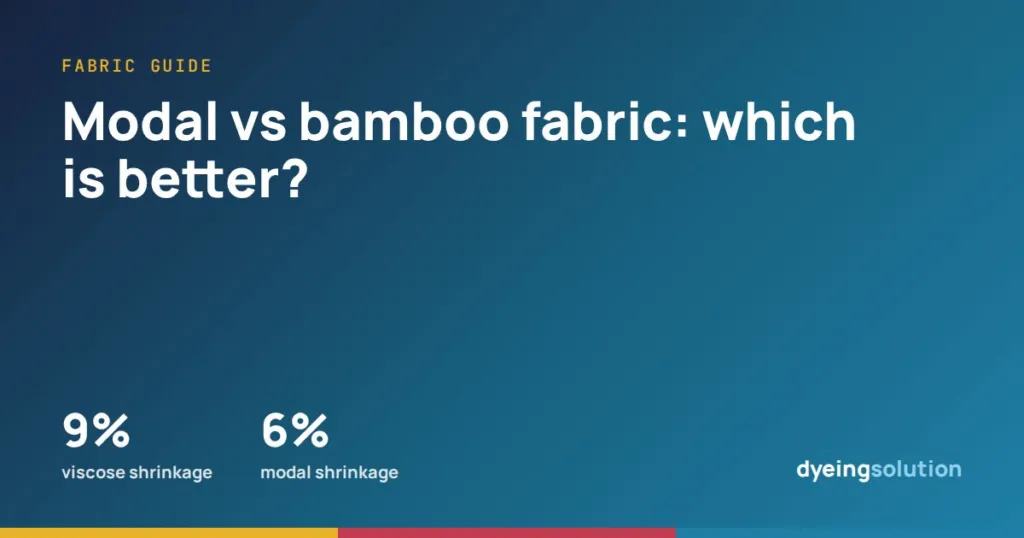
Modal and most bamboo fabric are both regenerated cellulose: modal from wood pulp by a modified viscose process, bamboo usually as bamboo viscose. Softness, strength, shrinkage data from our records, antibacterial claims, sustainability, labelling and which to choose.
At a glance
9%viscose shrinkage
6%modal shrinkage
Strongermodal when wet
Bothvery soft
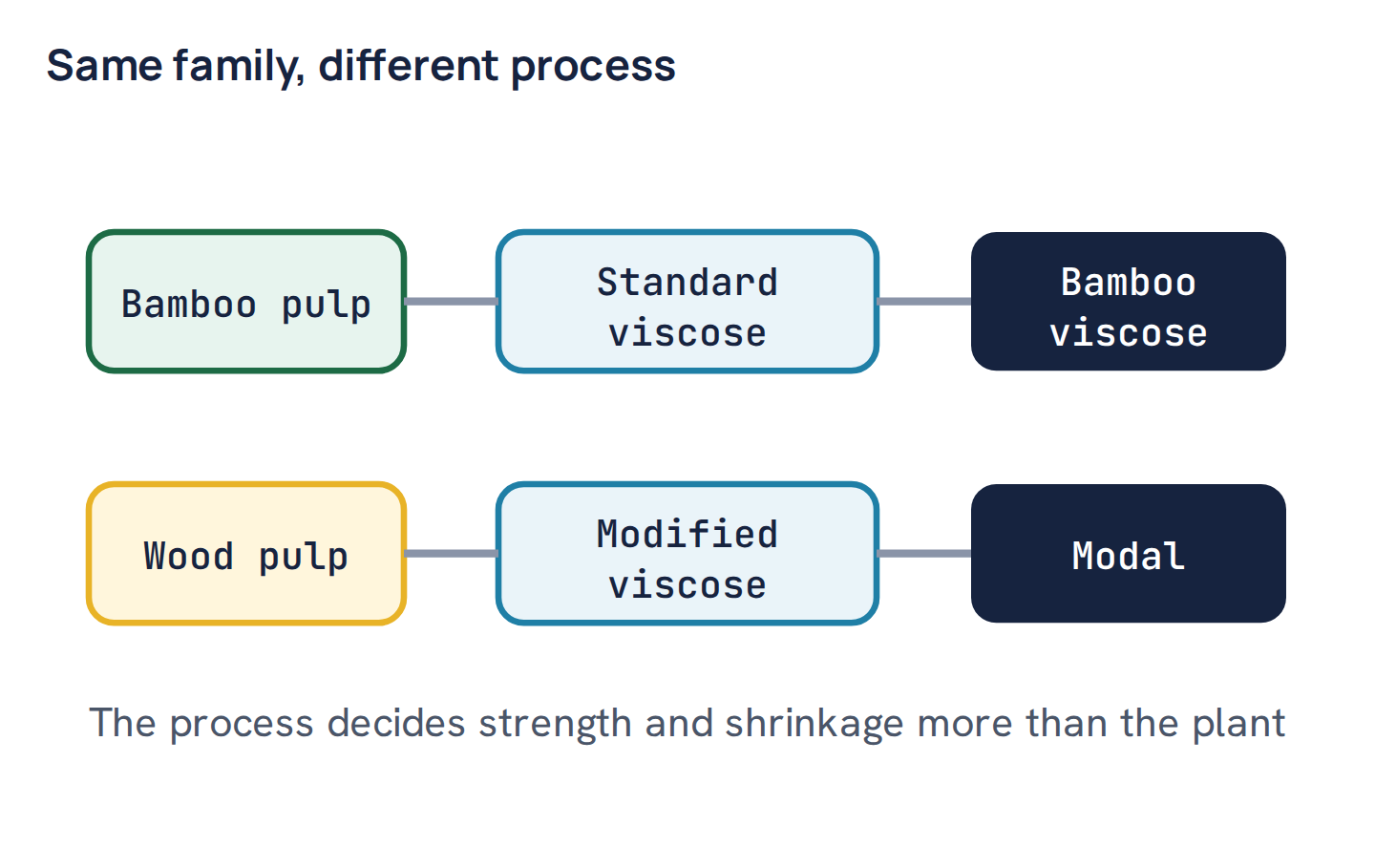
Modal and bamboo fabric are closer than most people think: both are usually regenerated cellulose fibres, made by dissolving plant pulp and spinning it into new fibres. Modal is made from wood pulp, often beech, by a modified viscose process that gives a stronger, more stable fibre. Most “bamboo” fabric is bamboo viscose (bamboo rayon), made by the standard viscose process from bamboo pulp. So the main difference is not the plant but the process: modal is generally stronger when wet, shrinks less and keeps its shape better; bamboo viscose is very soft and drapey but more delicate and more prone to shrinking.
This guide compares modal and bamboo fabric on how they are made, softness, breathability, strength, shrinkage, antibacterial claims, sustainability, cost, labelling and care, and uses our finishing records for viscose and modal knits to show how they behave. It is written from the dye-house floor, where we dye and finish both viscose and modal-blend knits.
How each is made
Bamboo viscose: bamboo stalks are pulped, then the pulp is treated with caustic soda and carbon disulphide to form a viscose solution, which is spun into an acid bath to regenerate cellulose fibres. The finished fibre is viscose; the bamboo’s natural structure does not survive. A smaller amount of bamboo fibre is made by the lyocell process, and very little is mechanically processed “bamboo linen”.
Modal: wood pulp, often from beech, goes through a modified viscose process with different spinning conditions that produce a more ordered fibre with higher wet strength. Modal is classified as a high wet modulus rayon. See what is modal fabric and bamboo rayon vs viscose.
Modal vs bamboo at a glance
| Point | Modal | Bamboo viscose |
|---|---|---|
| Raw material | Wood pulp (often beech) | Bamboo pulp |
| Process | Modified viscose (high wet modulus) | Standard viscose |
| Softness | Very soft, stays soft | Very soft, silky |
| Drape | Good | Very fluid |
| Wet strength | Good | Low |
| Shrinkage | Moderate | Higher |
| Breathability | High | High |
| Typical uses | Underwear, tees, sleepwear, sheets | Babywear, socks, sheets, loungewear |
What our records show
Because bamboo viscose behaves as viscose in processing, our viscose records give a good guide. In 164 viscose knit batches, the median length shrinkage after the wash test was 9%, with the worst tenth at 14% or more; only 23% of parts kept shrinkage within 5%; light parts gained a median 17.5% in weight after washing. In 374 modal-blend batches, the median length shrinkage was 6% and light parts gained a median 14.6%. Modal is the more stable fibre in washing. See does bamboo fabric shrink.
We do nothing special for lyocell or viscose. They are dyed and finished the normal way. After the stenter we check the parameters. If the length has grown or the width has come down, or the fabric needs some other correction, we set the compactor to adjust for it and then run the fabric.
Softness and comfort
Both are among the softest everyday fabrics. Bamboo viscose is often described as silky and very drapey; modal as smooth and buttery. Modal’s advantage is that it stays soft and keeps its shape after many washes, while bamboo viscose can lose shape and become slightly harsher. Both feel cool and absorb moisture well, which makes them popular for sleepwear and underwear. See is modal good for underwear.
Antibacterial claims
Bamboo is often marketed as naturally antibacterial. Raw bamboo plants have some natural defences, but in bamboo viscose the fibre is dissolved and regenerated, so those natural compounds do not survive in any meaningful amount. Any antibacterial effect in finished bamboo viscose usually comes from an added finish, not from the bamboo. Modal makes no such claim. Treat “naturally antibacterial bamboo” with caution unless the product states and tests an antimicrobial finish. See is bamboo fabric toxic.
Sustainability
Bamboo grows quickly with little irrigation, and modal often uses beech from managed forests. But both go through chemical processes, and the environmental impact depends mostly on how well the factory recovers and treats caustic soda and carbon disulphide. Modal is frequently produced in integrated plants with chemical recovery; bamboo viscose production standards vary widely. Bamboo lyocell, made with a recovered solvent, is the cleaner bamboo option. See lyocell bamboo fabric.
Labelling
In several markets, labelling rules say bamboo viscose should be labelled as “viscose” or “rayon made from bamboo”, not simply “bamboo”, because the fibre is viscose. Modal is labelled as modal. Reading the label tells you the process: “bamboo viscose” or “rayon from bamboo” behaves like viscose; “lyocell from bamboo” behaves like lyocell.
Dyeing
Both are dyed with reactive dyes and take bright, rich colours. Both swell and absorb dye quickly, so they need careful control of salt, alkali and temperature for level shades.
For cotton-modal, lyocell, viscose and modal, the salt goes in at 80°C and the bath is cooled to 60°C for the soda.
Common mistake: washing bamboo pyjamas hot and tumble drying them to “pre-shrink” them. Bamboo viscose is weak when wet and shrinks heavily with heat, so it can come out several sizes smaller and misshapen. Wash cool on a gentle cycle and line dry.
Which should you choose?
- Choose modal for underwear, T-shirts and sheets you wash often and want to keep their size and softness.
- Choose bamboo viscose for very soft, drapey sleepwear, babywear and socks, if you will wash it gently.
- Choose bamboo lyocell if you want bamboo with better strength and a cleaner process.
Care for both
- Wash at 30°C on a gentle cycle, inside out.
- Use mild liquid detergent; no bleach.
- Line dry or tumble on low; avoid high heat.
- Do not wring bamboo viscose; press water out gently.
- Iron on low to medium if needed.
Worked example. A family buys bamboo viscose and modal pyjamas for their children. After a month of 40°C washes and tumble drying, the bamboo set has shrunk noticeably in length and the cuffs have stretched; the modal set looks almost new. Washed at 30°C and line dried, the bamboo set holds up much better. Both are soft; modal is more forgiving.
Modal vs bamboo for babywear
Bamboo viscose is very popular for baby sleepsuits and swaddles because it feels exceptionally soft and drapes gently. Its drawbacks for babywear are shrinkage and lower wet strength, which matter because baby clothes are washed constantly. Modal babywear is less common but more stable. Whichever you choose, wash at 30°C, avoid tumble drying on high and buy a size up if the label warns of shrinkage. Look for recognised safety certification on anything a baby will wear.
Modal vs bamboo for bedding
Bamboo viscose sheets are marketed as cool, soft and breathable, and they are, but they can pill and lose shape faster than better-quality alternatives. Modal knit sheets are soft and stretchy and hold their size better. Lyocell sheets, from wood or bamboo, are the most durable of the three cellulose options. For hot sleepers who want softness that lasts, modal or lyocell sheets are usually the better buy.
Modal vs bamboo for socks
Bamboo socks are soft and absorbent and popular for everyday wear. Because viscose is weaker when wet, they are usually blended with nylon and spandex for strength and fit. Modal socks are similar. For hard-wearing socks, look for reinforcement at the heel and toe whichever cellulose fibre is used.
How to read a bamboo or modal label
- “Bamboo viscose” or “rayon from bamboo”: standard viscose process.
- “Lyocell from bamboo”: direct solvent process, stronger.
- “Modal”: high wet modulus rayon, usually from wood.
- “95% modal, 5% elastane”: typical underwear and tee blend.
- Just “bamboo”: check further; it is usually viscose.
When in doubt, the process named on the label tells you more about durability than the plant does.
Summary
- Modal and bamboo viscose are both regenerated cellulose fibres.
- Modal’s process gives higher wet strength and less shrinkage.
- In our records viscose shrank a median 9% and modal blends 6%.
- Bamboo’s “natural antibacterial” claim does not survive the viscose process.
- Both need cool, gentle washing; modal is more forgiving.
Questions
Is modal better than bamboo?
For frequently washed garments, modal is usually more durable and shrinks less. Bamboo viscose is very soft and drapey but more delicate.
Is bamboo fabric the same as modal?
No. Both are regenerated cellulose, but most bamboo is standard viscose, while modal is a stronger high wet modulus rayon.
Which is softer, modal or bamboo?
Both are very soft. Bamboo viscose feels silky and drapey; modal feels smooth and keeps its softness longer.
Is bamboo fabric antibacterial?
Not naturally once it is made into viscose. Any antibacterial effect usually comes from an added finish.
Does bamboo shrink more than modal?
Usually yes. In our records viscose knits shrank a median 9% in length against 6% for modal blends.

Textile engineer with 14+ years in dyeing and fabric development. He writes every guide on Dyeing Solution from real production work. Full profile