
Sweaters pill when rubbing pulls loose fibres into small balls; acrylic and polyester blends pill worst because their strong fibres hold the pills on. Which fibres and knits pill, what lab tests show, how to remove pills and how to stop them.
At a glance
Fuzzthen pill
Acrylicpills stay on
7%lab pilling fails
Shavenever pull
A sweater pills when rubbing pulls short, loose fibres out of the yarn and twists them into small balls on the surface. Soft, fluffy, loosely twisted yarns pill most, and pills stay on when the fibres anchoring them are too strong to break, as with acrylic, polyester and nylon. Wool and cashmere pill too, but their pills often fall off over time. You can slow pilling down a lot by washing gently and removing pills early, and you can avoid much of it by choosing the right yarn when you buy.
This guide explains why your sweater is pilling, which fibres and knits pill most, what our lab reports show about pilling, how to remove pills without damaging the sweater, and how to buy and wash sweaters that stay smooth. It is written from the textile-testing and finishing side, where pilling is one of the standard tests every knit fabric goes through.
Why is my sweater pilling?
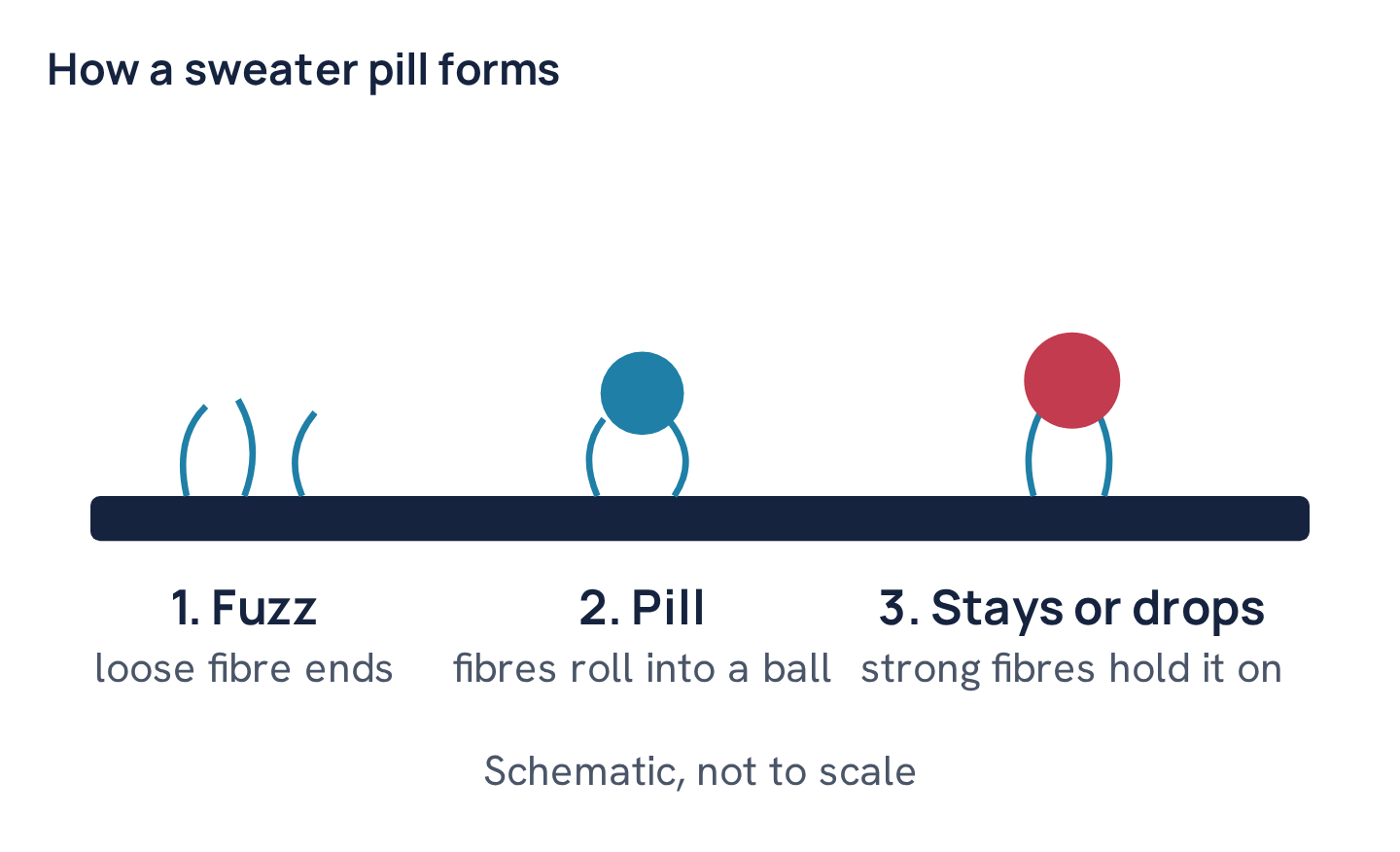
Pilling happens in three stages, and every sweater goes through the first one:
- Fuzz: friction pulls loose fibre ends out of the yarn, so the surface looks hazy.
- Entanglement: the loose fibres tangle and roll into tiny balls, the pills.
- Break-off or build-up: if the fibres holding a pill are weak, it breaks off. If they are strong, the pill stays attached and collects more fibre, growing bigger.
Sweaters pill more than most clothes because they are made for softness. Knitwear yarns are bulky and lightly twisted so they feel warm and soft, and that also lets fibres slip out easily. The places that pill first are the ones that rub: underarms, sides of the body where your arms swing, cuffs, and wherever a bag strap or seat belt sits.
Which sweater fibres pill the most?
| Fibre | Pilling tendency | Why |
|---|---|---|
| Acrylic | High, pills stay on | Short staple, often loosely spun for bulk; strong fibre anchors pills |
| Polyester blends | High, pills stay on | Very strong fibre; pills cannot break off |
| Nylon blends | Medium to high | Strong fibre holds pills |
| Wool (lambswool, shetland) | Medium | Short fibres pill, but pills often drop off over time |
| Cashmere | Medium to high at first | Very fine, short, soft fibres; pilling slows once loose fibres are gone |
| Merino (fine, long staple) | Low to medium | Longer fibres stay anchored in the yarn |
| Cotton | Low to medium | Weak fibres let pills break away |
The surprise for many people is that a cheap acrylic or polyester-blend sweater can look worse after a month than a wool one, even though acrylic is a “stronger” fibre. Strength is the problem: the pills cannot break free. The same thing happens with fleece and sweatpants; see why fleece and sweatpants pill.
Which sweater knits pill the most?
- Loose, open knits pill more than tight, dense ones, because fibres can work out of the yarn more easily.
- Chunky, low-twist yarns pill more than fine, smooth, tightly twisted yarns.
- Brushed or “fuzzy” finishes already have loose fibre on the surface, so they pill quickly.
- Short-staple blends pill more than long-staple yarns such as combed or worsted spun wool.
When you hold two sweaters in a shop, the tighter, smoother, heavier-feeling knit will almost always pill less.
What our lab reports show about pilling
Pilling is a standard test for knit fabric. The fabric is rubbed in a controlled way, in a tumbling pilling box or on a Martindale tester, then graded from 5 (no pilling) to 1 (severe pilling). Most buyers ask for grade 3–4 or better. In our 316 outside lab reports on knit developments, 266 included a pilling result and only 19 failed, about 7%. The fails were concentrated in heavy brushed and loop-back fabrics tested on the hardest Martindale setting at 2,000 rubs, where 9 of 16 fleece and terry fabrics failed, while none of 54 fabrics tested in the pilling box failed.
The lesson for sweaters is the same: surfaces made soft and fuzzy on purpose, and yarns spun loose for bulk, pill most. See how pilling tests work and why fleece and terry fail the pilling test.
How factories reduce pilling
Most pilling is decided before a sweater reaches the shop:
- Yarn choice: longer fibres, combed or worsted spinning and a little more twist keep fibres anchored.
- Tighter knitting: a firmer gauge leaves less room for fibres to escape.
- Enzyme polishing on cotton removes protruding fibres; it does not work on synthetics.
- Anti-pilling finishes lightly bind fibre ends on the surface.
- Anti-pill acrylic and polyester fibres are engineered to be weaker so pills break off instead of building up.
Common mistake: pulling pills off with your fingers. It drags more fibre out of the yarn and starts the next pill. Cut or shave pills off instead.
How to remove pills from a sweater
- Fabric shaver: fastest for acrylic, polyester and cotton blends. Lay the sweater flat and move the shaver lightly in small circles, without pressing.
- Sweater comb or stone: gentler for wool and cashmere; stroke in one direction.
- Small scissors: best for a few large pills on delicate knits.
- Lint roller or tape: lifts loose fuzz after shaving.
Always work on a flat surface and stop as soon as the surface looks clean. Over-shaving thins the fabric and can make holes.
How to stop a sweater pilling
- Wash inside out, on a gentle or wool cycle, in cool water, or hand wash.
- Wash sweaters with other soft items, never with jeans, towels or anything with zips.
- Use a mesh laundry bag for delicate knits.
- Skip the tumble dryer; dry flat.
- Do not wear the same sweater every day; let the fibres rest.
- Avoid rough bags, straps and seat belts rubbing the same spot.
- Remove pills early, before they collect more fibre.
Does pilling mean a sweater is poor quality?
Not always. Some of the softest, most expensive sweaters pill early, because the qualities that make them luxurious also make them pill: very fine, short, soft fibres and a loose, lofty knit. A new cashmere sweater often pills in the first weeks, then pills much less once the loose short fibres have worked out. A hard-wearing worsted wool or a tight cotton sweater pills less but feels firmer.
What does point to poor quality is heavy pilling that never stops, pills that are hard and attached by long strands, and pilling on a sweater that was not soft to begin with. That usually means short, low-grade fibre or a synthetic blend spun loosely to look bulky at a low price.
Pilling by sweater type
- Cashmere: pills early, especially under the arms; comb gently, wash by hand, and pilling usually slows after a few washes.
- Merino: fine, longer fibres; light pilling at first, generally low once settled.
- Lambswool and shetland: softer, shorter fibres; moderate pilling that a comb removes easily.
- Cotton: pills less than most knitwear; pills tend to wear off; can lose shape if washed hot.
- Acrylic: pills early and visibly; pills stay attached and need shaving.
- Wool-acrylic or wool-nylon blends: the synthetic part anchors pills from the wool, so pills last longer than on pure wool.
- Polyester fleece or sweatshirt fleece: pills where it rubs; anti-pill fleece is treated to reduce it.
When does a sweater stop pilling?
A natural-fibre sweater usually pills most in its first weeks of wear. Once the loose, short fibres near the surface have worked out and been removed, pilling slows down a lot. Synthetic and blend sweaters behave differently: because the pills stay attached and keep collecting fibre, pilling can continue for the life of the garment. Regular, gentle de-pilling keeps them looking acceptable, but it also slowly thins the fabric.
Worked example. Two grey sweaters cost the same. One is a loose, chunky acrylic-wool blend; the other a tighter, fine-gauge merino. After a winter of weekly wear, the blend shows hard pills on the sides and cuffs that need shaving every few weeks; the merino has a light fuzz that brushes off. If you want low pilling, choose the tighter, smoother knit with longer fibres, even at the same price.
Summary
- Sweaters pill when friction pulls loose fibres into balls; soft, loose yarns pill most.
- Acrylic and polyester blends pill badly because their strong fibres hold the pills on.
- Wool and cashmere pill too, but pills tend to fall away over time.
- Remove pills with a shaver or comb, never by pulling.
- Wash gently, inside out, cool, and dry flat to slow pilling.
Questions
Why is my sweater pilling?
Rubbing pulls short, loose fibres out of the soft, lightly twisted yarn and rolls them into balls. Strong synthetic fibres keep the pills attached.
Which sweaters pill the least?
Tightly knitted sweaters in long-staple, smooth yarns such as fine merino or combed cotton. Loose, chunky acrylic and polyester blends pill the most.
Do wool sweaters pill?
Yes, especially lambswool and soft, loosely spun wools, but wool pills often fall off over time because the fibres are weaker than synthetics.
How do I remove pills from a sweater?
Use a fabric shaver for synthetic blends or a sweater comb for wool and cashmere, on a flat surface with light pressure. Do not pull pills off by hand.
How do I stop my sweater pilling?
Wash inside out on a gentle cool cycle with soft items only, dry flat, rotate your sweaters, and remove pills early.

Textile engineer with 14+ years in dyeing and fabric development. He writes every guide on Dyeing Solution from real production work. Full profile