Nylon shrinks very little in normal washing, a median 4% in our knit records, but high heat in the dryer or iron can shrink, pucker or melt it. Why, what happens to nylon-spandex, and how to wash nylon so it keeps its size.
At a glance
4%median shrinkage
Heatis the risk
Heat setin the factory
Air drynylon-spandex
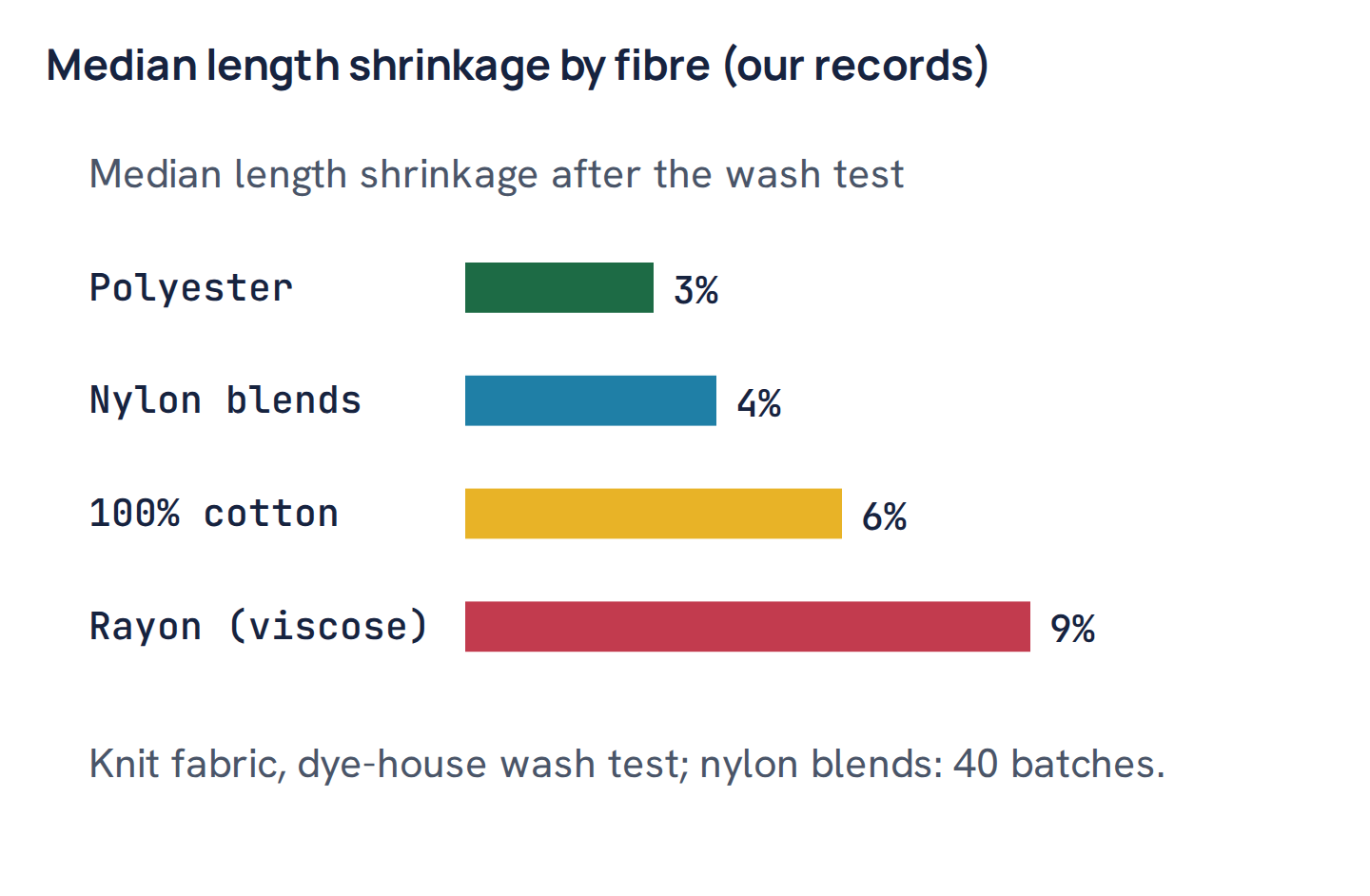
Nylon shrinks very little in a normal wash, but it can shrink and distort with high heat. Nylon is a synthetic fibre that absorbs little water, so cold or warm washing does not make it shrink the way cotton or rayon does. In our finishing records, nylon-blend knits shrank a median 4% in length after the dye-house wash test, compared with 6% for cotton and 9% for rayon. The risk with nylon is heat: a very hot dryer, hot water or a hot iron can shrink, pucker or even melt it, and nylon-spandex garments lose stretch in heat.
This guide explains why nylon behaves this way, whether nylon shrinks in the dryer or the wash, what happens to nylon-spandex leggings and swimwear, how factories stabilise nylon, and how to wash it so it keeps its size. It draws on our dye-house records and on how we process nylon and nylon-elastane knits.
Why nylon does not shrink like cotton
Cotton and rayon shrink mainly because their fibres swell in water and because the knit loops, stretched during processing, relax back when wet. Nylon behaves differently:
- Low water uptake: nylon absorbs only about 4% of its weight in moisture, so it barely swells in the wash.
- Heat setting: most nylon fabrics are heat set in the factory, which fixes their size and shape at a known temperature.
- Thermoplastic fibre: nylon softens with heat. Below its setting temperature it stays stable; above it, the fibre can contract and the fabric can shrink, wrinkle or glaze.
So the question is not “will water shrink nylon?” but “has it been heated beyond what the factory set it at?”
Does nylon shrink in the dryer?
It can, if the dryer is hot. On a low or delicate setting, most nylon garments come out the same size. On a high heat setting, especially for a long cycle, several things can happen:
- The fabric shrinks a little and feels tighter or stiffer.
- Thin nylon puckers or develops a crinkled, wavy surface.
- Nylon-spandex loses stretch and recovery, so leggings and swimwear go baggy or “crunchy”.
- Very thin nylon can glaze or melt where it touches hot metal parts.
This is thermal shrinkage: the fibre has been heated past the temperature it was set at. Unlike cotton’s relaxation shrinkage, it often comes with a change in handle that cannot be reversed.
Does nylon shrink in the wash?
In cold or warm water, hardly at all. Our records of nylon-blend knits show a median length shrinkage of 4% after the dye-house wash test, with the worst tenth around 8%. Much of that small change comes from the knit loops relaxing rather than the nylon fibre itself, and it is mostly done after the first wash. Very hot water (above about 60°C) can add some shrinkage and can set creases in nylon, so it is best avoided.
Compare that with 100% cotton knit at a median 6% and rayon at 9% in the same records; see does fabric shrink after washing for all fibres.
Does nylon and spandex shrink?
Nylon-spandex (nylon-elastane) is the classic fabric for leggings, swimwear, shapewear and sports bras. In normal cool washing it keeps its size well. Heat is the problem twice over: the nylon can contract, and the spandex is damaged by heat and by chlorine. A nylon-spandex garment dried hot often feels tighter at first, then loses its snap and starts to bag out at the knees and seat, because the elastane has been weakened.
Factories handle this by heat setting nylon-elastane at around 180°C before dyeing, which fixes the width and stretch, and by dyeing it at no more than about 98°C with acid dyes. See the nylon-elastane dyeing process and what is elastane.
Common mistake: tumble drying swimwear and leggings on high heat to “tighten them up”. The fabric may feel snug for one wear, but the elastane has been weakened, and the garment loses its shape faster than if it had been air dried.
Can you shrink nylon on purpose?
Only a little, and not safely. Because nylon was heat set at a high temperature in the factory, you would need to heat it close to or above that point to make it contract. Hot water and a hot dryer may tighten a nylon blend by a few percent, but the result is uneven and often damages the handle, stretch or colour. If a nylon garment is too big, altering it is far more reliable than trying to shrink it.
Nylon vs polyester and cotton for shrinkage
| Fabric | Shrinks in normal wash? | Heat risk | Median length shrinkage (our knit records) |
|---|---|---|---|
| Nylon blends | Very little | High heat shrinks, puckers or glazes | 4% |
| Polyester | Very little | Similar to nylon | 3% |
| 100% cotton | Yes, mainly first washes | Hot drying adds shrinkage | 6% |
| Rayon (viscose) | Yes, the most | Hot water and drying add more | 9% |
Blends follow their main fibre. A nylon-cotton fabric shrinks more than pure nylon because the cotton part relaxes and swells; a nylon-rayon blend shrinks more still.
How factories keep nylon fabric stable
- Heat setting: nylon and nylon-elastane are heat set on a stenter before dyeing, fixing width, length and stretch at a known temperature.
- Controlled dyeing: acid dyeing with a slow pH drop and a top temperature near 98°C avoids extra thermal shrinkage.
- Moderate finishing temperatures: synthetic fabrics are dried and finished well below the heat-setting temperature, so the setting is not undone.
- Wash testing: lab and factory wash tests check that length and width stay within the buyer’s tolerance.
For the whole route see the 100% nylon knit dyeing process.
How different nylon products behave
Nylon turns up in very different garments, and each reacts to washing in its own way:
- Swimwear: nylon-spandex, heat set in the factory. Size is stable in cool water; chlorine, sun and hot drying shorten its life by attacking the spandex rather than shrinking the nylon.
- Leggings and activewear: usually nylon or polyester with 10–25% spandex. Washed cool they keep their size; dried hot they lose compression and recovery.
- Hosiery and tights: very fine nylon yarns, easily snagged. Heat makes them lose shape and fit; hand wash or use a mesh bag.
- Windbreakers and shells: woven nylon, often coated. The fabric hardly shrinks, but heat can damage coatings, so follow the care label closely.
- Socks: nylon is often added to cotton or wool socks for strength. The cotton or wool part decides how much they shrink; the nylon keeps them from wearing through.
- Nylon-cotton and nylon-rayon blends: shrink more than pure nylon because the cellulose part swells and relaxes. Treat them like cotton or rayon in the wash.
How to tell heat damage from normal shrinkage
Normal relaxation shrinkage is small, even and happens mostly in the first one or two washes. The fabric looks and feels the same, just slightly shorter. Heat damage looks different:
- A shiny, glazed patch where the fabric touched something hot.
- Puckering or a crinkled, wavy surface on thin nylon.
- A stiff, papery or “crunchy” handle, especially on nylon-spandex.
- Loss of stretch: the garment stretches but does not spring back.
- In the worst case, small holes or hardened spots where the fibre melted.
Heat damage is permanent. The fibre has been reshaped at a molecular level, and no amount of washing or stretching brings the old handle back. That is why the safest rule for nylon is simple: keep it away from high heat.
Why the care label matters more for nylon than for cotton
With cotton, a mistake usually means a garment that is a little shorter. With nylon, a mistake with heat can mean a garment that is ruined. Labels on nylon garments often show a low maximum wash temperature, a low or no tumble-dry symbol and a one-dot iron. These limits come from the heat-setting temperature and from the spandex or coating in the garment, not from caution for its own sake. Follow them, especially for swimwear, leggings, hosiery and technical outerwear.
Worked example. A pair of nylon-spandex leggings, 95 cm long, washed cold and air dried, may lose about 2–3 cm in its first washes and then stay stable, in line with the 4% median in our records. The same leggings dried on high heat every week can feel tight and stiff at first, then lose their recovery within a few months.
How to wash nylon so it keeps its size
- Wash cold or warm (30–40°C) with a mild detergent.
- Use a gentle cycle for nylon-spandex, swimwear and hosiery; a mesh bag helps.
- Air dry, or tumble dry on low or delicate only.
- Rinse swimwear in fresh water after chlorine or sea water.
- Iron, if needed, on the lowest synthetic setting, never hot.
- Keep nylon away from radiators and direct high heat.
Summary
- Nylon shrinks very little in normal washing: a median 4% in our nylon-blend records.
- High heat in the dryer, hot water or a hot iron can shrink, pucker or melt nylon.
- Nylon-spandex keeps its size cool but loses stretch with heat.
- Factories stabilise nylon by heat setting it before dyeing.
- Wash cool, dry low or air dry, and never iron nylon hot.
Questions
Does nylon shrink?
Very little in a normal wash. Our nylon-blend knit records show a median 4% length shrinkage. High heat can shrink and distort it.
Does nylon shrink in the dryer?
It can on a hot setting: the fabric may tighten, pucker or glaze, and nylon-spandex loses stretch. On low or delicate heat, most nylon keeps its size.
Does nylon and spandex shrink?
Not much when washed cool and air dried. Heat damages the spandex and can tighten the nylon, so dry it low or flat.
Can you shrink nylon on purpose?
Only a little and not safely. It was heat set at high temperature, so you would have to overheat it to make it contract, which usually damages the fabric.
Does nylon shrink more than polyester?
Slightly. In our records nylon blends shrank a median 4% and polyester 3%; both shrink far less than cotton (6%) or rayon (9%).

Textile engineer with 14+ years in dyeing and fabric development. He writes every guide on Dyeing Solution from real production work. Full profile