New clothes bleed because loose dye was left in them at the factory. Why dark colours bleed, whether salt or vinegar really sets dye, how to stop bleeding in the wash, and how to set dye in cotton and synthetic fabric.
At a glance
Loose dyethe cause of bleeding
Saltdoes not set dye
Vinegaronly for acid dyes
Fixativefor direct dyes on cotton
New clothes bleed dye because they still carry loose dye: dye that was never fully fixed in the fibre or never washed off at the factory. Dark and bright colours carry the most, so new jeans, black T-shirts, red tops and navy towels are the usual culprits. Most bleeding stops after a few washes, once the loose dye has gone. The famous home tricks, salt and vinegar, help much less than people think, and they work only on certain dyes.
This guide explains, from the factory side, why some garments bleed, what really sets dye, how to stop a garment bleeding onto the rest of your laundry, and how to deal with synthetic fabrics.
Why some new clothes bleed and others don’t
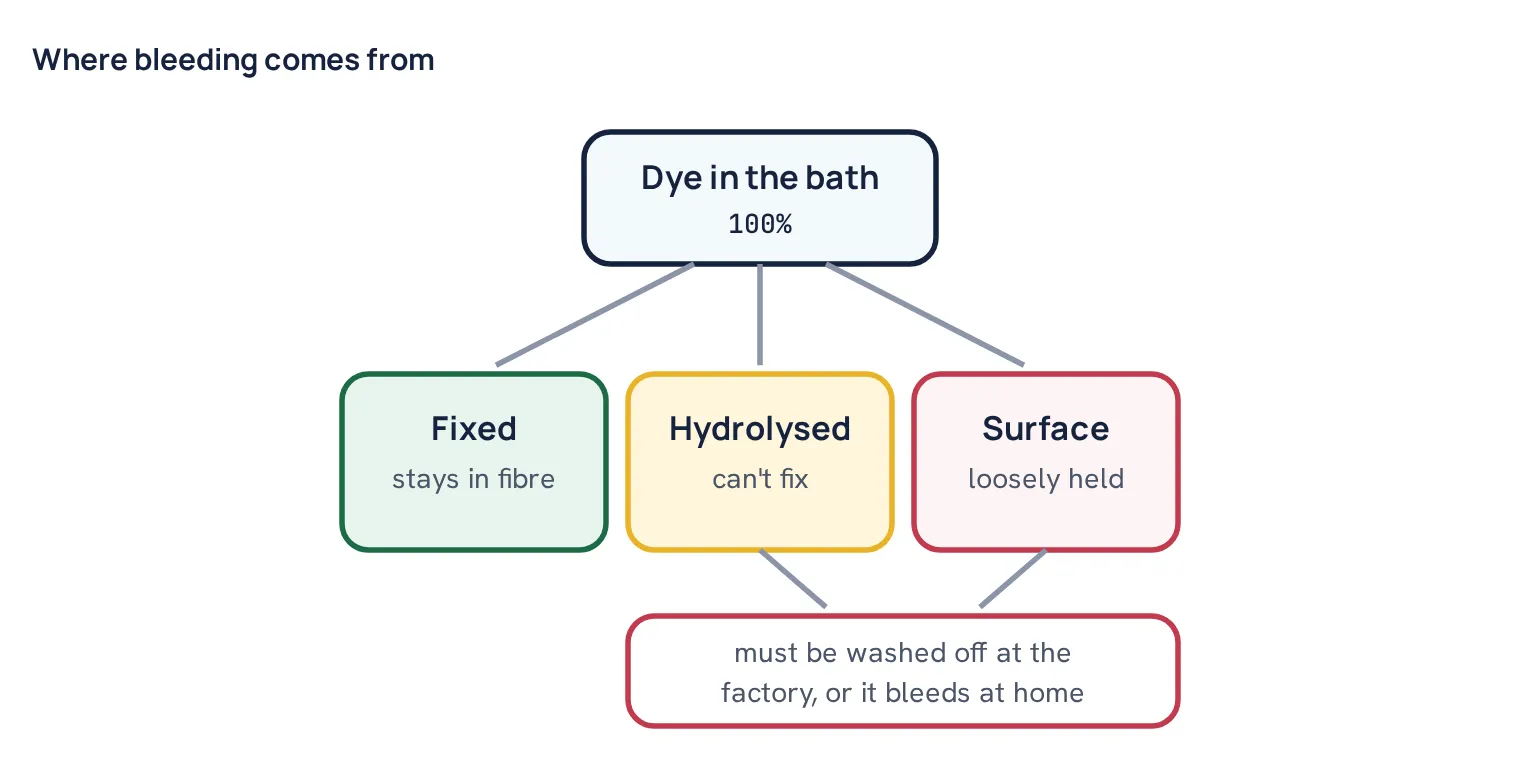
When fabric is dyed, part of the dye fixes in the fibre and part does not. For reactive dyes on cotton, a share of the dye reacts with water instead of the cotton (hydrolysis) and can never fix. The factory removes it with hot rinses and soaping, called the wash-off. If the wash-off is short, the water is not hot enough, or the shade is very deep, loose dye stays in the fabric and comes out in your washing machine.
In our own lab reports on knit developments, staining fails in wash, perspiration and water fastness tests came mostly from deep shades, and deep CVC shades in particular, where loose dye on the cotton and disperse dye on the polyester both have to be cleared. The fix was a better wash-off at the factory, not a chemical added later; see staining fails: 9 real lab cases.
Does salt or vinegar set dye?
Mostly no. Both are old remedies, and here is what they really do:
- Salt is used during dyeing to push dye onto cotton. Once the garment is dyed and finished, a salt soak does not bond any dye to the fibre. At best it slightly reduces how fast some direct dyes come out in that one soak.
- Vinegar is an acid. Acid dyes on nylon, wool and silk are held best in mildly acidic conditions, so a vinegar rinse can help those. On cotton dyed with reactive or direct dye it does not set anything.
What really reduces bleeding on cotton, linen and viscose dyed with direct dyes is a cationic dye fixative, which binds to the dye and makes it much less soluble; see how a dye fixative works. For reactive dyes, the answer is simply washing out the loose dye.
| Method | Helps with | Does not help with |
|---|---|---|
| Rinse until clear, hot wash alone | All dyes: removes loose dye | Nothing; always worth doing |
| Cationic fixative | Direct and all-purpose dyes on cellulose | Disperse dye on polyester |
| Vinegar rinse | Acid dyes on nylon, wool, silk | Cotton dyed with reactive or direct dye |
| Salt soak | Very little | Fixing any dye after dyeing |
| Colour-catcher sheets | Catching loose dye in the wash | Fixing dye in the garment |
How to stop fabric dye bleeding
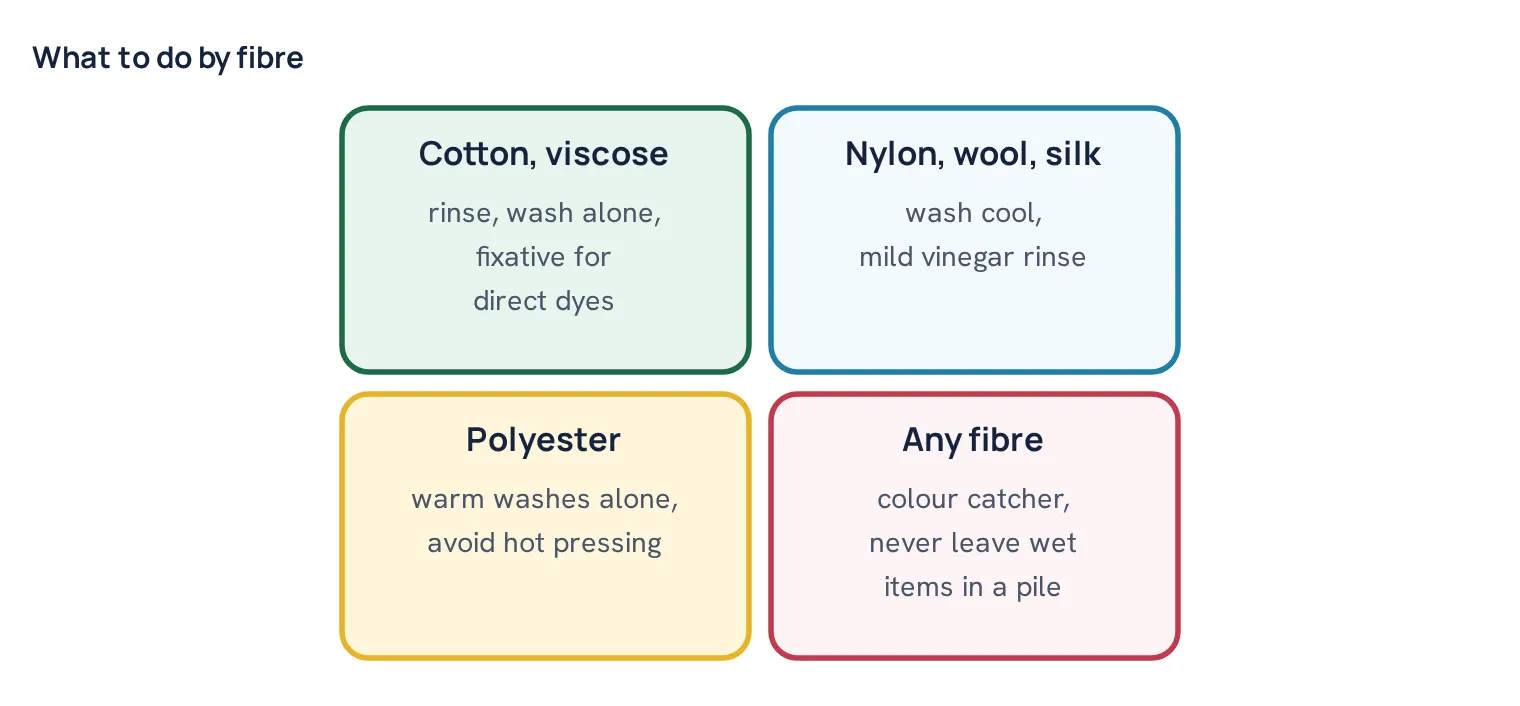
- Wash new dark or bright items separately for the first two or three washes.
- Use cold or cool water at first. Hot water removes loose dye faster, which is useful to get it over with, but do that alone, never with light items.
- Add a colour-catcher sheet to mixed loads. It does not stop bleeding, but it traps loose dye before it lands on other clothes.
- Use a fixative on cotton, linen or viscose items that keep bleeding after several washes.
- Do not leave wet items piled together. Dye transfers fastest from a wet dark garment to a wet light one left in a heap or in the drum.
Common mistake: leaving a wet black T-shirt on a white one after washing. Even a garment that does not bleed in the machine can transfer dye by contact when both are wet for hours. Unload and dry promptly.
How to set dye in synthetic fabric
Synthetic fabrics bleed for different reasons:
- Polyester is dyed with disperse dye at 130°C. If the factory did not reduction clear it properly, surface dye can rub off or stain in the wash, especially on dark colours. A home fixative does not help, because cationic fixatives work on direct and reactive dyes. A couple of warm washes on its own removes the loose surface dye.
- Nylon is dyed with acid dyes held by ionic bonds. Washing at very high temperature or in strong alkali can loosen them. Wash cool; a final rinse with a little vinegar keeps the conditions slightly acidic.
- Polyester heat. Hot ironing, tumble drying or pressing can move disperse dye back to the surface of polyester (thermomigration), so a garment that was fine can start to rub off after hot pressing; see colour fastness to hot pressing.
How to set dye in cotton fabric you dyed yourself
If you dyed cotton at home, setting the dye depends on the dye type. With a fibre reactive dye, the soda ash step is the fixation; afterwards, rinse cold, then wash hot with a little detergent until no more colour comes out. With an all-purpose or direct dye, rinse until clear and use a fixative as the pack directs. In both cases, the first few washes alone are what really “set” the colour by removing what was never going to stay.
Worked example. New dark indigo jeans turn the first wash water blue and mark a white sofa. Indigo is a vat dye built up in layers on the yarn surface, and denim is often left unwashed on purpose. No soak will lock it all in. Wash them inside out, cold, on their own for the first few washes, and keep them away from light upholstery until the excess has gone.
Summary
- New clothes bleed because of loose dye left by an incomplete factory wash-off.
- Salt does not set dye; vinegar only helps acid dyes on nylon, wool and silk.
- A cationic fixative helps direct dyes on cotton; washing out the loose dye works for all.
- Wash new dark items alone and cool, use colour catchers and never leave wet items in a pile.
Questions
Why do new clothes bleed dye?
Because they still carry loose dye that was not fully fixed or not washed out at the factory. Deep and bright colours carry the most, so they bleed the most.
Does vinegar stop dye bleeding?
Only for acid dyes on nylon, wool and silk, which hold best in mildly acidic conditions. Vinegar does not set reactive or direct dyes on cotton.
Does salt set dye in clothes?
No. Salt helps dye go onto cotton during dyeing, but a salt soak after dyeing does not bond dye to the fibre.
How do I stop fabric dye from bleeding?
Wash the item alone in cool water for the first few washes, use a colour-catcher sheet in mixed loads, use a fixative for direct-dyed cotton, and never leave wet items piled together.
How do you set dye in synthetic fabric?
Polyester and nylon do not respond to cotton fixatives. Wash them alone a few times to remove surface dye, wash nylon cool with a mild acidic rinse, and avoid hot pressing on polyester.

Textile engineer with 14+ years in dyeing and fabric development. He writes every guide on Dyeing Solution from real production work. Full profile