Dye that bled onto other clothes is loosely held and often comes out if you act before drying. The order to try rewashing, oxygen bleach, colour-run removers and chlorine bleach, which suits each fabric, and the safety rules.
At a glance
Don’t drytreat while damp
4 stepsgentle to strong
Whites onlyfor reducing removers
Never mixbleach and other chemicals
When a red sock turns a white load pink, the colour on the white clothes is transferred dye: loose dye that came out of one garment and settled on another. The good news is that transferred dye is usually held more loosely than dye that was applied in a proper dyeing, so it can often be removed, especially if you act before the clothes are dried. The method depends on whether the stained item is white or coloured, and on its fibre.
This guide explains why dye transfer happens, the order to try the removal methods in, which products suit which fabrics, and the safety rules, with a note on how a dye house strips colour when it has to.
Why dye transfer happens
Most dye transfer comes from new dark or bright garments that still carry loose dye, from a factory wash-off that was too short; see why new clothes bleed. In the wash, that loose dye dissolves in the water and some of it lands on the other clothes. Cotton, viscose and other cellulose fabrics pick it up most readily, because many loose dyes have some attraction to cellulose. Transfer is worst in warm water, in long cycles and when wet clothes are left together in the drum.
First: act while it is still wet
Do not put the stained clothes in the dryer. Heat does not chemically fix most transferred dye, but drying lets it settle deeper into the fibre and can make it much harder to remove. Keep the items damp and start with the gentlest method. Many light transfers come out with one more wash.
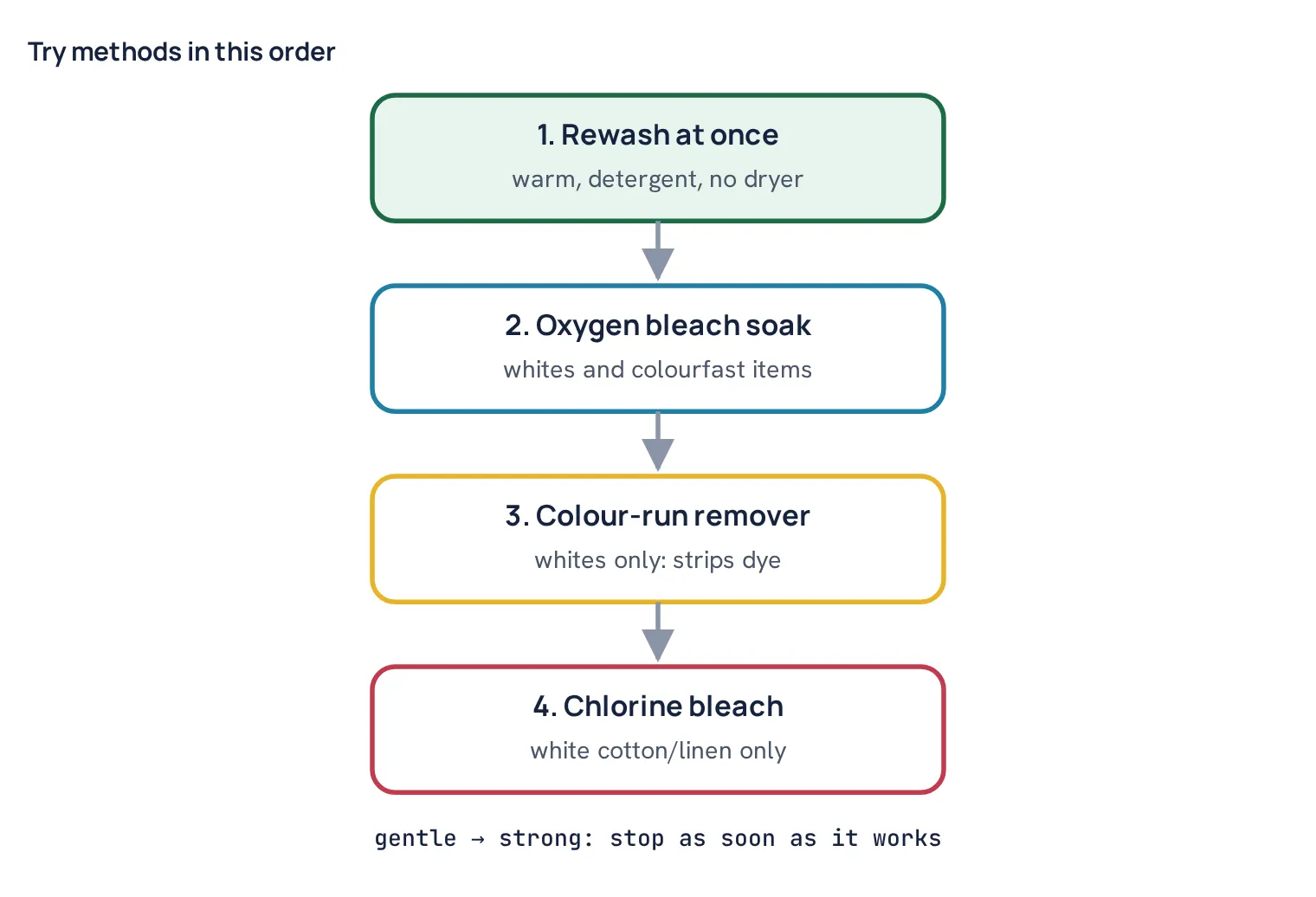
Method 1: rewash straight away
Wash the stained items again at once, on their own, at the warmest temperature the care label allows, with a normal dose of detergent. Fresh, lightly held dye often comes off into the clean water. Check while still damp; repeat once if the stain is fading.
Method 2: oxygen bleach soak
Oxygen bleach (sodium percarbonate, sold as an oxygen-based stain remover or laundry booster) releases hydrogen peroxide in warm water. It breaks down many dyes gently and is safe on most white and colourfast fabrics, including many synthetics. Dissolve it in warm water as the pack directs, soak the items for several hours or overnight, then wash normally. Do not use it on wool or silk unless the pack allows it, and test a hidden area on coloured items first.
Method 3: colour-run remover (whites only)
Colour-run removers are reducing agents. They break down dye molecules by reduction, the same kind of chemistry a dye house uses with sodium hydrosulphite when it strips a faulty shade (see stripping reactive-dyed cotton). They work well on transferred dye, but they will also attack the garment’s own colour, prints and coloured trims, so they are for all-white items only. Use them in a well-ventilated place, follow the pack exactly and never mix them with other chemicals.
Method 4: chlorine bleach (white cotton and linen only)
Diluted household chlorine bleach removes most dye stains from white cotton and linen. It damages and yellows wool, silk, nylon, spandex and many finishes, and it weakens cotton if used too strong or too often. Use it only on white cotton or linen without elastane, diluted as the bottle directs, and rinse thoroughly afterwards.
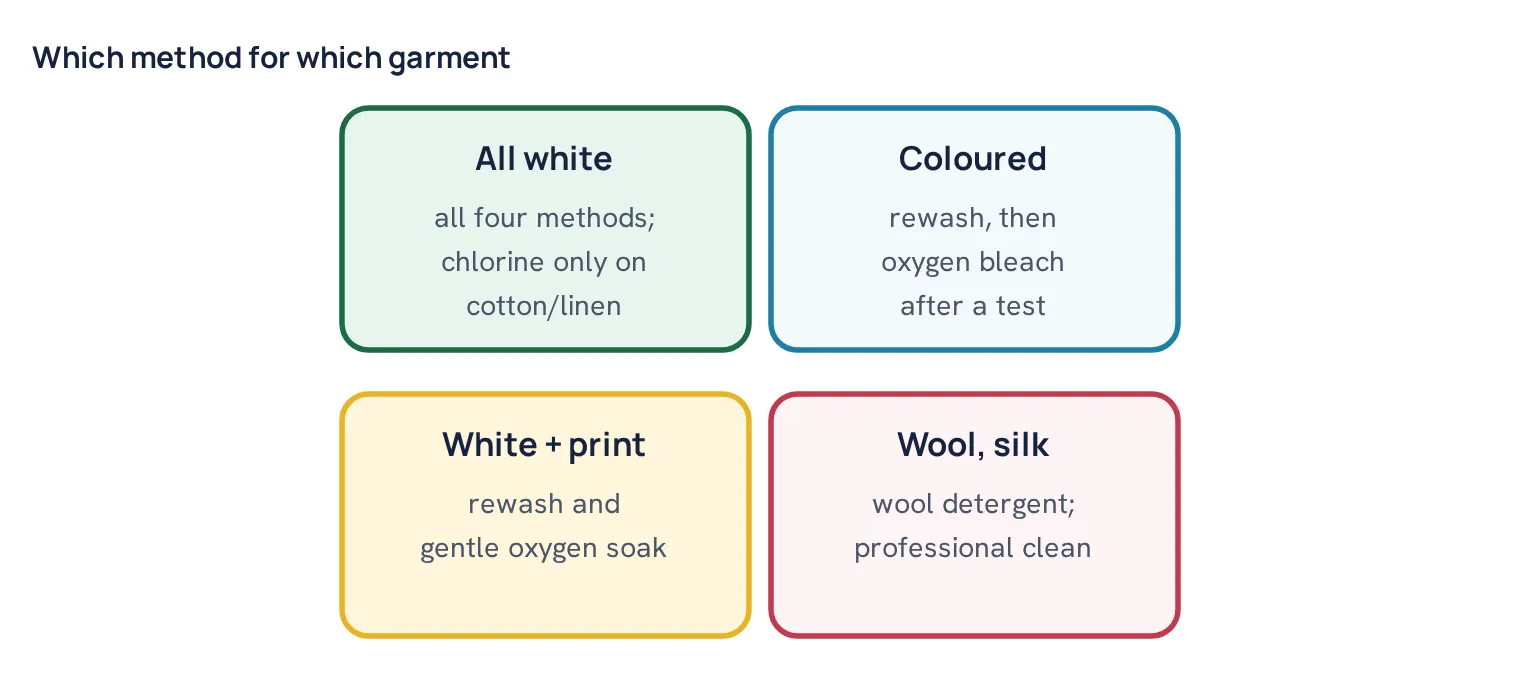
| Stained item | Try | Avoid |
|---|---|---|
| White cotton, linen | Rewash, oxygen bleach, colour-run remover, chlorine bleach | Drying before treating |
| White with elastane or synthetics | Rewash, oxygen bleach, colour-run remover | Chlorine bleach |
| Coloured cotton | Rewash, oxygen bleach after a hidden test | Colour-run remover, chlorine bleach |
| Wool, silk | Rewash in a wool detergent; professional cleaning | Chlorine bleach, strong oxygen soaks |
| Prints and logos | Rewash, gentle oxygen soak | Reducing removers, chlorine |
Common mistake: putting pink-stained whites through the dryer “to see if it comes out later”. Drying makes the dye much harder to shift. Treat while the items are still damp.
How to remove dye from white clothes with logos or trims
White garments with coloured prints, embroidery or trims are the hardest case, because the strong methods that remove the stain also remove the print colour. Stay with repeated rewashing and oxygen bleach soaks, and accept that a faint tint may remain. Spot-treating only the stained area with a reducing remover risks a pale halo and damage to the print.
Safety rules
- Never mix chlorine bleach with ammonia, vinegar or other acids, or with colour-run removers: dangerous gases can form.
- Use reducing removers and bleach in a ventilated room, wear gloves and keep them away from children.
- Rinse treated items thoroughly before the normal wash.
- Follow the product’s own instructions on dose, water temperature and time.
Preventing dye transfer
Wash new dark and bright items alone for the first few washes, use cool water for mixed loads, add a colour-catcher sheet, sort whites from colours, and unload the machine promptly so wet dark items do not sit on light ones. You can also check a doubtful garment before washing it with others; see how to test clothes for colourfastness.
Worked example. A white cotton-elastane T-shirt comes out pink after washing with a new red top. Chlorine bleach is ruled out because of the elastane. An immediate warm rewash takes most of the pink out; an overnight oxygen bleach soak removes the rest. Had it been tumble dried first, a colour-run remover would probably have been needed.
Summary
- Transferred dye is loosely held and often removable if treated before drying.
- Go from gentle to strong: rewash, oxygen bleach, colour-run remover, chlorine bleach.
- Reducing removers and chlorine bleach are for white items only; chlorine only for white cotton and linen.
- Never mix cleaning chemicals; ventilate and wear gloves.
Questions
How do you remove dye transfer from white clothes?
Rewash at once without drying, then try an oxygen bleach soak, then a colour-run remover. Chlorine bleach is a last resort for white cotton or linen without elastane.
Can dye transfer be removed after drying?
Often yes, but it is harder. A colour-run remover or a long oxygen bleach soak usually works on white items; coloured items are more difficult.
Is oxygen bleach safe for coloured clothes?
On many colourfast items, yes, but test a hidden area first. It can lighten some dyes and should not be used on wool or silk unless the pack allows it.
What is in a colour-run remover?
Usually a reducing agent, similar in chemistry to the sodium hydrosulphite a dye house uses to strip shades. It removes transferred dye but also the garment’s own colours, so it is for whites.
How do I prevent dye transfer in the wash?
Wash new dark or bright items alone at first, use cool water and a colour-catcher sheet for mixed loads, sort whites from colours and unload wet laundry promptly.

Textile engineer with 14+ years in dyeing and fabric development. He writes every guide on Dyeing Solution from real production work. Full profile