Rayon is soft, cool and absorbent but weak when wet; nylon is a strong, elastic, quick-drying synthetic. Rayon vs nylon compared on feel, strength, stretch, shrinkage, dyeing and uses, with data from our finishing records, plus rayon-nylon blends such as ponte.
At a glance
Cellulosevs polyamide
13% vs 4%moisture regain
9% vs 4%median shrinkage
Ponteblends both
Rayon and nylon are very different fibres that are often confused because both were early “artificial silks”. Rayon (viscose) is made from wood cellulose, so it is soft, cool, absorbent and breathable, but weak when wet and prone to shrinking. Nylon is a fully synthetic polyamide made from oil-based chemicals, so it is very strong, elastic, abrasion resistant and quick drying, but absorbs little moisture and can feel warm. Rayon suits soft, drapey, comfortable clothes; nylon suits tough, stretchy and technical ones such as hosiery, swimwear, activewear and bags.
This guide compares rayon and nylon on what they are, feel, breathability, strength, stretch, shrinkage, care, dyeing, environmental impact and typical uses, with figures from our dye-house finishing records, and explains rayon-nylon blends such as ponte.
What each fibre is
Rayon is regenerated cellulose. Wood pulp is dissolved chemically and re-formed into fibre through the viscose process. It is called semi-synthetic: natural raw material, factory-made fibre. See what is viscose fabric.
Nylon is a polyamide, a synthetic polymer first made in the 1930s. Nylon 6 and nylon 6,6 are the common types in clothing. It is melted and spun into smooth, strong filaments, often very fine.
Rayon vs nylon at a glance
| Point | Rayon (viscose) | Nylon |
|---|---|---|
| Type | Semi-synthetic, cellulose | Synthetic, polyamide |
| Feel | Soft, cool, silky, fluid | Smooth, slick, can feel warm |
| Moisture regain | About 13% | About 4% |
| Breathability | High | Low to moderate |
| Strength | Moderate dry, weak wet | Very high |
| Abrasion resistance | Low | Excellent |
| Elasticity | Poor recovery | Good stretch and recovery |
| Shrinkage (our knit records) | Median 9% in length | Median 4% (nylon blends) |
| Drying | Slow | Fast |
| Heat sensitivity | Scorches, does not melt | Melts at high heat |
| Biodegradable | Yes, under suitable conditions | No |
Feel and comfort
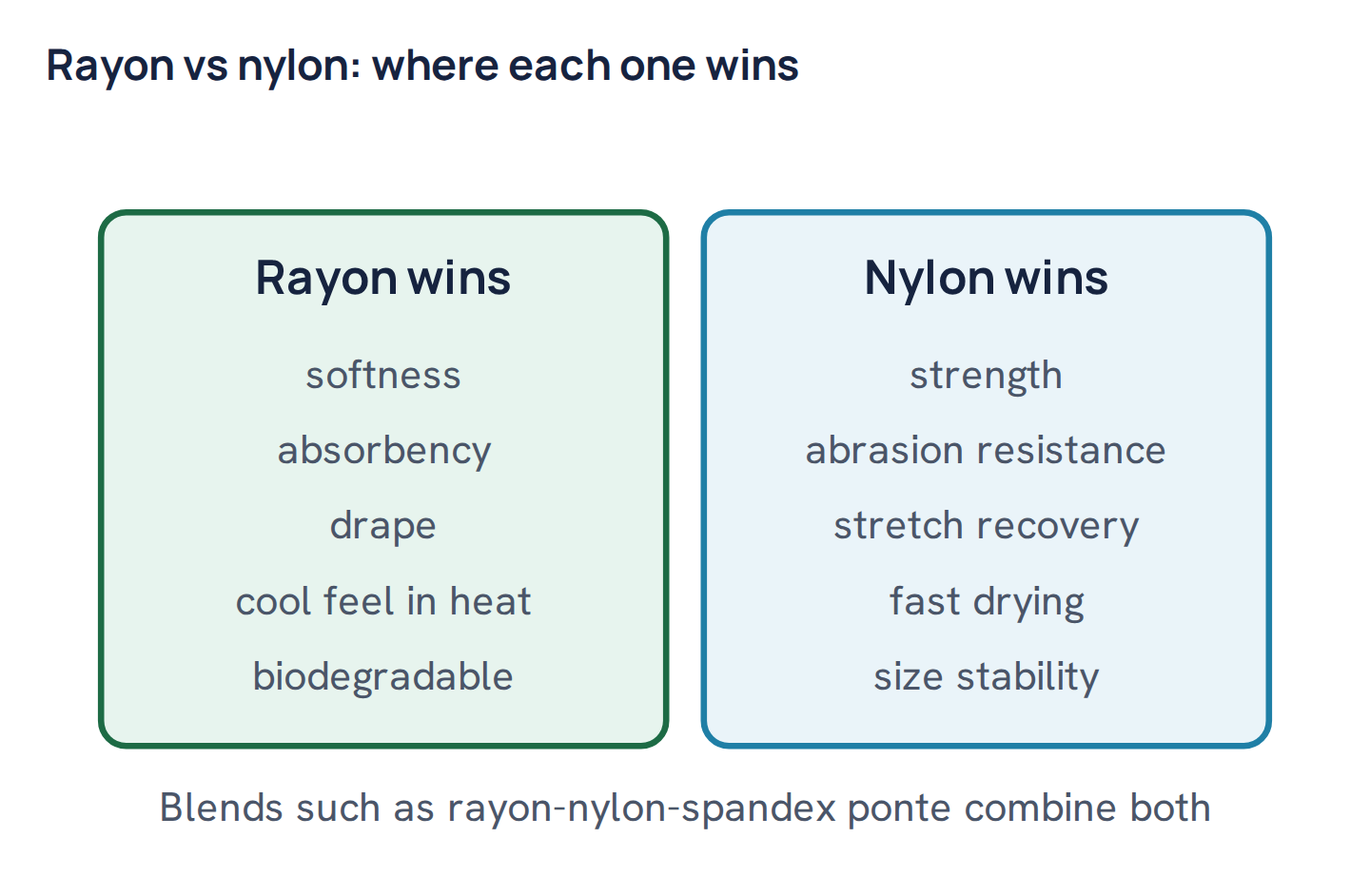
Rayon feels cool, soft and fluid; it hangs and moves like silk, absorbs sweat and does not cling with static. Nylon feels smooth and slippery, can be made very fine and sheer, and has a slight sheen. In heat, rayon is usually more comfortable because it absorbs moisture; nylon can feel warm and sticky in plain fabrics, though light nylon sportswear dries very quickly.
Strength and durability
Nylon is one of the strongest common textile fibres and resists abrasion extremely well, which is why it is used for tights, socks reinforcement, bags, outdoor gear and swimwear. Rayon loses much of its strength when wet, wears faster at friction points and can tear or distort in rough washing. For anything that will be rubbed, stretched or washed hard, nylon lasts far longer.
Stretch and recovery
Nylon has good natural elasticity: it stretches and comes back, which is why fine nylon hosiery fits so closely even before elastane is added. Rayon stretches but recovers poorly, so rayon knits grow with wear and bag at the knees and elbows. Most stretchy garments in either fibre add spandex: nylon-spandex for swimwear and leggings, rayon-spandex for soft fitted tops and dresses.
Shrinkage and washing
In our finishing records, viscose knit shrank a median 9% in length after the wash test, the worst tenth 14% or more, and only 23% of parts stayed within a 5% shrinkage limit. Nylon blends shrank a median 4%, with the worst tenth around 8%. Rayon swells strongly in water and relaxes; nylon absorbs little water and is heat set in the factory. Rayon needs cool, gentle washing and flat drying; nylon tolerates normal washing but must be kept away from high heat, which can shrink, glaze or melt it. See does rayon shrink and shrinkage by fibre.
How each is dyed
Rayon takes reactive and direct dyes, like cotton, usually at about 60°C, with a mild scour and gentle handling because it is weak when wet. Nylon takes acid dyes, which bond to the fibre’s amine groups, applied while the pH is slowly lowered and the bath heated towards 98°C. A rayon-nylon blend therefore needs two dye classes, one for each fibre, and the dyer must balance them so the two fibres match in shade. See how acid dyes work on nylon and the 100% viscose knit dyeing process.
Rayon-nylon blends
The best-known blend is ponte, a stable double knit often made of rayon, nylon and spandex. The rayon gives softness, drape and a matt, fabric-like look; the nylon adds strength, abrasion resistance and stability; the spandex adds stretch and recovery. Rayon-nylon blends are also used in velvet, some suiting and dress fabrics. They wear better and hold their shape better than pure rayon while staying softer and more comfortable than pure nylon. See the Ponte Roma development guide.
Common mistake: ironing a rayon-nylon blend on the hot rayon or cotton setting. The rayon can take it; the nylon can glaze, shine or melt. Iron blends on the setting for the most heat-sensitive fibre, usually low to medium, with a pressing cloth.
Rayon vs nylon in heat and sun
Both fibres react to heat in their own way. Rayon does not melt; it scorches and yellows if ironed too hot, and burns like paper if it catches fire. Nylon softens and melts at high temperatures, so it can glaze under a hot iron and drip if it burns. In sunlight, nylon gradually loses strength and some colours fade, which is why outdoor nylon is often treated for UV resistance. Rayon also weakens with long sun exposure and can fade in strong light.
How to tell rayon from nylon
- Feel: rayon feels cool, soft and slightly heavy; nylon feels smooth, slick and light.
- Stretch: nylon springs back when stretched; rayon stays slightly stretched.
- Water: a drop soaks into rayon quickly; on nylon it sits longer before spreading.
- Creases: rayon creases deeply when crushed; nylon recovers.
- Burn behaviour (lab method): rayon burns like paper with soft ash; nylon melts into a hard bead with a celery-like smell. Only test a tiny snip safely, if at all.
Environmental impact
Rayon is made from renewable wood and biodegrades, but conventional viscose production uses chemicals that must be recovered and treated properly. Nylon is made from fossil fuels, its production is energy-intensive, it sheds microfibres and does not biodegrade; recycled nylon from fishing nets and industrial waste reduces new raw material. Neither is impact-free; responsibly produced rayon and recycled nylon are the better options in each family.
Typical uses
| Rayon | Nylon |
|---|---|
| Summer dresses, blouses, skirts | Tights, stockings, socks reinforcement |
| Hawaiian and resort shirts | Swimwear and leggings (with spandex) |
| Linings | Windbreakers, rain shells, outdoor gear |
| Scarves and drapey tops | Bags, backpacks, straps |
| Pyjamas and loungewear | Activewear, underwear, lingerie |
Worked example. Two black dresses look similar: one 100% rayon crepe, one nylon-spandex jersey. The rayon dress feels cooler and more breathable at a summer wedding, but creases and must be washed cold and dried flat. The nylon-spandex dress fits closely, resists creasing, survives a normal cool wash and packs well for travel, but feels warmer in heat.
Care compared
- Rayon: wash cold, gentle cycle; do not wring; dry flat or hang; iron medium on the reverse.
- Nylon: wash cool to warm; tumble low or air dry; iron only on a low setting; keep away from radiators.
- Rayon-nylon blends: follow the rayon for washing (cool and gentle) and the nylon for ironing (low heat).
Rayon vs nylon for linings
Both are used for jacket and coat linings. Rayon linings breathe, absorb sweat and do not build static, so a jacket feels more comfortable to wear for long periods. Nylon and polyester linings are cheaper, tougher and slide on easily, but can feel warm and clingy. Tailored and higher-end garments often use rayon or other cellulose linings for that reason.
Rayon vs nylon for linings
Both fibres are used for garment linings. Rayon linings feel cooler and breathe better, so they suit jackets and dresses worn in warm weather. Nylon linings are stronger, slide on and off easily and resist wear at cuffs and seams. Many tailored jackets use rayon linings for comfort, while outerwear more often uses nylon for durability.
Summary
- Rayon is cellulose from wood; nylon is a synthetic polyamide.
- Rayon is softer, cooler and more absorbent; nylon is far stronger, more elastic and quicker drying.
- In our knit records rayon shrank a median 9% and nylon blends 4%.
- Rayon uses reactive dyes; nylon uses acid dyes; blends need both.
- Ponte and other rayon-nylon blends combine softness with strength.
Questions
What is the difference between rayon and nylon?
Rayon is a semi-synthetic fibre made from wood cellulose; nylon is a fully synthetic polyamide. Rayon is softer and more absorbent; nylon is stronger and more elastic.
Is rayon or nylon better?
Rayon is better for soft, breathable, drapey clothes; nylon is better for strength, stretch, abrasion resistance and fast drying.
Does rayon shrink more than nylon?
Yes. In our knit records rayon shrank a median 9% in length and nylon blends 4%.
Is nylon more breathable than rayon?
No. Rayon absorbs about 13% moisture against about 4% for nylon, so rayon feels cooler and more breathable.
What is a rayon nylon blend used for?
Ponte double knits, velvet, dresses and trousers, where rayon gives softness and drape and nylon adds strength and stability.

Textile engineer with 14+ years in dyeing and fabric development. He writes every guide on Dyeing Solution from real production work. Full profile