Lyocell is softer, cooler and more absorbent than cotton with a silky drape; cotton is cheaper, more stable and easier to care for. Feel, breathability, shrinkage and weight data from our records, fibrillation, dyeing, sustainability, blends and which to choose.
At a glance
7%lyocell shrinkage
6%cotton shrinkage
Silkierlyocell
Easiercotton care
Lyocell is softer, smoother, cooler and more absorbent than cotton, with a silky drape, while cotton is cheaper, more familiar, easier to care for and more stable in washing. Lyocell is a regenerated cellulose fibre made from wood pulp in a closed-loop solvent process; cotton is a natural seed fibre. Lyocell feels luxurious in shirts, dresses, bedding and underwear and is very good at handling sweat, but it can shrink, crease and show marks if washed carelessly. Cotton is the dependable everyday fibre. Lyocell-cotton blends combine much of both.
This guide compares lyocell and cotton on feel, breathability, moisture, strength, shrinkage, wrinkles, pilling, dyeing, sustainability, cost and care, and explains what our finishing records show about how lyocell blends behave compared with cotton. It is written from the dye-house floor, where we dye and finish both cotton and lyocell-blend knits.
What is lyocell?
Lyocell is made by dissolving wood pulp (cellulose) directly in an organic solvent, N-methylmorpholine N-oxide (NMMO), and spinning the solution into fibres. The solvent is recovered and reused at a very high rate, which is why lyocell is often described as a closed-loop fibre. Chemically, lyocell is cellulose, like cotton and viscose, but its fibre structure is more ordered, which makes it stronger than viscose, especially when wet. See what is lyocell fabric.
Lyocell vs cotton at a glance
| Point | Lyocell | Cotton |
|---|---|---|
| Source | Wood pulp, solvent-spun | Cotton plant seed hair |
| Feel | Very soft, smooth, silky, cool | Soft, matt, familiar |
| Drape | Fluid, flowing | Fuller, more body |
| Moisture regain | About 11–12% | About 8% |
| Wet strength | Good | Good (stronger wet) |
| Shrinkage | Can be high if not well finished | Moderate |
| Wrinkles | Creases fairly easily | Creases moderately |
| Fibrillation | Can develop a peach-skin or white haze | No |
| Price | Higher | Lower |
Feel and comfort
Lyocell’s fibres are smooth and round in cross-section, so lyocell fabrics feel slippery-soft and cool to the touch, with a subtle sheen. Cotton fibres are flat, twisted ribbons, giving a matt, slightly drier hand. Lyocell drapes and flows; cotton holds more shape. For sleepwear, summer dresses, flowing shirts and sheets, lyocell’s cool, silky feel is the attraction. For T-shirts that keep their shape, sweatshirts and denim, cotton’s body and stability are often preferred.
Breathability and moisture
Both fibres are breathable and absorbent, but lyocell absorbs more moisture and releases it quickly, which makes it feel cool and dry against the skin. That is why lyocell is popular for bedding for hot sleepers and for underwear and summer clothing. Cotton absorbs sweat well but holds it longer, so heavy cotton can feel damp. See is cotton breathable.
What our records show: shrinkage and weight
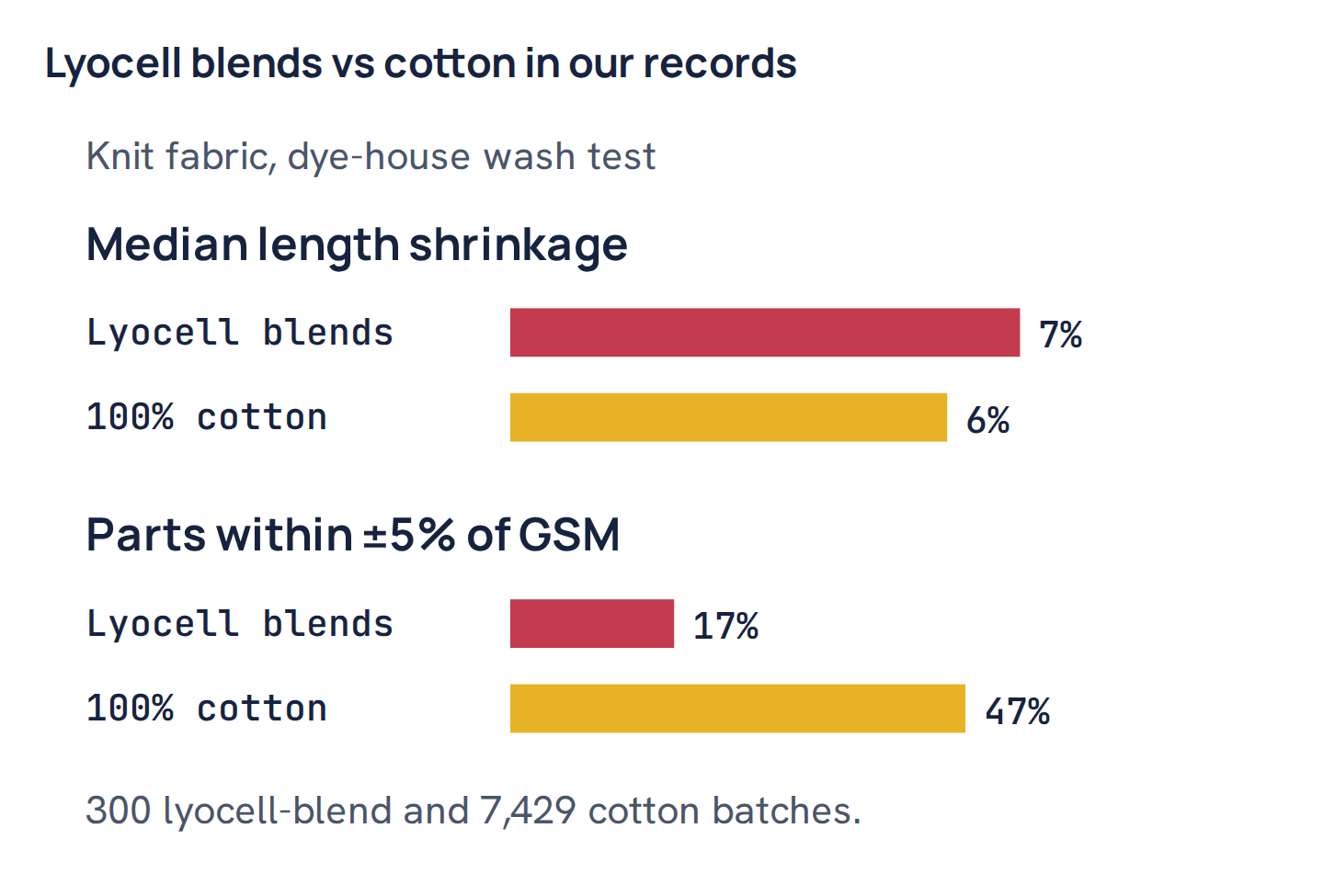
Lyocell’s biggest practical difference from cotton is in finishing. The fibre swells strongly in water, so lyocell-blend knits relax and shrink more and are harder to finish to the target weight. In our finishing records, lyocell-blend knits had a median length shrinkage of 7% after the wash test, against 6% for 100% cotton; the worst tenth of lyocell parts shrank 12% or more, against about 10% for cotton. Only 32% of lyocell-blend parts kept length shrinkage within 5%, and only 17% were finished within ±5% of the required GSM, against 47% for cotton. Lyocell parts typically came out light, with a median of 8.7% under the required weight before washing.
Cotton-lyocell fabric is very loose and shrinks a lot, so it goes heavy as soon as it is washed. You cannot really control that in finishing. What helps is heat setting the fabric before dyeing starts. That brings it under some control.
Fibrillation: a lyocell-only issue
Wet lyocell fibres can split at the surface into tiny fibrils when rubbed. In the factory this is used deliberately to create a soft “peach-skin” surface. In use, uncontrolled fibrillation shows as a whitish, frosted haze or chalky marks, especially on dark colours and along seams and folds. Mills control it with enzyme treatments and special finishes, and with careful handling during wet processing. Cotton does not fibrillate in this way.
Wrinkles and pilling
Lyocell woven fabrics crease fairly easily but often drop out lightly creased when hung after washing. Cotton wovens crease moderately and usually need ironing. Lyocell knits pill little when well finished, because the fibre is strong and smooth, but rough washing can raise fibrils. Cotton knits pill moderately, and the pills often break off.
Dyeing and colour
Lyocell and cotton both take reactive dyes. Lyocell gives rich, deep, clear colours with good brightness. Because lyocell absorbs dye quickly and swells strongly, it needs careful control of salt, alkali and temperature to dye evenly. See the 100% lyocell dyeing process.
For cotton-modal, lyocell, viscose and modal, the salt goes in at 80°C and the bath is cooled to 60°C for the soda.
Sustainability
Lyocell’s closed-loop process recovers most of the solvent, and wood for lyocell can come from certified, managed forests. Cotton needs farmland and often irrigation and crop protection, though organic and better-managed cotton reduces the impact. Both fibres are biodegradable when not mixed with synthetics. Dyeing and finishing affect the footprint of both.
Common mistake: washing a dark lyocell shirt hot with towels and jeans and tumble drying it. The rubbing raises fibrils that look like white streaks, and the heat adds shrinkage. Wash lyocell inside out, cool, on a gentle cycle, and dry flat or on low.
Lyocell-cotton blends
Blending lyocell with cotton softens cotton, adds drape and coolness, and reduces cost compared with pure lyocell. Blends are common in T-shirts, shirts, denim and bedding. They still behave more like lyocell in the wash than pure cotton does, so cool washing and gentle drying are wise.
Which should you choose?
- Choose lyocell for a cool, silky feel, fluid drape, hot-weather comfort and bedding for hot sleepers.
- Choose cotton for everyday durability, easy care, structure and lower price.
- Choose a lyocell-cotton blend for softer, drapier cotton with fewer care worries than pure lyocell.
Worked example. Two sets of sheets: lyocell sateen and cotton percale. The lyocell feels cool and silky and handles night sweats well, but must be washed at 30–40°C and line or low dried. The cotton percale feels crisp and cool, can take warmer washes and ironing, and costs less. A hot sleeper who does not mind gentler care prefers lyocell; a family that wants easy washing prefers cotton.
Lyocell vs cotton for underwear and socks
In underwear, lyocell blended with a little elastane feels smooth, cool and soft and handles sweat well, which many people prefer in hot weather. Cotton underwear is cheaper, more breathable at rest than synthetics, and tolerates hotter washes. For socks, lyocell blends feel soft and help manage moisture, but cotton or cotton-rich blends with nylon reinforcement are more common because they are hard-wearing and inexpensive. See cotton vs polyester underwear.
Lyocell vs cotton denim
Lyocell is often blended into denim to make jeans softer, drapier and cooler. Pure cotton denim is stiffer and more structured and breaks in over time; lyocell-blend denim feels soft from the first wear and suits loose, flowing cuts. The trade-off is that lyocell-blend denim can show fibrillation marks and may not age with the same high-contrast fades as cotton denim.
Price and value
Lyocell costs more than cotton because of the fibre-making process and the extra care needed in dyeing and finishing. Whether it is worth it depends on use: for sheets, sleepwear and summer clothes, many people find the comfort worth paying for; for everyday T-shirts and workwear, cotton gives better value and fewer care worries.
How to wash lyocell
- Turn inside out and wash at 30°C on a gentle cycle.
- Use mild liquid detergent; avoid bleach.
- Do not overload the machine; rubbing causes fibrillation.
- Line dry or tumble on low and remove promptly.
- Iron on a medium setting while slightly damp.
Summary
- Lyocell is softer, cooler, silkier and more absorbent than cotton.
- Cotton is cheaper, more stable and easier to care for.
- Lyocell blends shrink more and are harder to finish to weight than cotton in our records.
- Lyocell can fibrillate; wash it cool and gently.
- Blends combine lyocell’s comfort with cotton’s practicality.
Questions
Is lyocell better than cotton?
Lyocell is softer, cooler and more absorbent; cotton is cheaper, more stable and easier to care for. The better choice depends on use.
Does lyocell shrink more than cotton?
It can. In our knit records lyocell blends shrank a median 7% in length against 6% for cotton, with a wider spread.
Is lyocell more breathable than cotton?
Lyocell absorbs more moisture and releases it quickly, so it often feels cooler and drier than cotton.
What is fibrillation in lyocell?
Wet lyocell fibres can split into tiny fibrils when rubbed, causing a white haze or peach-skin surface.
Is lyocell natural?
Lyocell is made from natural wood cellulose but is manufactured by dissolving and spinning it, so it is a regenerated fibre.

Textile engineer with 14+ years in dyeing and fabric development. He writes every guide on Dyeing Solution from real production work. Full profile