A cotton black is a mix of blue, red and yellow dyes, and the blue part often fades first. Why black T-shirts fade, why they turn brown or reddish, and how to keep black clothes black for longer.
At a glance
3 dyesin a typical cotton black
Blueusually fades first
30°Cbest wash for black
Fuzzmakes black look grey
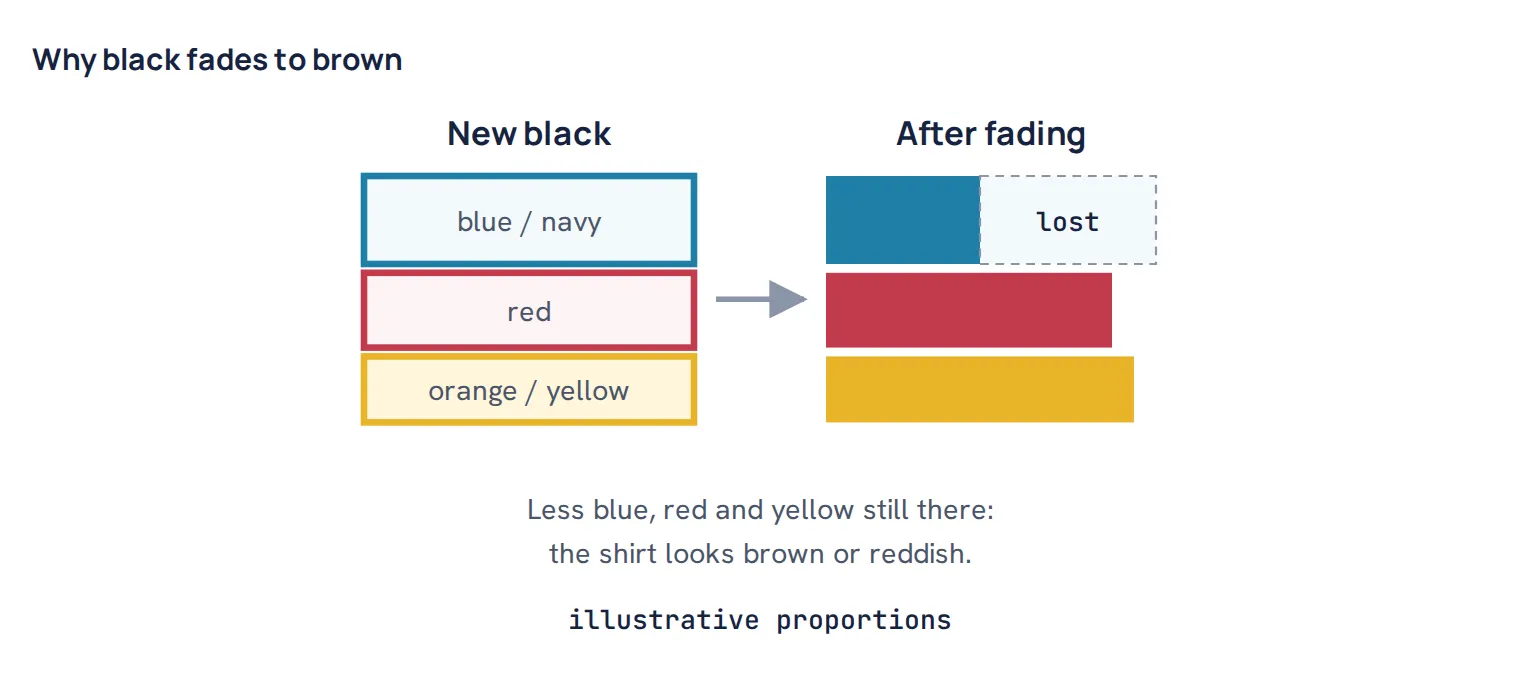
Black T-shirts fade for three main reasons: the washing removes and breaks down dye, the cotton surface wears and turns fuzzy so it reflects more light, and sunlight bleaches the dye. They often fade to brown, reddish or dull grey rather than a clean grey, because a cotton “black” is not one dye. It is a mix of dark blue, red and orange or yellow dyes, and the blue part is usually the first to go, leaving the warmer colours behind.
This guide explains, from the dye-house side, how a black cotton shirt is dyed, why it fades, why it turns brown, and what you can do to keep black clothes black for longer.
How a black cotton T-shirt is dyed
Most cotton T-shirts are dyed with reactive dyes. A deep black needs a lot of dye, often 6–8% of the fabric weight or more, and it is built from several dyes: usually a navy or black reactive dye, plus red and orange or yellow components to correct the shade to a neutral black. The dyes bond chemically to the cotton, then the fabric is washed hot and soaped to remove loose dye; see how reactive dyes work.
Each component has its own fastness. If one fades faster than the others, the shade changes colour as well as getting lighter.
Why black T-shirts fade
1. Washing removes and attacks dye
Every wash removes a little dye, especially in hot water. Many everyday detergents contain oxygen-based bleaching agents and optical brighteners meant for whites; they slowly break down some dyes. Alkaline washing at high temperature also loosens dye that was not fully washed off at the factory. In the first few washes, it is loose dye that comes out; after that, fading is slower.
2. The surface wears and goes fuzzy
Much of what looks like fading is really fibre damage. Rubbing in the machine and in wear raises tiny broken fibres on the surface. They scatter light, so the shirt looks greyer and duller even if most of the dye is still there, a bit like frosted glass. Enzyme-finished, smoother fabrics resist this better.
3. Sunlight
Ultraviolet light breaks down dye molecules. Drying black shirts in strong sun, or wearing them outdoors a lot, fades them faster, again often unevenly between dye components.
4. Chlorine and hard water
Chlorine in tap water and in some cleaning products attacks many reactive dyes; blues are often the most sensitive. Hard water leaves mineral deposits that make the surface look dull.
Why are my black T-shirts turning brown?
- The blue component fades first from light, chlorine or oxidising detergents, leaving the red and yellow parts: the shirt turns brown, reddish or rusty.
- Sweat and deodorant: perspiration and antiperspirant ingredients can react with dyes and with the fabric at the underarms, giving brown or orange patches there first. Labs test this with the perspiration fastness test; see colour fastness to perspiration.
- Sulphur black: some cheaper black cotton is dyed with sulphur dyes. Sulphur black is economical and wash-fast, but it can turn brownish and, if badly processed, can weaken the cotton over time in storage.
| What you see | Likely cause |
|---|---|
| Even grey all over | Washing, surface fuzz |
| Brown or reddish all over | Blue component faded: light, chlorine, oxidising detergent |
| Brown underarms | Sweat and deodorant |
| Faded shoulders and back | Sunlight |
| Pale streaks or patches | Bleach splash or detergent powder not dissolved |
Common mistake: washing black T-shirts with an all-purpose “whites and colours” powder at 60°C. The bleaching agents and brighteners meant for whites, plus the heat, fade black much faster than a cool wash with a detergent for darks.
How to keep black clothes black
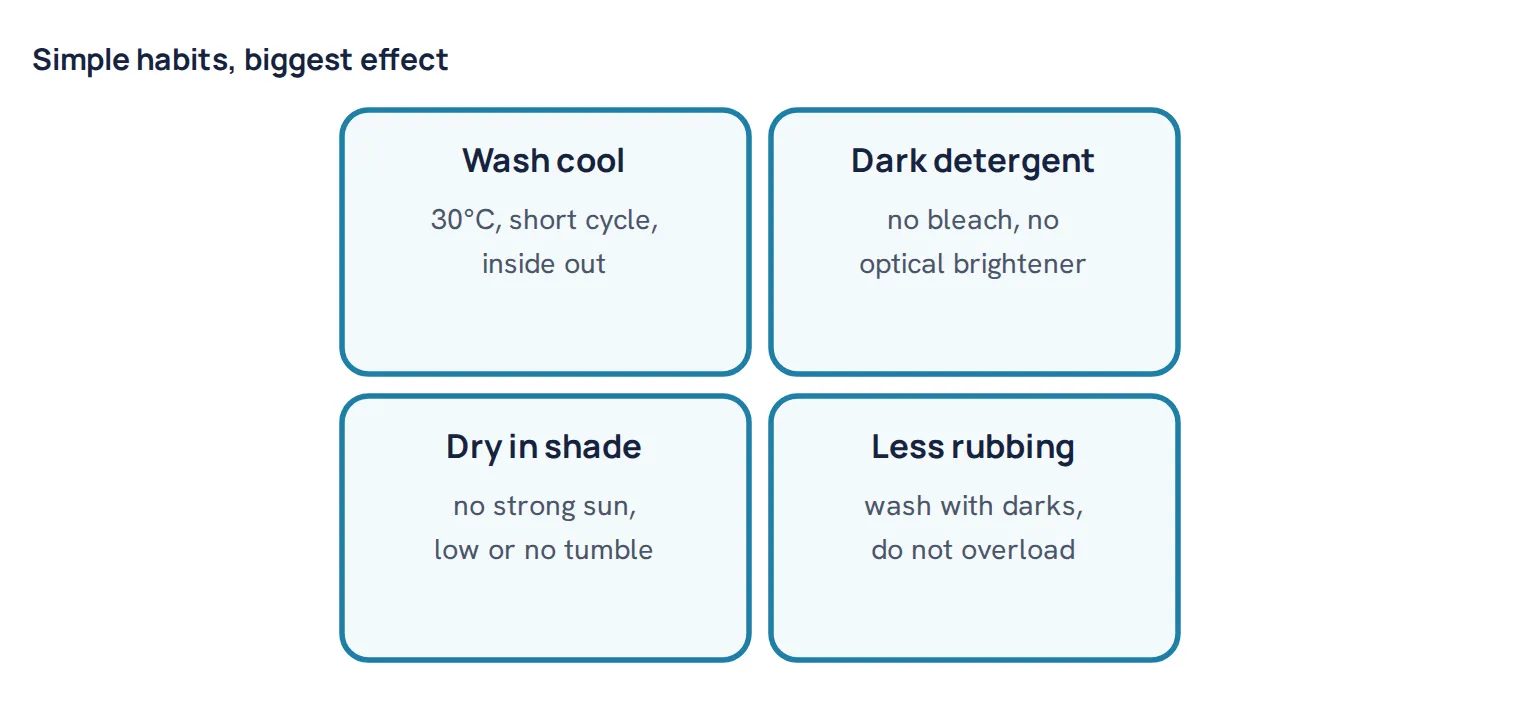
- Wash inside out, at 30°C, on a short cycle.
- Use a detergent for darks or colours without bleach or optical brighteners.
- Wash with other dark clothes, and do not overload the drum.
- Dry in the shade; avoid hot tumble drying.
- Let deodorant dry before dressing to reduce underarm marks.
- Faded black cotton can be re-dyed black; see fixing and re-dyeing clothes.
What makes a black T-shirt last at the factory
Good black starts in the dye house: a well-chosen combination of dyes with similar fastness, so the shade fades evenly instead of turning brown; a thorough hot wash-off and soaping to remove loose dye; and an enzyme finish that removes surface fibres so the shirt stays smooth and dark for longer. In deep shades, wet rubbing is the test most often failed, and the cure is the wash-off, not more dye; see why knit fabric fails wet rubbing.
Worked example. Two identical black cotton T-shirts are washed weekly for six months. One goes in at 60°C with an all-purpose powder and dries on a sunny line; it turns dull brown-grey. The other is washed inside out at 30°C with a detergent for darks and dried indoors; it stays close to black. Same shirt, same dye: the difference is heat, bleaching agents, sun and rubbing.
Summary
- Black T-shirts fade from washing, surface wear and sunlight.
- They turn brown because black is a mix of dyes and the blue part often fades first.
- Sweat and deodorant cause brown underarms; sulphur blacks can brown with age.
- Wash cool and inside out with a detergent for darks and dry in the shade.
Questions
Why do black T-shirts fade so fast?
Washing removes and breaks down dye, rubbing raises a fuzzy surface that looks grey, and sunlight bleaches dye. Hot washes and detergents with bleaching agents speed it up.
Why are my black T-shirts turning brown?
Cotton black is a mix of blue, red and yellow dyes. When the blue part fades faster, from light, chlorine or oxidising detergents, the remaining colours make the shirt look brown or reddish.
Why do black shirts turn brown under the arms?
Sweat and antiperspirant ingredients can react with the dye and fabric, causing brown or orange patches at the underarms first.
How do I keep black clothes from fading?
Wash inside out at 30°C with a detergent for darks, avoid bleach and optical brighteners, wash with other darks and dry in the shade.
Can you re-dye a faded black T-shirt?
Yes. Cotton T-shirts can be re-dyed black; black dye covers fading well, but polyester thread and prints will not take the dye.

Textile engineer with 14+ years in dyeing and fabric development. He writes every guide on Dyeing Solution from real production work. Full profile