Double brushed polyester is a polyester-spandex knit brushed on both sides for a very soft, peach-skin feel. How it is made, single vs double brushed, DBP vs cotton spandex and modal, why it pills, how it is dyed and printed, and how to care for it.
At a glance
Both sidesbrushed
92–96%polyester
3%polyester shrinkage
Pillswhere it rubs
Double brushed polyester (DBP) is a polyester knit, usually with a little spandex, that has been brushed on both sides to give it a very soft, peach-skin feel. Brushing raises tiny fibre ends on the surface, so the fabric feels velvety and warm instead of slick. DBP is light, stretchy, drapey and wrinkle-resistant, prints brilliantly, and is popular for leggings, dresses, tops, loungewear and children’s clothes. Its main drawbacks are that it pills more easily than smooth polyester, holds heat and does not absorb sweat.
This guide explains what double brushed polyester is, how it is made, single vs double brushed, DBP vs cotton, modal and other stretch knits, its pros and cons, why it pills, how it is dyed and printed, and how to care for it. It is written from the knit dyeing and finishing side, where brushing is a routine finishing step.
What double brushed polyester is made of
DBP is usually a single jersey knit of about 92–96% polyester and 4–8% spandex, knitted from fine polyester yarns. Typical weights are around 180–250 GSM. The fabric is then brushed on both the face and the back, which is why it is called “double brushed”. Some versions are 100% polyester without spandex, with less stretch.
How brushing works
Brushing, also called raising or napping, is a mechanical finish. The fabric passes over rollers covered in fine wire points or abrasive surfaces. These catch the yarn surface and pull out or break very short fibre ends, creating a fine, even layer of fuzz. In DBP this is done on both sides, so both faces feel soft. A related finish, peaching or sueding, uses abrasive rollers for an even shorter, velvety nap. See what is brushed cotton for brushing and peaching on cotton.
Single vs double brushed polyester
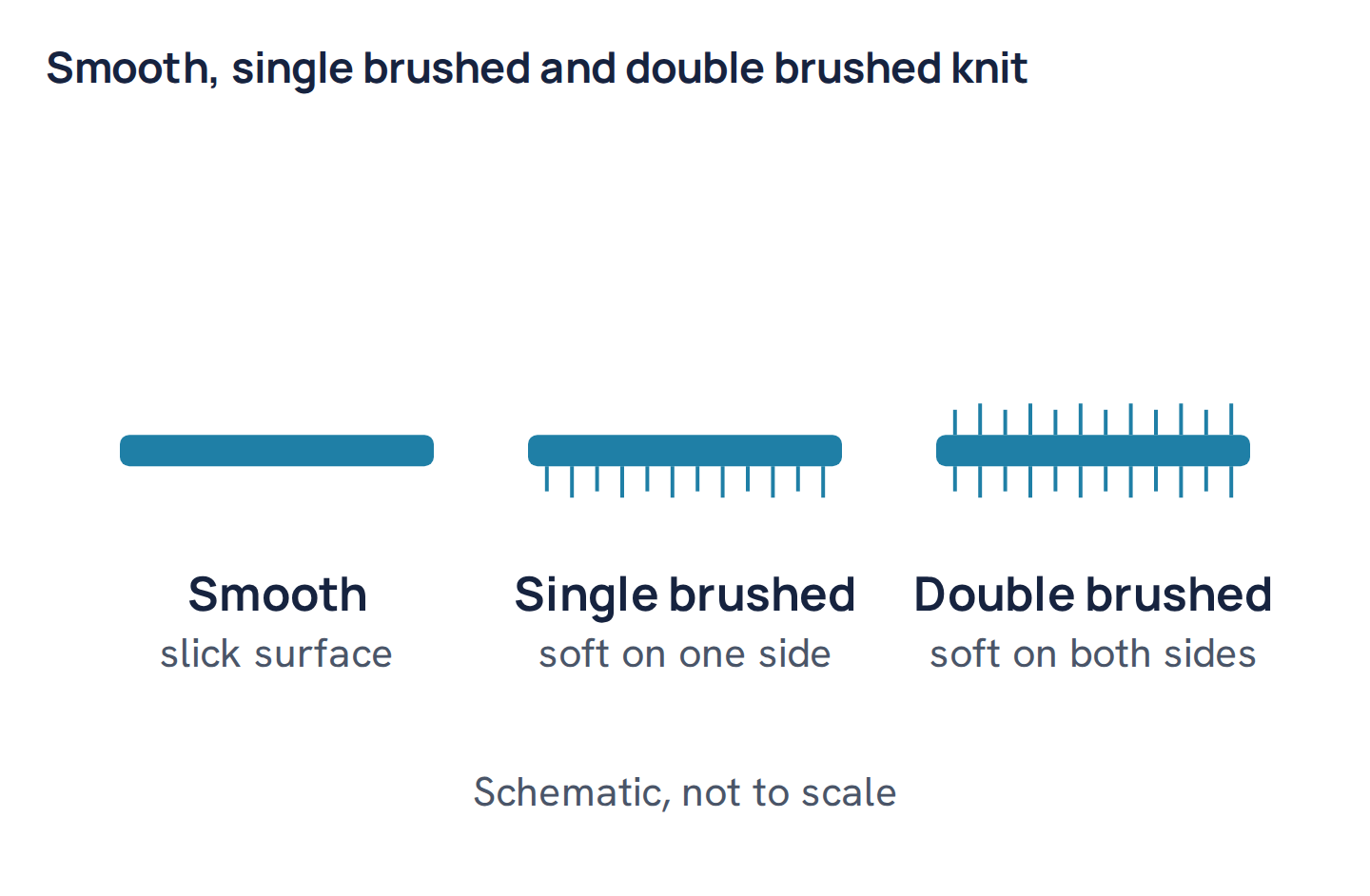
- Single brushed: brushed on one side only, usually the inside, for warmth and softness against the skin, while the outside stays smooth for printing or a cleaner look.
- Double brushed: brushed on both sides for an all-over soft, matt, peach-skin handle. Feels softer, warmer and less synthetic, but pills a little more because both faces have raised fibres.
Pros of double brushed polyester
- Very soft and comfortable, often compared to a well-worn T-shirt.
- Stretchy and drapey with spandex; good recovery.
- Wrinkle resistant and quick drying.
- Barely shrinks: polyester knit shrank a median 3% in our finishing records.
- Bright, lasting prints and colours.
- Affordable compared with modal or premium cotton knits.
Cons of double brushed polyester
- Pilling: the raised fibres can roll into pills where it rubs, and polyester holds pills on.
- Warmth and sweat: polyester absorbs about 0.4% moisture, so DBP can feel warm and clammy in heat.
- Static in dry weather.
- Odour: synthetic fabrics can hold body odour.
- Not biodegradable and sheds microfibres in washing.
DBP vs cotton spandex and modal
| Point | Double brushed polyester | Cotton spandex | Modal spandex |
|---|---|---|---|
| Softness | Very soft, peachy | Soft, natural | Silky, smooth |
| Breathability | Low to moderate | Good | Good, cool |
| Shrinkage (our knit records) | About 3% (polyester) | About 6% | About 6% (modal blends) |
| Wrinkles | Few | More | Some |
| Pilling | Moderate, pills stay | Low to moderate | Low |
| Print brightness | Excellent | Good | Very good |
| Price | Low | Low to medium | Higher |
Why DBP pills and how to slow it
Brushing deliberately creates loose fibre ends. When the fabric rubs, at the inner thighs of leggings, under the arms and at the seat, those ends tangle into pills, and the strong polyester fibres keep the pills attached. In knit testing, brushed and loop-back fabrics are the ones most likely to fail pilling tests; in our lab reports, pilling fails were concentrated in heavy brushed fleece and terry. Good DBP uses fine, well-spun yarns, moderate brushing and sometimes anti-pill treatments. See why fleece and sweatpants pill.
Common mistake: washing DBP leggings with jeans and towels and tumble drying on high. The rough items rub the brushed surface into pills, and the heat weakens the spandex. Wash DBP inside out with soft items and dry low.
How DBP is dyed, printed and finished
As a polyester fabric, DBP is dyed with disperse dyes at about 130°C, reduction cleared, then dried and finished at moderate temperatures. Fabric with polyester must be finished at around 100–110°C; hotter finishing can make the disperse dye migrate and fastness fail. Spandex-containing DBP is heat set before dyeing. Brushing is usually done after dyeing and drying, on dedicated raising machines, and the fabric may be sheared to even the nap. DBP is a favourite base for sublimation and digital printing because polyester takes disperse and sublimation inks brilliantly; see heat presses for sublimation.
What double brushed polyester is used for
- Leggings and yoga pants
- Dresses, skirts and tops
- Children’s clothes, often with bright prints
- Loungewear and pyjamas
- Headbands, scrunchies and accessories
- Printed fabric sold by the yard for home sewing
How to judge DBP quality
- Weight: mid-weight DBP, around 200–240 GSM, is less see-through and holds its shape better than very light versions.
- Recovery: stretch the fabric and let go; good DBP snaps back without bagging.
- Nap: the brushed surface should be even and fine; long, loose fuzz pills sooner.
- Opacity: stretch it over your hand; quality DBP for leggings stays opaque when stretched.
- Print: colours should be sharp and go through to the back reasonably well, with no white showing when stretched lightly.
Is DBP good for summer?
It can feel warm, because polyester absorbs little sweat and the brushed surface traps a little air. Light, loose DBP dresses and tops are fine in mild heat, especially in light colours. In hot, humid weather, cotton, modal or linen fabrics usually feel cooler. DBP is at its best in spring, autumn and winter, and for leggings worn in air-conditioned spaces.
Sewing with DBP
For home sewers, DBP is easy to cut and does not fray, but it is slippery and stretchy. Use a ballpoint or stretch needle, a stretch stitch or overlocker, and avoid stretching the fabric as you sew. Pre-washing is less critical than with cotton, because polyester barely shrinks, but it removes finishing residues.
Worked example. A small brand chooses between DBP and cotton-spandex for printed kids’ leggings. DBP gives brighter prints, softer handle, almost no shrinkage and fewer wrinkles at a lower price, but pills at the knees and feels warmer in summer. Cotton-spandex breathes better and pills less visibly but shrinks around 6% and needs more careful washing. For bright, colourful, easy-care leggings, DBP; for summer comfort, cotton-spandex.
How to care for double brushed polyester
- Wash cold or at 30°C, inside out, on a gentle cycle.
- Wash with similar soft garments; avoid rough items and zips.
- Skip fabric softener if you want to limit static and odour build-up.
- Air dry or tumble on low.
- Do not iron hot; if needed, use a low synthetic setting.
- Remove pills with a fabric shaver on a flat surface.
DBP vs other “buttery soft” knits
Several fabrics are sold on softness. Polyester-spandex “buttery” or “brushed” jersey is close to DBP but may be brushed on one side only. Modal-spandex jersey is silky rather than peachy and breathes better. Peached cotton jersey has a short, velvety nap with cotton’s breathability. Microfiber polyester knits feel smooth and slick rather than fuzzy. If breathability matters most, choose modal or peached cotton; if bright prints, low shrinkage and price matter most, DBP is hard to beat.
Is DBP safe for children?
DBP is widely used for children’s clothing and is not considered harmful to wear. As with any printed polyester, the dyes and inks matter, so choose products tested for restricted substances and wash new garments before first wear. For babies and children with sensitive skin or eczema, breathable cotton or modal next to the skin is often more comfortable in warm weather.
Summary
- Double brushed polyester is a polyester-spandex knit brushed on both sides for a soft, peachy feel.
- It is stretchy, drapey, wrinkle resistant and prints brilliantly.
- It barely shrinks but can pill, feel warm and hold odour.
- It is disperse dyed, finished at moderate temperatures and brushed after dyeing.
- Wash cool, inside out, with soft items, and dry low.
Questions
What is double brushed polyester?
A polyester knit, usually with a little spandex, brushed on both faces so both sides feel soft and velvety.
Is double brushed polyester good quality?
It is soft, stretchy, wrinkle resistant and prints well. Quality depends on yarn and brushing; cheap DBP pills quickly.
Does double brushed polyester pill?
It can, because brushing raises loose fibre ends and polyester holds pills on. Wash it inside out with soft items to slow pilling.
Does double brushed polyester shrink?
Very little. Polyester knit shrank a median 3% in our records; avoid high heat, which can damage the spandex.
Is double brushed polyester breathable?
Not very. Polyester absorbs little sweat, so DBP can feel warm in heat; cotton or modal stretch knits feel cooler.

Textile engineer with 14+ years in dyeing and fabric development. He writes every guide on Dyeing Solution from real production work. Full profile