Nylon underwear is not bad for you: it is smooth, stretchy, durable and quick drying, but it breathes less than cotton or modal. Benefits and drawbacks, intimate health, why the gusset matters, nylon vs cotton, modal and polyester, microfibre, choosing and washing.
At a glance
~4%moisture regain
Smoothand invisible
Cottongusset helps
Air dryno heat
Nylon underwear is not bad for you, but it is not the best choice for every situation. Nylon is smooth, light, strong, stretchy and quick drying, which is why it is used for seamless underwear, lingerie, shapewear and sports briefs that sit invisibly under clothes. Its drawback is breathability: nylon absorbs only about 4% moisture, so on hot days or during long wear it can hold sweat and warmth against the skin. A breathable gusset, ideally cotton, and the right fabric construction make a big difference. For all-day comfort, many people rotate nylon with cotton or modal underwear.
This guide explains how nylon underwear is made, its benefits and drawbacks, whether nylon is bad for intimate health, nylon vs cotton, modal and polyester underwear, why the gusset matters, how to choose nylon underwear, and how to wash it so it lasts. It is written from the dye-house side, where we dye nylon-elastane fabrics used for underwear and lingerie and test them for colour fastness and comfort-related properties.
How nylon underwear is made
Most nylon underwear is a nylon-elastane knit: typically around 75–90% nylon and 10–25% elastane (spandex). Fine nylon filaments are knitted into smooth jersey, tricot, microfibre or lace, or knitted seamlessly in a tube on special machines. The elastane gives stretch and hold. Nylon-elastane is dyed with acid dyes and heat set to fix its size and stretch. See the nylon-elastane dyeing process.
Benefits of nylon underwear
- Smooth and invisible: thin, flat fabric and laser-cut edges show less under clothes.
- Stretch and recovery: nylon-elastane hugs the body and keeps its shape.
- Quick drying: good for travel and sport.
- Durable: nylon resists abrasion and holds colour well.
- Lightweight: comfortable under fitted clothes and workwear.
Drawbacks
- Lower breathability: holds warmth and moisture more than cotton or modal.
- Less absorbent: sweat stays on the skin rather than in the fabric.
- Odour: synthetics can hold body odour more than cotton.
- Static: can cling in dry weather.
Is nylon underwear bad for intimate health?
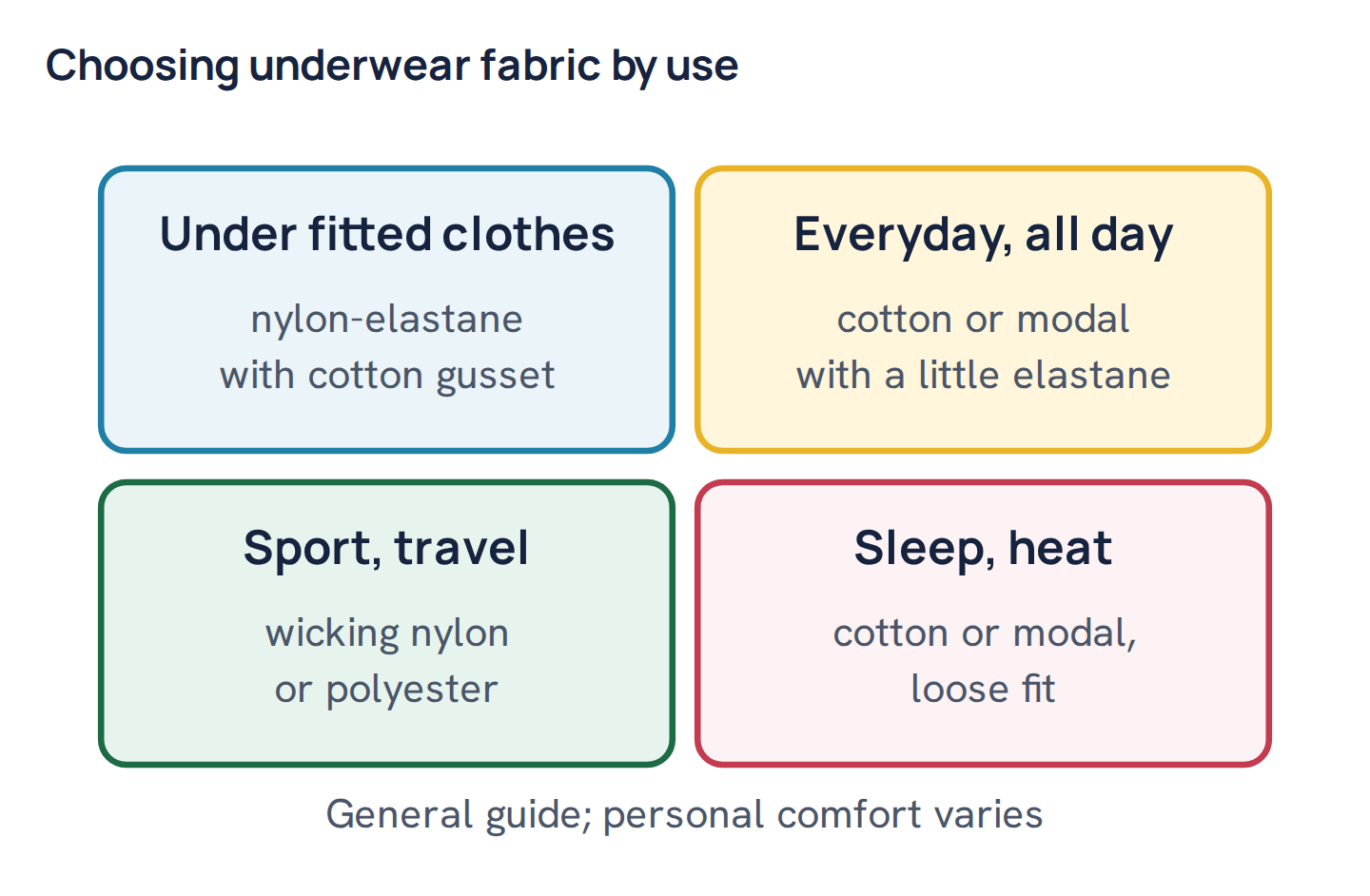
For most people, no. The concern is that warm, damp conditions can favour irritation and infections in people who are prone to them. Because nylon holds more moisture against the skin than cotton, health advice often suggests choosing breathable underwear, or at least a cotton gusset, and changing out of damp or sweaty underwear promptly. If you are prone to irritation, cotton or modal underwear for everyday wear and nylon for specific outfits or sport is a practical balance.
Why the gusset matters
The gusset is the lining in the crotch. Many nylon briefs and knickers have a cotton gusset, which adds an absorbent, breathable layer exactly where it matters most. A good gusset is soft, sewn or bonded flat, and made from cotton or a cotton-rich fabric. Check the label: it often lists the gusset fibre separately, for example “Gusset: 100% cotton”.
Nylon vs cotton, modal and polyester underwear
| Fabric | Breathability | Smoothness | Drying | Best for |
|---|---|---|---|---|
| Nylon-elastane | Moderate | Very smooth | Fast | Fitted outfits, lingerie, sport |
| Cotton-elastane | High | Soft, slightly textured | Slow | Everyday, sensitive skin |
| Modal-elastane | High | Very soft, smooth | Moderate | Everyday comfort, sleep |
| Polyester-elastane | Low to moderate | Smooth | Very fast | Sport, wicking briefs |
See cotton vs polyester underwear and is modal good for underwear.
Nylon microfibre underwear
Microfibre underwear uses very fine nylon filaments, finer than silk, which make the fabric softer, smoother and more breathable than ordinary nylon knits. Fine filaments also give better wicking, because they create many small capillary spaces that move moisture. Good microfibre nylon underwear can feel nearly as comfortable as modal. See is polyester a microfiber for how microfibre is defined.
Dyes, finishes and skin
Nylon underwear is dyed with acid dyes, which generally have good fastness when properly fixed. Brands that test their products check colour fastness to perspiration and washing, pH and restricted substances. Rarely, a dye or finish irritates sensitive skin; washing new underwear before wearing and choosing lighter colours can help. See colour fastness to perspiration.
Common mistake: tumble drying nylon underwear and bras on high heat. Heat damages the elastane and can glaze nylon, so waistbands lose grip, lace stiffens and the fabric goes baggy. Wash cool in a mesh bag and air dry.
How to choose good nylon underwear
- Check for a cotton or cotton-rich gusset.
- Look for microfibre or fine-gauge fabric for softness and breathability.
- Choose the right size: too tight increases heat and friction.
- Look for flat or bonded seams to reduce rubbing.
- For sport, choose wicking or mesh styles.
How to wash nylon underwear
- Wash at 30–40°C in a mesh bag on a gentle cycle.
- Use mild detergent; avoid bleach and fabric softener.
- Separate dark and light colours.
- Air dry; avoid the tumble dryer.
- Replace underwear when the elastic is tired or the gusset is worn.
Worked example. Someone who wears nylon seamless briefs every day notices discomfort in summer. Switching to modal-elastane briefs for everyday wear and keeping nylon briefs for fitted dresses and gym sessions solves it. The nylon was not harmful; it simply suited some uses better than others.
Is nylon underwear good for men?
Nylon and nylon-blend boxer briefs are popular for sport and travel because they are light, supportive and dry quickly. For everyday office wear, cotton or modal boxer briefs are often more comfortable in heat. Many men use wicking nylon or polyester for training and cotton or modal day to day.
Nylon bras and lingerie
Bras, lace and lingerie use nylon because it can be knitted into very fine, smooth, strong fabrics and lace that hold their shape and colour. Nylon lace is softer and more durable than polyester lace. Linings in bra cups are often cotton or microfibre for comfort. Hand wash or use a mesh bag on a gentle cycle, fasten hooks before washing, and never tumble dry bras.
Nylon underwear for sport
For running, cycling and gym work, nylon or polyester underwear designed to wick sweat often feels better than cotton, which soaks up sweat and can chafe when wet. Look for mesh panels, flat seams and a wicking gusset. Change after training rather than staying in damp sportswear. See is spandex breathable.
Seamless and laser-cut nylon underwear
Seamless underwear is knitted as a tube on special circular machines, so there are no side seams to rub or show. Laser-cut edges are cut cleanly and bonded rather than hemmed, which makes them almost invisible under tight clothes. Both styles depend on nylon’s smooth, strong, stretchy filaments. They are excellent under fitted dresses and trousers, but the closer fit means breathability matters more.
How long does nylon underwear last?
Nylon itself is very durable; underwear usually wears out at the elastic and the gusset. Heat, chlorine, body oils and rough washing break down the elastane, so waistbands lose grip and leg openings sag. Washed cool and air dried, good nylon underwear lasts a long time. Replace pairs when the elastic is tired or the gusset is thin.
Nylon vs microfibre polyester underwear
Both make smooth, quick-drying underwear. Nylon microfibre usually feels softer and more supple, with a slightly cooler touch; polyester microfibre is cheaper, resists sunlight and chlorine better and holds colour well. For everyday smoothness, nylon microfibre is often preferred; for budget sports packs, polyester is common.
Nylon underwear and odour
Synthetic fibres can hold body odour more than cotton because oily sweat compounds cling to the fibre surface. Washing after each wear at 30–40°C with a good detergent prevents build-up. Some nylon underwear has an antimicrobial finish to reduce odour; it still needs regular washing. Avoid fabric softener, which can trap odour in synthetics.
If underwear still smells after washing, a soak in warm water with a little oxygen-based cleaner (not chlorine bleach) usually clears it.
Rotating several pairs also gives the elastane time to recover between wears.
Summary
- Nylon underwear is not bad for you, but it breathes less than cotton or modal.
- It is smooth, stretchy, durable and quick drying.
- A cotton gusset improves comfort and breathability.
- Microfibre nylon is softer and more breathable than ordinary nylon.
- Wash cool, avoid heat and change out of sweaty underwear promptly.
Questions
Is nylon good for underwear?
Yes for smooth, fitted and sporty use. For all-day comfort, cotton or modal breathes better.
Is nylon underwear bad for you?
No, but it holds more warmth and moisture than cotton. A cotton gusset and changing out of sweaty underwear help.
Is nylon or cotton better for underwear?
Cotton is more breathable for everyday wear; nylon is smoother, more stretchy and dries faster.
What is microfibre nylon underwear?
Underwear made from very fine nylon filaments, which feels softer and breathes and wicks better than ordinary nylon.
How do you wash nylon underwear?
Wash cool in a mesh bag on a gentle cycle, avoid bleach and softener, and air dry.

Textile engineer with 14+ years in dyeing and fabric development. He writes every guide on Dyeing Solution from real production work. Full profile